REVIEW · BAALBEK ANJAR AND KSARA DAY TRIPS
Private Full-Day Tour to Qadisha valley, Cedars of God and Baalbek from Beirut
Ancient stones and sacred trees fill one remarkable day. This private tour links Lebanon’s rugged Qadisha Valley, Bcharre, the protected Cedars of God, and the vast Roman ruins of Baalbek in about nine hours. You get hotel pickup and drop-off, private air-conditioned transport, a tour leader, and a guide in Baalbek, all for $150 per person.
I like the way the route combines mountain scenery with major archaeological sites, rather than keeping you in Beirut’s urban core. I also like the private format, since you can ask for extra photo time and avoid sharing the vehicle with strangers. The main drawback is the pace: five stops across northern Lebanon and the Bekaa Valley make this a long day, and lunch is not included.
The available feedback gives Kassem special praise for driving safely through Lebanon’s chaotic traffic and for waiting patiently when extra time was needed for photographs. That matters here. Much of the pleasure comes from looking out the window, and a calm driver makes the long road easier.
In This Review
- Key points at a glance
- Why this route works from Beirut
- Qadisha Valley and the roots of Christianity
- Bcharre, churches, and Khalil Jubran
- The Cedars of God and Lebanon’s national symbol
- Baalbek’s Roman temples and the Heliopolitan Triad
- The Stone of the Pregnant Woman
- Transport, timing, and the value of $150
- Who should book this private day trip?
- Final booking advice
- FAQ
- Where does the tour begin?
- How long does the tour last?
- Is this a private tour?
- Is hotel pickup included?
- What type of transportation is provided?
- Is a guide included at Baalbek?
- Is lunch included?
- Is admission to Baalbek included?
- How much does the tour cost?
- Can the tour be canceled for a full refund?
Key points at a glance
- Qadisha Valley connects early Christianity with dramatic mountain terrain: Caves, monasteries, and cultivated terraces reflect centuries of religious life.
- Bcharre adds local culture beyond the main sights: The town is linked with poet and artist Khalil Jubran, 37 churches, and Lebanon’s oldest skiing area.
- The Cedars of God are a rare surviving forest: The grove contains 375 trees and features the cedar, Lebanon’s national symbol.
- Baalbek is the day’s major archaeological stop: Roman temples, enormous columns, and the Heliopolitan Triad make this the tour’s historical centerpiece.
- The private vehicle gives the day flexibility: You can request more time for photos, an advantage specifically praised in the available feedback.
- The $150 price covers the main transport and guiding: Lunch and Baalbek admission remain separate costs.
Why this route works from Beirut
This is not a quick outing to one nearby attraction. It is a northbound and eastward sweep through several parts of Lebanon, linking religious sites, mountain towns, old forests, and Roman architecture in one day.
The 8:30 am start is sensible. You need the morning to reach the mountain areas, and the schedule leaves room for Baalbek later in the day. The tour lasts about nine hours, so you should treat it as a full day rather than a relaxed half-day trip.
A private tour is especially useful for this route. You are not just being taken to one landmark, then returned to Beirut. You are moving between several stops with different levels of interest. If a view catches your eye or you need more time with your camera, the driver can work with your group. The available feedback specifically praises Kassem for allowing extra time for photographs, though the assigned driver may vary.
The vehicle is air-conditioned and private. Hotel pickup and drop-off are included, which removes the trouble of finding an early taxi and arranging a return ride after a tiring day. Group discounts are also offered, so the value improves if you are traveling with family or friends.
More Baalbek and Bekaa day trips:
- Guided Small-Group Tour to Baalbek, Anjar and Ksara with Lunch
★ 5.0 · 511 reviews - Anjar, Baalbek & Ksara Day Trip – With Lunch (4G on Board)
★ 4.5 · 181 reviews - Baalbek – Anjar – Ksara Trip From Beirut
★ 4.5 · 80 reviews
Qadisha Valley and the roots of Christianity
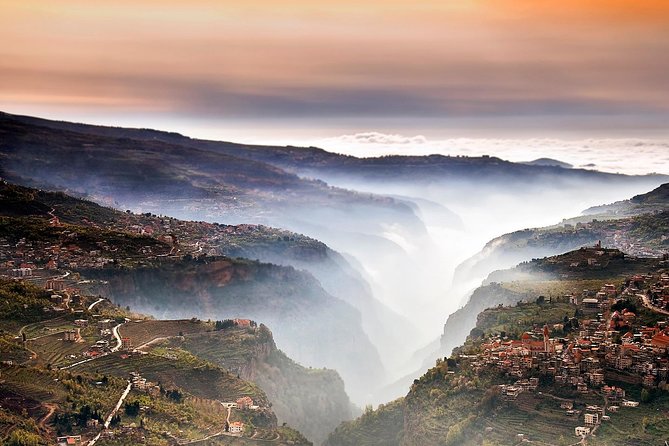
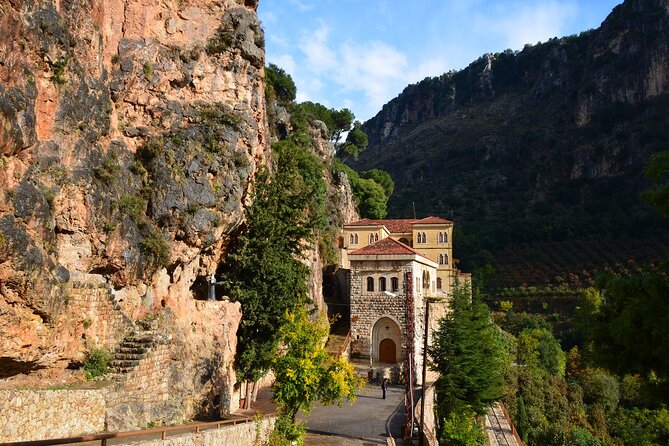
The first major stop is Qadisha Valley, one of the world’s important early Christian settlement areas. The valley includes caves, monasteries, and cultivated terraces tied to the first phases of Christian life in the region.
You have about 30 minutes here. That is enough for a first look, photographs, and an introduction from your guide, but not enough for a serious hike or an extended visit to several monasteries. Keep your expectations focused. This portion is a scenic and historical orientation, not a full walking tour of the valley.
The setting is the key. Qadisha is known for its rugged mountain terrain, where religious communities found shelter in caves and remote cliffs. The contrast between the harsh rock and the patient work of farming terraces gives the valley its special character.
I would listen closely to the guide here. The physical remains can be easy to underread if you only take photographs. Caves may look like simple openings in the rock, while monasteries can seem small beside the vast valley. Their importance comes from the long religious life attached to them.
The short stop also tells you something about the whole day. This tour favors a broad look at several major places rather than a slow, single-site visit. If you want a full Qadisha hiking program, you would need a different tour with more time on foot.
Bcharre, churches, and Khalil Jubran
The tour continues to Bcharre, a town closely associated with the Cedars of God. You have around 30 minutes here, so this is another brief stop rather than a full town visit.
Bcharre is known as the birthplace of Khalil Jubran, the celebrated Lebanese poet, painter, and sculptor. His museum is located in town, but the provided schedule does not list museum admission or a visit inside it. You should ask the guide before the day begins if the museum is open to your schedule, since the half-hour stop may not leave enough time.
Bcharre is also sometimes called the city of churches. About 37 churches are associated with the town, a striking number for a place of its size. This gives the stop a local and religious flavor that balances the larger monuments later at Baalbek.
The town also has an important place in Lebanese skiing. The Cedars Ski Resort is described as the country’s oldest skiing area, and Lebanon’s first ski lift was built there in 1953. You may not have time to use the resort on this tour, but the detail helps explain how Bcharre connects old mountain traditions with modern recreation.
For you, the practical point is simple: use this stop to absorb the setting and ask questions. Do not expect an hour of independent sightseeing. The schedule is tight, and the Cedars grove is still ahead.
The Cedars of God and Lebanon’s national symbol
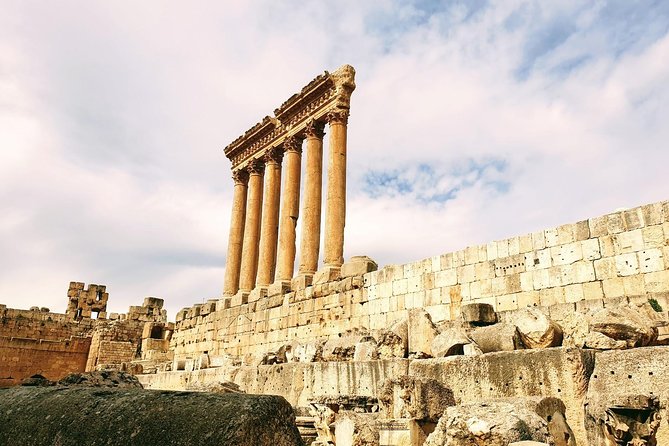
The Cedars of God is one of the most distinctive stops on the route. The forest contains 375 trees and represents one of the last remains of Lebanon’s ancient cedar forests.
The cedar is not just a pleasant tree in a mountain park. It is the national symbol of Lebanon and appears prominently on the country’s flag. In ancient times, cedar wood was highly valued as a building material for important religious structures. The tree is also cited 103 times in the Bible, giving it religious meaning far beyond its botanical interest.
You have 45 minutes here, the longest of the three mountain stops. That gives you time to walk around the grove, study the old trees, and take photographs without rushing through in a few minutes.
I like this stop because it gives the day a quieter rhythm. Qadisha brings cliffs and monasteries. Bcharre brings town life and cultural figures. The cedar grove gives you a place to slow down and consider how a single tree became tied to a country’s identity.
The grove is also a reminder that famous natural symbols can survive in very small numbers. The tour describes 375 trees, not an endless forest. You should not expect miles of untouched woodland. The value is in seeing a preserved remnant with deep cultural importance.
Wear comfortable shoes, especially if you want to make the most of the 45-minute visit. The tour does not promise a long nature walk, so treat this as a compact visit to the protected grove rather than a strenuous outdoor excursion.
More of the Qadisha Valley and the Cedars:
- Guided Small-Group Tour to Qadisha, Bcharee & Cedars with Lunch
★ 5.0 · 39 reviews - Cedars of Lebanon, Qozhaya, & Bcharre – With Lunch (4G on Board)
★ 4.5 · 34 reviews - Cedars, Bsharre & Kozhaya Day Tour
★ 5.0 · 15 reviews - Guided small group to Cedars Reserve & Beiteddine w/lunch+entries
★ 5.0 · 12 reviews
Baalbek’s Roman temples and the Heliopolitan Triad
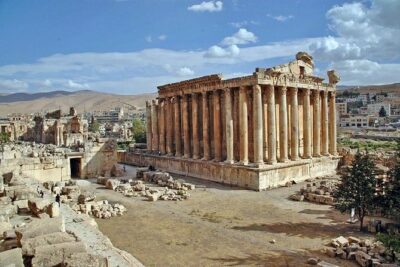
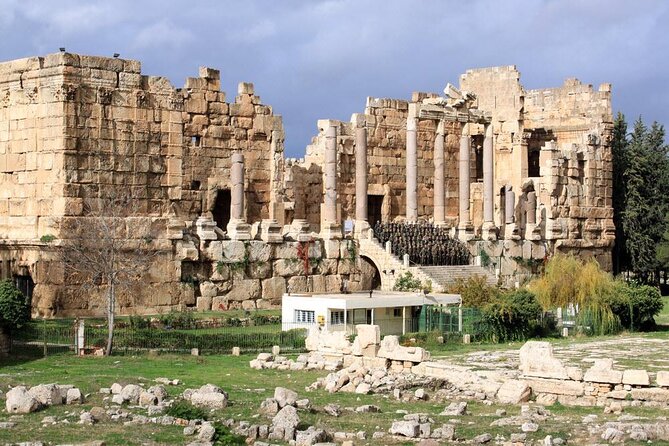
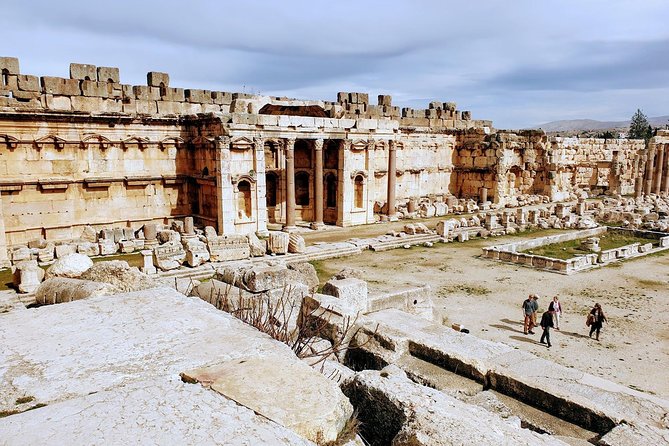
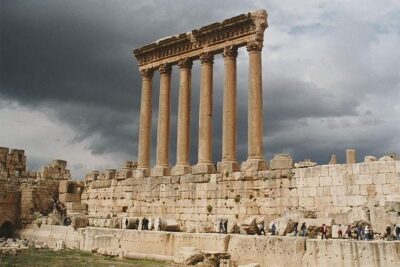
Baalbek is the major historical centerpiece, and the schedule allows about 90 minutes at the temple complex. That is a useful amount of time for a guided introduction and close views of the principal ruins, though the site is large enough that you may wish for even longer.
The complex sits at the foot of the Anti-Lebanon range beside the fertile Bekaa plain, at an altitude of about 1,150 meters. The location matters. Baalbek was not built as an isolated monument. It developed into a major sanctuary connected with the surrounding plain and mountain routes.
The city reached its peak during the Roman period. Its enormous structures were built over more than two centuries and became one of the best-known sanctuaries in the Roman world. The scale can be difficult to grasp from photographs. Once you are near the massive columns and stone platforms, the amount of labor becomes the story.
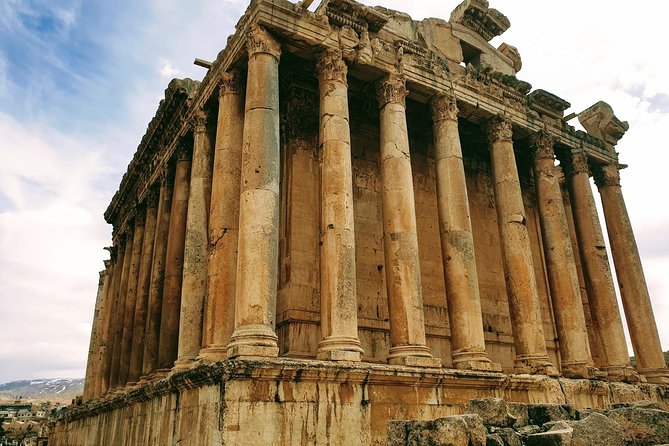
The sanctuary honored three deities known as the Romanized Triad of Heliopolis: Jupiter, Venus, and Bacchus. The worship was connected to an older Phoenician religious tradition, showing how Roman power adapted existing local beliefs instead of simply wiping them away.
Your Baalbek guide is included, and that is important. A site of this size can otherwise become a parade of impressive stones without a clear explanation of what you are seeing. The guide can help separate the temple areas, explain the religious setting, and point out the engineering that makes the ruins remarkable.
Baalbek admission is not included in the tour price. Plan for that separate cost, and confirm the current entrance fee when booking or before departure. This is the one major admission expense identified for the day.
The 90-minute visit is also where the schedule may feel most compressed. If Roman architecture is your main interest, you may want more time than the standard plan provides. On the other hand, the long drive back to Beirut and the earlier mountain stops make a nine-hour day difficult to extend without changing the schedule.
The Stone of the Pregnant Woman
The final listed stop is the Stone of the Pregnant Woman, a worked Roman monolith near Baalbek. You have about 15 minutes here.
The name is memorable, but the engineering is the real subject. This huge block, along with another nearby stone, is among the largest monoliths ever quarried. The stones were apparently intended for the nearby Roman temple complex, where their size reflects a form of construction on an almost absurd scale.
Fifteen minutes is enough for photographs and a short explanation. It is not enough for a long archaeological visit, and it does not need to be. The stop works as a quick add-on to Baalbek, showing the raw building material behind the finished temples.
I find this kind of brief stop useful when it has a clear purpose. Here, you get a physical sense of how ambitious the Baalbek builders were. The temple ruins show the finished work. The monolith shows the challenge before the stone was even placed.
Transport, timing, and the value of $150
At $150 per person, this tour is not a budget bus outing. It is a private full-day service with hotel pickup and drop-off, an air-conditioned vehicle, private transportation, a tour leader, and a guide in Baalbek.
The value depends heavily on your group size and priorities. If you are traveling with several people and want a private vehicle, the price may compare well with arranging separate transport and guides. Group discounts are available, which may improve the cost for larger parties.
You are also paying for convenience. Reaching Qadisha, Bcharre, the cedar grove, and Baalbek independently would require careful transport planning. The route crosses different parts of the country, and the return to Beirut makes driving a central part of the day.
You should remember that lunch is not included. The schedule gives you no clearly stated lunch stop, so ask the provider how the meal break is handled before departure. At minimum, carry water and a few snacks unless you have confirmed where food will fit into the day.
The available feedback praises safe driving through chaotic Lebanese traffic and patience with photographs. Those comments highlight the real service value of this tour. A driver who handles the roads well and does not hurry every photo stop can make a major difference on a long day.
Who should book this private day trip?
I would recommend this tour to you if you want to cover several of Lebanon’s major sights in one organized outing from Beirut. It suits first-time visitors who prefer a guide and private transport, couples who want some control over the pace, and families who value hotel pickup and a vehicle reserved for their group.
It is also a strong fit if you care about contrasts. You move from Christian monastic sites to a mountain town, from an ancient cedar grove to Roman temples. Each stop has a different subject, so the day does not rely on one attraction carrying the entire experience.
You may want another option if you prefer slow travel. The 30-minute visits to Qadisha Valley and Bcharre are introductory. The 15-minute Stone of the Pregnant Woman stop is quick by design. Baalbek receives the most time, but even 90 minutes can feel short for a major archaeological complex.
The tour is not designed around lunch, hiking, or a long museum visit. It is a sightseeing route with a strong historical and cultural focus. Comfortable shoes, water, and a willingness to spend much of the day in the vehicle will help.
Final booking advice
Book this tour if you want a private, well-organized way to connect Qadisha Valley, Bcharre, the Cedars of God, and Baalbek from Beirut in one day. The route offers excellent variety, and the included transport and guiding remove much of the planning burden.
Before paying, confirm the Baalbek entrance fee, ask how lunch fits into the schedule, and check whether your group qualifies for a discount. If you want long walks in Qadisha or a detailed visit to the Khalil Jubran Museum, this itinerary is too tight. If your goal is to see Lebanon’s major northern and eastern highlights with a patient private driver, it is a sensible choice.
Free cancellation is available if you cancel at least 24 hours before the 8:30 am start time. Inside that window, the payment is not refunded and changes are not accepted.
FAQ
Where does the tour begin?
The tour begins with hotel pickup in Beirut. The scheduled start time is 8:30 am.
How long does the tour last?
The tour lasts approximately nine hours.
Is this a private tour?
Yes. Only your own group participates in the private activity.
Is hotel pickup included?
Yes. Hotel pickup and drop-off are included.
What type of transportation is provided?
The tour provides private transportation in an air-conditioned vehicle.
Is a guide included at Baalbek?
Yes. A guide in Baalbek is included, along with a tour leader.
Is lunch included?
No. Lunch is not included in the tour price.
Is admission to Baalbek included?
No. Admission to the Temples of Baalbek is not included.
How much does the tour cost?
The listed price is $150 per person. Group discounts are offered.
Can the tour be canceled for a full refund?
Yes. You can receive a full refund if you cancel at least 24 hours before the experience begins. Cancellations or changes made less than 24 hours before the start time are not refunded or accepted.
Just added in Beirut
- Private Guided Tour of Beiteddine and Deir el Qamar★ 5.0 · 2 reviews
- Unveiling the Charms of Chouf Cedars, Baalbek Temples & Ksara★ 5.0 · 1 review
- Discover Lebanon: Private Tour to Jeita Grotto, Harissa & Byblos★ 5.0 · 1 review
- Exploring Lebanon’s: Journey to Beit elDin, Deir ElQamar & Cedars★ 5.0 · 2 reviews
- Discovering Lebanon’s Charms: A Private Tour to Tripoli & Batroun★ 5.0 · 1 review
- Private Wine Tasting Day Tour from Beirut★ 5.0 · 1 review
- Baalbek, Anjar & Ksara: Private Tour Through Lebanon’s Treasures★ 5.0 · 2 reviews
- Exploring History & Viticulture: Private Tour to Baalbek & Ksara★ 5.0 · 1 review
Baalbek Anjar and Ksara Day Trips
Anjar, Baalbek & Ksara Day Trip – With Lunch (4G on Board)
Read our review →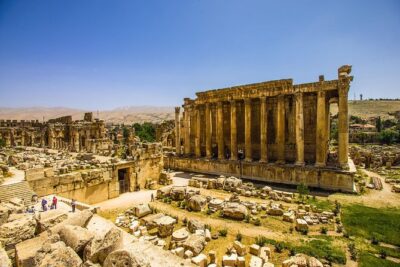
Private Anjar and Baalbek Tour from Beirut with Departure Ticket
Read our review →
Guided Private Full Day Tour to Baalbek, Anjar and Chateau Ksara
Read our review →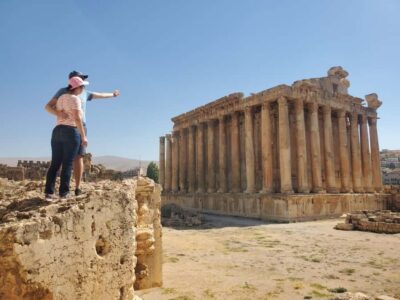
Baalbek Temples & Ksara Caves w/pick-up,guide, entries+lunch
Read our review →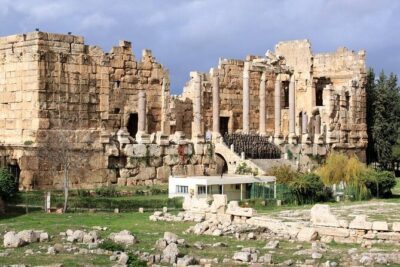
Small Group Tours to Baalbek, Anjar & Chateau Ksara with lunch and Tickets
Read our review →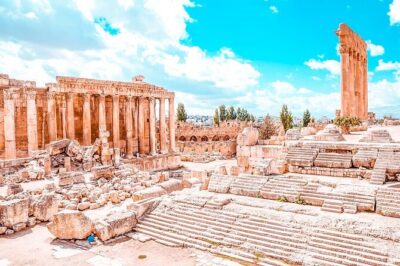
Private Tour: Anjar, Baalbek and Ksara Day Trip from Beirut
Read our review →