REVIEW · QADISHA VALLEY AND THE CEDARS OF GOD
Small-Group Tour with Lunch to Qadisha Valley, Bcharre and Cedars
Mountain air, ancient cedars, and monastery views. This full-day trip from Beirut takes you into Mount Lebanon for a good mix of scenery, culture, and religious history. I especially like the small group of no more than 15 people and the fact that lunch, entrance fees, transport, and city-center pickup are all included.
I also like the range of stops: you move from the dramatic Qadisha Valley to Bcharre’s Gibran Museum, then to the Cedars of God and the Maronite Monastery of Saint Anthony the Great. The main drawback is the long day, about eight hours, with only short visits at several stops. If you want a slow hike or long museum session, this tour may feel brisk.
In This Review
- Key points to know before booking
- Why leave Beirut for Qadisha Valley?
- Bcharre, a mountain town with two very different identities
- Inside the Gibran Museum
- The Cedars of God and Lebanon’s national symbol
- Saint Anthony the Great at 950 meters
- Lunch included, and why the $60 price matters
- Transport, pickup, and group size
- What the guide adds to the day
- Who should book this Mount Lebanon day trip?
- Should you book it?
- FAQ
- How long is the Qadisha Valley, Bcharre, and Cedars tour?
- Is hotel pickup included?
- What is included in the $60 price?
- How large is the tour group?
- How much time is spent at each main stop?
- Can I cancel for a full refund?
Key points to know before booking
- Qadisha Valley offers the day’s most striking scenery, with caves, monasteries, and cultivated terraces tied to early Christian monastic life.
- The Gibran Museum contains 440 original paintings and drawings, along with personal belongings, furniture, manuscripts, and the artist’s tomb.
- The Cedars of God preserve 375 trees, a rare surviving section of Lebanon’s ancient cedar forests.
- Lunch and admission fees are included, which makes the $60 price easier to judge as an all-in day out.
- Pickup and drop-off cover Beirut city center, with departure at 8:30 am in an air-conditioned vehicle.
- The itinerary is compact rather than leisurely, giving you a broad introduction to the region in one day.
Why leave Beirut for Qadisha Valley?
Beirut is a useful base, but Lebanon’s character changes quickly once you head toward Mount Lebanon. The city gives you food, museums, and urban energy. Qadisha gives you cliffs, wooded slopes, old monastic sites, and villages shaped by centuries of mountain life.
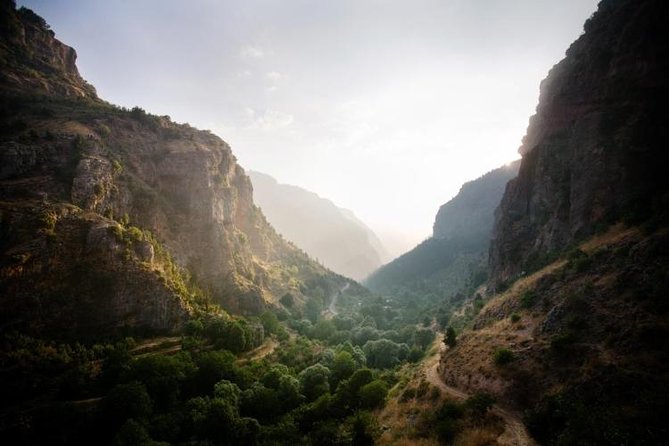
The Qadisha Valley is not just a pretty drive. Its caves, monasteries, and cultivated terraces are linked to an early phase of Christianity, when hermits and religious communities used the remote valley as a place of worship and retreat. The rugged setting helps explain why the area became important: the terrain offered privacy, shelter, and a natural barrier from the outside world.
I like that the tour does not reduce the valley to a photo stop. You also visit Bcharre, the Gibran Museum, the Cedars of God, and Saint Anthony’s Monastery. Together, these stops give you several ways to understand northern Mount Lebanon: religious, artistic, environmental, and local.
The tour begins at 8:30 am and lasts about eight hours. That makes it a full day, not a quick half-day escape. You should keep your schedule light that evening, especially if you prefer time to pause at viewpoints or take your time in museums.
More of the Qadisha Valley and the Cedars:
- Guided Small-Group Tour to Qadisha, Bcharee & Cedars with Lunch
★ 5.0 · 39 reviews - Cedars of Lebanon, Qozhaya, & Bcharre – With Lunch (4G on Board)
★ 4.5 · 34 reviews - Cedars, Bsharre & Kozhaya Day Tour
★ 5.0 · 15 reviews
Bcharre, a mountain town with two very different identities
Bcharre is known as the town of the Cedars of God, but its cultural importance goes beyond the forest. It is the birthplace of Khalil Jubran, the poet, painter, and sculptor honored at the Gibran Museum. The town is also sometimes called the city of churches, with about 37 churches.
That combination gives Bcharre a strong sense of place. You are not simply passing through a mountain settlement on the way to the cedars. The town connects Lebanon’s Christian heritage with one of its best-known artistic figures.
The scheduled time in Bcharre is about 30 minutes, separate from the museum visit. That is enough to get your bearings and see the town’s setting, but not enough for a long independent wander. I would treat this stop as an introduction rather than a full town tour.
Bcharre also has a place in Lebanon’s skiing story. It is home to the Cedars Ski Resort and Lebanon’s first ski lift, built in 1953. That detail adds another layer to the town. The same high mountain setting that sheltered monasteries and preserved cedar trees also made Bcharre an early center for winter sports.
Inside the Gibran Museum
The Gibran Museum occupies the former Monastery of Mar Sarkis in Bcharre. It is dedicated to the Lebanese writer, philosopher, and artist Kahlil Gibran, and the building itself adds a religious and historical setting to the collection.
The museum holds 440 original paintings and drawings. You can also see Gibran’s tomb, furniture and belongings from his studio in New York City, and private manuscripts.
I like this stop because it provides more than a name and a birthplace. A visit to a person’s hometown can easily become a quick plaque-reading exercise. Here, the original works and personal objects give you a clearer sense of the artist’s working life and public legacy.
The visit is planned for around 30 minutes. That timing is useful if you want a focused introduction, but it may feel short if you are drawn to the paintings or want to read every manuscript detail. If art is your main reason for booking, keep your expectations realistic. This is one part of a broad day, not a dedicated museum tour.
Still, the museum is one of the tour’s strongest cultural stops. The valley supplies the scenery, while the museum gives the day a human voice through Gibran’s art, writing, and belongings.
The Cedars of God and Lebanon’s national symbol
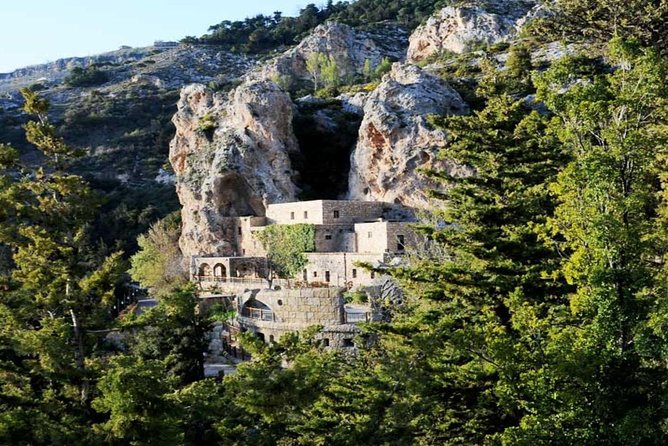
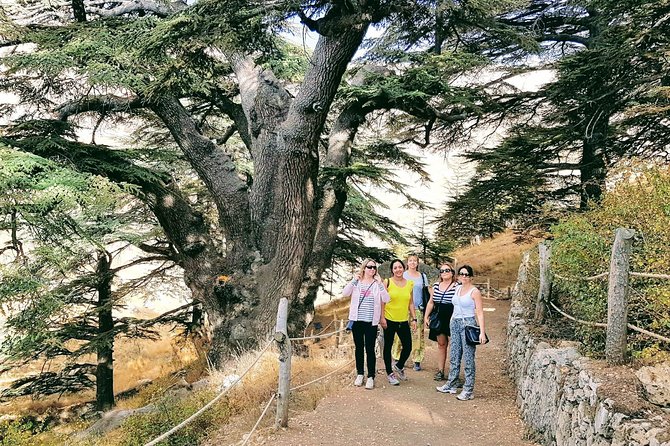
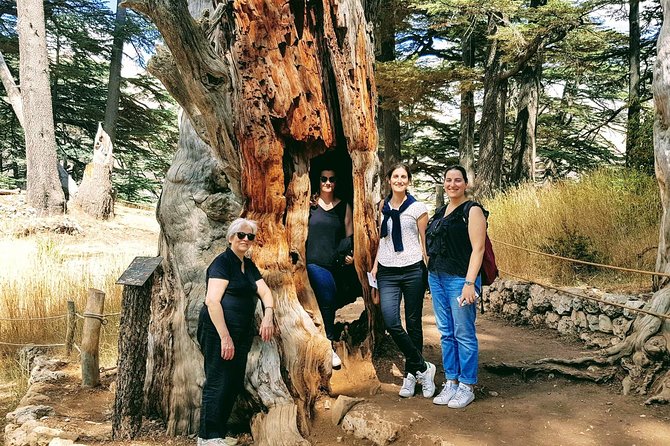
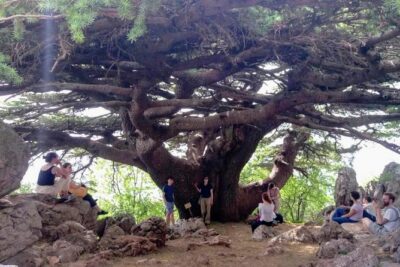
The Cedars of God preserve 375 trees and represent one of the last remaining sections of Lebanon’s ancient cedar forests. Cedar is the country’s national symbol and appears on the Lebanese flag, so this stop carries meaning beyond its appearance.
The trees were highly valued in ancient times as construction material for important religious buildings. The cedar is also cited 103 times in the Bible, linking the forest to the religious history that runs through the Qadisha Valley.
The scheduled visit lasts about 45 minutes, making it the longest stop of the day. That gives you more room to appreciate the forest than the short town and museum visits allow. You can expect the focus here to be on the trees and the preserved woodland setting, rather than on a demanding hike.
The forest is also a good reminder that Lebanon’s cedar heritage is limited. The Cedars of God are not simply a large, untouched forest stretching across the mountains. They are a preserved remnant of much older woods, which makes the site especially important.
I would pay attention to the contrast between the ancient role of the cedar and its modern role as a national emblem. You see the trees as living plants, but you also see why they carry such weight in Lebanese identity.
A completely different kind of day out:
- Guided Small-Group Tour to Baalbek, Anjar and Ksara with Lunch
★ 5.0 · 511 reviews - Guided Small-Group Tour to Jeita, Harissa, Byblos with Lunch
★ 5.0 · 361 reviews - Paragliding Trip Over Lebanon – Jounieh Bay
★ 5.0 · 257 reviews - Jeita Grotto,Harissa&Byblos Full-Day PRIVATE-CAR Trip from Beirut
★ 5.0 · 222 reviews
Saint Anthony the Great at 950 meters
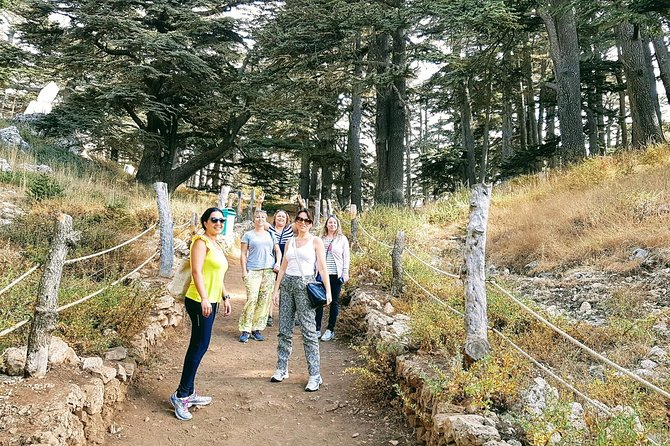
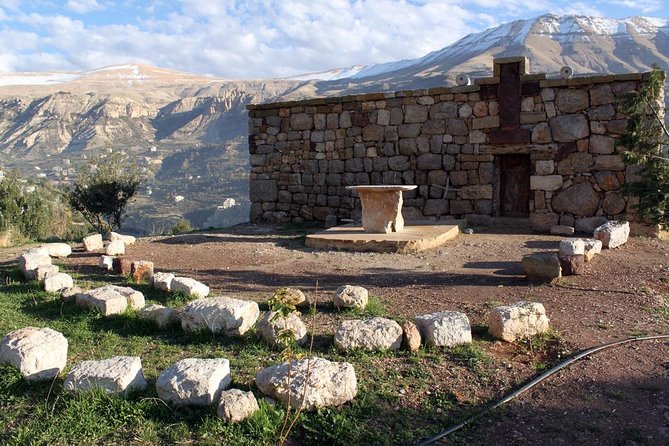
The Maronite Monastery of Saint Anthony the Great sits at about 950 meters above sea level in the Valley of Qozhaya. Pine and oak trees cover the surrounding hills, while fruit trees grow through the valley. Qozhaya extends toward the Valley of Qannubin, forming part of the wider Qadisha Valley.
The monastery is linked to the tradition of eremitic life, meaning the search for holiness through solitude and retreat. Historians and scholars believe the monastery began to be built and occupied by hermits in the early fourth century. It was looted, burned, and destroyed several times, yet remains from the seventh century still survive.
The scheduled visit lasts about 30 minutes. That is enough to see the setting and receive background from the guide, but you should not expect an extended religious study or a long walk through every corner.
The site’s value comes from its setting as much as its age. You look across a wooded mountain valley and then consider that hermits were using this remote area many centuries ago. It is a simple but powerful connection between the physical surroundings and the history of faith in Lebanon.
The tour information says the monastery offers panoramic views. Those views are one of the reasons this stop works well late in the itinerary. After the museum and cedar forest, the monastery brings the day back to the wider Qadisha setting.
Lunch included, and why the $60 price matters
At $60 per person, this tour is priced as a practical full-day package rather than a bare transport service. You receive an air-conditioned vehicle, an English-speaking driver, professional guides, hotel pickup and drop-off, admission to the listed sites, and lunch.
The included meal matters. A day in the mountains can become more expensive when you add restaurant costs and entrance tickets, so having those charges covered makes the price easier to understand. The promise is an authentic Lebanese lunch, just like the locals do, though the supplied details do not specify the restaurant, menu, or dietary choices.
You also avoid the work of arranging transport between Beirut, Bcharre, the forest, and the monastery. For a first visit to Lebanon, that convenience has real value. The route combines several locations that are easier to handle together than independently in a single day.
The trade-off is control. A small-group schedule means you follow the set route and timing. You will not be able to spend an extra hour in the Gibran Museum or linger indefinitely among the cedars. If your priority is efficiency and variety, that is a fair exchange. If your priority is solitude and a flexible pace, a private arrangement would suit you better, though the price would likely differ.
Transport, pickup, and group size
Pickup and drop-off are offered from any location within Beirut’s city center. The advertised departure is 8:30 am, so you should be ready before then and confirm the exact pickup details at booking.
The air-conditioned vehicle is a practical feature, not just a comfort bonus. This is a long mountain day with several transfers, and a cool vehicle gives you a place to rest between stops. Comfortable transportation also matters if you are visiting Lebanon without renting a car.
The maximum group size is 15 people. That is small enough for the guide to provide background without the feel of a large coach outing. It also keeps the day moving more easily at museum entrances and viewpoint stops.
The tour is described as suitable for most people. No special hiking requirement is listed, but the itinerary includes mountain sites and historic religious buildings. If you have mobility concerns, ask the operator for current details before booking, since the supplied information does not explain surfaces, steps, or vehicle access.
What the guide adds to the day
The tour includes an English-speaking driver and professional guides. That matters most at Qadisha Valley and Saint Anthony’s Monastery, where the significance of caves, monasteries, and hermit life is not always obvious from the scenery alone.
The available feedback points to good background on the sights, friendly treatment, clear explanations, and comfortable transport. One Spanish-language comment especially praises the kindness, explanations, and ease of the ride. Those details suggest that the human side of the tour is a major part of its appeal.
There is no guide name provided, so you cannot choose a particular guide in advance. Still, the high overall rating of 4.9 from 12 ratings, with 100 percent recommending the experience, supports the idea that the guiding and organization are generally strong.
One rating called it a good trip while noting that Qadisha Valley was beautiful and the guide gave useful context. That is a fair description of the tour’s role: it offers a well-rounded introduction rather than an intense expedition.
Who should book this Mount Lebanon day trip?
I would recommend this tour if you are staying in Beirut and want to see a major mountain region without arranging a car, driver, meals, and entry tickets yourself. It is particularly suited to first-time visitors who want a clear overview of Qadisha Valley, Bcharre, the cedar forest, and Gibran’s connection to the area.
It also fits you if you value variety. In one day, you see a town, a museum, a protected forest, and a monastery. The scenery changes often enough to keep the schedule interesting.
The tour is less suitable if you want a strenuous walk, a quiet retreat, or long unplanned stops. The itinerary gives you 30 minutes in Bcharre, 30 minutes at the museum, 45 minutes at the Cedars of God, and 30 minutes at the monastery. The rest of the day is taken up by transport and lunch.
The experience is also a good match if you want costs kept clear. Lunch and admission tickets are included, and free cancellation is available when you cancel at least 24 hours before the start time. Changes or cancellations made inside that window are not accepted for a refund.
Should you book it?
Book this tour if you want the most convenient way to reach Qadisha Valley and northern Mount Lebanon from Beirut in one day. The strongest reasons are the included lunch and entrances, the small group, the air-conditioned vehicle, and the unusually broad mix of nature, art, and religious sites.
The best moment may be the Qadisha Valley itself, but the day works because each stop adds something different. The Gibran Museum gives the mountains a cultural figure, the Cedars of God connects you with Lebanon’s national symbol, and Saint Anthony’s Monastery supplies a powerful link to early Christian life.
Skip it only if you need a very slow pace or want a full day devoted to hiking or art. For a compact, good-value introduction to Mount Lebanon from Beirut, I would book it.
FAQ
How long is the Qadisha Valley, Bcharre, and Cedars tour?
The tour lasts about eight hours, with pickup beginning at 8:30 am.
Is hotel pickup included?
Yes. Pickup and drop-off are included from locations within Beirut’s city center.
What is included in the $60 price?
The price includes lunch, an air-conditioned vehicle, professional guides, an English-speaking driver, transportation, hotel pickup and drop-off, and admission to the listed sites.
How large is the tour group?
The tour has a maximum of 15 travelers.
How much time is spent at each main stop?
The schedule allows about 30 minutes in Bcharre, 30 minutes at the Gibran Museum, 45 minutes at the Cedars of God, and 30 minutes at the Monastery of Saint Anthony the Great.
Can I cancel for a full refund?
Yes. You can cancel at least 24 hours before the experience start time for a full refund. Cancellations or changes made less than 24 hours before the start time are not accepted for a refund.
Just added in Beirut
- Wine Tasting Tour★ 5.0 · 2 reviews
- Lebanon tours vip jeitta byblos beirut we charge per vechile not per person.★ 5.0 · 1 review
- Lebanon’s Treasures: Jeita Grotto and Harissa Private Tour★ 5.0 · 2 reviews
- Small Group Tour to Baalbek, Anjar & Ksara with Hotel pickup★ 5.0 · 2 reviews
- Journey Through Time: A Private Tour of Tripoli and Byblos★ 5.0 · 1 review
- Guided Small-Group Tour to Baalbek, Cedars & Qozhaya with Lunch★ 5.0 · 2 reviews
- Small-Group Tour with Lunch to Sidon, Tyre & Maghdouche★ 5.0 · 2 reviews
- Small-Group Tour Qadisha Valley, Becharre and Cedars with Lunch and Tickets★ 5.0 · 1 review
Qadisha Valley and the Cedars of God
Guided Small-Group Tour to Qadisha, Bcharee & Cedars with Lunch
Read our review →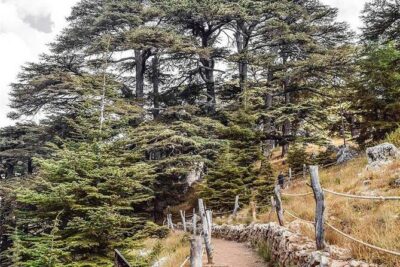
Cedars of Lebanon, Qozhaya, & Bcharre – With Lunch (4G on Board)
Read our review →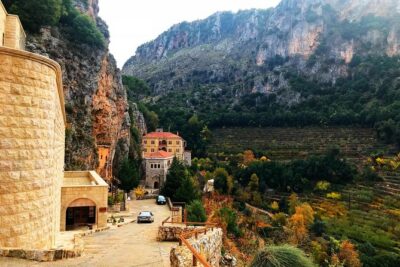
Cedars Shouf & Beiteddine w/pick-up, guide, entries+lunch
Read our review →
Guided small group to Cedars Reserve & Beiteddine w/lunch+entries
Read our review →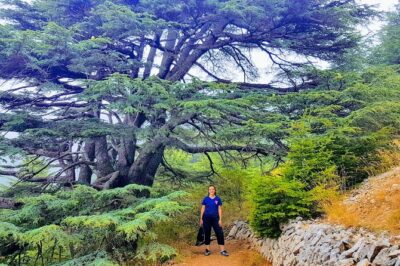
Guided Full-Day Private Trip to Cedars, Baalbek and Chateau Ksara
Read our review →
Small Group Tours to Qadisha Valley, Bcharre and Cedars with lunch and all fees
Read our review →