REVIEW · BAALBEK ANJAR AND KSARA DAY TRIPS
Guided Small-Group Tour to Baalbek, Cedars & Qozhaya with Lunch
Ancient stones, sacred valleys, and cedar trees fill one long day. This Beirut outing links three very different parts of Lebanon: the Cedars of God near Bcharre, the Monastery of Qozhaya in the Qadisha Valley, and the huge Roman temples of Baalbek. I like the hotel pickup and drop-off, which removes a lot of transport planning, and I like that lunch and entrance fees are included rather than added one by one.
The main drawback is the amount of ground covered. You spend about eight to nine hours on the road and only about 30 minutes at the cedars and Qozhaya. Baalbek receives the most attention, but this is still a brisk day with several major stops, not a slow mountain retreat.
In This Review
- At a glance
- Why this day trip works from Beirut
- The Qadisha Valley sets the tone
- Bcharre and the Cedars of God
- A short visit to Deir Qozhaya
- Lunch brings a welcome pause
- Baalbek: Lebanon’s great Roman showpiece
- The Temple Complex and the Stone of the Pregnant Woman
- A glimpse of Sayyida Khawla Mosque
- Transport, group size, and the pace of the day
- What the $150 price really covers
- Who should book this experience?
- Final verdict: a strong full-day introduction
- FAQ
- What is the tour’s starting time?
- How long does the tour last?
- Is hotel pickup included?
- How many people can join the tour?
- Is lunch included?
- Are entrance fees included?
- Can I cancel for a full refund?
At a glance
- Three very different sides of Lebanon: sacred Qadisha Valley, the country’s famous cedar grove, and Imperial Roman ruins.
- Baalbek gets the main visit: allow about 90 minutes for the temple complex and its monumental remains.
- Lunch is included: the meal gives you a chance to taste Lebanese food without arranging another stop.
- Maximum group size is 15: smaller than a standard coach tour, though not the same as a private outing.
- Round-trip Beirut transport: an air-conditioned vehicle collects you at your hotel and returns you there.
- A full mountain and Bekaa Valley day: the route is rewarding, but you should be ready for a long schedule.
Why this day trip works from Beirut
Lebanon packs strikingly different sights into a small area, but getting between them is not always simple. This tour solves that problem with a full-day route from Beirut, beginning at 8:30 am and covering the northern mountains before reaching Baalbek in the Bekaa region.
I see the appeal for anyone who wants the major highlights without hiring a car or piecing together several rides. You get a tour leader, a local guide at Baalbek, an air-conditioned vehicle, entrance fees, and lunch in one price of $150 per person.
That price is not bargain transport. It becomes more reasonable when you add the distance, the included meal, the historical admissions, and the convenience of hotel transfers. If you would otherwise pay separately for a driver, guide, tickets, and food, the package has solid value.
Still, you should set your expectations correctly. Small group does not mean a quiet private tour. With a maximum of 15 people, the group is manageable, but one personal account described the outing as very big. I would think of it as a compact group tour with a fuller atmosphere, not a private cultural guide.
More Baalbek and Bekaa day trips:
- Guided Small-Group Tour to Baalbek, Anjar and Ksara with Lunch
★ 5.0 · 511 reviews - Anjar, Baalbek & Ksara Day Trip – With Lunch (4G on Board)
★ 4.5 · 181 reviews - Baalbek – Anjar – Ksara Trip From Beirut
★ 4.5 · 80 reviews
The Qadisha Valley sets the tone
The first major setting is the Qadisha Valley, an area linked with some of the earliest Christian monastic settlements in the world. Its caves, monasteries, and old cultivated terraces are scattered through steep, rugged country.
The tour information treats the valley as a broad area rather than a single timed attraction. You should therefore expect to see and pass through the valley as part of the route, with the Monastery of Qozhaya serving as the focused stop. That distinction matters. This is not a full walking tour of every monastery and cave.
Qadisha is valuable because it gives the day a sense of place before the Roman ruins arrive. Baalbek is grand and built for public spectacle. Qadisha is quieter in spirit, shaped by hermits, religious life, and mountain isolation. The contrast makes the itinerary stronger than a simple ruins excursion.
Bcharre and the Cedars of God
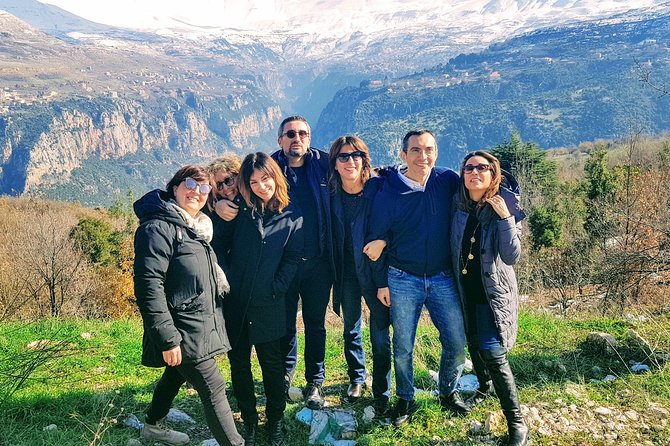
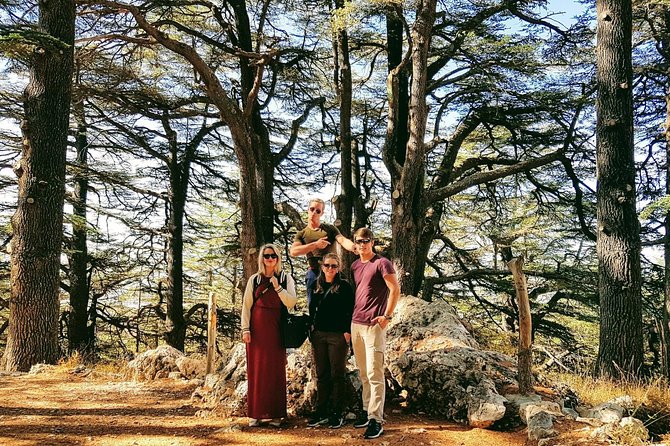
Near the town of Bcharre, you stop at the Cedars of God for about 30 minutes. The grove contains 375 trees and represents one of the last surviving pieces of Lebanon’s old cedar forests.
The cedar is more than a pleasant woodland stop. It is Lebanon’s national symbol and appears on the country’s flag. In ancient times, cedar wood was prized for major construction projects and religious buildings, and the tree is cited 103 times in the Bible.
Thirty minutes is enough for a short walk, photographs, and a look at the oldest trees. It is not enough for a long forest outing, so keep your expectations modest. This stop works best as a concentrated encounter with a national symbol rather than a hiking excursion.
Bcharre itself adds useful context. The town is known as the home of the preserved cedars, and it is also the birthplace of Khalil Gibran, the Lebanese poet, painter, and sculptor. His museum is in town, but it is not listed as a scheduled stop, so you should not assume there will be time to visit it.
The town is also associated with Lebanon’s oldest skiing area and the country’s first ski lift, built in 1953. Bcharre is sometimes called the city of churches because it has about 37 churches. These details help you see the area as a living mountain community, not just a waypoint beside a famous grove.
A short visit to Deir Qozhaya
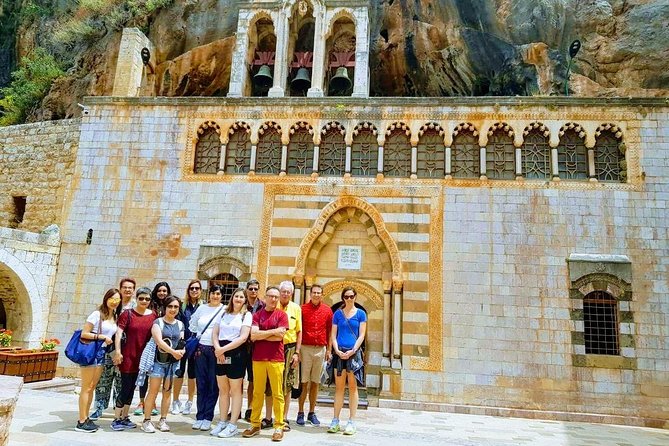
The Monastery of Saint Anthony the Great, also called Deir Qozhaya, sits at about 950 meters above sea level in the Qozhaya Valley. You have about 30 minutes here.
Pine and oak trees cover the surrounding hills, while fruit trees grow along the valley. The setting connects with the wider Qadisha Valley and its long tradition of hermit life. Historians place the monastery’s beginnings in the early fourth century, although parts of what remains date from the seventh century.
The monastery has endured repeated looting, fires, and destruction. That history gives the visit weight, but the short stop limits how much you can take in. I would use the time to appreciate the setting and the age of the religious site rather than expect an extended architectural tour.
The word brief is important here. If monasteries are your main reason for visiting northern Lebanon, you would need a slower, more specialized itinerary. On this trip, Qozhaya is one piece of a much larger day.
More of the Qadisha Valley and the Cedars:
- Guided Small-Group Tour to Qadisha, Bcharee & Cedars with Lunch
★ 5.0 · 39 reviews - Cedars of Lebanon, Qozhaya, & Bcharre – With Lunch (4G on Board)
★ 4.5 · 34 reviews - Cedars, Bsharre & Kozhaya Day Tour
★ 5.0 · 15 reviews - Small-Group Tour with Lunch to Qadisha Valley, Bcharre and Cedars
★ 5.0 · 12 reviews
Lunch brings a welcome pause
A Lebanese restaurant lunch is included. The supplied details do not specify the restaurant or exact dishes, but the meal is presented as fresh, authentic Lebanese food.
That inclusion matters on a tightly timed day. You do not need to search for a restaurant between mountain stops and Baalbek, and you can sit down for a proper meal instead of relying on snacks. One account praised the lunch along with the guide and the sites, which is a useful sign that the meal is more than a token add-on.
I would still treat lunch as part of the tour’s value, not as a separate food tour. The strongest reason to book is the complete route, with the meal making the long day easier.
Baalbek: Lebanon’s great Roman showpiece
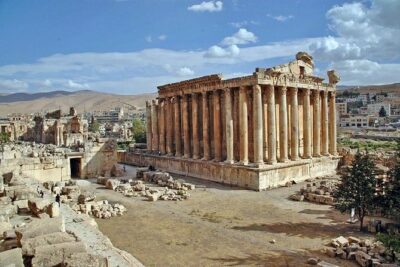
Baalbek is the centerpiece. The city was known as Heliopolis during the Hellenistic period, and its sanctuary later became one of the Roman world’s most important religious sites. It was dedicated to a Romanized version of a Phoenician religious triad: Jupiter, Venus, and Bacchus.
The scale is the main shock. Baalbek was built over more than two centuries, and its massive structures rank among the grandest surviving Roman temple ruins. The site became a UNESCO World Heritage site in 1984.
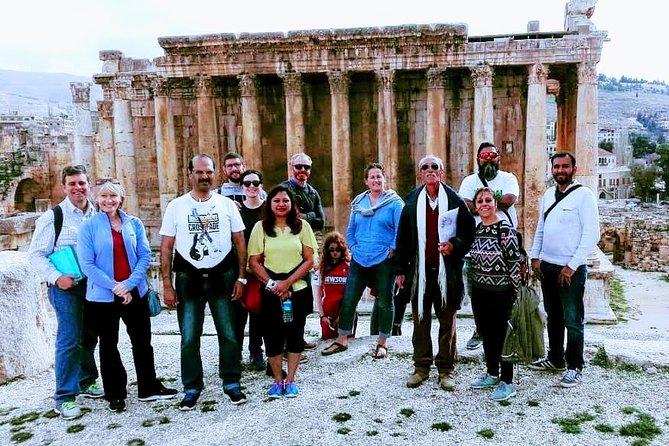
You have about 90 minutes for Baalbek and its temples. A local guide leads the visit, which is especially useful here. The stones are impressive on their own, but the scale makes more sense when someone explains how the sanctuary functioned, which gods were honored, and why the Romans invested so heavily in this place.
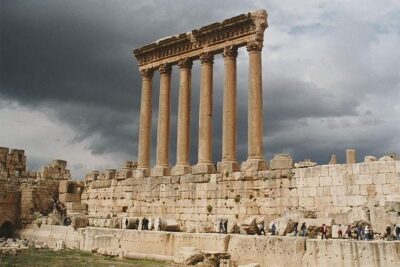
The Temple of Bacchus is one of the best-preserved Roman temples in the complex. The Temple of Jupiter is known for its enormous columns and the sheer size of the platform and masonry around it. You will also see the remains of a vast sanctuary that once drew pilgrims from across the Roman world.
The guide’s role is important because Baalbek can otherwise become a parade of giant blocks and broken columns. A friendly local guide who can connect the Phoenician roots, Hellenistic period, and Roman building program will add real value. The available account specifically praised the guide’s friendly manner and strong command of the subject, though no guide’s name is provided.
The main limitation is time. Ninety minutes gives you a solid introduction, but Baalbek deserves longer if you want to inspect every court, column, stairway, and carved detail. You will need to stay with the group and accept that some corners receive only a quick look.
The Temple Complex and the Stone of the Pregnant Woman
The scheduled visit to the Temples of Baalbek also lasts about 90 minutes, and admission is included. The duplicate timing reflects the fact that Baalbek is both the city and the archaeological complex, with the temple grounds receiving the central portion of the day.
At the complex, look closely at how the site combines religious purpose with engineering ambition. The sanctuary sits at roughly 1,150 meters above sea level, at the foot of the southwestern slope of the Anti-Lebanon range and beside the fertile Bekaa plain.
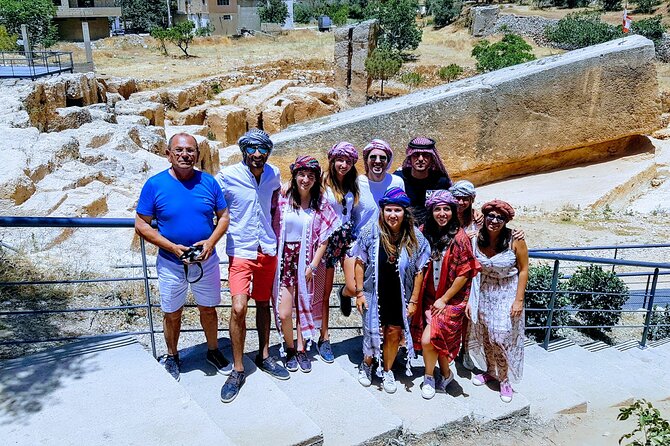
After the main temple visit, the route includes the Stone of the Pregnant Woman, a worked Roman monolith. Along with another huge block nearby, it ranks among the largest stones ever quarried. The blocks were likely intended for the temple complex, though they were never placed in the final building.
You have only about 15 minutes here. That is enough to see the stone, hear the basic explanation, and take photographs. It is not a separate archaeological visit. Think of it as a quick stop that adds a memorable engineering mystery to the larger Baalbek story.
The nickname is colorful, but the important point is the stone’s size. Ancient builders were moving blocks on a scale that still challenges the imagination. This short stop gives you a glimpse of the construction problem behind the temples.
A glimpse of Sayyida Khawla Mosque
The route also passes or briefly visits the Mosque of Sayyida Khawla in Baalbek. It is built at the site where Sayyida Khawla, the daughter of Imam al-Hussein and granddaughter of the Prophet Muhammad, is believed to have been buried.
The mosque connects Baalbek to a living religious tradition, not only to its Roman past. The story says that Khawla died when the caravan of captives from Karbala passed through Baalbek and that she was buried there.
The available schedule does not assign a separate duration to this stop. You should therefore expect a brief look rather than a lengthy mosque visit. It is a valuable reminder that Baalbek is not an empty ruin field. It remains a place of religious meaning for local people.
Transport, group size, and the pace of the day
Pickup and drop-off at your Beirut hotel are included, with an 8:30 am start. That is a practical advantage because the day reaches distant mountain and inland sites that are awkward to connect independently.
The vehicle is air-conditioned, and comfortable transport is included in the package. You will spend a good portion of the day riding, so the vehicle matters as much as the sights. The route passes through countryside, mountain valleys, Bcharre, and the Bekaa area before returning to Beirut.
A maximum of 15 people keeps the group smaller than a large coach party. You can usually expect a more organized visit than on a mass tour, but you should not expect the guide to adjust the whole schedule around individual interests.
The pace suits you if you prefer seeing several major places in one day. It is less suitable if you dislike early starts, long transfers, or fixed stop lengths. The 30-minute cedar stop and 30-minute monastery stop are efficient, but they leave little room for lingering.
What the $150 price really covers
At $150 per person, this is best judged as a bundled day trip rather than a simple ride to Baalbek. The price includes:
- Hotel pickup and return
- Air-conditioned transportation
- A tour leader
- A local guide for Baalbek
- Lunch at a Lebanese restaurant
- Entry fees for the historical sites
- A small-group setting with up to 15 people
That list removes several common costs and decisions. You do not need to arrange a separate Baalbek guide, budget for site admissions, or find lunch during a packed route.
The value is strongest for a first visit to Lebanon when you want the main sights efficiently. It is weaker for someone staying in Beirut who only wants Baalbek and would prefer to spend several hours there. In that case, the cedar grove and Qozhaya stops add interest but also reduce your time at the Roman sanctuary.
Who should book this experience?
I would recommend this tour to you if you want a broad introduction to Lebanon beyond Beirut in a single day. It is particularly good for first-time visitors who value transport, a guide, and a planned lunch more than complete freedom.
It also suits history lovers who want Roman ruins with a religious and cultural setting around them. Baalbek is the headline, but the cedar grove, Qadisha Valley, and Qozhaya monastery prevent the day from feeling one-note.
You may want another plan if your priority is hiking, extended monastery visits, or a slow look at Bcharre. The itinerary gives you a taste of each place, not a full study of any one of them.
The tour also suits people who prefer not to drive in unfamiliar conditions. Round-trip hotel transfers make the day simple from the start, and the included admissions reduce last-minute planning.
Final verdict: a strong full-day introduction
I would book this if I had one free day in Beirut and wanted to see Lebanon’s most important inland sights without arranging transport myself. The Baalbek temples are the clear highlight, while the cedars and Qozhaya add natural and religious depth.
Go in expecting a long, well-filled day, not a leisurely mountain escape. If you can accept short visits at the cedars and monastery, the $150 price gives you a practical mix of guide service, food, transport, and major historical sites.
The strongest praise is deserved by the Baalbek visit, the friendly guide, and the lunch. The only real caution is scale: even with a 15-person limit, the day may feel full and tightly timed. For a first look at Lebanon beyond Beirut, that tradeoff is fair.
FAQ
What is the tour’s starting time?
The tour starts at 8:30 am.
How long does the tour last?
The experience lasts approximately eight to nine hours.
Is hotel pickup included?
Yes. Hotel pickup and drop-off in Beirut are included.
How many people can join the tour?
The maximum group size is 15 people.
Is lunch included?
Yes. Lunch at a Lebanese restaurant is included in the price.
Are entrance fees included?
Yes. Entry and admission fees for the historical sites are included.
Can I cancel for a full refund?
Yes. You can cancel at least 24 hours before the experience starts for a full refund. Cancellations or changes made less than 24 hours before the start time are not accepted for a refund.
Just added in Beirut
- Wine Tasting Tour★ 5.0 · 2 reviews
- Lebanon tours vip jeitta byblos beirut we charge per vechile not per person.★ 5.0 · 1 review
- Lebanon’s Treasures: Jeita Grotto and Harissa Private Tour★ 5.0 · 2 reviews
- Journey Through Time: A Private Tour of Tripoli and Byblos★ 5.0 · 1 review
- Small Group Tour to Baalbek, Anjar & Ksara with Hotel pickup★ 5.0 · 2 reviews
- Small-Group Tour with Lunch to Sidon, Tyre & Maghdouche★ 5.0 · 2 reviews
- Small-Group Tour Qadisha Valley, Becharre and Cedars with Lunch and Tickets★ 5.0 · 1 review
- Small Group Tours from to Baalbek, Cedars and Qozhaya with lunch and all fees★ 5.0 · 1 review
Baalbek Anjar and Ksara Day Trips
Anjar, Baalbek & Ksara Day Trip – With Lunch (4G on Board)
Read our review →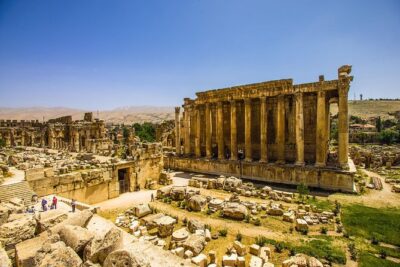
Private Anjar and Baalbek Tour from Beirut with Departure Ticket
Read our review →
Guided Private Full Day Tour to Baalbek, Anjar and Chateau Ksara
Read our review →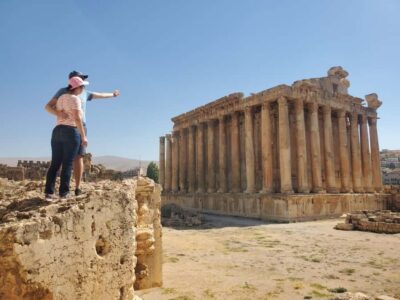
Baalbek Temples & Ksara Caves w/pick-up,guide, entries+lunch
Read our review →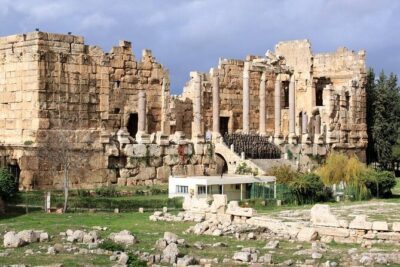
Small Group Tours to Baalbek, Anjar & Chateau Ksara with lunch and Tickets
Read our review →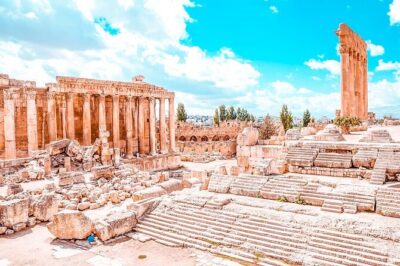
Private Tour: Anjar, Baalbek and Ksara Day Trip from Beirut
Read our review →