REVIEW · BAALBEK ANJAR AND KSARA DAY TRIPS
Guided Private Full Day Tour to Baalbek, Anjar and Chateau Ksara
Rome did not end at the Mediterranean. From Beirut, this private day trip takes you into Lebanon’s Beqaa Valley for enormous Roman temples, an Umayyad city, and wine aged in stone caves. I like the private vehicle and hotel pickup, which remove much of the day’s transport fuss, and I like the mix of archaeology and local wine at Château Ksara. The main drawback is cost control: entrance fees, wine tasting, and lunch are extra, so the $100 price is not the final bill.
This is a long but rewarding outing, lasting about eight hours. Guides such as Georgette and Albert have earned especially warm praise for their clear explanations, flexibility, and personal reflections on the sites. You get a private experience for your own group, not a busload of strangers, but the packed route leaves limited time for lingering.
In This Review
- Key points to know before you go
- Why this Beirut day trip works
- Crossing from Beirut to the Beqaa Valley
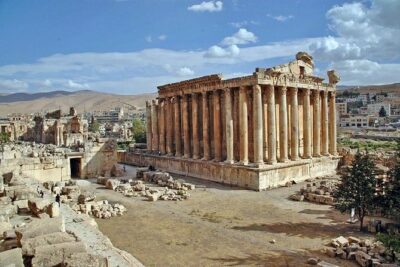
- Baalbek and the scale of Heliopolis
- The Mosque of Sayeda Khawla
- The Stone of the Pregnant Woman in 15 minutes
- Anjar, an Umayyad city in the Beqaa
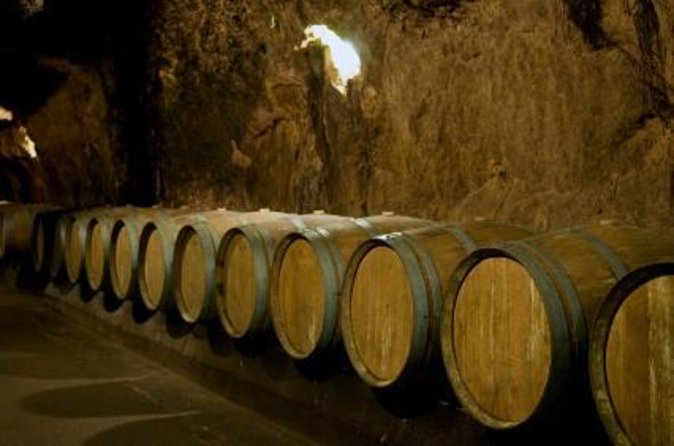
- Château Ksara and wine in a cave
- Is $100 per person a fair price?
- Who should book this experience?
- My verdict: a strong full-day choice from Beirut
- FAQ
- Where does the tour begin?
- How long does the tour last?
- Is this a private tour?
- What transportation is provided?
- Is a guide included?
- Are Baalbek admission fees included?
- Is admission to Anjar included?
- Is the Château Ksara wine tasting included?
- Is lunch included?
- Can I cancel for a full refund?
Key points to know before you go
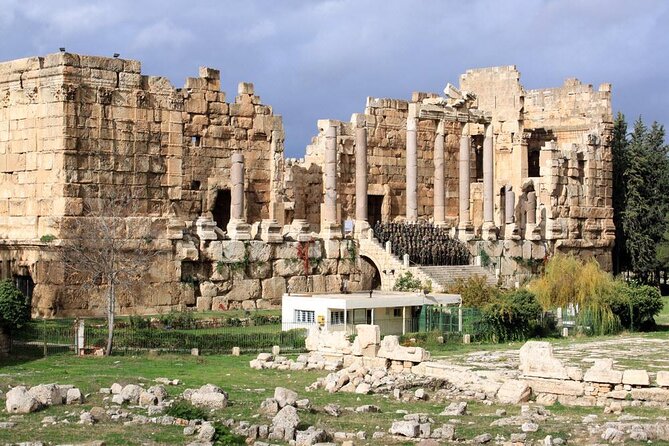
- Baalbek is the main event: The Temple of Jupiter and Temple of Bacchus make this one of Lebanon’s most powerful ancient sites.
- The Stone of the Pregnant Woman is a quick but memorable stop: This huge Roman building block offers a glimpse of the engineering challenge behind Baalbek.
- Anjar shifts the story from Rome to the Umayyads: Its palace, mosque, baths, and arcaded remains show a different period of Lebanon’s past.
- Château Ksara adds a relaxed finish: You can sample Lebanese wine in a cave, but tasting fees are not included.
- Private transport matters: Hotel pickup and drop-off from Beirut make a full day outside the city much easier.
- Budget for extras: Admission at the Baalbek temples and Anjar, wine tasting, and lunch all require separate payment.
Why this Beirut day trip works
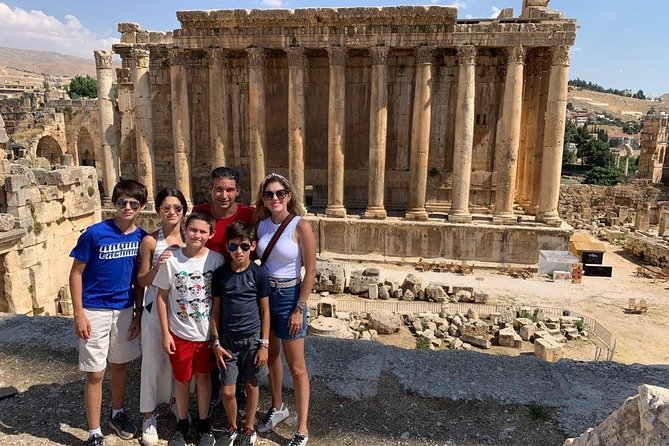
I like this tour because it joins three very different places in one day. Baalbek delivers monumental Roman architecture, Anjar explains the Umayyad period, and Château Ksara gives you a taste of modern Lebanese food and wine culture.
The route also gives you a change of pace. You spend part of the day walking among ancient stones and part of it sitting down for a wine tasting. That balance helps, since several hours of ruins can become tiring, especially under strong sun.
The private format is another real advantage. Your group travels in an air-conditioned vehicle with a tour leader and professional guide. You do not have to wait for a large coach or follow a fixed public transport schedule. If the guide is Albert, expect a flexible approach and plenty of historical context. Georgette has also been praised for her enthusiasm and clear explanations.
The tour is rated 4.9 out of 5, with a 100 percent recommendation rate from 60 ratings. That does not remove the need to check the extra costs, but it does suggest that the guiding and overall organization are usually the strongest parts of the day.
More Baalbek and Bekaa day trips:
- Guided Small-Group Tour to Baalbek, Anjar and Ksara with Lunch
★ 5.0 · 511 reviews - Anjar, Baalbek & Ksara Day Trip – With Lunch (4G on Board)
★ 4.5 · 181 reviews - Baalbek – Anjar – Ksara Trip From Beirut
★ 4.5 · 80 reviews
Crossing from Beirut to the Beqaa Valley
Your day begins with pickup at your Beirut hotel. From there, the private vehicle heads toward the Beqaa Valley, an inland plain bordered by the Lebanon and Anti-Lebanon mountain ranges.
The transfer is not just dead time. It takes you away from Beirut’s dense streets and toward a part of Lebanon shaped by farming, trade routes, religious centers, and ancient empires. The exact time spent on the road can vary, but the complete experience is planned for roughly eight hours, including the stops.
An air-conditioned vehicle is particularly useful here. You will be moving between outdoor archaeological sites, and the chance to cool off between visits makes the day more manageable. Hotel pickup and drop-off also add value for anyone who does not want to arrange a rental car or navigate the route alone.
This is still a full day, not a quick side trip. I would choose it when you have enough time in Beirut to spare one day beyond the capital. If you prefer slow visits with long meals and unplanned wandering, the schedule may feel tight.
Baalbek and the scale of Heliopolis
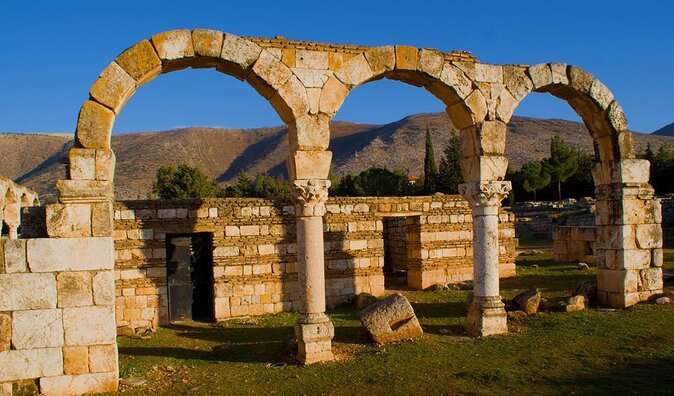
Baalbek is the heart of the tour. The ancient city was known as Heliopolis during the Hellenistic period and later became a major Roman sanctuary. Its religious life centered on a triad of deities: Jupiter, Venus, and Bacchus, shaped from an older Phoenician tradition.
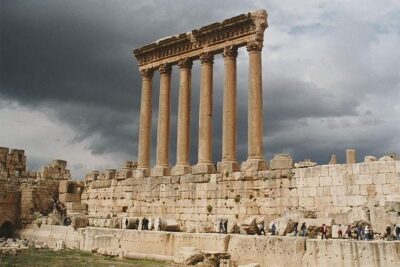
The site is listed as a UNESCO World Heritage site, and the reason becomes clear as soon as you see the scale of the remains. The Temple of Jupiter and Temple of Bacchus are not delicate fragments. They are huge, carefully built structures that show the reach and ambition of Imperial Rome.
Plan on roughly two hours around Baalbek, with another hour and a half focused on the temple complex itself. That is enough time to understand the major structures, listen to the guide, and take in the setting at the foot of the Anti-Lebanon range. It is not enough for a slow archaeological study of every stone.
The Temple of Bacchus is especially impressive for its preserved columns and carved details. The Temple of Jupiter is known for its immense scale, even though much of the original building has disappeared. Your guide can help connect the surviving blocks and columns to the sanctuary that once drew pilgrims from across the Roman world.
The phrase colossal Roman architecture is not an exaggeration here. Baalbek gives you a stronger sense of ancient construction than many sites where only foundations remain. You can see how architects used massive stone blocks to create a religious complex meant to impress both worshippers and visitors.
Admission to the temple complex is not included in the tour price. The itinerary also lists an initial Baalbek stop with no admission charge, but the main temple visit requires a separate ticket. Keep that distinction in mind when working out your day’s budget.
The Mosque of Sayeda Khawla
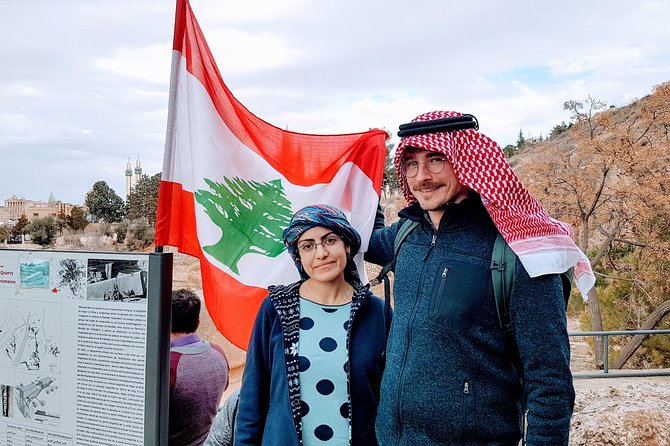
The tour also includes a stop at the Mosque of Sayeda Khawla in Baalbek. The mosque is associated with Sayyida Khawla, believed to be the daughter of Imam al-Hussein and the granddaughter of the Prophet Muhammad.
Local belief holds that she died and was buried here when a caravan of captives from Karbala passed through Baalbek. The stop adds a living religious dimension to a day otherwise dominated by Roman and Umayyad ruins.
The information provided does not give a fixed duration for this visit, so your time there may depend on the day’s pace and the guide’s plan. Treat it as a chance to see how Baalbek remains an important place of faith, not only an ancient monument.
A completely different kind of day out:
- Guided Small-Group Tour to Jeita, Harissa, Byblos with Lunch
★ 5.0 · 361 reviews - Paragliding Trip Over Lebanon – Jounieh Bay
★ 5.0 · 257 reviews - Jeita Grotto,Harissa&Byblos Full-Day PRIVATE-CAR Trip from Beirut
★ 5.0 · 222 reviews - First Paragliding Club in Lebanon – Since 1992
★ 5.0 · 193 reviews
The Stone of the Pregnant Woman in 15 minutes
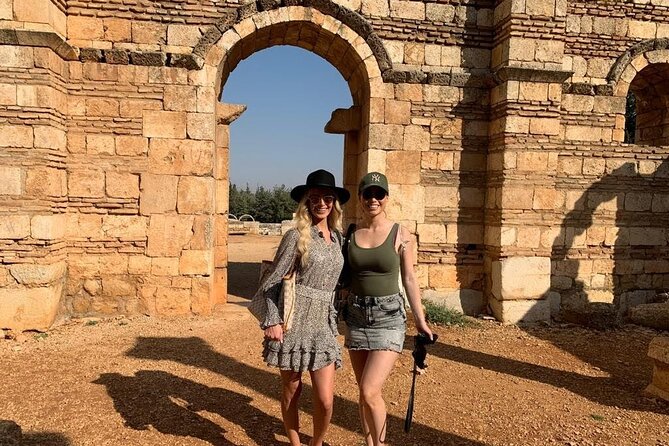
The Stone of the Pregnant Woman, also called a worked Roman monolith, is a brief stop with a striking subject. The stone is one of two enormous ancient blocks near Baalbek, both likely intended for the Roman temple complex.
The name is memorable, but the engineering is the real point. These stones reveal the sheer size of the building materials considered suitable for Baalbek. Even without spending long here, you can appreciate the difficulty of quarrying, moving, and placing a block of this scale in antiquity.
The visit lasts about 15 minutes and has no separate admission charge. That makes it a sensible addition to the route, but do not expect a full museum-style stop. You will see the monolith, hear its connection to Baalbek, and move on.
Anjar, an Umayyad city in the Beqaa
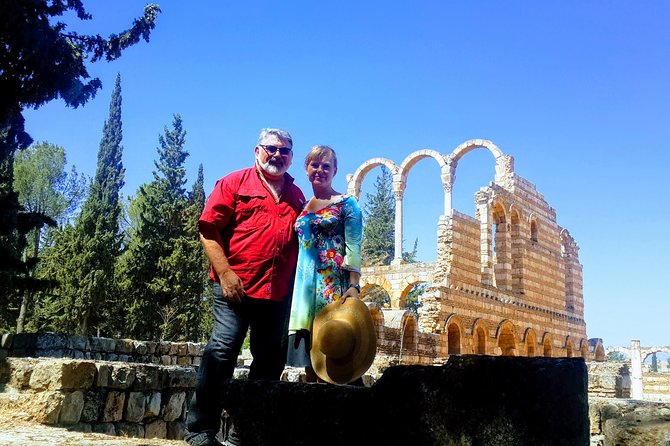
Anjar changes the historical subject. Instead of Roman temples, you encounter the remains of an inland commercial center built during the Umayyad period.
The site stood at the meeting point of important routes. One route ran from Beirut to Damascus, while another crossed the Beqaa toward Homs and Tiberiade. That location helps explain why an urban center developed here. Anjar was not simply an isolated palace complex. It was connected to trade and movement across the region.
Only in the late 1940s did archaeologists identify the ancient city. Today, the ruins include the walls of the Umayyad palace, harems, a mosque, thermal baths, the great palace of the caliph, and many pillars that show Roman architectural influence.
You have about 45 minutes at Anjar. That is enough to walk through the principal remains and understand the basic plan of the city, but it is shorter than the Baalbek visit. The guide’s explanation matters here because the site can be harder to read at a glance. At Baalbek, giant temples announce their purpose. At Anjar, you need help seeing the former city behind the walls and columns.
Admission is not included. Since this is another archaeological site with a separate ticket, ask your guide early in the day how the payments will be handled. It is a small practical point, but it keeps the schedule moving.
I would especially recommend Anjar if you want more than a Roman ruins tour. The Umayyad remains show how Lebanon’s role changed across the centuries, from a center of ancient worship to a crossroads for Islamic-era commerce and government.
Château Ksara and wine in a cave
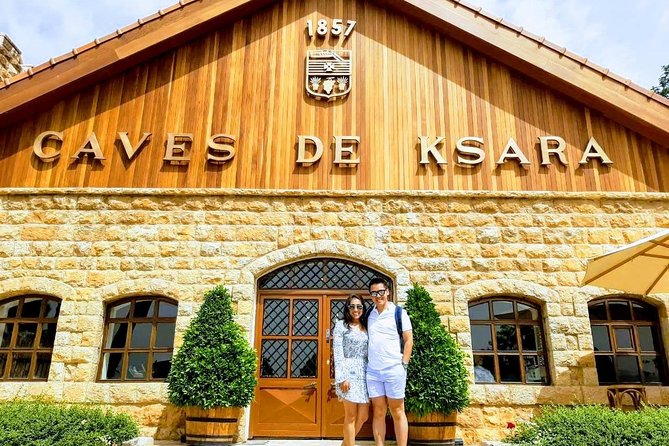
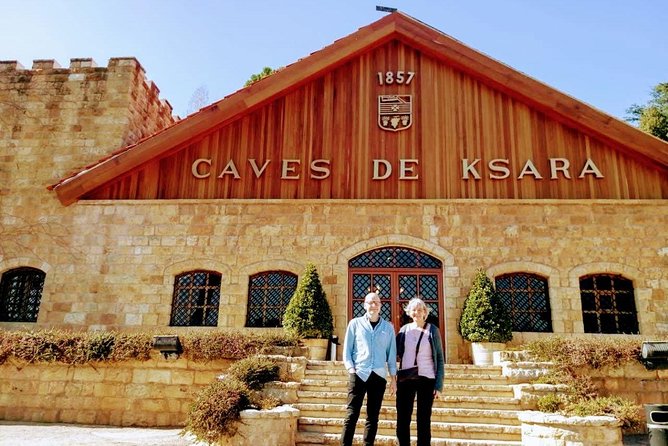
The final major stop is Château Ksara in the Beqaa Valley. Founded by Jesuit priests in 1857, the winery produced Lebanon’s first dry wine and now makes about three million bottles each year. Its wines are exported to more than 40 countries.
The visit lasts about one hour and gives the day a welcome change of rhythm. After walking through temple ruins and city walls, you can sit in a cave and sample local wine. The setting is part of the appeal: this is not simply a tasting counter added to a sightseeing route, but a chance to connect Lebanese wine with the valley’s long agricultural and commercial life.
Wine tasting is not included in the $100 tour price. You should treat it as an optional extra and confirm the current tasting charge when booking or before the visit. The tour also does not include lunch, so you need to budget for a meal separately.
The winery may be the least important stop for someone focused only on archaeology. For many people, though, it is what makes the day feel rounded rather than repetitive. You get ancient history, religious heritage, Umayyad urban remains, and a modern Lebanese product in one outing.
Is $100 per person a fair price?
At $100 per person, this is not the cheapest way to reach Baalbek and Anjar. The price makes more sense if you value a private air-conditioned vehicle, hotel pickup and drop-off, a dedicated guide, and a full day of transport between several sites.
You are paying for convenience as much as sightseeing. Organizing Baalbek, Anjar, and Château Ksara independently would require arranging transport across the valley, timing several stops, and finding someone to explain the monuments. The tour handles that structure for you.
Still, the advertised price does not cover everything. You must add:
- Baalbek temple admission
- Anjar admission
- Château Ksara wine tasting
- Lunch
The exact total depends on the admission and tasting charges in effect on your date. Ask for those figures before departure if you are keeping to a strict budget.
Group discounts may be available, which improves the value for a larger private party. Since only your group participates, the per-person price may feel easier to justify when shared with family or friends.
Who should book this experience?
I would choose this tour if you are staying in Beirut and want to see Lebanon’s major inland archaeological sites without renting a car. It suits first-time visitors who want historical guidance, dependable transport, and a day planned from start to finish.
It is also a good match for mixed-interest groups. One person can enjoy Roman architecture, another can focus on Islamic history, and someone else can look forward to the winery. The private setting makes it easier to keep the day comfortable for your own group.
The tour may be less suitable if you dislike long road days, want extensive time at each site, or do not drink wine. Château Ksara remains part of the schedule even if you only want to see the winery rather than taste.
Wear practical walking shoes and bring a plan for extra costs. The information provided does not specify accessibility details, so anyone with mobility concerns should ask the provider before booking.
Free cancellation is available when you cancel at least 24 hours before the start time. Changes or cancellations made less than 24 hours ahead are not accepted for a refund.
My verdict: a strong full-day choice from Beirut
I would book this tour for the combination of private transport and strong guiding, especially if Baalbek is high on your list. The Roman sanctuary alone is worth the trip, while Anjar and Château Ksara prevent the day from becoming a single-site excursion.
Go in knowing that the $100 covers the framework, not every expense. Add tickets, lunch, and the wine tasting, then decide if the convenience matches your budget. If it does, this is an efficient and rewarding way to connect Beirut with three very different parts of the Beqaa Valley.
FAQ
Where does the tour begin?
The tour offers pickup from your Beirut hotel and returns you there after the day’s visits.
How long does the tour last?
The experience lasts approximately eight hours.
Is this a private tour?
Yes. Only your group participates in the private activity.
What transportation is provided?
The tour includes comfortable private transportation in an air-conditioned vehicle.
Is a guide included?
Yes. The package includes a tour leader and a professional guide.
Are Baalbek admission fees included?
No. Admission to the main Baalbek temple complex is not included in the tour price.
Is admission to Anjar included?
No. The entrance fee for the Umayyad ruins of Anjar is separate.
Is the Château Ksara wine tasting included?
No. Wine tasting at Château Ksara is not included.
Is lunch included?
No. Lunch must be paid for separately.
Can I cancel for a full refund?
Yes, if you cancel at least 24 hours before the experience start time. Cancellations made less than 24 hours in advance are not refunded.
Just added in Beirut
- Wine Tasting Tour★ 5.0 · 2 reviews
- Lebanon tours vip jeitta byblos beirut we charge per vechile not per person.★ 5.0 · 1 review
- Lebanon’s Treasures: Jeita Grotto and Harissa Private Tour★ 5.0 · 2 reviews
- Small Group Tour to Baalbek, Anjar & Ksara with Hotel pickup★ 5.0 · 2 reviews
- Journey Through Time: A Private Tour of Tripoli and Byblos★ 5.0 · 1 review
- Guided Small-Group Tour to Baalbek, Cedars & Qozhaya with Lunch★ 5.0 · 2 reviews
- Small-Group Tour with Lunch to Sidon, Tyre & Maghdouche★ 5.0 · 2 reviews
- Small-Group Tour Qadisha Valley, Becharre and Cedars with Lunch and Tickets★ 5.0 · 1 review
Baalbek Anjar and Ksara Day Trips
Anjar, Baalbek & Ksara Day Trip – With Lunch (4G on Board)
Read our review →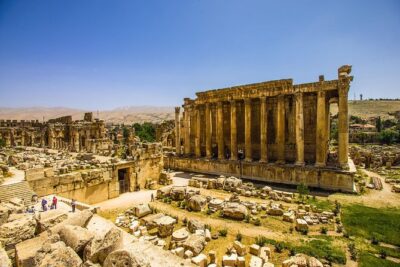
Private Anjar and Baalbek Tour from Beirut with Departure Ticket
Read our review →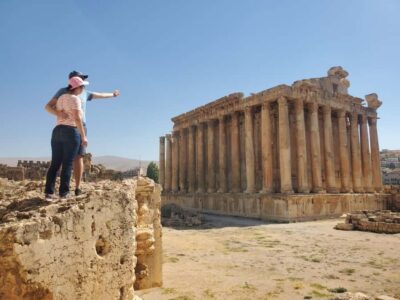
Baalbek Temples & Ksara Caves w/pick-up,guide, entries+lunch
Read our review →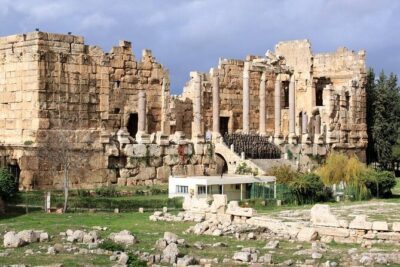
Small Group Tours to Baalbek, Anjar & Chateau Ksara with lunch and Tickets
Read our review →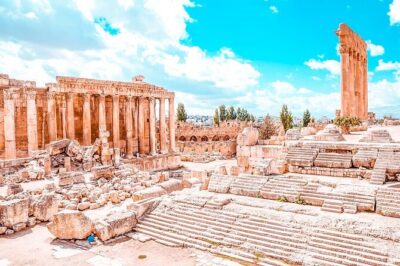
Private Tour: Anjar, Baalbek and Ksara Day Trip from Beirut
Read our review →