REVIEW · BAALBEK ANJAR AND KSARA DAY TRIPS
Small Group Tours from to Baalbek, Cedars and Qozhaya with lunch and all fees
Lebanon packs centuries into one day. This small-group trip from Beirut links the sacred Qadisha Valley, the Cedars of God, Qozhaya Monastery, and the huge Roman temples of Baalbek, with lunch and entrance fees included. I especially like the wide mix of places, from a living monastery to ancient stonework, and the fact that a guide and driver handle a complicated route. The one concern is time: eight hours is a brisk schedule for so many stops, especially when Baalbek and the northern mountains are both on the plan.
I also like the all-in pricing. At $150 per person, you get hotel pickup and drop-off, transport in an air-conditioned vehicle, lunch at a local restaurant, entrance fees, a tour leader, and a local guide in Baalbek. The group can reach 20 people, so this is small compared with a large coach tour, but it may not feel intimate at the maximum size.
In This Review
- Key points to know before booking
- Why this day trip is worth considering
- Qadisha Valley and the road into Lebanon’s mountains
- Bcharre, a mountain town with cedar country nearby
- The Cedars of God: Lebanon’s national symbol
- Qozhaya Monastery and the story of mountain solitude
- Baalbek’s Jupiter and Bacchus temples
- Sayyida Khawla Mosque and the Stone of the Pregnant Woman
- Lunch, transport, and what $150 really buys
- Who will get the most from this tour?
- Should you book the Baalbek, Cedars and Qozhaya tour?
- FAQ
- What is the price of the tour?
- How long does the experience last?
- What time does the tour start?
- Is hotel pickup and drop-off included?
- Is lunch included?
- Are entrance fees included?
- What is the maximum group size?
- Which major places does the tour visit?
- What is the cancellation policy?
Key points to know before booking
- The route covers four major Lebanese sights: Qadisha Valley, the Cedars of God, Qozhaya Monastery, and Baalbek.
- Baalbek receives the most substantial visit: allow about 90 minutes for the Roman temple complex.
- The Cedars of God stop lasts 30 minutes, enough for a walk and photographs but not a long forest outing.
- Qozhaya Monastery is a short visit of about 30 minutes, with no admission charge.
- Lunch, entrance fees, pickup, and drop-off are included, which makes the price easier to judge.
- The day begins at 8:00 am and runs for about eight hours, with a maximum group size of 20.
Why this day trip is worth considering
Lebanon is a compact country on the map, but mountain roads and valley routes make independent sightseeing slower than you might expect. This tour solves the main practical problem: you do not have to arrange transport between Beirut, the northern mountains, and Baalbek, or work out separate admission costs.
The appeal is the contrast. You move from early Christian monastic sites in the Qadisha Valley to the remaining cedar trees that became Lebanon’s national symbol. Later, the mood changes again at Baalbek, where Roman temples were built on a vast scale. Few day trips offer such a sharp shift between forest, faith, and imperial architecture.
The schedule also gives you several different ways to experience Lebanon. You can take photographs in Qadisha, walk among old cedars, see a monastery still tied to religious life, and study some of the largest ancient stone blocks ever quarried. It is not simply an ancient ruins tour.
The tradeoff is pace. This is a sightseeing sampler, not a slow mountain retreat. The 30-minute visits are useful introductions, but they leave little room for lingering, long walks, or unscheduled stops. If you want a relaxed visit to the Cedars or a serious exploration of every corner of Baalbek, a private or multi-day plan would give you more breathing room.
More Baalbek and Bekaa day trips:
- Guided Small-Group Tour to Baalbek, Anjar and Ksara with Lunch
★ 5.0 · 511 reviews - Anjar, Baalbek & Ksara Day Trip – With Lunch (4G on Board)
★ 4.5 · 181 reviews - Baalbek – Anjar – Ksara Trip From Beirut
★ 4.5 · 80 reviews
Qadisha Valley and the road into Lebanon’s mountains
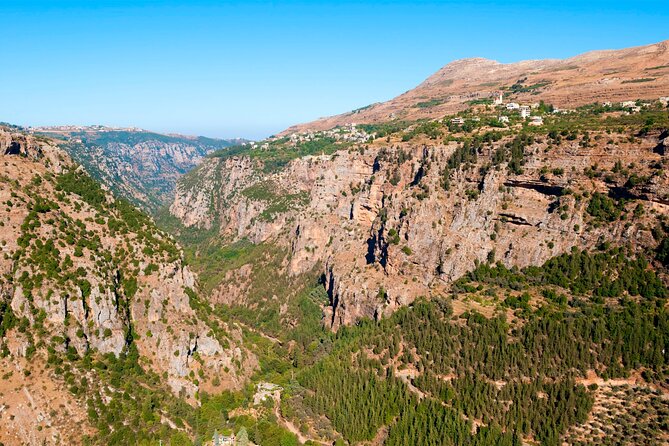
The Qadisha Valley is one of the key stops because it explains why this part of Lebanon matters beyond scenery. Its caves, monasteries, and cultivated terraces are linked to some of the earliest Christian monastic settlements in the world. The setting is rugged, with religious buildings fitted into steep terrain rather than placed on an easy flat site.
You should expect this part of the day to be more about views and context than a long hike. The schedule identifies the valley as a scenic stop for photographs, while the more focused monastery visit comes at Qozhaya. That distinction matters. You may get a striking sense of the valley’s scale, but do not assume the tour includes an extended trek through its caves and terraces.
I like this stop because it gives the rest of the day a human story. At Baalbek, you see the remains of an enormous state-sponsored sanctuary. In Qadisha, you see how people sought quiet and isolation in a difficult mountain setting. The two places offer very different ideas of power and devotion.
Bcharre, a mountain town with cedar country nearby
The route also passes through Bcharre, a town associated with the Cedars of God and with Khalil Gibran, the Lebanese poet, painter, and sculptor. A museum in town honors him. Bcharre is also known for its ski area and for having Lebanon’s first ski lift, built in 1953.
The town is sometimes called the city of churches, with about 37 churches. That detail helps place Bcharre within the Christian mountain culture of the region, though the tour information does not promise a church visit or a stop at the Gibran museum.
For you, Bcharre works mainly as geographic and cultural context. It is the gateway to the cedar reserve and the wider Qadisha area. If Gibran’s work or the town’s churches are a major reason for your visit, ask the operator before booking if the day allows time for either. The listed schedule is already full.
The Cedars of God: Lebanon’s national symbol
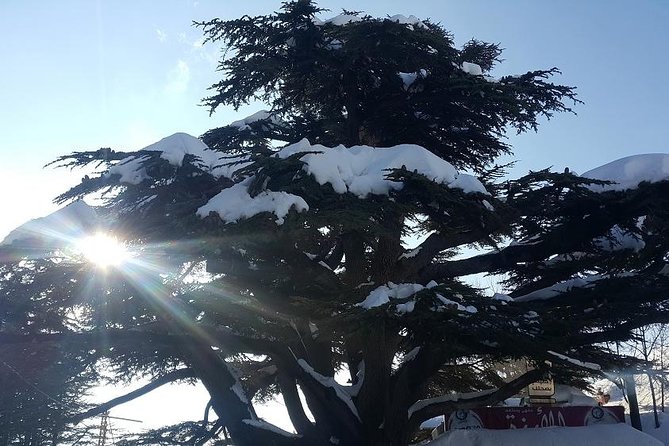
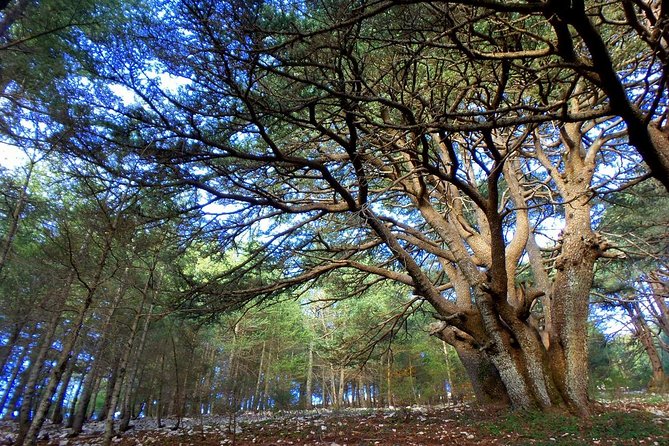
The Cedars of God reserve contains 375 trees and preserves one of the last remaining areas where Lebanon’s original cedar trees still grow. The cedar appears on the Lebanese flag and has long been a symbol of the country.
These trees mattered greatly in ancient times. Cedar wood was prized as a building material for major religious structures, and the tree is cited 103 times in the Bible. That background makes a short walk more meaningful. You are not just entering a pretty grove. You are seeing a small surviving section of forests that once covered much more of the region.
The planned stop is 30 minutes, with admission included. I would use that time for a short walk, photographs, and a close look at the oldest or most distinctive trees your guide points out. Do not plan on a long forest hike. The timing is enough to appreciate the site, but it is clearly designed as one part of a packed day.
This is one of the tour’s most appealing stops for first-time visitors to Lebanon. The cedar is an immediate national symbol, and the reserve offers a welcome change from archaeological sites. Still, anyone hoping for a huge, untouched forest should adjust expectations. The reserve contains 375 trees, a precious remnant rather than an endless woodland.
More of the Qadisha Valley and the Cedars:
- Guided Small-Group Tour to Qadisha, Bcharee & Cedars with Lunch
★ 5.0 · 39 reviews - Cedars of Lebanon, Qozhaya, & Bcharre – With Lunch (4G on Board)
★ 4.5 · 34 reviews - Cedars, Bsharre & Kozhaya Day Tour
★ 5.0 · 15 reviews - Cedars Shouf & Beiteddine w/pick-up, guide, entries+lunch
★ 4.7 · 12 reviews
Qozhaya Monastery and the story of mountain solitude
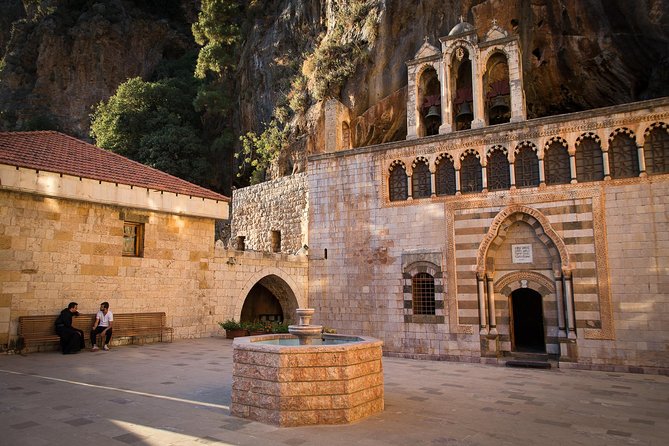
The Maronite Monastery of St Anthony the Great sits at about 950 meters above sea level in the Valley of Qozhaya. Pine and oak cover the surrounding hills, while fruit trees line the valley. The site connects with the larger Qadisha Valley and its long tradition of hermits and religious communities.
Historians place the monastery’s first occupation by hermits as early as the beginning of the fourth century. It suffered repeated looting, fires, and destruction, yet remains include traces from the seventh century. That combination of survival and hardship is what makes the visit worthwhile.
The planned stop lasts about 30 minutes, and admission is free. This is enough for a look at the monastery and an explanation of its role, but not enough for an unhurried religious or architectural study. I would keep your expectations focused: this is a concise introduction, not a retreat experience or a full examination of every building.
The monastery also helps explain why the Qadisha area earned such importance. The valley was not chosen for easy access. Its rough terrain offered isolation, which allowed hermits and monastic communities to pursue religious life away from crowded settlements. Your guide can connect the physical setting with that history, making the stop more than a quick photo break.
Baalbek’s Jupiter and Bacchus temples
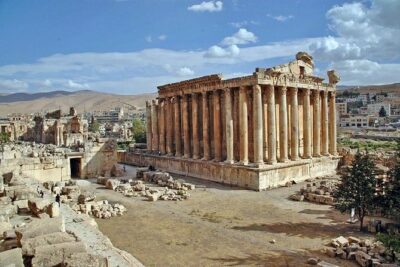
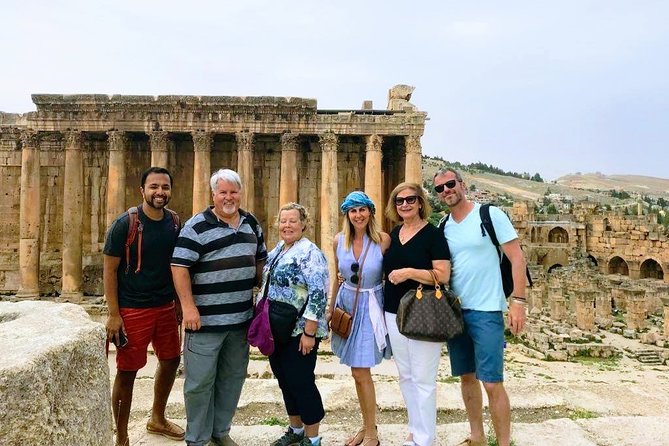
Baalbek is the heavyweight attraction of the day. The sanctuary sits at about 1,150 meters at the foot of the Anti-Lebanon range, beside the fertile Bekaa plain. During the Roman period, the city reached its height, and the temple complex grew over more than two centuries.
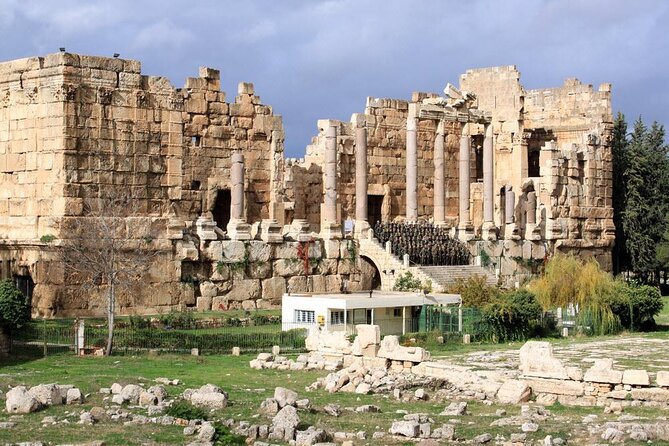
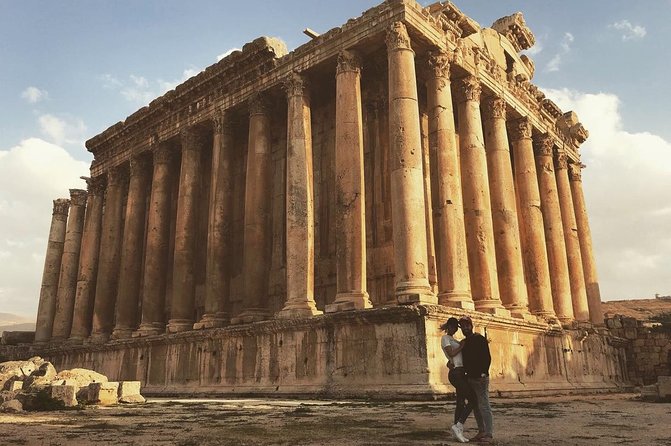
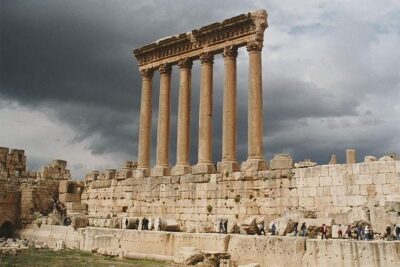
The site was dedicated to a Romanized version of a Phoenician religious triad associated with Jupiter, Venus, and Bacchus. The surviving architecture shows how grand the sanctuary was intended to be. Colossal columns, broad platforms, and huge blocks make Baalbek feel less like a small ruin field and more like the remains of a major imperial project.
You get about 90 minutes here, the longest scheduled stop. That is appropriate. Baalbek needs time for scale to register. At first, you may focus on the columns and ornament. Then you notice the platform stones and the sheer size of the construction. The ancient builders were not working on a modest temple. They were creating a sanctuary meant to impress pilgrims and display power.
The Baalbek portion includes a local guide, while the wider day includes a tour leader. That arrangement should be useful because the complex needs explanation. Without context, it is easy to walk among giant stones and miss the meaning of the Roman sanctuary, the older Phoenician roots, and the engineering challenge.
Ninety minutes is still not a full scholarly visit. You will need to stay aware of the meeting time, especially if you enjoy examining carved details or taking photographs. The advantage is that the schedule gives Baalbek real priority without allowing one site to consume the entire day.
Sayyida Khawla Mosque and the Stone of the Pregnant Woman
The Mosque of Sayyida Khawla in Baalbek is associated with the belief that Sayyida Khawla, the daughter of Imam al-Hussein and granddaughter of the Prophet Muhammad, was buried at the site. The tradition says she died when a caravan of captives from Karbala passed through Baalbek.
This stop adds a different religious layer to the Baalbek visit. The Roman sanctuary reflects ancient imperial and Phoenician traditions, while the mosque belongs to the region’s Islamic history and living religious memory. The supplied schedule does not give a duration or state that an interior visit is included, so treat it as a brief point of interest unless your guide says otherwise.
The Stone of the Pregnant Woman is a worked Roman monolith near the temple complex. Together with another large block nearby, it ranks among the biggest stones ever quarried. The blocks were likely intended for the Roman sanctuary and show the extreme scale of the building project.
The stop lasts 15 minutes and admission is free. That is plenty of time to see the stone, understand its connection to Baalbek, and take photographs. The name is memorable, but the engineering story is the real reason to pay attention. Ask yourself how such a block was cut, moved, and placed in an ancient building project. The tour does not promise a technical demonstration, but the sheer size makes the question unavoidable.
Lunch, transport, and what $150 really buys
The $150 price includes local restaurant lunch, all entrance fees, an air-conditioned vehicle, hotel pickup and drop-off, a tour leader, and a local guide in Baalbek. That bundle has real value for a visitor based in Beirut. You are paying for transport across a long, varied route, not just admission to one archaeological site.
Lunch is also practical. A full day with mountain stops and ruins is easier when you do not have to search for a restaurant or lose time deciding where to eat. The information describes it as a Lebanese lunch at a local restaurant, so expect the meal to be part of the cultural experience as well as a break in the schedule. No menu or dietary details are provided, so ask ahead if you have food restrictions.
Pickup is offered, with an 8:00 am start. The exact pickup arrangement is not specified, so confirm the meeting details when you book. Starting early is sensible because the route covers a lot of ground, but you should be prepared for a full day with limited free time.
The group maximum is 20. That is smaller than a large sightseeing bus, and it should make it easier to hear explanations and move through stops. Still, 20 people can create delays at pickup points and make a short 30-minute stop feel even shorter. If you want personal attention at every site, look for a smaller private option.
The included fees simplify budgeting. You do not need to keep calculating entrance charges at the Cedars and Baalbek. Free cancellation is available if you cancel at least 24 hours before the start time. Changes or cancellations inside that window are not refunded, and poor weather can lead to a different date or a full refund.
Who will get the most from this tour?
I would recommend this trip to you if you have limited time in Beirut and want to see several of Lebanon’s major northern and eastern sights in one day. It suits first-time visitors who value a guide, included transport, and a clear plan more than long independent exploration.
It is also a good fit if your interests are broad. You get early Christian sites, Maronite heritage, Lebanese national symbolism, Roman architecture, Islamic tradition, and mountain scenery in one outing. That range is the tour’s main strength.
You may want another plan if you dislike early starts, quick visits, or a day built around several long transfers. The information does not provide exact driving times, road conditions, or walking requirements, so ask the operator if you need a more precise mobility plan. Most people can participate, but the schedule is active enough that you should be comfortable getting in and out of the vehicle and walking around outdoor sites.
Should you book the Baalbek, Cedars and Qozhaya tour?
Book it if you want a practical, history-heavy day from Beirut and you prefer having the difficult transport handled for you. The combination of Baalbek’s monumental temples, the Cedars of God, Qadisha’s Christian heritage, and Qozhaya Monastery is unusually varied, and the included lunch and admission fees strengthen the $150 value.
Go in with realistic expectations. You will sample each place rather than linger, and a maximum group of 20 is small-group travel only in the broad sense. For a first look at Lebanon beyond Beirut, though, this is a strong choice. The simple praise attached to the experience is well placed: it offers a friendly, history-filled day with a lot of places to see.
FAQ
What is the price of the tour?
The tour costs $150 per person.
How long does the experience last?
The tour lasts approximately eight hours.
What time does the tour start?
The scheduled start time is 8:00 am.
Is hotel pickup and drop-off included?
Yes. Hotel pickup and drop-off are included.
Is lunch included?
Yes. Lunch at a local restaurant is included in the price.
Are entrance fees included?
Yes. All entrance fees are included. The Qozhaya Monastery and the Stone of the Pregnant Woman are listed as free admission stops.
What is the maximum group size?
The group can include a maximum of 20 people.
Which major places does the tour visit?
The route includes Qadisha Valley, Bcharre, the Cedars of God, the Maronite Monastery of St Anthony the Great in Qozhaya, the Baalbek temple complex, Sayyida Khawla Mosque, and the Stone of the Pregnant Woman.
What is the cancellation policy?
You can cancel at least 24 hours before the start time for a full refund. Cancellations or changes made less than 24 hours before the start time are not refunded or accepted. If poor weather causes cancellation, you will be offered another date or a full refund.
Just added in Beirut
- Wine Tasting Tour★ 5.0 · 2 reviews
- Lebanon tours vip jeitta byblos beirut we charge per vechile not per person.★ 5.0 · 1 review
- Lebanon’s Treasures: Jeita Grotto and Harissa Private Tour★ 5.0 · 2 reviews
- Small Group Tour to Baalbek, Anjar & Ksara with Hotel pickup★ 5.0 · 2 reviews
- Journey Through Time: A Private Tour of Tripoli and Byblos★ 5.0 · 1 review
- Guided Small-Group Tour to Baalbek, Cedars & Qozhaya with Lunch★ 5.0 · 2 reviews
- Small-Group Tour with Lunch to Sidon, Tyre & Maghdouche★ 5.0 · 2 reviews
- Small-Group Tour Qadisha Valley, Becharre and Cedars with Lunch and Tickets★ 5.0 · 1 review
Baalbek Anjar and Ksara Day Trips
Anjar, Baalbek & Ksara Day Trip – With Lunch (4G on Board)
Read our review →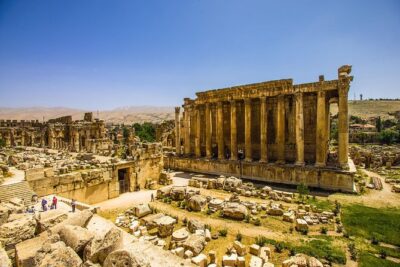
Private Anjar and Baalbek Tour from Beirut with Departure Ticket
Read our review →
Guided Private Full Day Tour to Baalbek, Anjar and Chateau Ksara
Read our review →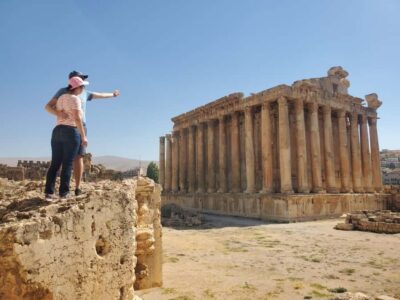
Baalbek Temples & Ksara Caves w/pick-up,guide, entries+lunch
Read our review →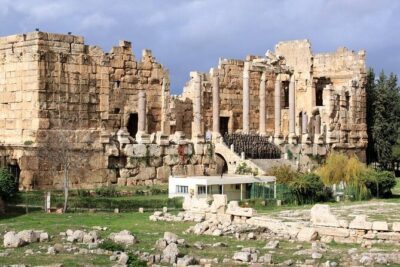
Small Group Tours to Baalbek, Anjar & Chateau Ksara with lunch and Tickets
Read our review →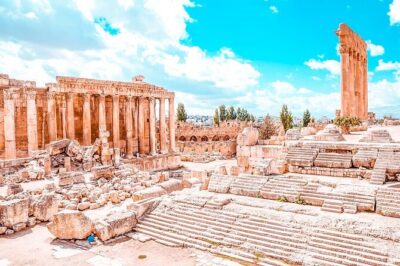
Private Tour: Anjar, Baalbek and Ksara Day Trip from Beirut
Read our review →