REVIEW · HISTORICAL TOURS
Guided Half-Day Private Beirut Historical Tour
Beirut tells its story in layers. This private five-hour tour links the National Museum and Roman Berytus Baths with mosques, churches, waterfront sights, and the city’s most important war landmarks. I like the hotel pickup and drop-off, and I like having a private, air-conditioned vehicle for a city that can be tricky to cover efficiently. The main drawback is the pace: with eleven listed stops plus the Holiday Inn, several visits last only 10 to 15 minutes.
You pay $75 per person, with group discounts available. That is fair value if you want a broad first look at Beirut without arranging taxis, routes, and background information yourself. The museum receives two hours, but most other sights are short photo and orientation stops.
The tour is a strong fit if you have only one day in Beirut, are visiting from a cruise or short stay, or want a useful introduction before exploring more on your own. The tour has a perfect five-star rating from six published reviews, with particular praise for being informative, entertaining, and helpful for finding areas to revisit later.
In This Review
- Key Points Before You Book
- Why This Private Beirut Tour Works Well
- Two Hours Inside the National Museum of Beirut
- Roman Berytus Baths and Martyrs’ Square
- Beirut’s Two Mosques and Saint George Cathedral
- Place de l’Étoile and Beirut Souks
- Zaitunay Bay, the Corniche, and Pigeon Rocks
- The Holiday Inn and Beirut’s War Memory
- Timing, Vehicle Comfort, and Pace
- Who Gets the Best Value for $75
- Should You Book This Beirut Historical Tour?
- FAQ
- How long does the Beirut historical tour last?
- Is hotel pickup and drop-off included?
- Is this a private tour?
- Is transportation included?
- Is admission to the National Museum included?
- Is lunch included?
- Can I cancel for a full refund?
Key Points Before You Book
- Two hours at the National Museum: This is the tour’s main historical visit and the only listed stop with a substantial indoor time allowance.
- A private experience for your group: You do not share the vehicle or guide with other participants.
- A full sweep of central Beirut: The route covers Martyrs’ Square, religious buildings, Place de l’Étoile, Beirut Souks, Zaitunay Bay, the Corniche, and Raouché.
- An honest look at wartime Beirut: The abandoned Holiday Inn adds difficult but important context to the city’s modern past.
- Museum admission is extra: The tour includes transport and guiding, but the National Museum ticket is not included.
- Five hours with little spare time: The plan works best as an overview, not as a slow neighborhood walk.
Why This Private Beirut Tour Works Well
Beirut is compact in some areas, but its sights are spread across different parts of the city. A private vehicle saves you from piecing together a route between the museum, downtown, the waterfront, and Raouché. Hotel pickup and drop-off also make the day easier, particularly if you are unfamiliar with local streets or are carrying luggage between other plans.
I especially like the private format. You can ask for more explanation at a place that catches your interest, and you are not waiting for a large group to gather after every stop. The guide’s role matters here because the tour moves quickly from Phoenician and Roman remains to Ottoman-era politics, religious buildings, the Civil War, and modern shopping districts.
The published feedback gives useful clues about the experience. The strongest praise centers on the tour being informative and entertaining, while also showing different parts of Beirut that can help you decide where to spend more time later. That is exactly how I would use this outing: as a well-organized orientation, not as a complete exploration of every site.
The $75 price includes private transportation, hotel pickup and drop-off, an air-conditioned vehicle, and a professional guide. Lunch is not included, and the museum charges its own admission fee. For a solo visitor, the price is less of a bargain than it is for a couple or small group, but group discounts may improve the value.
More history tours in Beirut:
- PRIVATE Beirut Historical Walking Half Day Tour
★ 5.0 · 27 reviews - Historical Beirut Tour (AM) Half Day – (4G on Board)
★ 4.0 · 16 reviews - Temple of Eshmun – Mleeta Landmark – Beaufort Castle
★ 5.0 · 9 reviews
Two Hours Inside the National Museum of Beirut
The National Museum is the anchor of the day. It is Lebanon’s main archaeology museum, with objects gathered from excavations across the country. Because Lebanon sits at a cultural crossroads, the collection helps explain why so many civilizations left traces here.
The planned two-hour visit gives you time to look beyond the famous pieces. You can expect the museum to provide a broad outline of Lebanon’s past, from ancient societies through later periods shaped by outside powers. Your guide can help connect the objects to the places you will see later in Beirut.
This is also the only listed stop where admission is not included. Keep that extra cost in mind when calculating your budget. The museum visit may feel long compared with the short stops that follow, but it gives the rest of the tour a useful foundation.
If you enjoy archaeology, you may want to protect the full two hours rather than treating the museum as a quick introduction. If you prefer street life and architecture, the visit is still worthwhile, but the pace afterward may feel more appealing.
Roman Berytus Baths and Martyrs’ Square
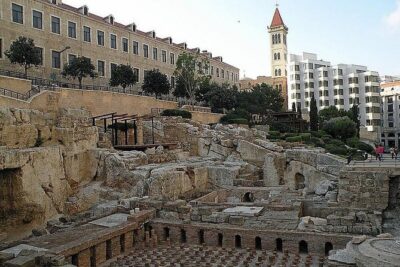
The Roman Baths are a quick stop in downtown Beirut, with about 15 minutes planned. The site was uncovered in 1968 and 1969 and later underwent major renovation. Ancient Berytus had four main bath complexes, with the first created in the early first century under Augustus.
An earthquake in 551 AD destroyed the baths. Today, the remains offer a visible reminder of Roman Beirut, and one bath area is used for artistic performances and concerts. The stop is free, but 15 minutes will give you only a short look and explanation rather than a detailed archaeological visit.
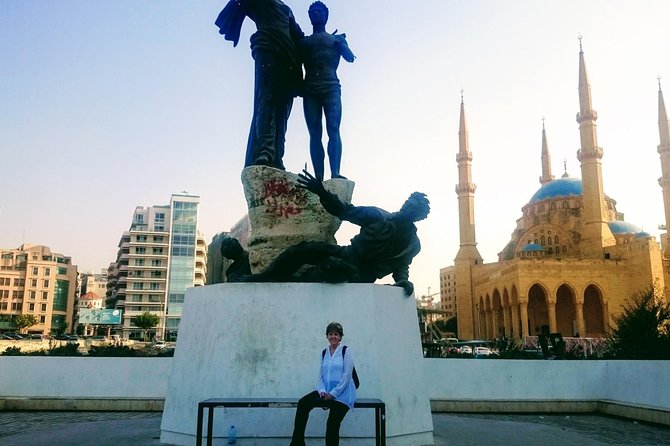
Nearby Martyrs’ Square carries a more recent political memory. The square was known historically as Al Burj or Place des Cannons, and it takes its current name from the executions of Lebanese nationalists by the Ottoman authorities on May 6, 1916.
The square is not just an open space to photograph. It helps you understand how Beirut’s central district has been shaped by foreign rule, national identity, conflict, and reconstruction. Expect a brief orientation here, with enough time to take in the location but not enough for a long independent wander.
Beirut’s Two Mosques and Saint George Cathedral
The Mohammad Al-Amin Mosque, also called the Blue Mosque, is the largest mosque in Lebanon. Located near Martyrs’ Square, it opened in 2008 and has four minarets, each 65 meters high. Its light blue tiled domes, tall arches, and amber-colored exterior make it one of downtown Beirut’s most striking buildings.
The visit lasts about 10 minutes, so think of it as an exterior and orientation stop unless access inside is specifically available on the day. Religious sites can have their own visiting expectations, so modest dress and a respectful manner are sensible.
The Al-Omari Grand Mosque gives you a much older story. It was built in the age of Omar Bin El Khattab in 635 AD, converted into the Church of Saint John by Crusaders in the 12th century, and returned to use as the city’s Grand Mosque under the Mamluks in 1291.
The mosque was damaged during the Lebanese Civil War, and its refurbishment was completed in 2004. Those layers are the point. In a few minutes, you encounter early Islamic rule, Crusader history, Mamluk restoration, and the effects of the modern conflict.
The Greek Orthodox Cathedral of Saint George adds another religious tradition to the same central area. It is the seat of the Greek Orthodox Metropolitan bishop of Beirut and is described as the city’s oldest church. The first Christian temple at this location dates to the mid-sixth century and is linked with Beirut’s famous Law School.
The cathedral stop is also about 10 minutes. The quick sequence of mosque, mosque, and cathedral works well because it places different faiths within the same urban story. It also shows why Beirut’s center cannot be understood through a single period or community.
A completely different kind of day out:
- Guided Small-Group Tour to Baalbek, Anjar and Ksara with Lunch
★ 5.0 · 511 reviews - Guided Small-Group Tour to Jeita, Harissa, Byblos with Lunch
★ 5.0 · 361 reviews - Paragliding Trip Over Lebanon – Jounieh Bay
★ 5.0 · 257 reviews - Jeita Grotto,Harissa&Byblos Full-Day PRIVATE-CAR Trip from Beirut
★ 5.0 · 222 reviews
Place de l’Étoile and Beirut Souks
Place de l’Étoile, or Nejme Square, is the central square of downtown. The Lebanese Parliament and related buildings, two cathedrals, a museum, cafes, and restaurants all sit around or near this area.
The square’s best-known feature is its four-faced 1930 Rolex clock. The architecture and clock have made the square a recognizable symbol of Beirut, but the short 15-minute stop means you will mainly get a look, a few photographs, and historical context.
From there, the tour moves to Beirut Souks. This modern commercial district has more than 200 shops, 25 restaurants and cafes, an entertainment center, and a cinema complex. The planned visit lasts only 15 minutes, so you will not have time for serious shopping or a meal.
That limitation is worth noting. Beirut Souks works well as a quick contrast with the archaeological and religious sights, showing the city’s commercial side. If you want to shop, return later with a free afternoon rather than trying to squeeze purchases into this tour.
The route’s mix is one of its strengths. Within a short span, you move from Ottoman-era executions and ancient baths to Parliament, a modern shopping center, and a symbolic clock. You get a sense of how many different Beiruts occupy the same downtown streets.
Zaitunay Bay, the Corniche, and Pigeon Rocks
Zaitunay Bay is a newer waterfront area with shops and restaurants. It is presented as one of Beirut’s main leisure destinations, and the 10-minute stop gives you a quick look at the marina setting.
This is not a dining visit. Lunch is not included, and there is no meal break listed in the schedule. If you want to eat by the water, plan to do so separately after the tour or ask about timing before you begin.
The Corniche offers a different view of Beirut. Al Manara Corniche runs from the Ramlet al Bayda area to the Saint George marina and is lined with palm trees. From here, you can look across the Mediterranean, toward Pigeon Rock, and toward the summits of Mount Lebanon on the eastern side.
The 15-minute stop is enough for a short walk and photographs, though not a full promenade stroll. The Corniche is one of the places this tour can help you mark for a later return. If you enjoy open-air city views, you may want to come back when you can take your time.
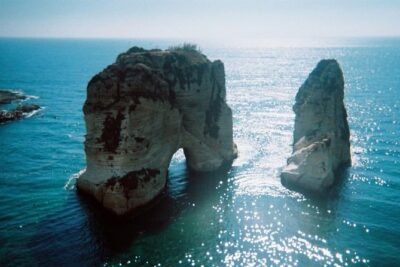
Pigeon Rocks in Raouché are the coastal finale. Two huge rock formations sit at Beirut’s western tip, rising from the sea like natural sentinels. They are among the city’s most recognizable sights and provide the tour’s clearest scenic moment.
The stop lasts about 15 minutes. That is enough to see the formations and take photographs, but conditions and viewpoints can affect how long you want to stay. Since the tour uses private transportation, you avoid the trouble of arranging a separate ride to this western edge of the city.
The Holiday Inn and Beirut’s War Memory
The abandoned Holiday Inn is one of the most powerful stops because it refuses to tidy away Beirut’s recent past. Built between 1971 and 1974, the hotel opened during a period when Beirut’s economy was growing and the city attracted visitors from across the Middle East.
The Lebanese Civil War began in 1975. The Holiday Inn soon became part of the Battle of the Hotels, a prolonged fight in which more than 25,000 combatants battled for control of luxury hotels, including the Holiday Inn and the Phoenicia.
The building remains abandoned and largely untouched decades after the war. It is not a polished memorial or a museum display. Its damaged condition is the message, giving you a direct view of how conflict marked the city’s buildings and public memory.
The itinerary does not give a time length for this stop, so the exact visit may depend on traffic and the guide’s plan. I would treat it as an important viewing and explanation point, not a place to enter. It also adds emotional weight to what might otherwise be a fast collection of monuments and photo stops.
Timing, Vehicle Comfort, and Pace
The tour lasts about five hours. The listed stops account for two hours at the museum and roughly three hours at the shorter locations, before allowing time for driving and hotel transfers. That schedule is workable, but it leaves little room for delays, extended visits, or spontaneous detours.
The air-conditioned private vehicle is a practical advantage. Beirut’s climate and traffic can make a long outdoor route tiring, and moving between distant areas is easier when you are not managing transport yourself. Hotel pickup and drop-off also make this suitable for a first day in the city.
Still, you should expect a survey course rather than a slow walking tour. Most downtown stops last 10 to 15 minutes. You will see many important places, but you may not have time to enter every building or study every detail.
The private arrangement gives you some flexibility, though no specific custom route is promised. It is worth telling the guide early if the museum, religious architecture, waterfront, or war history matters most to you. That helps you make the most of limited time.
Who Gets the Best Value for $75
I would recommend this tour most strongly to first-time visitors and anyone with a short stay. It combines Beirut’s ancient remains, religious buildings, civic center, shopping district, waterfront, natural sights, and modern war history in one organized morning or afternoon.
It is also useful if you want ideas for the rest of your visit. The Corniche, Beirut Souks, downtown squares, and Zaitunay Bay can all be revisited later, when you have time to walk, eat, shop, or sit by the sea.
The value is less clear if you already know Beirut well or prefer one subject in depth. An archaeology enthusiast may want more time at the National Museum. A shopper will find 15 minutes at Beirut Souks too short. Someone focused on architecture may prefer a dedicated walking route through the center.
The $75 price makes the most sense when two or more people share the private experience and when you value the guide and transport. Since lunch and museum admission are extra, budget for those separately.
Should You Book This Beirut Historical Tour?
Book it if you want a well-paced introduction to Beirut’s main sights without handling the logistics yourself. The combination of private transport, hotel service, historical explanation, and the Holiday Inn stop gives the tour more substance than a simple sightseeing drive.
You should skip it only if you want long visits, extensive shopping, or a relaxed meal by the water. For everyone else, especially those short on time, this is a useful first look at a complicated city. Keep your expectations clear: you are collecting the pieces of Beirut’s story, then choosing which ones deserve a longer visit.
FAQ
How long does the Beirut historical tour last?
The tour lasts approximately five hours.
Is hotel pickup and drop-off included?
Yes. Hotel pickup and drop-off are included.
Is this a private tour?
Yes. It is a private activity, and only your group participates.
Is transportation included?
Yes. The tour includes comfortable private transportation in an air-conditioned vehicle.
Is admission to the National Museum included?
No. Admission to the National Museum of Beirut is not included in the tour price.
Is lunch included?
No. Lunch is not included.
Can I cancel for a full refund?
Yes. You can cancel at least 24 hours before the experience start time for a full refund. Cancellations or changes made less than 24 hours in advance are not accepted for a refund.
Just added in Beirut
- Wine Tasting Tour★ 5.0 · 2 reviews
- Lebanon tours vip jeitta byblos beirut we charge per vechile not per person.★ 5.0 · 1 review
- Lebanon’s Treasures: Jeita Grotto and Harissa Private Tour★ 5.0 · 2 reviews
- Journey Through Time: A Private Tour of Tripoli and Byblos★ 5.0 · 1 review
- Small Group Tour to Baalbek, Anjar & Ksara with Hotel pickup★ 5.0 · 2 reviews
- Small-Group Tour with Lunch to Sidon, Tyre & Maghdouche★ 5.0 · 2 reviews
- Guided Small-Group Tour to Baalbek, Cedars & Qozhaya with Lunch★ 5.0 · 2 reviews
- Small-Group Tour Qadisha Valley, Becharre and Cedars with Lunch and Tickets★ 5.0 · 1 review
Historical Tours
Historical Beirut Tour (AM) Half Day – (4G on Board)
Read our review →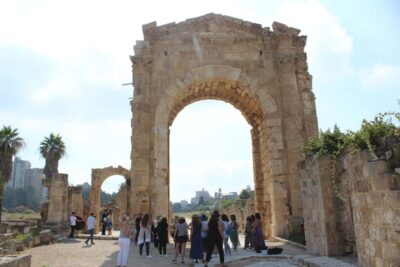
Sidon & Tyre Unesco Heritage w/pick-up, guide, entries+lunch
Read our review →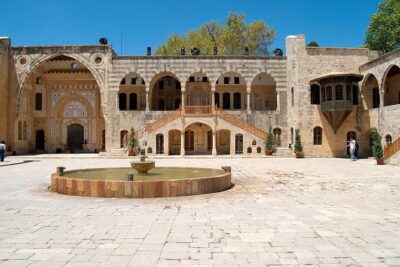
PRIVATE tour to Beirut history museum, Beiteddine & Deir elQamar
Read our review →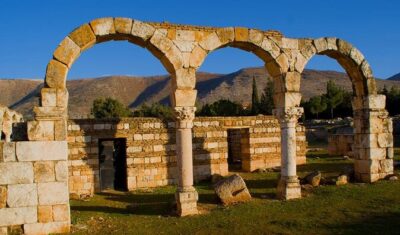
Baalbek, Anjar & Wine: A Journey Through Lebanon’s Heritage
Read our review →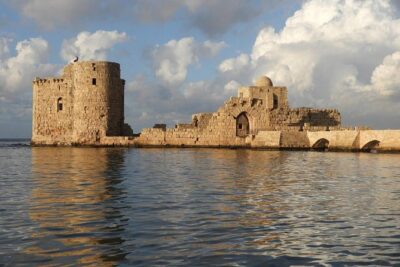
Exploring Beirut’s Past: A Private Guided Historical Tour
Read our review →