REVIEW · BEITEDDINE AND DEIR EL QAMAR
Chouf Charm: Private Journey Through Lebanon’s Historic Heartland
Lebanon’s mountain past comes alive here. This eight-hour private outing from Beirut links Beiteddine Palace and the old village of Deir el Qamar with the famous cedars of the Al-Shouf Cedar Nature Reserve. I like the easy door-to-door format, and I like that your private driver can give you a broad introduction to Lebanese history while taking care of the mountain roads.
The strongest practical advantage is the personal service. A punctual, helpful guide can adjust to your wishes, which is useful when you want more time in a church, less time at a viewpoint, or a slower walk through the village. The tradeoff is that this is mainly a transport-based experience, so the depth of guiding may depend on your tour leader and how much commentary you receive at each stop.
In This Review
- Key points at a glance
- Why the Chouf makes a good day from Beirut
- Beiteddine Palace: 90 minutes of courtly Mount Lebanon
- Deir el Qamar: a village with several faiths in one walk
- Fakhreddine’s Mosque and Saydet El Talle Church
- The Al-Shouf Cedar Reserve: Lebanon’s signature trees
- What the $75 price really buys you
- Timing, transport, and the private format
- Who should book this Chouf day trip?
- Should you book the Chouf Charm tour?
- FAQ
- Where does the Chouf tour begin?
- How long does the experience last?
- Is this a private tour?
- What transportation is provided?
- Is a tour leader included?
- Is lunch included?
- Are admission tickets included?
- How much time is spent at Beiteddine Palace?
- Can I cancel for a full refund?
Key points at a glance
- Beiteddine Palace takes about 90 minutes, giving you time to see one of Mount Lebanon’s grandest historic buildings, though the admission fee is extra.
- Deir el Qamar packs several centuries into a small area, with traditional stone houses, churches, a historic mosque, and narrow streets.
- The oldest mosque in Mount Lebanon is part of the village visit, with Fakhreddine’s Mosque dating to 1493.
- The Al-Shouf Cedar Nature Reserve is the day’s main nature stop, covering 550 square kilometers on the slopes of Barouk Mountain.
- Private pickup and drop-off save time, especially if you prefer not to arrange separate transport into the Chouf.
- The $75 price is strongest for small groups, since the vehicle and chauffeur service are private rather than shared.
Why the Chouf makes a good day from Beirut
The Chouf gives you a very different side of Lebanon from the capital. Instead of city streets and waterfront traffic, you spend the day among mountain villages, old religious buildings, palace courtyards, and cedar forests. The route also has a pleasing rhythm: grand architecture first, village history next, then a quieter natural setting.
You begin at 9:00 a.m., with hotel pickup included. Since the tour lasts about eight hours, you should return to Beirut in the late afternoon or early evening, although the exact timing can shift with road conditions and the pace of your group.
I especially like this arrangement if you have limited time in Lebanon. You do not need to work out how to reach Beiteddine, Deir el Qamar, and the reserve on your own. Your air-conditioned private vehicle handles the long stretches, while you can watch the countryside and ask questions along the way.
This is not a walking tour with a tightly scripted lecture at every doorway. It is better understood as a private day trip with a tour leader and transport at its center. That makes it flexible, but it also means you should ask at the start how much guiding will be provided inside each site.
More of Beiteddine and the Chouf:
- Guided small group to Cedars Reserve & Beiteddine w/lunch+entries
★ 5.0 · 12 reviews - Beirut, Beiteddine & DeirElQamar Day Trip-With Lunch(4G on Board)
★ 4.5 · 12 reviews - Cedars Shouf & Beiteddine w/pick-up, guide, entries+lunch
★ 4.7 · 12 reviews
Beiteddine Palace: 90 minutes of courtly Mount Lebanon
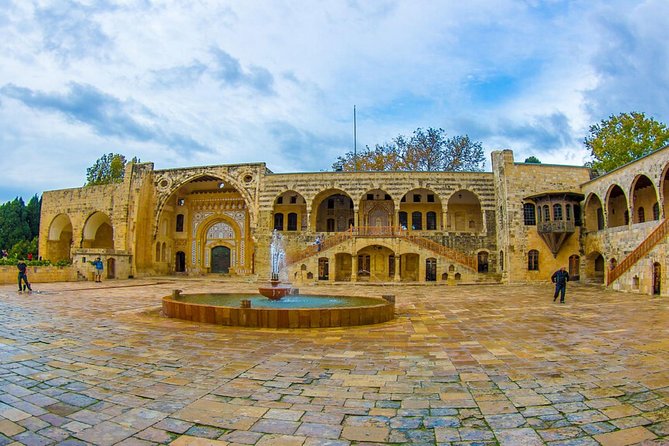
Beiteddine Palace is the day’s grandest stop. Its name means House of Faith, and Emir Bashir Chehab II built it between 1788 and 1818. The palace was created during his rule of the Mount Lebanon Emirate, and its long building period helps explain its scale and variety.
You have about an hour and a half here. That is enough time to get a proper sense of the complex rather than simply stepping out for photographs. Expect a historic palace with formal spaces, Lebanese architectural details, and a past that continued well beyond the emir’s rule.
After 1840, the Ottomans used the palace as a government building. During the French Mandate, it became a local administrative office. In 1943, it was declared the official summer residence of the Lebanese president. Part of the palace remains connected to that role, while other sections are open to the public.
The building suffered heavy damage during the Lebanese Civil War. That fact matters because Beiteddine is not just an elegant old residence. It also reflects Lebanon’s more recent political and military past. You will see a place that has been built, repurposed, damaged, and partly restored across several eras.
The Beiteddine Palace Museum is part of the visit, but admission is not included in the tour price. Budget for that separately. Since the palace is one of the two major historic sites on the route, I would not treat the ticket as an annoyance. It is one of the day’s main costs beyond transportation, and the 90-minute stop gives you a fair chance to make it worthwhile.
A useful tip: use your time here for more than the most famous rooms. Look at how the palace sits within the mountain setting, notice the changes in function over time, and ask your guide to connect Emir Bashir’s rule with the later Ottoman, French, and Lebanese periods.
Deir el Qamar: a village with several faiths in one walk
Only about five kilometers from Beiteddine, Deir el Qamar makes a natural second stop. The name means Monastery of the Moon. Its narrow streets, traditional stone houses, and old religious buildings give the village a more intimate feel than the palace.
The village has an important civic distinction: it became the first village in Lebanon to have a municipality, in 1864. It was also home to artists, writers, and politicians. That combination of local government and cultural life gives Deir el Qamar a place in Lebanon’s national story beyond its attractive appearance.
The village also reflects a long pattern of different religious communities living close together. At different points, Deir el Qamar had a mosque, a synagogue, and Christian churches. That makes the stop especially useful for understanding the Chouf as a place shaped by Druze and Christian communities, as well as by wider Lebanese history.
You have around 30 minutes for the municipality area, followed by short visits to Fakhreddine’s Mosque and Saydet El Talle Church. Thirty minutes is not long, so you should expect an overview rather than a slow village walk. Wear comfortable shoes, since the charm is in the streets and buildings rather than in a single viewing platform.
The village endured a terrible episode in 1860, when it was destroyed during fighting between Druze and Christians and set ablaze. A French contingent sent by Napoleon III helped rebuild it. That painful history sits beside the village’s attractive stone architecture, and your guide’s explanation can help prevent the visit from becoming mere postcard sightseeing.
Fakhreddine’s Mosque and Saydet El Talle Church
Fakhreddine’s Mosque is a small but important stop. Its octagonal minaret helps identify it, and the mosque dates to 1493. It was restored in the sixteenth century by Fakhreddine I and is described as the oldest mosque in Mount Lebanon.
The scheduled visit lasts about 15 minutes. That is enough to see the building and hear why it matters, but not enough for an extended architectural study. I would pay attention to the mosque’s place within Deir el Qamar rather than expecting a large complex.
The next 15-minute visit is to Saydet El Talle Church, also called Our Lady of the Hill. It is one of Deir el Qamar’s important religious and historic sites and dates to the fifteenth century. The church was built over the remains of an older Phoenician temple linked to the goddess Astarte, adding another layer to the site’s long religious past.
A story connected with the hill tells of a Druze emir in Baakline who saw a light coming from the hill. He ordered his soldiers to dig there and instructed them to build either a mosque or a church depending on what they found. This legend helps explain the place’s importance, though you should treat it as a traditional story rather than a substitute for the documented history.
Together, the mosque and church make Deir el Qamar more than a pretty old village. In a short distance, you encounter Islamic, Christian, and pre-Christian references. For me, that is the most rewarding part of the village visit.
More history tours in Beirut:
- PRIVATE Beirut Historical Walking Half Day Tour
★ 5.0 · 27 reviews - Historical Beirut Tour (AM) Half Day – (4G on Board)
★ 4.0 · 16 reviews - Temple of Eshmun – Mleeta Landmark – Beaufort Castle
★ 5.0 · 9 reviews - Sidon & Tyre Unesco Heritage w/pick-up, guide, entries+lunch
★ 4.9 · 6 reviews
The Al-Shouf Cedar Reserve: Lebanon’s signature trees
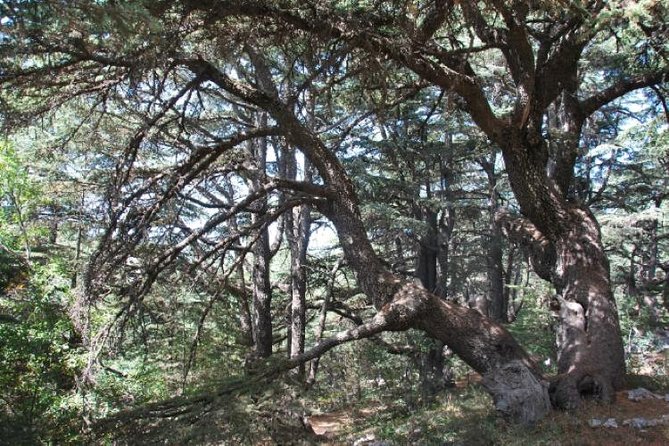
The final major stop is the Al-Shouf Cedar Nature Reserve, also called the Maaser Al-Shouf Cedar Nature Reserve. It lies on the slopes of Barouk Mountain and covers 550 square kilometers. That is nearly 5.3 percent of Lebanon’s territory and about 70 percent of the country’s green area.
The reserve is also recognized by UNESCO as a biosphere reserve, a designation granted in 2005. You have about one hour here, with admission not included. The visit is therefore best viewed as an introduction to the reserve rather than a full day of hiking.
The cedars are the emotional centerpiece. Lebanon’s cedar has deep national and cultural importance, and seeing mature trees in a protected mountain setting gives you context that a cedar image on a flag cannot provide. The reserve also offers a welcome change after the palace and churches, with time outdoors and a slower pace.
The available details do not specify a particular hiking route, trail difficulty, or guided nature walk. Do not book this expecting a demanding trek unless the operator confirms that separately. With one hour scheduled, you are more likely to have time for a short visit and views around the reserve.
Admission is extra here as well. Add both the palace and reserve entrance costs to your planning. The tour’s $75 price covers the private vehicle, driver, tour leader, pickup, and drop-off, but not lunch or these admission tickets.
What the $75 price really buys you
At $75 per person, the value depends on how many people share your private vehicle. For a solo guest, the cost is not especially low once you add lunch and entrance fees. For a couple, family, or small group, the price becomes more attractive because you are paying for private transport across a full day rather than a seat on a shared bus.
The main purchase is convenience. You get hotel pickup and return, an air-conditioned vehicle, and a chauffeur who handles the driving. That matters in a mountainous region where arranging several separate rides could eat into your day.
You also get flexibility. The guide described in the available feedback was helpful and punctual, offered a good general account of Lebanese history, and was willing to accept requests. That is exactly the kind of service that makes a private trip useful. You can ask for clarification, adjust your attention between sites, and avoid being tied to the preferences of a large group.
Still, you should keep the limits clear. Lunch is not included. Palace and reserve admission are not included. And because this is transport-focused, the experience may feel light on detailed interpretation if you want a specialist history or nature tour.
Timing, transport, and the private format
The tour starts at 9:00 a.m. and lasts about eight hours. Hotel pickup and drop-off are included, and the vehicle is air-conditioned. That combination makes the trip simple to join from Beirut, especially if you do not want to navigate the route yourself.
Only your group participates. This is useful if you value quiet conversation or need a pace that suits your party. It also means that the per-person price should be judged against your group size, not against the cheapest shared excursion you can find.
The route includes several short visits in Deir el Qamar, so the day is not just a series of long drives. Beiteddine receives the most time at 90 minutes, the village area gets 30 minutes, each of the two religious sites receives 15 minutes, and the cedar reserve receives one hour.
Those timings are sensible for a broad introduction, but they do not allow much lingering. If you are a serious photographer, architecture fan, or church historian, tell the guide early. The helpful, flexible service is most valuable when you make your priorities clear.
Who should book this Chouf day trip?
I would recommend this tour if you want to see several major Chouf sights without arranging transport yourself. It suits couples, families, and small groups who value privacy and want a driver rather than a shared coach.
It is also a good fit if you want a balanced day. You get architecture at Beiteddine, village streets and religious sites at Deir el Qamar, and mountain nature at the cedar reserve. No single stop has to carry the whole experience.
You may want a different option if your main goal is a long forest hike, an intensive palace tour, or a food-centered day. The supplied schedule leaves limited time for extended walks, and lunch is not provided.
For the best day, bring money for the two admission fees and lunch, wear shoes suited to uneven village streets, and use the private format actively. Ask questions, explain what interests you, and confirm how much time you will have inside the palace and reserve.
Should you book the Chouf Charm tour?
Book it if you want an easy, private introduction to Mount Lebanon with a helpful chauffeur, a sensible route, and no transport worries. The strongest reasons are the door-to-door service, the mix of historic and natural sights, and the ability to shape the day around your group.
Think twice if you want a highly specialized guide or a full hiking program. The experience is best for seeing the Chouf’s highlights in one day, not for exploring every room, trail, and village at length.
At $75 per person, it offers good value for a small group that will use the private vehicle and flexible service. Add the cost of lunch and entrance tickets, then book with the understanding that the real strength is convenient access to a broad and memorable slice of Lebanon.
FAQ
Where does the Chouf tour begin?
The tour begins with hotel pickup in Beirut at 9:00 a.m.
How long does the experience last?
The tour lasts approximately eight hours.
Is this a private tour?
Yes. Only your group participates in the activity.
What transportation is provided?
The tour includes comfortable private transportation in an air-conditioned vehicle, along with hotel pickup and drop-off.
Is a tour leader included?
Yes. A tour leader is included as part of the experience.
Is lunch included?
No. Lunch is not included.
Are admission tickets included?
Admission tickets for Beiteddine Palace and the Al-Shouf Cedar Nature Reserve are not included. The listed visits to Deir el Qamar, Fakhreddine’s Mosque, and Saydet El Talle Church have free admission.
How much time is spent at Beiteddine Palace?
The scheduled visit to Beiteddine Palace lasts about one hour and 30 minutes.
Can I cancel for a full refund?
Yes. You can receive a full refund if you cancel at least 24 hours before the experience begins. Cancellations or changes made within 24 hours are not refunded or accepted.
Just added in Beirut
- Wine Tasting Tour★ 5.0 · 2 reviews
- Lebanon’s Treasures: Jeita Grotto and Harissa Private Tour★ 5.0 · 2 reviews
- Lebanon tours vip jeitta byblos beirut we charge per vechile not per person.★ 5.0 · 1 review
- Small Group Tour to Baalbek, Anjar & Ksara with Hotel pickup★ 5.0 · 2 reviews
- Journey Through Time: A Private Tour of Tripoli and Byblos★ 5.0 · 1 review
- Guided Small-Group Tour to Baalbek, Cedars & Qozhaya with Lunch★ 5.0 · 2 reviews
- Small-Group Tour with Lunch to Sidon, Tyre & Maghdouche★ 5.0 · 2 reviews
- Small-Group Tour Qadisha Valley, Becharre and Cedars with Lunch and Tickets★ 5.0 · 1 review
Beiteddine and Deir el Qamar
Cedars Shouf & Beiteddine w/pick-up, guide, entries+lunch
Read our review →
Beirut, Beiteddine & DeirElQamar Day Trip-With Lunch(4G on Board)
Read our review →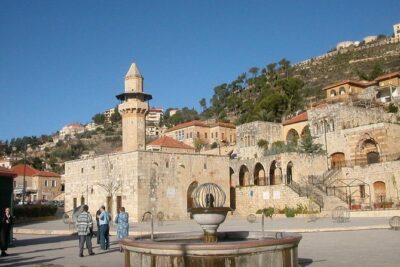
Guided small group to Cedars Reserve & Beiteddine w/lunch+entries
Read our review →
Small Group Tours to Beirut, Beiteddine & Deir el Qamar with lunch and all fees
Read our review →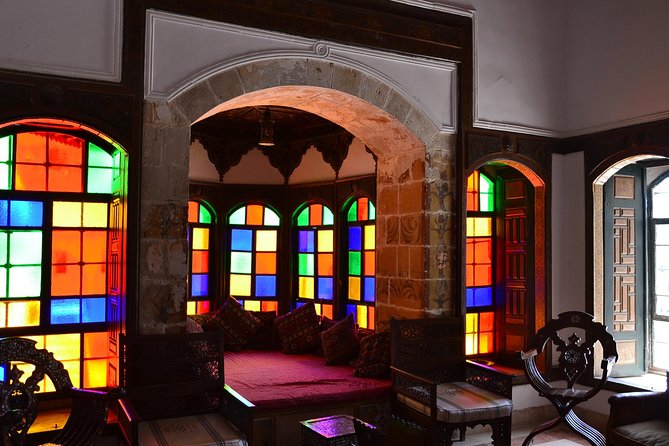
Deir el Qamar – Beiteddine Palace – Chouf Cedars From Beirut
Read our review →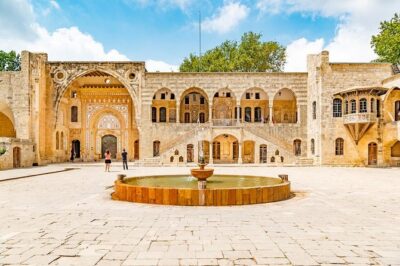
Guided Small-Group Tour to Beirut, Beiteddin & Deir elQamar
Read our review →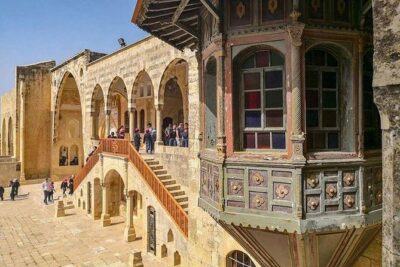
Deir Al-Qamar, Beiteddine Palace and Barouk Cedars Tour
Read our review →