REVIEW · TRIPOLI AND BATROUN TOURS
Guided Full-Day Private Trip to Tripoli from Beirut
Tripoli rewards visitors who arrive ready to wander. This private day trip takes you north from Beirut to Lebanon’s second city, where a Crusader citadel, Mamluk mosques, covered souks, old hammams, and a historic port fit into one long day. I especially like the direct hotel pickup and the chance to explore with a private guide instead of trying to deal with Lebanon’s traffic and possible roadblocks on your own.
I also like the range of sights. You are not simply taken to one castle and sent home. The day moves through religious buildings, trade quarters, bathhouses, a modernist exhibition site, a famous sweet shop, and El Mina port. The main drawback is the pace: eight to nine hours is a long outing, and several stops last only five minutes. Lunch is also not included, so you need to plan for that yourself.
In This Review
- Key points to know before booking
- Why a private trip makes sense from Beirut
- Tripoli’s old city, where the day really begins
- Citadel Saint Gilles and Tripoli’s layered fortress
- Al Mansouri Great Mosque and the city’s Mamluk center
- Taynal Mosque and reused Roman columns
- Souk Al-Harajb and Tripoli’s working markets
- Khan Al-Khayyatin and Khan As Sabon
- Tripoli’s old hammams
- Oscar Niemeyer’s unfinished fairgrounds
- Hallab 1881 and Tripoli’s sweet tooth
- El Mina Port and the Phoenician connection
- Guides, timing, and the feel of the day
- Who should book this Tripoli day trip?
- Should you book it?
- FAQ
- Where does this Tripoli tour begin and end?
- How long does the private Tripoli trip last?
- Is this a private tour?
- What transportation is provided?
- Are entrance fees included?
- Is lunch included?
- Can I cancel for a full refund?
Key points to know before booking
- Private travel from central Beirut: Pickup and drop-off at your hotel save time and remove the stress of self-driving.
- Tripoli’s medieval core: The Citadel Saint Gilles, Al Mansouri Great Mosque, Taynal Mosque, souks, khans, and hammams reveal the city’s layered past.
- A useful mix of major and minor stops: You get the big monuments, but also short visits to the soap khan, tailoring khan, port, and Oscar Niemeyer’s unfinished fairgrounds.
- Hallab 1881 is part of the route: The celebrated Tripoli sweet shop offers an easy way to connect the city’s food traditions with its commercial past.
- Entrance fees are covered: The advertised price is $100 per person, with admission costs included where applicable.
- A guide matters here: Rita and Pierre both received especially warm praise for their guiding and organization.
Why a private trip makes sense from Beirut
Tripoli lies about 80 kilometers north-northeast of Beirut, at the mouth of the Abu Ali River. On paper, that may look like a straightforward day drive. In practice, the tour is designed for people who would rather not handle heavy traffic, roadblocks, navigation, and parking themselves.
Pickup and drop-off are offered from a central Beirut address, and transportation is in an air-conditioned vehicle. That matters on a full-day outing. You can use the ride to rest between stops instead of arriving in Tripoli already tired from the road.
The private format is another real advantage. Only your group participates, so the guide can explain a mosque or bazaar at a pace that suits you. It also means you are not waiting for a large group to reboard the vehicle at every corner. The day still follows a busy schedule, but it should feel more personal than a standard coach excursion.
The advertised cost is $100 per person. For that price, you receive transportation, hotel pickup and drop-off, a tour leader, a professional guide, and included entrance fees. Lunch is extra. I consider the price reasonable if you value convenience and private transport, especially since Tripoli is not being treated as a quick photo stop. If you are traveling alone, the per-person cost may feel less attractive. Group discounts are offered, which makes the outing easier to justify for families or friends traveling together.
More of Tripoli and Batroun:
- Aaqoura Lakes – Baatara Waterfall – Batroun
★ 4.5 · 55 reviews - PRIVATE city Tour of authentic Tripoli and vibrant Batroun
★ 5.0 · 51 reviews - Guided Small-Group Tour to Tripoli and Batroun with Lunch
★ 5.0 · 16 reviews
Tripoli’s old city, where the day really begins
The broad introduction to Tripoli gives you about three hours to see the city and connect its separate monuments. That time is important because Tripoli is not one isolated archaeological site. Its historic core is a working part of the city, shaped by worship, trade, bathing, food, and local crafts.
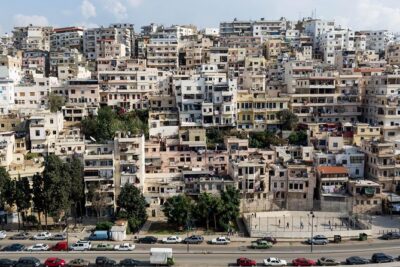
Tripoli dates back to the Phoenician era and is one of Lebanon’s oldest cities, along with Byblos, Tyre, and Sidon. Forty-five buildings have been registered as historic sites, and twelve Mamluk and Ottoman mosques have survived. The city’s souks and khans still help explain how those buildings once worked together.
I like this part of the route because you get more than grand architecture. You can see how religious buildings, workshops, storage areas, markets, and public baths formed one urban system. The drawback is that the historic center may feel confusing if you want a neat, linear sightseeing route. Narrow passageways and small alleys are part of the experience, but they make a guide useful.
Citadel Saint Gilles and Tripoli’s layered fortress
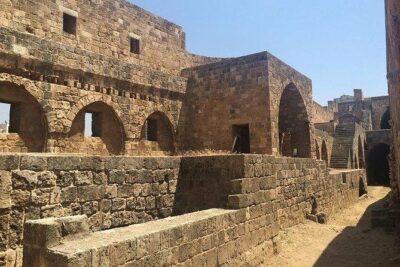
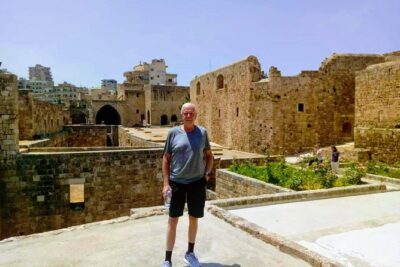
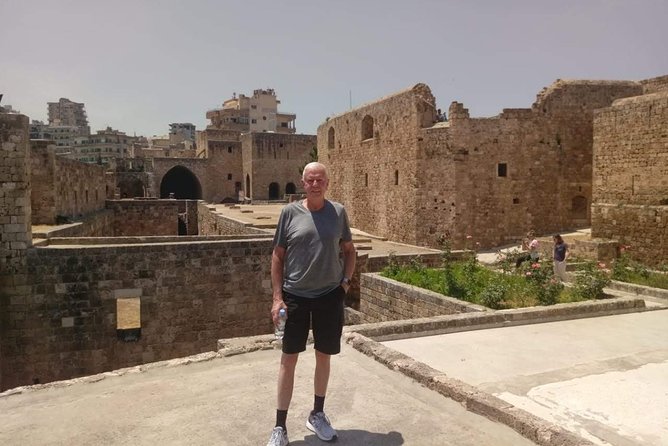
The Citadel Saint Gilles, also called Qal’at Sinjil, sits above the city and gives you a strong opening view of Tripoli. The fortress is huge, measuring about 140 meters long and 70 meters wide, and its shape reflects repeated rebuilding rather than one clean period of design.
You can see remnants of Fatimid construction, Crusader additions from the 12th and 13th centuries, Mamluk work from the 14th century, and Ottoman changes from the 16th century. An octagonal Fatimid structure was converted into a church by the Crusaders. Later rulers altered the site again.
The present form owes much to restoration carried out by Mustafa Barbar Agha, Tripoli’s governor in the early 19th century. Your visit lasts about 30 minutes, with admission included. That is enough time for a guided look at the fortress and its history, though not enough for a slow architectural study of every corner.
I would treat this as the visual anchor of the day. The castle helps you understand why Tripoli mattered, but the old city below gives the fortress its meaning.
Al Mansouri Great Mosque and the city’s Mamluk center
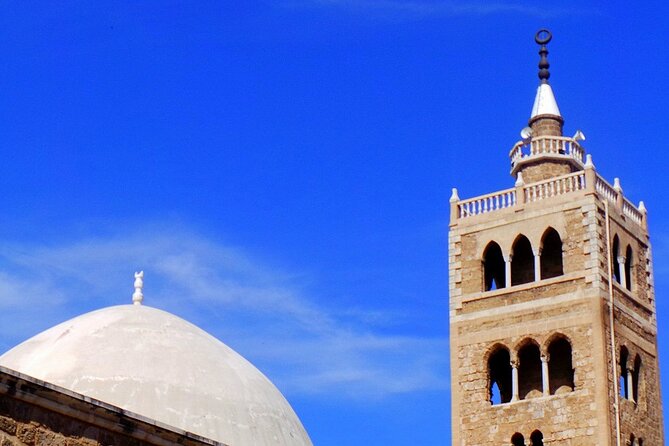
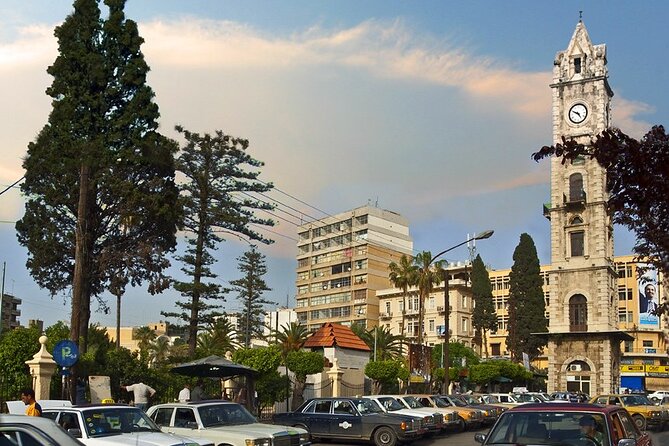
The Al Mansouri Great Mosque was begun in 1294 and completed in 1315. It was built over the remains of the 12th-century Crusader cathedral of St. Mary of the Tower, so its walls preserve an unusual meeting of Western and Islamic architecture.
The mosque’s large courtyard leads to a vaulted prayer hall. Look for the old northern entrance and the Lombard-style bell tower, which was later transformed into a minaret. Foundation plaques and decrees carved into the building also provide clues about construction and daily life during the Mamluk period.
The scheduled visit is only about 15 minutes, and admission is free. That makes your guide’s explanation especially valuable. Without context, the reused columns, altered tower, and inscriptions could be easy to miss. I would listen first, then take a quick look around rather than expecting a long independent visit.
A completely different kind of day out:
- Guided Small-Group Tour to Baalbek, Anjar and Ksara with Lunch
★ 5.0 · 511 reviews - Guided Small-Group Tour to Jeita, Harissa, Byblos with Lunch
★ 5.0 · 361 reviews - Paragliding Trip Over Lebanon – Jounieh Bay
★ 5.0 · 257 reviews - Jeita Grotto,Harissa&Byblos Full-Day PRIVATE-CAR Trip from Beirut
★ 5.0 · 222 reviews
Taynal Mosque and reused Roman columns
The Taynal Mosque dates from 1336 and was built by Saif Ed-Dine Taynâl on the site of a ruined Crusader church. Its adjoining domed mausoleum contains the founder’s tomb.
The building’s most striking detail is the reuse of two rows of granite columns with late Roman capitals in the first prayer hall. The entrance to the second prayer hall has a distinctive decorative design associated with Mamluk Tripoli. These details make the mosque a useful companion to Al Mansouri. Both buildings show how the city’s rulers reused earlier structures instead of clearing the slate.
The stop lasts around 15 minutes and has no admission charge. As with the Great Mosque, modest timing means you should stay close to the guide and focus on the features being pointed out.
Souk Al-Harajb and Tripoli’s working markets
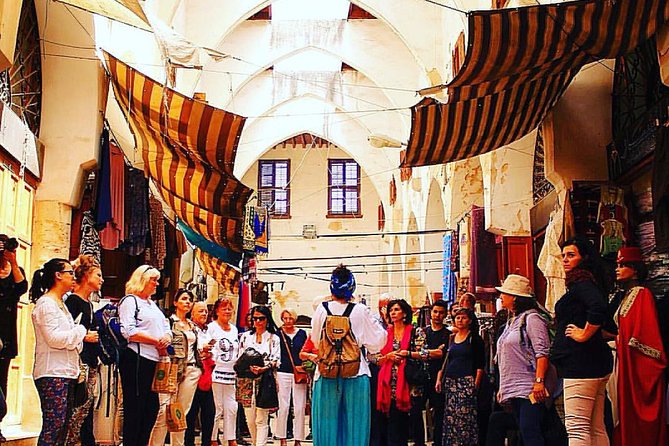
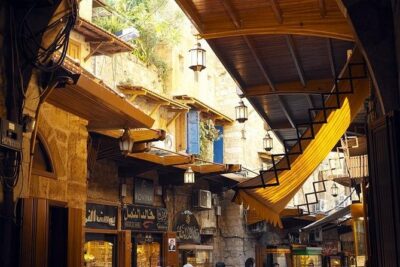
The souks are where the tour shifts from monuments to everyday city life. Tripoli has nine named souks: Attareen, Bazerkan, Haddadin, Haraj, Kameh, Koundarjiyeh, Nahhasin, Samak, and Sayyaghin. There is also a food souk selling produce, meat, fish, and other goods.
You can expect covered passageways, small alleys, shopfronts, smells from food and materials, and the sound of trade happening around you. This is not a polished shopping mall. The appeal comes from the old pattern of specialized crafts and market streets.
About 30 minutes is scheduled for Souk Al-Harajb. That is enough to get a feel for the area, but you may want to ask your guide where the most useful pause points are. If you enjoy browsing, tasting, or photographing details, the time can pass quickly.
I like that the souk visit gives the tour a human scale. After castles and mosques, you see the city as a place where people still work and shop.
Khan Al-Khayyatin and Khan As Sabon
Khan Al-Khayyatin is known as the Tailors’ Khan. It is a long rectangular building, about 40 by 80 meters, with a covered central courtyard and shops lining the sides. Tailors and related trades, including sellers of needles, thread, and sewing machines, have traditionally used the building.
The scheduled stop is only five minutes, so think of it as a quick architectural and cultural look rather than a shopping visit. The covered courtyard helps you see how these khans organized work under one roof.
Khan As Sabon, or the Soap Khan, dates to the beginning of the 17th century. It was first built as a military barracks for Ottoman troops and was placed in the city center so the pasha could control possible uprisings. Its two-story arcades run around a courtyard with a fountain.
This stop also lasts about five minutes. The building’s former military purpose gives it a different character from the Tailors’ Khan. Together, the two stops show how Tripoli’s commercial buildings could serve practical, political, and social purposes over time.
Tripoli’s old hammams
The tour includes four bathhouses, each with a different condition and story. They are short stops, but they help explain an important part of old urban life.
Hammam El-Abed is described as the only functioning hammam in Tripoli. Probably built near the end of the 17th century, it has pierced domes typical of Mamluk and Ottoman public baths. Cushions, a central fountain, and traditional fittings give the interior the feel of a living museum.
Hammam Al-Jadid was built around 1740 and was once the largest hammam in Tripoli. It has not operated since the 1970s, but its faded condition still suggests the scale and atmosphere of the old bathing tradition.
Hammam Izzed-dine was given to the city by Mamluk governor Izz ed-Dine Aybak, who died in 1298 and is buried in a nearby mausoleum. The bathhouse was in continual use until recently and is now under restoration.
The itinerary lists both Hammam Al Jadid and Hammam al-Jadid, but the descriptions refer to the functioning Hammam El-Abed, the former New Bath, and Hammam Izzed-dine. Since the visits are only about five minutes each, ask your guide to clarify the names and current access on the day. This is a small point, but it can prevent confusion when several bathhouses appear close together in the schedule.
Oscar Niemeyer’s unfinished fairgrounds
The Rachid Karami International Fair is one of the day’s most surprising stops. Brazilian architect Oscar Niemeyer designed its 15 structures in 1963, and the complex was intended to become one of the world’s five largest exhibition centers.
The project was abandoned during Lebanon’s civil war in 1975, leaving the structures unfinished. The visit is listed at about five minutes, so you should not expect a full architectural tour. Still, the site adds a modern chapter to a day otherwise focused on medieval and Ottoman buildings.
I value this contrast. Tripoli is not only an old city of mosques and markets. Its unfinished fairgrounds show an ambitious modern plan interrupted by conflict, and they remind you that the city’s story did not stop in the Mamluk period.
Hallab 1881 and Tripoli’s sweet tooth
Hallab 1881 is one of Tripoli’s best-known landmarks. The family business began in 1881 with Abdul Rahman Hallab and became closely associated with Lebanese sweets.
The stop lasts about five minutes, so expect a brief visit rather than a long meal. It is still a useful pause, especially if you want to connect Tripoli’s commercial traditions with its food culture. The tour does not include lunch, and this stop should not be treated as a substitute for lunch.
If you like edible souvenirs, Hallab is the natural place to consider buying something to take back. Your guide can help you understand what the shop is known for and how much time you have before continuing.
El Mina Port and the Phoenician connection
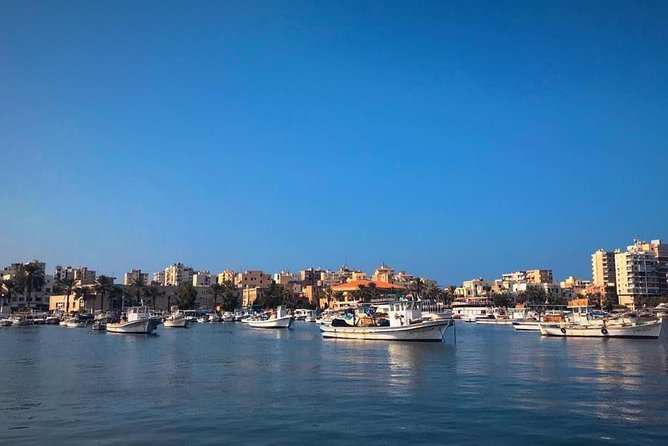
The final listed stop is El Mina, Tripoli’s coastal town and harbor. It occupies the location of the old Phoenician city of Tripoli and serves as the port area for modern Tripoli.
The port has nine islands. Four have been declared natural reservations to support fish breeding and protect their natural habitat. The scheduled visit is about 15 minutes, making it a short coastal look rather than a boat outing or extended seaside stay.
I like ending here because the port connects several parts of the day. Tripoli’s position on the Mediterranean helped shape its trade, its markets, and its long relationship with other cultures. After the dense old city, the waterfront gives you a little visual breathing room.
Guides, timing, and the feel of the day
The experience includes a tour leader and a professional guide. Rita received especially strong praise for guiding this Tripoli outing as well as Beirut and Baalbek excursions, while Pierre was singled out for making the long day feel manageable. Those names are useful when you receive your guide assignment.
The schedule is ambitious. Some major stops receive 15 to 30 minutes, while several khans and hammams receive only five. That format works if you want a broad introduction to Tripoli and prefer seeing many different places. It will disappoint you if you want long visits inside each monument or extended time in the souks.
The private format helps. You can ask questions, request a little extra time where possible, and avoid the delays of a large group. Still, the total duration remains about eight to nine hours, so wear comfortable shoes and expect a full day rather than a relaxed half-day outing.
Most people can participate, and the activity is private to your group. Confirmation is provided at booking. Free cancellation is available if you cancel at least 24 hours before the local start time. Changes or cancellations inside that window are not accepted for a refund.
Who should book this Tripoli day trip?
I would recommend it to you if you are staying in Beirut and want to see Tripoli without arranging transport yourself. It suits first-time visitors who want an organized overview, families or friends who can use the group discount, and anyone who values a private guide and hotel pickup.
It is also a good choice if you care about more than famous monuments. The route includes working souks, old craft khans, bathhouses, a sweet shop, and a port, along with the major religious and military buildings.
I would hesitate if you dislike long road days, need generous time at each site, or want lunch included in the price. The trip also may not satisfy a specialist in Crusader or Ottoman architecture who wants extended access and detailed study. For that kind of visit, a shorter, more focused arrangement would be better.
Should you book it?
Book this tour if convenience, variety, and private guiding matter more to you than a slow pace. For $100 per person, the package covers transport, pickup, a guide, and entrance fees, while taking the worry out of Beirut’s difficult roads.
The best reason to choose it is the combination of Tripoli’s old city and its less obvious places: the Tailors’ Khan, Soap Khan, hammams, Niemeyer’s unfinished fairgrounds, Hallab 1881, and El Mina port. Just bring patience for the long day, arrange your own lunch, and understand that some stops are quick glimpses rather than full visits.
FAQ
Where does this Tripoli tour begin and end?
Hotel pickup and drop-off are included from a central Beirut address. The experience begins and ends in Beirut.
How long does the private Tripoli trip last?
The full experience lasts approximately eight to nine hours.
Is this a private tour?
Yes. Only your group participates in the activity.
What transportation is provided?
The tour includes comfortable private transportation in an air-conditioned vehicle.
Are entrance fees included?
Yes. Entrance fees are included where applicable. Several listed stops, including the mosques, souks, khans, hammams, fairgrounds, Hallab 1881, and El Mina port, have no admission charge listed.
Is lunch included?
No. Lunch is not included in the tour price.
Can I cancel for a full refund?
You can cancel for a full refund if you cancel at least 24 hours before the experience’s local start time. Cancellations or changes made less than 24 hours before the start are not accepted for a refund.
Just added in Beirut
- Guided Half-Day Private Trip to Beiteddine Palace and Deir el Qamar★ 5.0 · 2 reviews
- Guided Half-Day Private Trip to Byblos from Beirut★ 5.0 · 1 review
- Small Daily Tours in Beirut City★ 4.5 · 2 reviews
- Discovering Tyre: A Half-Day Tour with English-Speaking Driver★ 5.0 · 1 review
- Beirut to Beiteddine and Deir El Qamar: Daily Tours with Lunch★ 5.0 · 2 reviews
- Semi-Private Guided Tour to Baalbek, Anjar and Ksara with lunch★ 5.0 · 2 reviews
- Customized as you like day tour in lebanon anywhere from 1-6 riders same price★ 5.0 · 1 review
- Private Trip to Beiteddine Palace, Deir elQamar and Mousa Castle★ 5.0 · 2 reviews
Tripoli and Batroun Tours

PRIVATE city Tour of authentic Tripoli and vibrant Batroun
Read our review →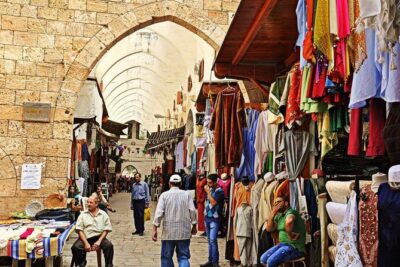
Guided Small-Group Tour to Tripoli and Batroun with Lunch
Read our review →
Full day Tripoli private great guide/all-in + rustic meal
Read our review →