REVIEW · TRIPOLI AND BATROUN TOURS
Discovering Lebanon’s Charms: A Private Tour to Tripoli & Batroun
Two cities, one very full day. This private trip from Beirut pairs Tripoli’s medieval souks and Mamluke mosques with Batroun’s Phoenician sea wall, lemonade, and coastal streets. I like the hotel pickup and private vehicle, and I especially like the chance to explore with a guide who can adjust the day and sometimes open sites that would otherwise be closed. The main drawback is the packed schedule: several stops receive only five or fifteen minutes.
The price is $60 per person, a fair deal if your group fills the vehicle and you value door-to-door transport. Lunch and entrance fees are extra, so this is not a fully prepaid day. You should also expect a long outing with plenty of short visits rather than a slow, leisurely tour of every monument.
In This Review
- Key points to know before you go
- Why this Beirut day trip is worth your time
- Tripoli’s old city, where trade and worship share the streets
- The Citadel of Saint Gilles and Tripoli from above
- Two Mamluke mosques with reused Crusader stone
- Tripoli’s souks: the most atmospheric part of the day
- Four bathhouses and a glimpse of public life
- Oscar Niemeyer’s unfinished fairground
- Sweets at Hallab 1881 and the harbor at Al-Mina
- Batroun’s ancient wall and easy coastal mood
- Hilmi’s lemonade, a small but memorable finish
- What $60 includes, and where the value lies
- Who should book this private tour?
- Should you book it?
- FAQ
- What time does the tour start?
- How long does the tour last?
- Does the tour provide hotel pickup and drop-off?
- Is transportation private?
- Is an English-speaking driver included?
- Are entrance fees included?
- Is lunch included?
- Can I cancel for a full refund?
Key points to know before you go
- Tripoli gets the serious history: You’ll see a citadel, Mamluke mosques, medieval trade buildings, public baths, and old souks.
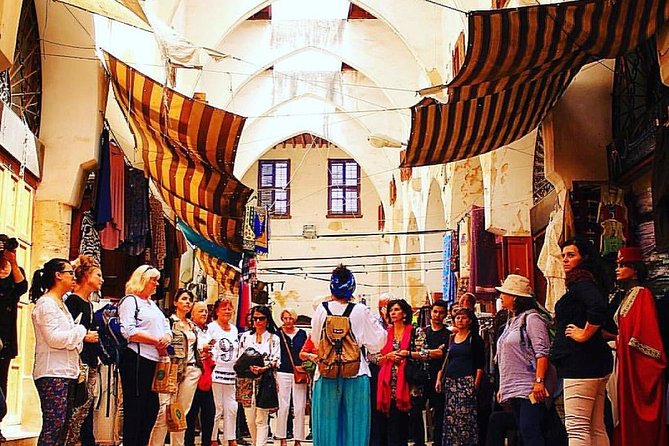
- The souks are the heart of the day: Narrow lanes connect tailors, food sellers, metalworkers, soap makers, and other traditional trades.
- Batroun adds a lighter coastal finish: The ancient Phoenician wall is followed by Hilmi’s lemonade, made in the city since 1888.
- Oscar Niemeyer’s unfinished fairground is a sharp change of mood: The Rachid Karami International Fair offers a look at modern architecture and Lebanon’s wartime history.
- The tour is private: Only your group participates, with an English-speaking driver and air-conditioned transport.
- Budget for extras: Site admission is not included, and lunch is your responsibility.
Why this Beirut day trip is worth your time
Tripoli and Batroun give you two very different pictures of northern Lebanon. Tripoli is dense, old, and layered with Islamic, Crusader, Ottoman, and local commercial history. Batroun is smaller and easiergoing, with a sea wall, old religious buildings, beaches, cafes, and a strong reputation for lemonade.
I like the pairing because the day does not ask you to choose between archaeology and everyday city life. In Tripoli, you move through working souks and old buildings rather than simply looking at isolated ruins. In Batroun, ancient stone sits beside places where people stop for a drink and a relaxed break.
The private format matters here. The listed stops are spread across Tripoli, its Al-Mina harbor area, and Batroun. A private vehicle saves the trouble of arranging separate transport, while a private guide can explain why a reused church column, an old khan, or a half-finished modernist building matters.
Still, you should keep your expectations in check. The day lasts about eight hours, yet the program includes many locations. The three hours assigned to Tripoli cover a great deal of ground, and the separate five-minute stops are best treated as quick looks, photo opportunities, or brief explanations. If you want long visits inside each bathhouse and mosque, you may need to agree on priorities at the start.
More of Tripoli and Batroun:
- Aaqoura Lakes – Baatara Waterfall – Batroun
★ 4.5 · 55 reviews - PRIVATE city Tour of authentic Tripoli and vibrant Batroun
★ 5.0 · 51 reviews - Guided Small-Group Tour to Tripoli and Batroun with Lunch
★ 5.0 · 16 reviews
Tripoli’s old city, where trade and worship share the streets
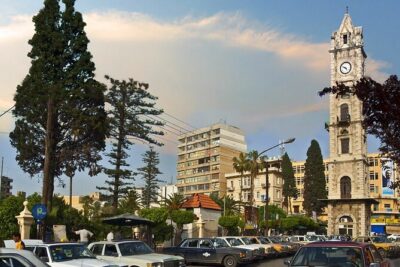
Tripoli is about 80 kilometers north-northeast of Beirut, at the mouth of the Abu Ali River. Its history reaches back to the Phoenician era, and the old city contains dozens of historic buildings, including mosques from the Mamluke and Ottoman periods.
The most rewarding part of the visit is the way the buildings fit together. A mosque, a bathhouse, a khan, and a market are not scattered across a park. They form a city fabric shaped by trade, worship, craft, and public life.
Your time in Tripoli begins with the city itself, then moves through several major monuments. The order may change, but the experience is likely to feel like a walk through connected quarters rather than a series of unrelated attractions.
The Citadel of Saint Gilles and Tripoli from above
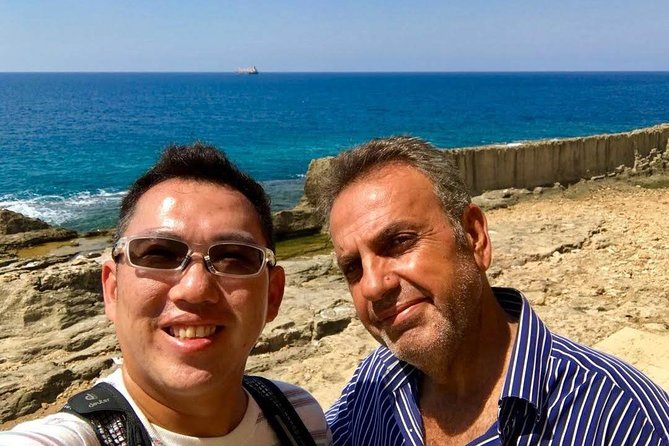
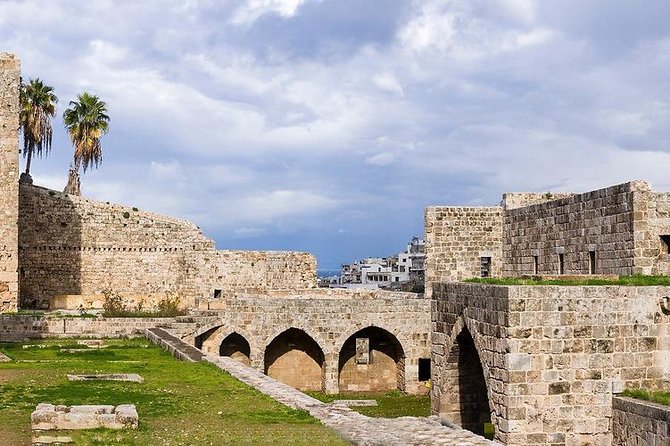
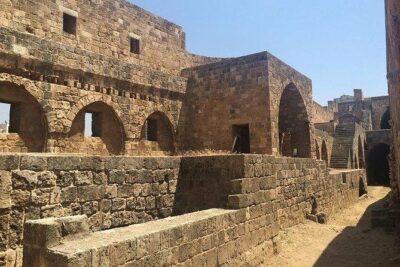
The Citadel of Tripoli, also called Qal’at Sinjil, rises above the city. It measures about 140 meters by 70 meters and has been changed by Fatimid, Crusader, Mamluke, and Ottoman builders.
Allow roughly 30 minutes here, with admission paid separately. That short visit should give you time to appreciate the scale of the fortress and the way it has been rebuilt over many centuries. The octagonal Fatimid structure later became a Crusader church, while other sections date from the 12th and 13th centuries. Mamluke and Ottoman additions followed.
The present form also reflects restoration under Mustafa Barbar Agha, who governed Tripoli in the early 19th century. I would ask your guide to point out the different building periods, since the fortress makes much more sense when you can connect the walls with the people who altered them.
This stop is also useful for orientation. From above, you can better understand the relationship between the old city, the coast, and the surrounding urban area. The drawback is that half an hour passes quickly, especially if you want both views and architectural detail.
Two Mamluke mosques with reused Crusader stone
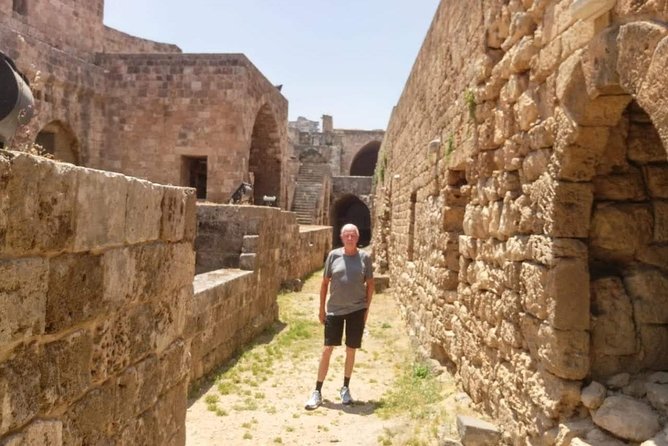
Al Mansouri Great Mosque was begun in 1294 and finished in 1315. It was built over the remains of the 12th-century Crusader cathedral of St. Mary of the Tower.
The courtyard and vaulted prayer hall are the main features, but look closely at the older Western elements. The northern entrance and a former Lombard-style bell tower, now used as the minaret, reveal how one building was reshaped into another. Inscriptions on the walls also provide clues about construction and daily life during the Mamluke period.
The visit is scheduled for about 15 minutes, with no admission fee listed. That is enough for a guided introduction, but not enough for a slow architectural study. You’ll get more from the stop if you listen for the story of reuse rather than trying to inspect every inscription.
Taynal Mosque, built in 1336, offers another example of layered construction. Saif Ed-Dine Taynâl built it on the site of a Crusader church, and the founder’s tomb is in the adjoining domed mausoleum.
The mosque contains two rows of granite columns with late Roman capitals, reused from the earlier structure. The entrance to the second prayer hall is noted for its Mamluke decoration. Again, the fifteen-minute visit is brief, but the contrasts are striking: Roman columns, Crusader foundations, and Islamic architectural design occupy the same complex.
When visiting religious buildings, dress and behavior should be respectful. The supplied information does not specify a dress code, so ask the guide before entering and follow local instructions.
A completely different kind of day out:
- Guided Small-Group Tour to Baalbek, Anjar and Ksara with Lunch
★ 5.0 · 511 reviews - Guided Small-Group Tour to Jeita, Harissa, Byblos with Lunch
★ 5.0 · 361 reviews - Paragliding Trip Over Lebanon – Jounieh Bay
★ 5.0 · 257 reviews - Jeita Grotto,Harissa&Byblos Full-Day PRIVATE-CAR Trip from Beirut
★ 5.0 · 222 reviews
Tripoli’s souks: the most atmospheric part of the day
Tripoli has nine named souks, including Attareen, Bazerkan, Haddadin, Haraj, Kameh, Koundarjiyeh, Nahhasin, Samak, and Sayyaghin. There is also a food market selling produce, meat, fish, and other daily goods.
Souk Al-Harajb is allotted about 30 minutes. That is likely the most atmospheric walk of the Tripoli portion. You’ll pass through covered lanes, small alleys, and compact shops where traditional trades still shape the feel of the district.
The point is not just shopping. The souks show how an old commercial city works. Smells, sounds, colors, and movement come from ordinary business, not from a display arranged for sightseeing. If you want to buy something, ask your guide about prices and suitable shops rather than rushing into the first purchase.
Khan Al-Khayyatin is a long rectangular building with a covered courtyard and shops along the sides. As its Arabic name suggests, it has housed tailors and related trades such as sellers of thread, needles, and sewing machines.
You’ll have only about five minutes here. That makes it a quick architectural glimpse, not a proper shopping visit. Look up at the covered courtyard and notice how the khan once gave merchants a place to work, sell, and organize their trade.
The Soap Khan, or Khan As Sabon, dates from the early 17th century. It was originally built as an Ottoman military barracks, positioned in the center of the city so the governor could respond to unrest. Its two-story arcades run around a courtyard with a fountain.
This is a useful reminder that old commercial buildings often had several lives. The name suggests soap production, but its first purpose was military. A five-minute stop will not allow much more than a quick look, so take advantage of the guide’s explanation.
Four bathhouses and a glimpse of public life
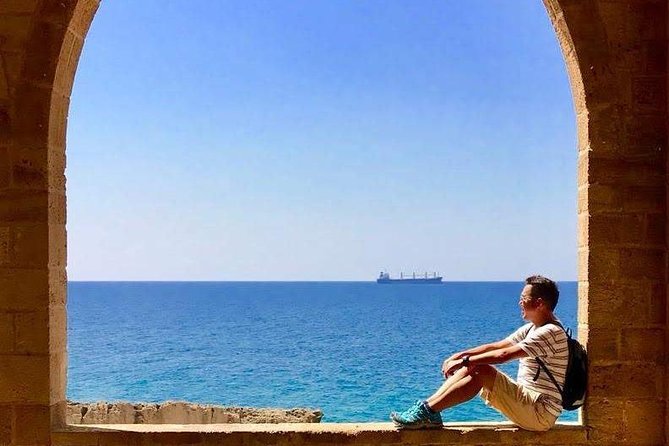
Tripoli’s hammams help you picture the social life of the old city. These were not simply places to wash. Their domes, fountains, cushions, and changing rooms formed part of the rhythm of urban life.
Hammam Al-Abed, also called Hammam El-Abed, is described as the only functioning hammam in Tripoli. It was probably built near the end of the 17th century and has the pierced domes associated with Mamluke and Ottoman bathhouses.
The interior includes cushions, a central fountain, and traditional fittings. You are given about five minutes, so the visit may be more of a look through the entrance than a full tour of the bathhouse.
Hammam Al-Jadid was built around 1740 and is the largest hammam in Tripoli. It has not operated since the 1970s, but its faded condition helps show how public buildings change when their original use disappears.
Hammam Izzeddine was donated to the city by the Mamluke governor Izz ed-Dîne Aybak, who died in 1298 and is buried in a nearby mausoleum. The bathhouse was used until recently and is now under restoration.
These three brief stops are best understood as a group. You may not have time to examine each one, but together they explain the scale and variety of Tripoli’s bathhouse tradition.
Oscar Niemeyer’s unfinished fairground
The Rachid Karami International Fair offers a complete change from the old city. The 15 structures were designed by Brazilian architect Oscar Niemeyer in 1963, and the site was intended to become one of the world’s largest exhibition centers.
The project was abandoned during Lebanon’s civil war in 1975. The buildings remain unfinished, giving the site a stark modern character. The visit is listed at about five minutes, so do not expect an extended architectural tour. It is more likely a short stop to see the main forms and hear the story of the abandoned project.
I like including this stop because it prevents the day from becoming a simple parade of medieval monuments. Lebanon’s recent past is part of the country’s identity, and the fairground puts that history into concrete and open space.
Sweets at Hallab 1881 and the harbor at Al-Mina
Hallab 1881 is one of Tripoli’s best-known sweet makers. Abdul Rahman Hallab began the business in 1881, and the company’s Kasr El Helou is now a local landmark.
You are given around ten minutes. That is enough for a tasting or purchase if the stop is open and the schedule allows. It also gives you a practical chance to try Lebanese sweets in the city that built this particular food tradition.
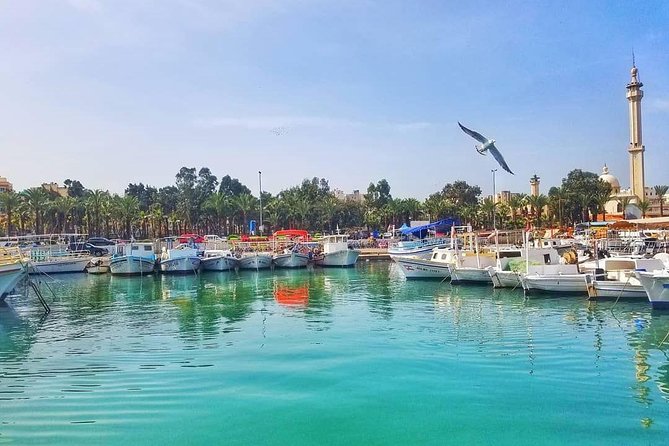
Al-Mina is Tripoli’s coastal town and harbor. It occupies the site of the ancient Phoenician city and includes nine islands, four of which have been declared natural reservations to protect fish breeding and local habitat.
The fifteen-minute visit adds sea air and a different view of Tripoli. After the tight lanes of the old city, the harbor helps you understand the city’s connection to the Mediterranean. It is a short stop, but an important one because Tripoli was never only an inland market town.
Batroun’s ancient wall and easy coastal mood
Batroun is one of the oldest cities in the world, with Phoenician roots reaching back more than three thousand years. It is also known for beaches, churches, citrus fruit, old fortifications, cafes, and modern nightlife.
The tour allows about 30 minutes for Batroun before visiting the Phoenician Wall. That initial stop gives you a quick sense of the town, but it is not enough to explore every church, beach, or cafe. If Batroun is your main interest, ask whether you can shift time away from one of the shorter Tripoli stops.
The Phoenician sea wall is about 225 meters long and 1 to 1.5 meters thick. It began as petrified sand dunes, then was reinforced with rocks by the Phoenicians. Its present shape dates largely to the first century BC.
The wall protected the city from storms and invaders. During Roman times, parts were used as a quarry. Some sections have crumbled, but the remaining stone still meets the sea in a powerful, simple line.
This is not a huge monument with rooms to enter. It is a coastal structure best appreciated from outside, with time to look at the stone, water, and old city around it. The scheduled 20 minutes should be enough for photographs and a short explanation.
Hilmi’s lemonade, a small but memorable finish
Hilmi’s House of Lemonade has been making lemonade since 1888. The shop also offers smoothies and ice cream, prepared with fresh produce and locally sourced goods.
The visit lasts about five minutes, so think of it as a quick refreshment stop rather than a long cafe break. Still, it is a fitting finish. After fortresses, mosques, markets, and sea walls, a cold local drink gives the day a simple, pleasant final note.
Lunch is not included, and the provided details do not name a restaurant or set meal. Bring that question up early, especially because the schedule is tight. You may prefer to keep lunch brief, or you may want to agree on a longer meal and reduce the number of short stops.
What $60 includes, and where the value lies
At $60 per person, the package includes hotel pickup and drop-off, private transportation, an air-conditioned vehicle, and an English-speaking driver. Since only your group participates, the value improves when several people share the booking and qualify for a group discount.
You are paying for convenience as much as sightseeing. Northern Lebanon covers a lot of ground from Beirut, and arranging this route independently would require separate transport, navigation, and local planning. A private day also lets you ask for more time at the souks, the citadel, or Batroun if those matter most to you.
The price does not include entrance fees or lunch. The citadel specifically lists admission as extra, while the other stops list no admission charge. Keep a little money aside for the fortress, food, drinks, and any sweets or shopping.
The service appears able to respond to local conditions. The guide has been praised for showing more than the planned sights and for opening doors when places were closed for a holiday. That is a useful advantage in a city where hours and access can change.
Who should book this private tour?
I would choose this tour if you have one free day from Beirut and want to combine major historic sites with working neighborhoods and a coastal town. It suits couples, families, and small groups who prefer a private vehicle to a large coach.
It is also a good match if you like variety. In eight hours, you may see a Crusader fortress, Mamluke mosques, Ottoman-era buildings, active souks, a modernist fairground, a harbor, a Phoenician wall, and a century-old lemonade shop.
I would hesitate if your priority is a slow museum-style visit. The five-minute stops are numerous, and even the citadel receives only about half an hour. The best approach is to tell the driver your priorities at the start and ask which stops can be shortened.
The tour starts at 9:00 a.m. Hotel pickup and drop-off are offered, and confirmation is provided when you book. Most people can participate, but the supplied details do not provide specific accessibility information, so ask the operator before reserving if that affects your plans.
Should you book it?
Book this trip if you want a private, varied northern Lebanon day and value transport, local context, and flexibility more than long visits at each site. The strongest parts are Tripoli’s souks and layered religious buildings, along with the contrast offered by Batroun’s sea wall and lemonade.
Skip it, or request changes, if you want to spend most of the day in one place. With so many stops, the experience works best as a broad introduction. Tell the guide what matters most to you, then use the private format to turn a crowded schedule into a day that feels more personal.
FAQ
What time does the tour start?
The tour starts at 9:00 a.m.
How long does the tour last?
The tour lasts approximately eight hours.
Does the tour provide hotel pickup and drop-off?
Yes. Hotel pickup and drop-off are included.
Is transportation private?
Yes. The tour provides private transportation in an air-conditioned vehicle, and only your group participates.
Is an English-speaking driver included?
Yes. An English-speaking driver is included.
Are entrance fees included?
No. Entrance fees to the sites are not included. Admission to the Citadel of Saint Gilles is specifically listed as extra.
Is lunch included?
No. Lunch is not included in the tour price.
Can I cancel for a full refund?
Yes, if you cancel at least 24 hours before the experience start time. Cancellations made less than 24 hours in advance are not refunded, and changes made within that period are not accepted.
Just added in Beirut
- Private Guided Tour of Beiteddine and Deir el Qamar★ 5.0 · 2 reviews
- Unveiling the Charms of Chouf Cedars, Baalbek Temples & Ksara★ 5.0 · 1 review
- Discover Lebanon: Private Tour to Jeita Grotto, Harissa & Byblos★ 5.0 · 1 review
- Exploring Lebanon’s: Journey to Beit elDin, Deir ElQamar & Cedars★ 5.0 · 2 reviews
- Baalbek, Anjar & Ksara: Private Tour Through Lebanon’s Treasures★ 5.0 · 2 reviews
- Exploring History & Viticulture: Private Tour to Baalbek & Ksara★ 5.0 · 1 review
- Private Wine Tasting Day Tour from Beirut★ 5.0 · 1 review
- Private Full-Day Tour to Qadisha valley, Cedars of God and Baalbek from Beirut★ 5.0 · 1 review
Tripoli and Batroun Tours
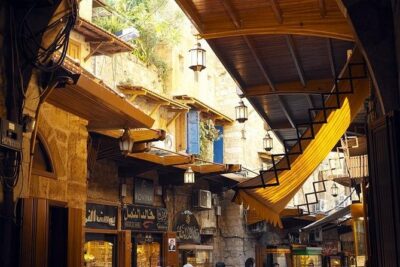
PRIVATE city Tour of authentic Tripoli and vibrant Batroun
Read our review →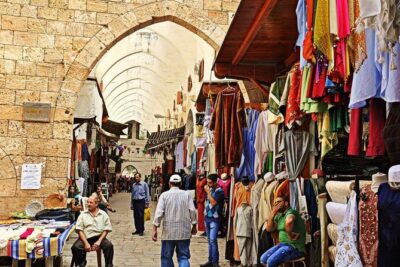
Guided Small-Group Tour to Tripoli and Batroun with Lunch
Read our review →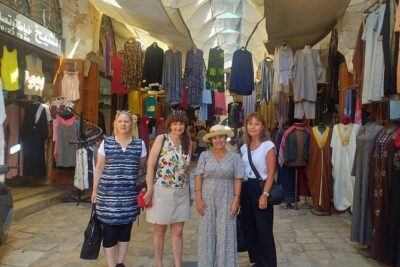
Full day Tripoli private great guide/all-in + rustic meal
Read our review →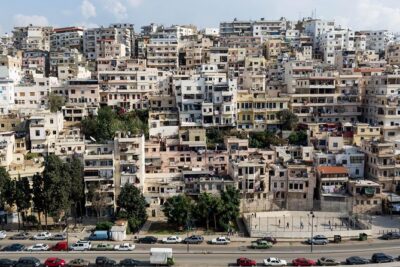
Private Full-Day Tour to Byblos and Tripoli from Beirut
Read our review →