REVIEW · SIDON TYRE AND MAGHDOUCHE DAY TRIPS
Small Group Tour to Sidon, Tyre & Maghdouche with lunch
History comes thick and fast here. This full-day trip from Beirut links three very different Lebanese sights: Sidon’s Crusader sea castle, Tyre’s Phoenician and Roman remains, and the Marian shrine at Maghdouche. You ride in an air-conditioned minivan, travel with a capped group of up to 20 people, and finish with a traditional-style lunch in Tyre.
I especially like the way the tour mixes major archaeological sites with ordinary city life. The Sidon souks and Tyre’s old market keep the day from becoming a parade of ruins, while the included hotel pickup and lunch make the $99 price easier to justify. I also like that guide Hassane has been praised for his care, clear explanations, and ability to arrange an archaeologist at Tyre.
The main drawback is the pace. You cover a lot of ground in about eight hours, and several stops are short. Admission is not included at the sea castle, Soap Museum, or Al-Bass Archaeological Site, so you should carry extra cash for those visits if you want to enter.
In This Review
- Key points to know before booking
- Why this makes a good Beirut day trip
- Sidon Sea Castle: a fortress reached across the water
- Khan al-Franj and Sidon’s commercial past
- The Soap Museum: old craft in a restored workshop
- Sidon souks: a short taste of local city life
- Maghdouche and Our Lady of Mantara
- Lunch in Tyre and the Phoenician connection
- Al-Bass Archaeological Site: the day’s strongest ancient stop
- Tyre’s old souk and heritage square
- Transport, group size, and the real value of $99
- Who will get the most from this tour
- Should you book the Sidon, Tyre, and Maghdouche tour?
- FAQ
- How long is the tour?
- Where does the tour start?
- Is lunch included?
- Is transportation provided?
- How large is the group?
- Are attraction admission fees included?
- How long do you spend at the Sidon Sea Castle?
- How long is the visit to Al-Bass Archaeological Site?
- What is the cancellation policy?
Key points to know before booking
- Three major stops in one day: Sidon, Maghdouche, and Tyre give you a broad look at southern Lebanon.
- A strong guide can shape the day: Hassane has been singled out for his history knowledge, professional driving, and personal attention.
- Lunch is included in Tyre: You do not need to arrange a midday meal while moving between sites.
- Tyre includes serious Roman remains: Al-Bass has a triumphal arch, necropolis, aqueduct, Roman road, and one of the best-preserved hippodromes.
- Small-group transport saves time: Hotel pickup and drop-off reduce the work of arranging taxis between three cities.
- Entry fees are separate: The sea castle, Soap Museum, and Al-Bass site list admission charges as not included.
Why this makes a good Beirut day trip
Sidon and Tyre are close enough to visit from Beirut, but far enough away that planning transport can become a nuisance. This tour handles the route, the driving, and the return to your hotel, leaving you free to watch the coastal towns pass by.
I see the day as a useful introduction to southern Lebanon rather than a slow, specialist archaeological tour. You get Crusader remains, Phoenician stories, Roman engineering, religious heritage, markets, and lunch in one outing. That range is the main appeal.
The capped group size of 20 should feel more manageable than a large coach excursion. Still, the actual atmosphere depends on the number booked that day. If you want the most personal experience possible, ask at booking how many people are expected.
The tour begins at 8:00 am and lasts about eight hours. That early start matters. With several stops, two archaeological areas, and hotel transfers, a late departure would squeeze the schedule even more.
More of Sidon and Tyre:
- Small-Group Adventure Tour to Sidon Tyre & Maghdouche-Day Trip
★ 5.0 · 45 reviews - Sidon, Tyre & Maghdouche Day Trip – With Lunch (4G on Board)
★ 4.5 · 44 reviews - Guided Small-Group Tour to Sidon, Tyre & Maghdouche with Lunch
★ 5.0 · 41 reviews
Sidon Sea Castle: a fortress reached across the water
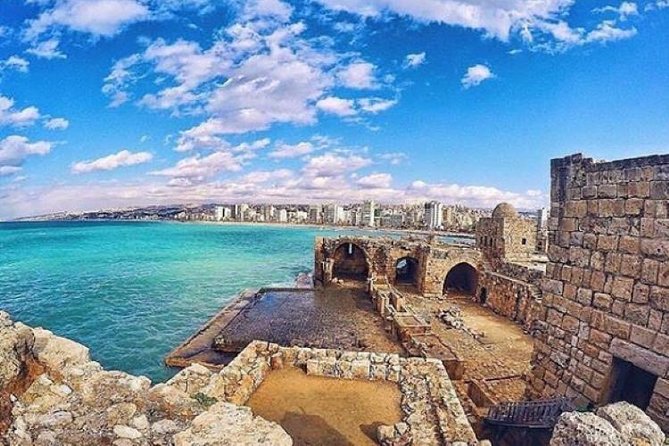
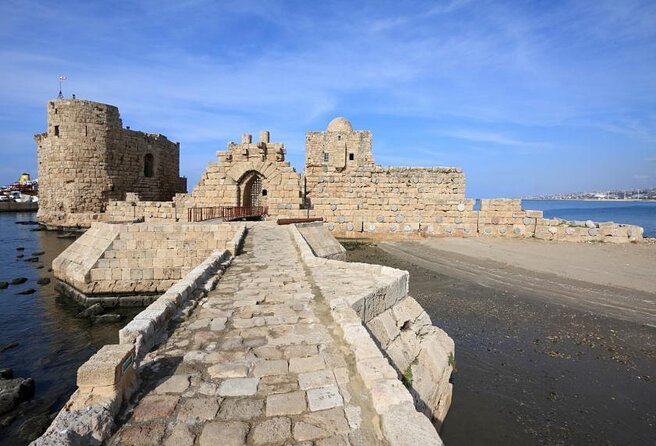
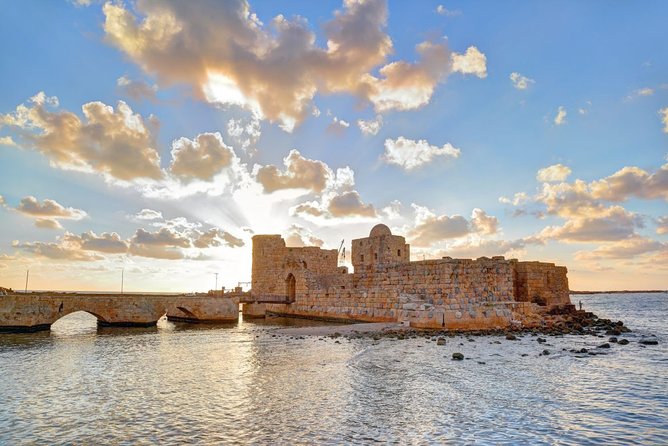
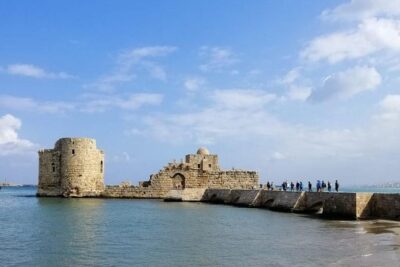
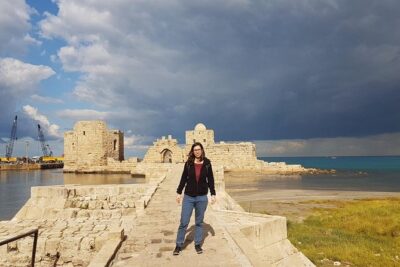
The first major sight is Sidon’s Sea Castle, a Crusader fortress built in the 13th century on a small island just offshore. A causeway connects it to the mainland, giving you a memorable approach before you even reach the stone walls.
This was built as a fortress linked to the Crusader presence in the Holy Land. The Mamluks largely destroyed it in 1291, and Fakhr el-Dine Maan II later restored parts of it in the early 17th century. Old prints show a more decorated and elegant structure than the one you see today, but the remaining walls still make a strong first stop.
You have about 30 minutes here. That is enough to look around, take in the harbor setting, and understand the castle’s position, but not enough for a long archaeological study. Admission is not included, so factor that into the day’s cost.
I would pay close attention to the setting. The castle is not simply an isolated ruin. Its position on the water explains its defensive purpose and gives you one of the clearest visual reminders that Sidon has always been tied to the sea.
Khan al-Franj and Sidon’s commercial past
Khan al-Franj offers a change of mood. Built in the early 17th century by Emir Fakhreddine II, it served as a hotel for ambassadors and a center for trade between Lebanon and France.
The building follows the classic khan plan: a large rectangular courtyard, a central fountain, and covered galleries around the edges. You have only 15 minutes, but the compact visit works well after the fortress. Instead of another military ruin, you see a place built for trade, diplomacy, religion, literature, and industry.
Admission is free. The short stop means you should not expect a full museum visit. Think of it as a quick look at the architecture and a useful explanation of how merchants and officials once moved through Sidon.
The Soap Museum: old craft in a restored workshop
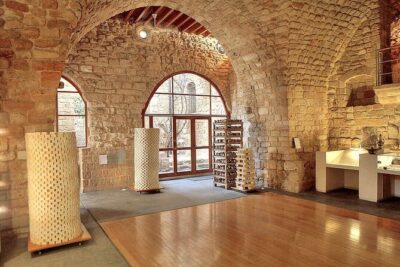
The Soap Museum gives the Sidon section a more human scale. The building began as a soap workshop operated by the Hammoud family in the 17th century, with parts thought to reach back to the 13th century.
Inside, the museum explains Levantine soap making, especially the use of olive oil. You can see a demonstration of traditional production and learn about hammam, or bath, customs. That practical focus makes this more than a display of old objects. You get a sense of a craft tied to homes, markets, hygiene, and daily work.
The building also contains archaeological finds from excavations on the site, including clay pipe heads from the 17th to 19th centuries and pottery fragments. You have 30 minutes here, which should give you time for the main exhibits and demonstration.
Admission is not included. If you enjoy craft museums and old working buildings, this is one of the more distinctive stops. If your priority is major monuments, you may find the visit less essential than the castle or Tyre’s Roman site.
A completely different kind of day out:
- Guided Small-Group Tour to Baalbek, Anjar and Ksara with Lunch
★ 5.0 · 511 reviews - Guided Small-Group Tour to Jeita, Harissa, Byblos with Lunch
★ 5.0 · 361 reviews - Paragliding Trip Over Lebanon – Jounieh Bay
★ 5.0 · 257 reviews - Jeita Grotto,Harissa&Byblos Full-Day PRIVATE-CAR Trip from Beirut
★ 5.0 · 222 reviews
Sidon souks: a short taste of local city life
The Sidon souks are a maze of narrow lanes lined with small kiosks, shops, cafés, and workshops. You may see butchers, grocers, shoemakers, tailors, jewelers, and street merchants sharing the same tight space.
The scheduled visit lasts just 10 minutes. That is enough to get your bearings, but not enough to browse slowly, shop for gifts, or stop for a coffee. Keep your expectations realistic. You are getting a quick walk through the commercial center, not a free afternoon in the market.
I like this stop because it adds noise, movement, and ordinary commerce to a day otherwise focused on monumental remains. Watch your footing in the narrow lanes and stay aware of the group, since it would be easy to lose sight of the guide.
Maghdouche and Our Lady of Mantara
The tour then moves inland to Maghdouche and the Basilica of Our Lady of Mantara, also called Our Lady of Awaiting. It is a Melkite Greek Catholic shrine discovered on September 8, 1721, by a young shepherd.
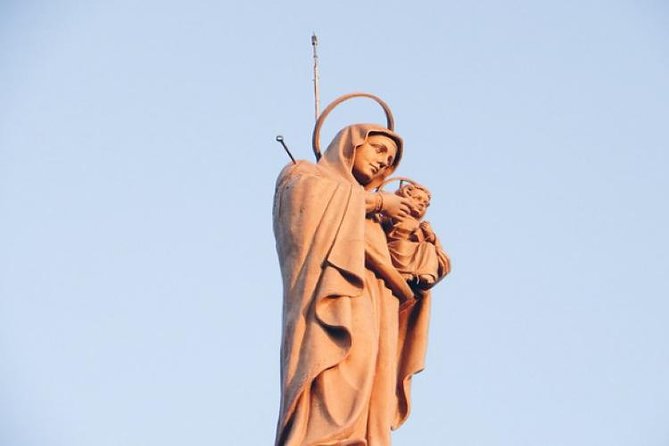
The complex includes a tower topped by a statue of the Virgin and Child, a cathedral, a cemetery, and a sacred cave. The cave is believed to be the place where the Virgin Mary rested while waiting for Jesus.
You have about 30 minutes, and admission is free. This is a quiet change from the markets and waterfront fortifications. Even if you are not visiting for religious reasons, the shrine helps show the variety of Lebanon’s cultural and faith traditions.
The short time here is appropriate for seeing the main elements and hearing the story. It is not intended as a long religious visit or a detailed study of the church complex. Dress and behave respectfully, as you would at any active place of worship.
Lunch in Tyre and the Phoenician connection
Tyre is the longest part of the day, with about two hours in town before or around the archaeological visit. A local restaurant lunch is included, described as traditional-style, so you can expect the meal to be part of the cultural experience rather than an improvised stop at a highway café.
Tyre began as a Phoenician port and is linked in local tradition to Elissar, the Phoenician princess who founded Carthage. The city was once famous for its purple dye, made from murex sea snails. That dye helped give Tyre a name far beyond Lebanon.
The settlement dates to about 2750 BC. Over the centuries, it was ruled or colonized by Egyptians, Assyrians, Neo-Babylonians, Greeks, Seleucids, Romans, Byzantines, Arabs, Crusaders, Mamluks, and Ottomans. You do not need to memorize every period, but this long sequence explains why Tyre feels layered rather than tied to a single civilization.
Tyre also has a seaside location and popular beaches. The tour focuses on heritage, not a beach outing, so do not book it expecting swimming time. You will see the coastal setting, but the schedule is built around the old city and archaeological remains.
Al-Bass Archaeological Site: the day’s strongest ancient stop
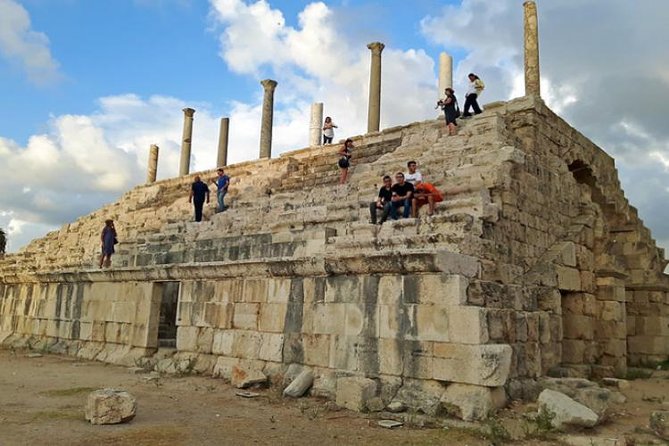
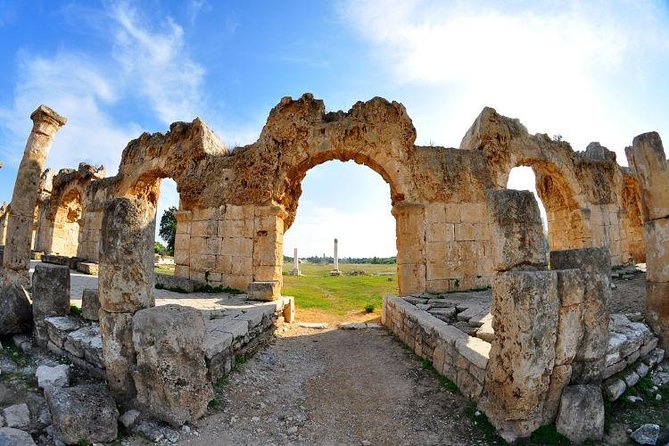
Al-Bass is the major archaeological stop in Tyre and one of the clearest reasons to choose this tour. The site contains a necropolis with hundreds of well-preserved sarcophagi, a monumental Roman road, an aqueduct, and a triumphal arch dating from the 2nd century AD.
Its greatest feature is the Roman hippodrome. It is described as the largest and best-preserved example of a Roman hippodrome, and one of the largest in the Roman world. The broad scale helps you picture public spectacles in a way that smaller ruins often cannot.
You have about one hour here. Wear sensible shoes, since the site covers open archaeological ground and includes multiple features spread along a wide causeway. Admission is not included, so this is another fee to add to the $99 tour price.
One especially useful feature of the experience is the possibility of meeting an archaeologist at the Tyre sites. Hassane arranged this for at least one departure, and the specialist added site-specific explanations beyond what a general city tour might provide. It is not stated as a guaranteed part of every departure, so treat it as a possible bonus rather than a promised service.
The Al-Bass visit rewards attention to layout. Look at how the necropolis, road, arch, aqueduct, and hippodrome relate to one another. This was not a single monument placed in isolation. It was an entrance zone and a working part of a major ancient city.
Tyre’s old souk and heritage square
After the archaeological sites, the old souk brings you back to present-day Tyre. Small shops sell gold, copper, vegetables, fish, meat, clothing, and antiques. The market also has simple food stops serving sandwiches, foul, and hummus.
The scheduled visit is only 15 minutes, so you will get a quick walk rather than a long shopping session. The stop works best as a final glimpse of how Tyre functions today, after seeing the city’s Phoenician and Roman remains.
If you want to buy something, keep an eye on the clock and stay close to the group. The market is compact but can be distracting, especially after a full day of monuments and explanations.
Transport, group size, and the real value of $99
At $99 per person, the value depends on how much you would otherwise spend arranging separate transport, guides, entrance visits, and lunch. Hotel pickup and drop-off are included, as are the air-conditioned vehicle, local guide, tour leader, and restaurant lunch.
That package is useful in Lebanon, where connecting three destinations independently would take planning and several separate rides. You also avoid the stress of navigating the route yourself and can focus on the sites.
The price does not cover admission to the Sidon Sea Castle, Soap Museum, or Al-Bass Archaeological Site. Since the tour visits all three, check the current entry charges before departure and bring extra money. The free stops include Khan al-Franj, the Sidon souks, the Maghdouche shrine, and the Tyre old souk.
An eight-hour day in a minivan is still a long day. You will spend time on the road, and the itinerary leaves little room to linger. I would choose this trip if you want breadth and convenience. I would not choose it if you prefer to spend half a day at one museum or archaeological site.
Who will get the most from this tour
I would recommend it to a first-time visitor based in Beirut who wants a strong introduction to Lebanon’s southern heritage. It is also a good fit if you want to see both Sidon and Tyre but do not want to arrange transport between them.
History fans will appreciate the Crusader castle, Phoenician story, Roman hippodrome, aqueduct, and necropolis. People interested in local culture get the soap workshop, markets, lunch, and religious shrine as well.
Families and mixed-interest groups may like the variety. A person who is fascinated by archaeology can focus on Al-Bass, while someone else may prefer the souks or the sea castle. The tradeoff is that no single stop receives a very long visit.
The experience is rated 4.9 out of 5 from 11 reviews, with 100 percent recommending it. The strongest praise centers on the guide service, especially Hassane’s professionalism, historical explanations, and care with practical needs. That matters because a route with many short stops depends heavily on a guide who keeps the day moving without making it feel rushed.
Free cancellation is available if you cancel at least 24 hours before the 8:00 am start time. Changes or cancellations made inside that 24-hour window are not refundable.
Should you book the Sidon, Tyre, and Maghdouche tour?
Book it if you want three destinations, included lunch, hotel transfers, and a local guide in one efficient day. The mix is unusually broad: Crusader architecture in Sidon, traditional soap making, a Christian shrine, Phoenician Tyre, and major Roman remains.
Before booking, confirm the pickup details and ask whether an archaeologist is expected at Tyre. Also budget for the three attractions with separate admission fees. If you can accept a fast pace and short market visits, this is a practical and good-value way to see southern Lebanon from Beirut.
FAQ
How long is the tour?
The tour lasts approximately eight hours and begins at 8:00 am.
Where does the tour start?
The tour departs from Beirut, with hotel pickup and drop-off included.
Is lunch included?
Yes. Lunch at a local restaurant in Tyre is included in the tour price.
Is transportation provided?
Yes. You travel in an air-conditioned vehicle, with hotel transfers included.
How large is the group?
The group is capped at a maximum of 20 people.
Are attraction admission fees included?
No. Admission is not included for the Sidon Sea Castle, Soap Museum, or Al-Bass Archaeological Site. Entry is listed as free at Khan al-Franj, the Sidon souks, the Basilica of Our Lady of Mantara, and Tyre’s old souk.
How long do you spend at the Sidon Sea Castle?
The scheduled visit lasts about 30 minutes.
How long is the visit to Al-Bass Archaeological Site?
The scheduled visit to Al-Bass lasts about one hour.
What is the cancellation policy?
You can cancel at least 24 hours before the experience begins for a full refund. Cancellations or changes made less than 24 hours before the start time are not accepted for a refund.
Just added in Beirut
- Wine Tasting Tour★ 5.0 · 2 reviews
- Lebanon tours vip jeitta byblos beirut we charge per vechile not per person.★ 5.0 · 1 review
- Lebanon’s Treasures: Jeita Grotto and Harissa Private Tour★ 5.0 · 2 reviews
- Small Group Tour to Baalbek, Anjar & Ksara with Hotel pickup★ 5.0 · 2 reviews
- Journey Through Time: A Private Tour of Tripoli and Byblos★ 5.0 · 1 review
- Guided Small-Group Tour to Baalbek, Cedars & Qozhaya with Lunch★ 5.0 · 2 reviews
- Small-Group Tour with Lunch to Sidon, Tyre & Maghdouche★ 5.0 · 2 reviews
- Small Group Tours from to Baalbek, Cedars and Qozhaya with lunch and all fees★ 5.0 · 1 review
Sidon Tyre and Maghdouche Day Trips
Small-Group Adventure Tour to Sidon Tyre & Maghdouche-Day Trip
Read our review →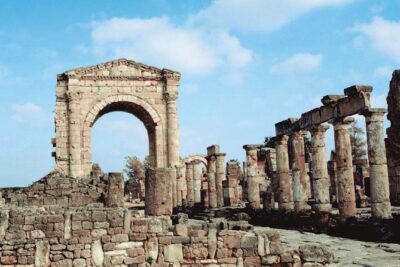
Sidon, Tyre & Maghdouche Day Trip – With Lunch (4G on Board)
Read our review →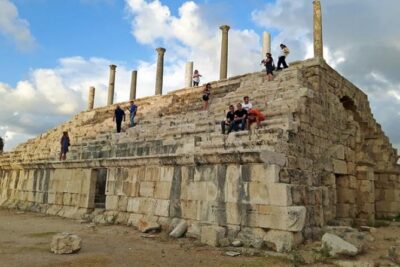
Guided Small-Group Tour to Sidon, Tyre & Maghdouche with Lunch
Read our review →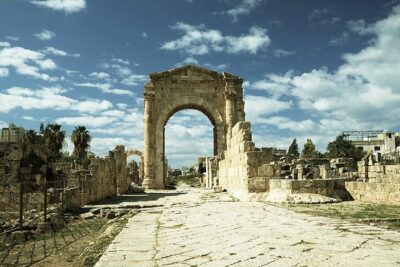
Private Guided Tour to Sidon, Tyre and Maghdouche from Beirut
Read our review →
Lebanon tour Sidon & Tyre ruins with pick-up, guide,lunch+entries
Read our review →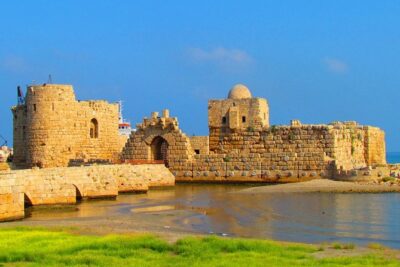
Lebanon Unveiled: Exclusive Private Tours to Sidon & Tyre
Read our review →