REVIEW · SIDON TYRE AND MAGHDOUCHE DAY TRIPS
Private Guided Tour to Sidon, Tyre and Maghdouche from Beirut
Ancient ports, purple dye, and a hilltop shrine await. This private day tour links Sidon and Tyre with the Our Lady of Mantara shrine in Maghdoucheh, giving you a broad look at southern Lebanon without putting you behind the wheel. I like the door-to-door transport and the mix of Roman ruins, Crusader remains, markets, and living religious sites. The $100 price per person is fair for a private vehicle and guide, though entrance fees and lunch cost extra.
The day lasts about eight hours and begins at 9:00 a.m. You travel only with your own group, which makes it easier to ask questions or adjust the pace. The main caution is time: Sidon and Tyre each receive roughly two hours, so this is a brisk introduction rather than a slow archaeological study.
In This Review
- Five reasons this southern Lebanon day trip works
- Why visit Sidon and Tyre together?
- Leaving Beirut in a private vehicle
- Sidon: the sea castle and the old commercial quarter
- The Crusaders Sea Castle
- Khan al-Franj
- Sidon’s souks and soap tradition
- Maghdoucheh and Our Lady of Mantara
- Tyre: the day’s biggest archaeological payoff
- Al-Bass: Roman roads, tombs, and the hippodrome
- Timing, food, and the real value of $100
- Who should book this private tour?
- Should you book it?
- FAQ
- Where does the tour start?
- How long does the experience last?
- Is transportation private?
- Is hotel drop-off included?
- Is the vehicle air-conditioned?
- Are entrance fees included?
- Is lunch included?
- Which places are visited?
- Is the tour suitable for most people?
- Can I cancel for a full refund?
Five reasons this southern Lebanon day trip works
- Sidon mixes a sea fortress with everyday souks: You move from Crusader stonework to narrow lanes filled with shops, cafés, and small workshops.
- Tyre delivers the strongest ancient sites: The Al-Bass area includes a Roman road, triumphal arch, aqueduct, necropolis, and one of the largest Roman hippodromes.
- Maghdoucheh adds a quiet religious stop: Our Lady of Mantara gives the day a different mood, with a shrine, cathedral, cemetery, statue, and sacred cave.
- Private transport removes a major worry: Hotel pickup, drop-off, and an air-conditioned vehicle spare you the task of handling Lebanese traffic.
- Local guides have earned strong praise: Hassane, Kamil, and Kassim are names associated with warm service, good conversation, and solid local knowledge, though guide assignments can vary.
Why visit Sidon and Tyre together?
Sidon and Tyre were major Phoenician ports long before Lebanon became a modern country. Both cities connect ancient trade, seafaring, religion, conquest, and local craft traditions. Seeing them together helps you compare two old coastal powers rather than treating either city as an isolated ruin.
Sidon is the more layered stop. Its old port, souks, khan, castle, and soap traditions bring the past into the present. Tyre has the grander archaeological remains, especially at Al-Bass, where the scale of Roman construction becomes clear.
I also like the way Maghdoucheh breaks up the ancient sites. The shrine is not another pile of columns. It introduces a continuing religious tradition and a local story tied to Mary waiting for Jesus. The result is a day with more variety than a standard ruins-only tour.
More of Sidon and Tyre:
- Small-Group Adventure Tour to Sidon Tyre & Maghdouche-Day Trip
★ 5.0 · 45 reviews - Sidon, Tyre & Maghdouche Day Trip – With Lunch (4G on Board)
★ 4.5 · 44 reviews - Guided Small-Group Tour to Sidon, Tyre & Maghdouche with Lunch
★ 5.0 · 41 reviews
Leaving Beirut in a private vehicle
Pickup begins at your hotel in Beirut at 9:00 a.m., and the tour ends with drop-off at your hotel. The vehicle is air-conditioned and transportation is private, so only your group joins the trip. That matters on a full day covering several places, particularly if you are not comfortable navigating local roads yourself.
The private format also gives the guide room to explain details along the way. One strong point from the feedback is the quality of the conversation during the drives. Kamil was praised for excellent conversation and education, while Kassim was described as polite, trustworthy, and a very capable driver and guide.
You should still keep your expectations practical. This is a private tour, not a fully customized private tour. The supplied schedule gives each stop a set amount of time, and the total day is about eight hours. Ask before departure if you want more time at the archaeological sites or less time in the market.
A few people enjoyed a breakfast stop during the drive to Sidon, with especially good food. That stop is not listed as a guaranteed part of the tour, so treat it as a possible extra rather than something to plan around. Lunch is not included, and the day’s food arrangements may vary.
Sidon: the sea castle and the old commercial quarter
Sidon was founded in the third millennium BC and prospered during the second millennium BC. The Phoenician city became known for purple dye and glassware, and it is also associated with a visit by Jesus. Later, Sidon changed hands repeatedly during the Crusades, suffering destruction and rebuilding along the way.
The city stop is scheduled for about two hours. That is enough to get a useful first look, but not enough for a leisurely wander through every lane. Your guide’s explanations will help connect the scattered remains to the city’s long sequence of Phoenician, Crusader, Mamluk, Ottoman, and modern life.
The Crusaders Sea Castle
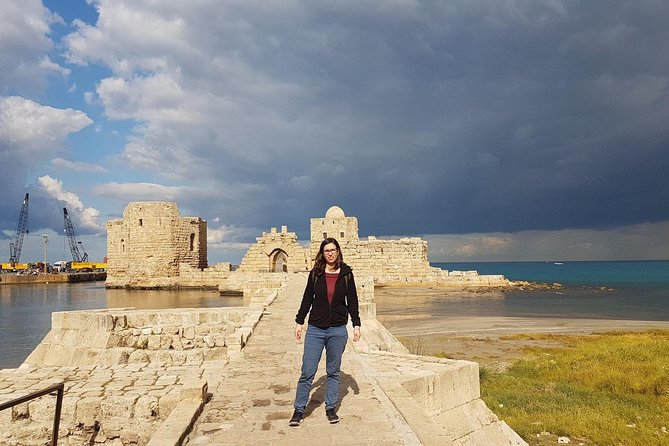
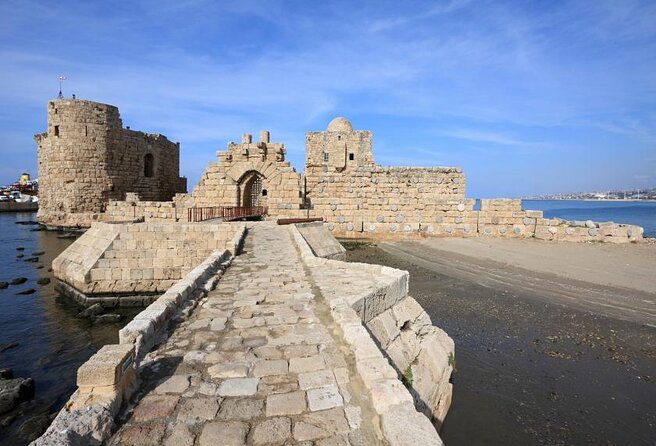
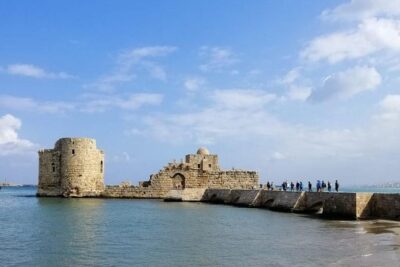
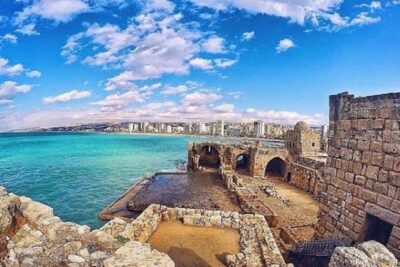
The Sea Castle is Sidon’s most recognizable sight. Built by Crusaders in the thirteenth century on a small island, it was connected to land by a causeway and used as a fortress connected with the Holy Land.
The castle was largely destroyed by the Mamluks in 1291 and later restored by Emir Fakhr el-Dine Maan II in the early seventeenth century. Old prints show a more decorated and complete fortress than the one you see today. What remains is less polished, but that is part of the appeal. You can read the site as a working defensive structure rather than a perfectly reconstructed monument.
Allow about 30 minutes here. The castle requires an admission fee, and that fee is not included in the tour price. Bring shoes suitable for uneven historic surfaces, although no special equipment is listed as necessary.
The setting is a major part of the experience. You are not viewing a fortress in isolation. The ruins sit by the port, where the connection between Sidon’s military role and its maritime economy is easy to understand.
A completely different kind of day out:
- Guided Small-Group Tour to Baalbek, Anjar and Ksara with Lunch
★ 5.0 · 511 reviews - Guided Small-Group Tour to Jeita, Harissa, Byblos with Lunch
★ 5.0 · 361 reviews - Paragliding Trip Over Lebanon – Jounieh Bay
★ 5.0 · 257 reviews - Jeita Grotto,Harissa&Byblos Full-Day PRIVATE-CAR Trip from Beirut
★ 5.0 · 222 reviews
Khan al-Franj
Khan al-Franj takes you from military power to trade and diplomacy. Emir Fakhreddine II built it at the beginning of the seventeenth century as a hotel for ambassadors and a center for commercial exchange between Lebanon and France.
Its design is straightforward and memorable: a large rectangular courtyard, a central fountain, and covered galleries around the edges. The khan later became a center for literature, religion, history, industry, and diplomacy. A 15-minute visit is short, but it gives you a useful picture of how merchants, officials, and visitors once moved through Sidon.
Admission is listed as free. This is a good example of why a guide helps. Without context, a courtyard can look like a pleasant old building. With context, it becomes part of Sidon’s role as a meeting point between Lebanon and Europe.
Sidon’s souks and soap tradition
The Sidon souks are compact, crowded with detail, and far more ordinary than the monumental castle. That is exactly why they matter. Narrow alleyways lead past kiosks, cafés, grocers, butchers, shoe-makers, tailors, jewelers, and other small businesses.
The scheduled time is only about 15 minutes, so you will get a taste rather than a serious shopping session. If the lanes catch your interest, ask the guide if the schedule allows a little flexibility. The private format makes that question more reasonable, but there is no promise that extra time will be possible.
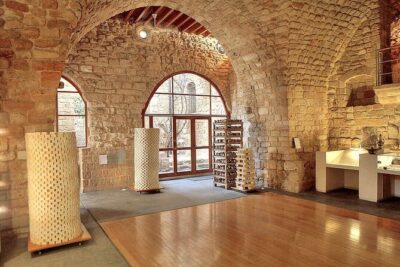
The Soap Museum is part of the tour’s Sidon experience, even though the detailed stop list gives the souks a separate short visit. Sidon’s soap-making tradition adds a hands-on cultural note to the day and connects with the city’s older craft economy. You will also hear about the Phoenician use of purple dyes, made from murex sea snails, a subject that links Sidon and Tyre.
Maghdoucheh and Our Lady of Mantara
After the coastal sites, the tour includes a 20-minute stop at the Basilica of Our Lady of Mantara in Maghdoucheh. The name is also translated as Our Lady of Awaiting, reflecting the belief that Mary waited here while Jesus visited Sidon.
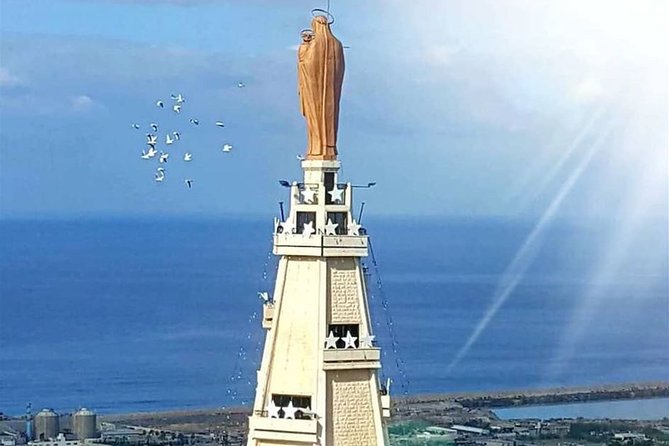
The shrine was discovered on September 8, 1721, by a young shepherd. Its complex includes a tower topped by a statue of the Virgin and Child, a cathedral, a cemetery, and a sacred cave believed to be the place where Mary rested.
This is a short visit, but it changes the rhythm of the day. You move away from ports, forts, and Roman engineering and into a site of active religious meaning. If you enjoy sacred places, the cave and the story behind it may be one of the day’s most affecting moments.
Admission is listed as free. Dress and behavior should be respectful, as this is a religious shrine rather than simply an archaeological attraction. The schedule does not promise a service, special access, or a long interior visit.
Tyre: the day’s biggest archaeological payoff
Tyre dates back to approximately 2750 BC and later came under Egyptian rule before flourishing under King Hiram. The Phoenician port became famous around the ancient world for its purple dye, produced from murex sea snails.
The city is also tied to Elissar, the Phoenician princess traditionally credited with founding Carthage. Over the centuries, Tyre was controlled by Assyrians, Neo-Babylonians, Greeks, Seleucids, Romans, Byzantines, Arabs, Crusaders, Mamluks, and Ottomans.
That long sequence can sound like a list of names, but the ruins make it easier to grasp. Tyre’s importance came from its position on the sea and its ability to connect trade routes. The city also has beaches and a seaside setting, so the stop is not limited to stones and excavation trenches.
The tour allows about two hours in Tyre, followed by one hour at Al-Bass. That makes Tyre the archaeological centerpiece of the day. The strongest praise for the trip focuses on Tyre, and I can see why. The site offers scale, variety, and a clearer sense of Roman urban planning than the smaller remains in Sidon.
Al-Bass: Roman roads, tombs, and the hippodrome
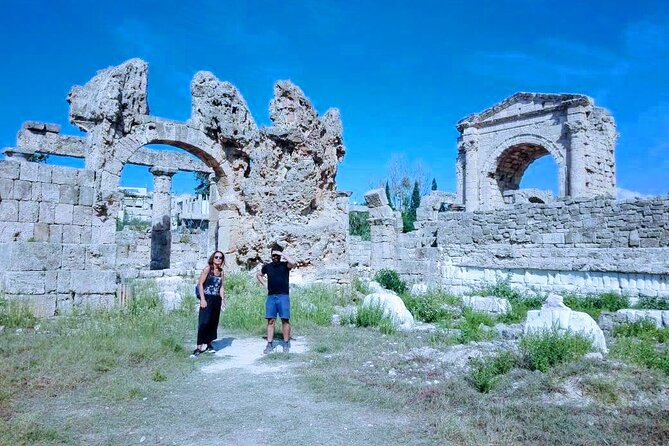
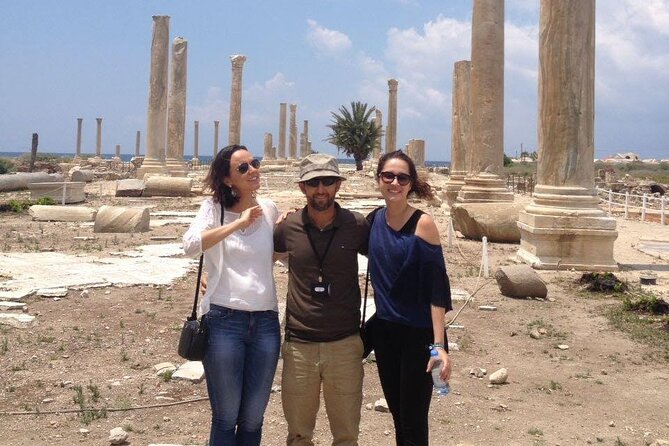
The Al-Bass Archaeological Site is the most substantial stop on the tour. It was the main entrance to ancient Tyre and contains a necropolis, a broad monumental causeway, a Roman triumphal arch from the second century AD, an aqueduct, and a Roman hippodrome.
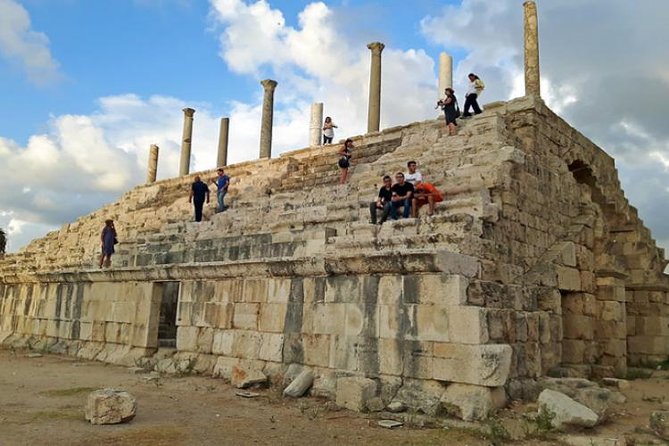
The hippodrome is the headline feature. It is described as the largest and best-preserved example of a Roman hippodrome and one of the largest in the Roman world. Even with only an hour, you should have time to appreciate its size and imagine the crowds gathered for races and public events.
The site also contains several hundred well-preserved sarcophagi. The intact Roman road helps you picture movement through the ancient town, while the aqueduct shows the practical infrastructure behind city life. These details make Al-Bass more than a single impressive ruin.
Admission is not included. Confirm the current entrance cost before you set out, since the tour price covers transport and guiding but not paid site tickets. If archaeology is your main reason for booking, use your time here well and listen closely to the guide’s explanation of how the different sections fit together.
Timing, food, and the real value of $100
At $100 per person, the tour is easiest to justify for couples, families, or small groups who value a private vehicle and a guide. The price includes hotel pickup and drop-off, comfortable private transportation, an air-conditioned vehicle, a tour leader, and a professional guide.
It does not include lunch or entrance fees. That means your final cost will be higher than the advertised amount, and you should budget for both. The lack of an included meal is not a serious flaw, since it leaves you free to choose your food, but you should not begin the day assuming lunch is covered.
The private format is the main value. A cheaper shared excursion might reduce the price, but it may also limit your questions, keep you to a fixed pace, and add pickup delays. Here, the convenience of door-to-door service is especially useful because the day links Beirut with several southern destinations.
The overall schedule is balanced but full. Sidon receives two hours, the Sea Castle 30 minutes, Khan al-Franj 15 minutes, the souks 15 minutes, Maghdoucheh 20 minutes, Tyre two hours, and Al-Bass one hour. Some of those times overlap conceptually with the broader city visits, so ask the guide at the start how the day will be paced.
Who should book this private tour?
I would choose this trip if you want a broad first look at southern Lebanon without arranging several separate rides. It suits anyone interested in Phoenician trade, Roman archaeology, Crusader architecture, religious sites, and local crafts.
It is also a good fit if you prefer conversation and flexibility over a large group. The private setting lets you ask about subjects that interest you, from purple dye to Lebanese traditions and local religious history.
You may want another type of visit if you need long, quiet hours at every ruin. The schedule is active, and the short stops at Khan al-Franj, the souks, and Maghdoucheh leave limited time for lingering. You should also be comfortable paying extra for the Sea Castle and Al-Bass.
The overall rating is 4.6 from nine pieces of feedback, with particularly warm praise for the drivers, guides, comfortable vehicle, food suggestions, and the historical sites. Hassane received specific praise for guiding the full day, while Kamil and Kassim were singled out for conversation, driving, courtesy, and local context. Guide availability is not guaranteed, so ask about your assigned guide if a particular name matters to you.
Should you book it?
Book this tour if you want the convenience of private transport and a well-rounded introduction to Sidon, Tyre, and Maghdoucheh. Tyre and Al-Bass are the main reasons to go, while Sidon adds more street life and Crusader atmosphere.
Skip it if your priority is a slow archaeological field trip or an included lunch and entrance tickets. For most first-time visitors based in Beirut, the combination of private transfers, strong guiding, and several very different sites makes the $100 starting price reasonable, provided you budget for extras.
Free cancellation is available until 24 hours before the 9:00 a.m. start time. Changes or cancellations made later are not accepted for a refund.
FAQ
Where does the tour start?
The tour starts with hotel pickup in Beirut at 9:00 a.m.
How long does the experience last?
The tour lasts approximately eight hours.
Is transportation private?
Yes. The tour uses private transportation, and only your group participates.
Is hotel drop-off included?
Yes. Hotel pickup and drop-off are included.
Is the vehicle air-conditioned?
Yes. The included vehicle is air-conditioned.
Are entrance fees included?
No. Entrance fees are excluded. The Crusaders Sea Castle and Al-Bass Archaeological Site specifically list admission as not included.
Is lunch included?
No. Lunch is not included in the tour price.
Which places are visited?
The tour visits Sidon, the Crusaders Sea Castle, Khan al-Franj, the Sidon souks, the Basilica of Our Lady of Mantara in Maghdoucheh, Tyre, and the Al-Bass Archaeological Site.
Is the tour suitable for most people?
The available information says most participants can take part.
Can I cancel for a full refund?
Yes, if you cancel at least 24 hours before the experience start time. Cancellations made less than 24 hours before the start are not refunded, and late changes are not accepted.
Just added in Beirut
- Wine Tasting Tour★ 5.0 · 2 reviews
- Lebanon tours vip jeitta byblos beirut we charge per vechile not per person.★ 5.0 · 1 review
- Lebanon’s Treasures: Jeita Grotto and Harissa Private Tour★ 5.0 · 2 reviews
- Small Group Tour to Baalbek, Anjar & Ksara with Hotel pickup★ 5.0 · 2 reviews
- Journey Through Time: A Private Tour of Tripoli and Byblos★ 5.0 · 1 review
- Guided Small-Group Tour to Baalbek, Cedars & Qozhaya with Lunch★ 5.0 · 2 reviews
- Small-Group Tour with Lunch to Sidon, Tyre & Maghdouche★ 5.0 · 2 reviews
- Small-Group Tour Qadisha Valley, Becharre and Cedars with Lunch and Tickets★ 5.0 · 1 review
Sidon Tyre and Maghdouche Day Trips
Small-Group Adventure Tour to Sidon Tyre & Maghdouche-Day Trip
Read our review →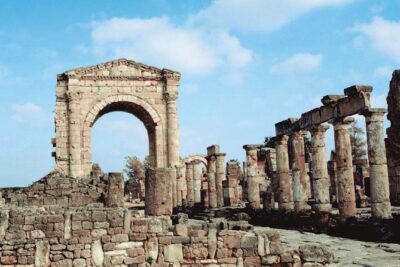
Sidon, Tyre & Maghdouche Day Trip – With Lunch (4G on Board)
Read our review →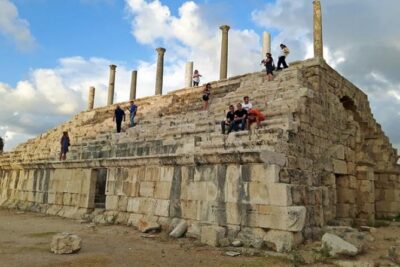
Guided Small-Group Tour to Sidon, Tyre & Maghdouche with Lunch
Read our review →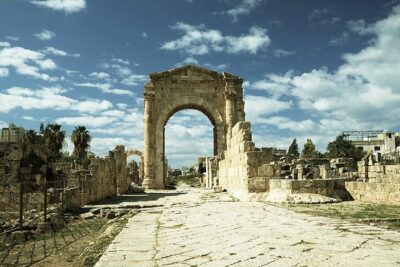
Small Group Tour to Sidon, Tyre & Maghdouche with lunch
Read our review →
Lebanon tour Sidon & Tyre ruins with pick-up, guide,lunch+entries
Read our review →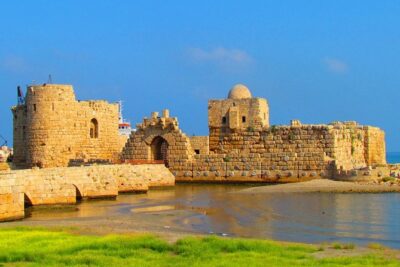
Lebanon Unveiled: Exclusive Private Tours to Sidon & Tyre
Read our review →