REVIEW · TOURS
All in 1 Lebanon Local Multi day Tour, 3 days
Lebanon packs ancient ports, Roman ruins, mountain shrines, and cave wonders into a small country. This three-day private tour gives you a broad first look, with Sidon, Tyre, Baalbek, Byblos, and Jeita Grotto all on the plan. I like the efficient route and the chance to travel with a guide who can explain each site in your language. I also like the private transportation, which saves you from piecing together long trips by public transport. The main drawback is pace: several days include long drives and major archaeological sites, so this is sightseeing with purpose, not a slow village holiday.
At $329 per person, the tour can offer good value if your group wants one vehicle, a dedicated guide, and a simple way to cover much of Lebanon. I would budget extra for admission fees, lunch, and dinner, since these are not included. The provider is Lebanon Tours Online by Fadi Eid, and English, Italian, Spanish, French, German, Russian, and Arabic guiding can be arranged.
In This Review
- Key points to know before booking
- Why this three-day route works
- Day one: Sidon’s sea castle and the southern coast
- Tyre: Phoenician stories and ancient remains
- Maghdoucheh and the Lady of Waiting church
- Day two: Anjar and the Bekaa Valley
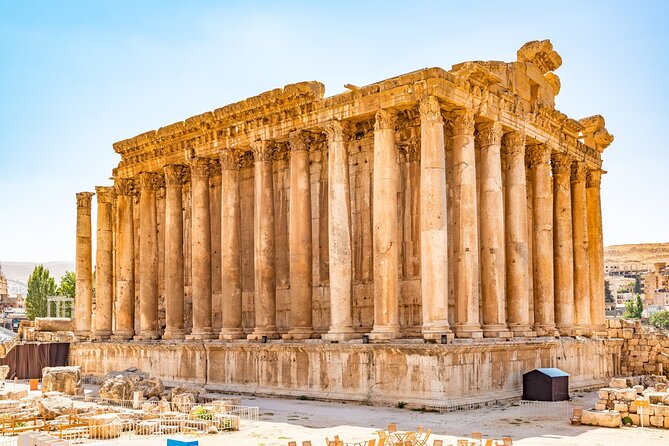
- Baalbek and the scale of Heliopolis
- Day three: Jeita Grotto brings a change of pace
- Byblos and a long human timeline
- Harissa and the Our Lady of Lebanon sanctuary
- What $329 covers, and what it does not
- Who should book this experience?
- Should you book the three-day Lebanon tour?
- FAQ
- How long is the tour?
- Where does the tour take place?
- Is pickup available?
- What transportation is included?
- Are entrance tickets included?
- Are meals included?
- Which guide languages are available?
- How many people can join the tour?
Key points to know before booking
- Three days cover Lebanon’s biggest landmarks: The route links the southern coast, the Bekaa Valley, and the northern coast.
- Sidon and Tyre bring Phoenician-era stories to life: Sea castles, a soap museum, and ancient ruins give the first day a strong historical focus.
- Baalbek is the grandest archaeological stop: The former Heliopolis is the likely highlight for anyone drawn to Roman architecture.
- Jeita Grotto adds a change of scene: After ruins and churches, the cave visit brings an entirely different type of sightseeing.
- Private transport matters here: The distances between Beirut, the south, Bekaa Valley, and northern sites make an organized vehicle useful.
- The schedule is full: You should expect early starts, road time, and limited freedom to linger at every stop.
Why this three-day route works
I like the basic design because each day has a clear character. Day one follows the southern coast and nearby hills. Day two heads inland to two major ancient sites. Day three turns north toward a cave, an old port city, and a hilltop sanctuary above Beirut.
That variety is the tour’s strongest feature. You are not seeing three versions of the same ruin. You move from the Mediterranean to Roman and Umayyad remains, then to a natural cave and Christian pilgrimage sites.
The private format also gives you a better chance to ask questions and adjust the rhythm. The group can be as large as 24 people, so private guided should be clarified at booking if that point matters to you. The description says private transportation and a private guide, but the stated maximum leaves open the possibility of a larger shared group.
The tour begins and ends in Beirut, with pickup offered. Confirmation is provided when you book, and most people can participate. Since the route crosses several parts of the country, ask the provider to confirm pickup time, exact order, guide language, and entry charges before departure.
Other trips worth a look in Beirut:
- Guided Small-Group Tour to Baalbek, Anjar and Ksara with Lunch
★ 5.0 · 511 reviews - Guided Small-Group Tour to Jeita, Harissa, Byblos with Lunch
★ 5.0 · 361 reviews - Paragliding Trip Over Lebanon – Jounieh Bay
★ 5.0 · 257 reviews
Day one: Sidon’s sea castle and the southern coast
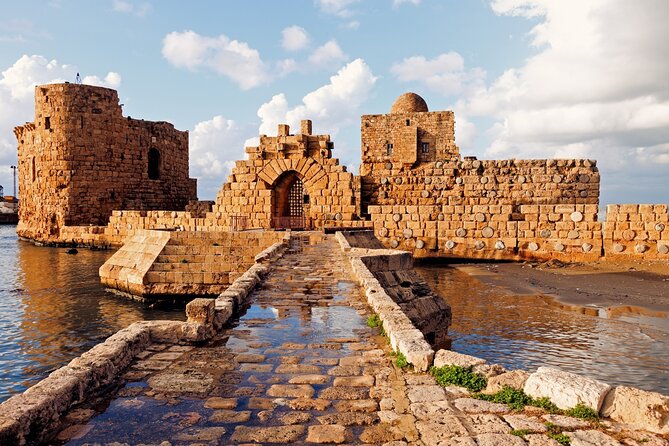
Sidon, also called Saida, is Lebanon’s third-largest city and the capital of the South Governorate. The visit centers on the sea castle and the Soap Museum, with about two hours planned for the stop.
The sea castle gives you the classic coastal view: an old defensive structure surrounded by the Mediterranean. It is the kind of place where the setting explains the history. From the shore, you can picture why Sidon mattered as a port and why control of the coast shaped so much of the region’s past.
The Soap Museum offers a more focused look at local craft. I would give this stop your full attention rather than treating it as a quick photo break. The combination of castle and museum makes Sidon feel more complete than a simple seaside walk.
Two hours is a sensible introduction, though not enough for an unhurried exploration of every corner. If you enjoy markets, museums, or street photography, you may wish you had more independent time. The advantage is that the tour keeps moving toward Tyre, one of the day’s major destinations.
Tyre: Phoenician stories and ancient remains
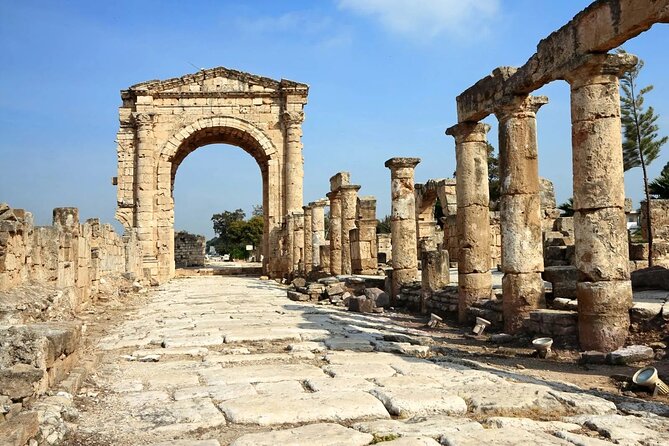
Tyre lies on the southern coast, roughly 40 kilometers from Beirut and about 40 kilometers from Sidon. Around three hours are planned here, making it the longest stop on the first day.
Tyre is known as one of the oldest continuously inhabited cities in the world. Its place in Phoenician history gives the site unusual weight, and the stories connected with the city reach well beyond Lebanon. Tyre is associated with Europa, Cadmus, Phoenix, and Dido, the legendary founder of Carthage.
The visit includes the area described as the bus castle and the sea castle. The wording is not entirely clear, so I would ask the operator which specific monuments are included and whether the route includes the archaeological areas commonly associated with ancient Tyre.
You can order lunch at about 1 p.m. Lunch and dinner are not included in the tour price. That arrangement gives you some choice, but it also means you should plan for the extra cost and allow enough time to eat without rushing the afternoon.
Tyre rewards visitors who enjoy connecting ruins with geography. You are not looking at isolated stones in a field. You are seeing a port city whose importance depended on its position beside the sea. Three hours gives you useful time, though the day remains tightly scheduled.
Maghdoucheh and the Lady of Waiting church
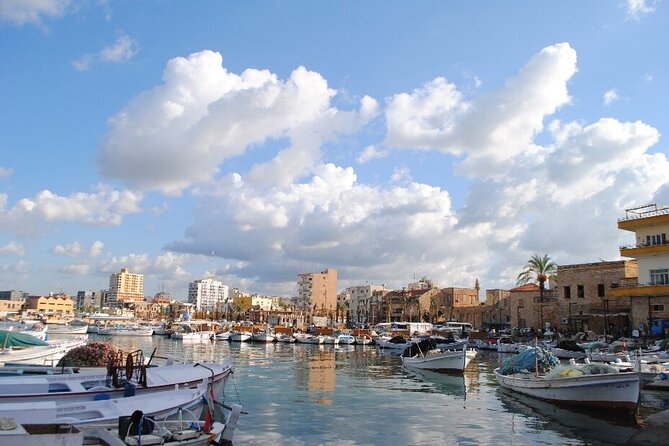
From Sidon, the route turns inland to Maghdoucheh, a hill town about eight kilometers southeast of Sidon and around 50 kilometers south of Beirut. The village sits roughly 200 to 229 meters above sea level, about three kilometers from the Mediterranean.
The main stop is the Lady of Waiting church, described as a small church inside a cave. It is presented as the only Christian place in the area, which gives the visit a local religious character rather than the scale of a grand basilica.
I like this addition because it breaks up the coastal monuments with a quieter hillside stop. You get a closer look at a living place of worship, not only ancient walls. The scheduled hour should be enough for a brief visit, but you should not expect an extended religious or architectural tour.
Day one combines three different experiences: a port city, an ancient coastal center, and a small church in the hills. It is a strong introduction to southern Lebanon, though the amount of driving means comfortable shoes and a little patience will help.
A completely different kind of day out:
- Jeita Grotto,Harissa&Byblos Full-Day PRIVATE-CAR Trip from Beirut
★ 5.0 · 222 reviews - First Paragliding Club in Lebanon – Since 1992
★ 5.0 · 193 reviews - Anjar, Baalbek & Ksara Day Trip – With Lunch (4G on Board)
★ 4.5 · 181 reviews - Jeita Grotto – Harissa – Byblos Trip
★ 5.0 · 169 reviews
Day two: Anjar and the Bekaa Valley
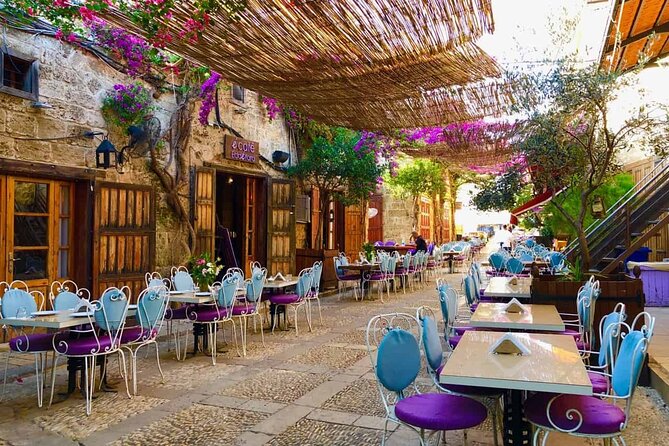
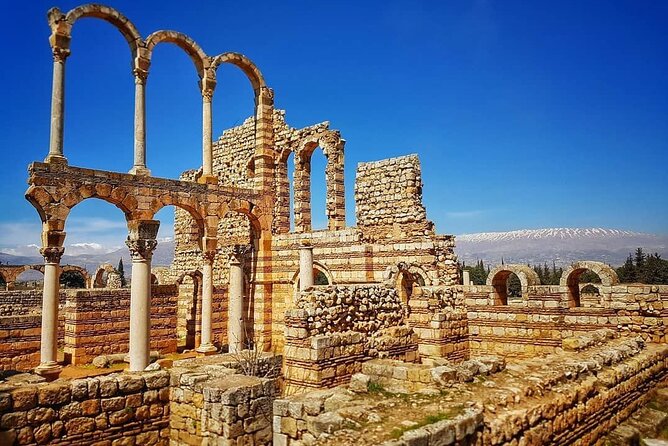
Day two heads inland to Anjar, with about one hour needed to reach the site. Anjar is in the Bekaa Valley and has a population of about 2,400, made up almost entirely of Armenians. The town covers roughly 20 square kilometers.
The main attraction is the ruined Umayyad settlement, recognized as a UNESCO World Heritage Site since 1984. This gives the day a different historical focus from Sidon and Tyre. Instead of a Phoenician port, you are looking at the remains of an early Islamic town.
The one-hour drive is important when judging the day’s rhythm. Anjar is not a quick hop from Beirut, and the return or onward journey adds road time. I would use this day for focused sightseeing rather than expecting long meals or spontaneous detours.
The site’s value comes from the contrast it provides. If you only visit Roman ruins, the ancient world can begin to blur together. Anjar helps you see another period and another style of urban planning. Your guide’s explanation will matter here, especially if you want to understand how the settlement functioned rather than simply photograph its walls.
Baalbek and the scale of Heliopolis
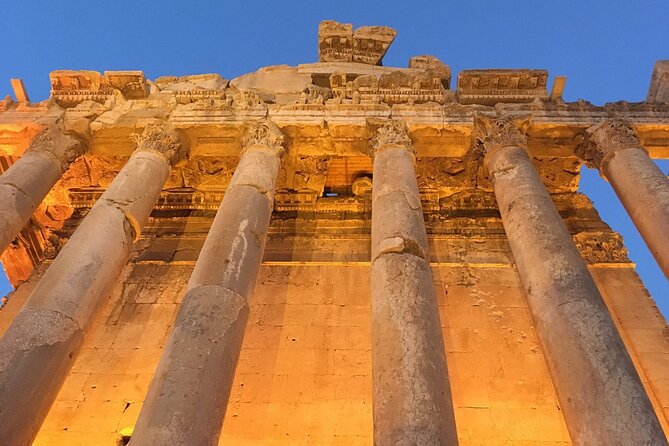
The journey to Baalbek takes about one hour from the previous location. Baalbek lies east of the Litani River in the Bekaa Valley, about 67 kilometers northeast of Beirut, and serves as the capital of Baalbek-Hermel Governorate.
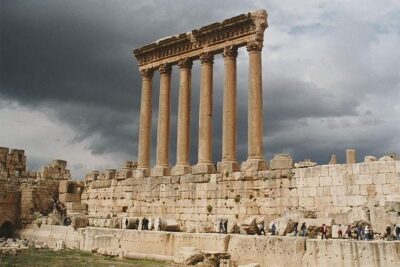
In Greek and Roman times, Baalbek was known as Heliopolis. The city is the archaeological heavyweight of the whole tour. Its monumental Roman remains give you a powerful sense of scale, and this is the place where a guide can turn impressive columns into a readable story.
Allow yourself time to look upward, outward, and across the site. The size of the ruins is the point. Baalbek is not merely another ancient stop added to a checklist. It gives you a visual measure of the resources and ambition behind a major Roman religious center.
The supplied timing does not state how long you will spend inside Baalbek, so ask for the exact schedule. That matters because the site deserves more than a rushed walk, yet the day already includes travel from Beirut and Anjar.
Baalbek is likely the best match for you if monumental archaeology is your main reason for visiting Lebanon. If you prefer small museums, food, or village life, the day may feel more focused on stones and driving than on everyday culture.
Day three: Jeita Grotto brings a change of pace
The third day begins with a drive of about 40 minutes to Jeita. The town is in the Keserwan District, about 20 kilometers north of Beirut, at an average elevation of 380 meters.
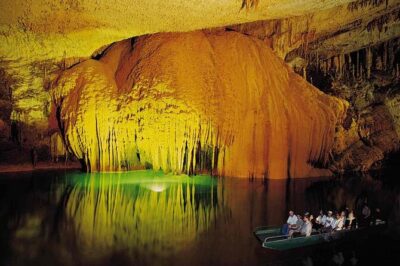
Jeita Grotto gives the tour a welcome change after two days centered on cities and ruins. You move underground into a natural attraction, with around two hours planned for the visit. The provided details do not specify which internal sections or transport arrangements are included, so confirm the practical details before you go.
I like placing Jeita on the third day because it resets your attention. Instead of reading layers of human history, you are looking at rock formations shaped over time. Two hours should allow a meaningful visit, though you will want to know how much of that period includes transfers or waiting.
Admission tickets are not included in the $329 price. Since Jeita is a ticketed attraction, set aside money for entry and ask whether the guide’s admission is handled separately. The description elsewhere labels stop tickets as free, so clarification is especially sensible.
Byblos and a long human timeline
From Jeita, the route takes about one hour to Byblos, also called Jbeil or Jubayl. Around three hours are planned here, giving you time to appreciate one of Lebanon’s most important old cities.
Byblos is believed to have been occupied as early as 8800 to 7000 BC and continuously inhabited since about 5000 BC. Those dates make the city more than an archaeological site. They point to a place where human settlement continued across thousands of years.
I would pay attention to how the old city connects to the sea. Byblos makes sense when you think of it as a living port rather than a collection of ancient remains. Its long timeline also gives your guide plenty to explain, from early settlement to later urban life.
Three hours is generous compared with some other stops, but it still may not satisfy you if you want a slow meal and independent wandering. The tour’s strength is coverage. Its tradeoff is that you will rarely have an entire afternoon to follow your own curiosity.
Harissa and the Our Lady of Lebanon sanctuary
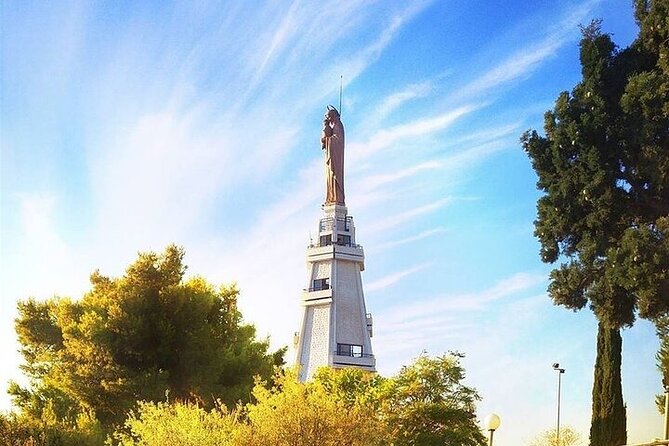
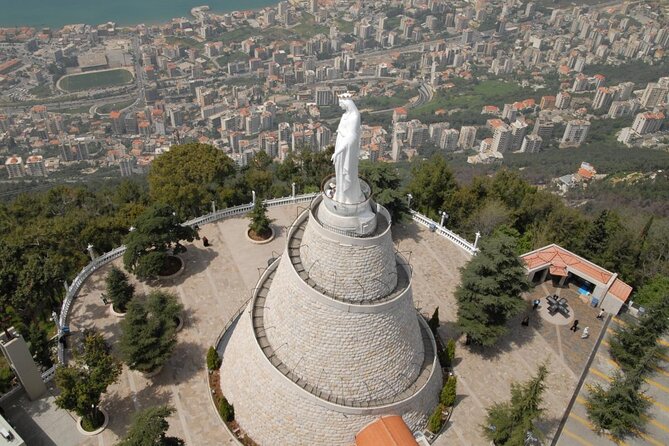
The final stop is Harissa, reached in about 40 minutes from Byblos. The visit lasts around one hour and centers on the Our Lady of Lebanon Sanctuary.
The sanctuary belongs to the Maronite Patriarchate and the Holy See, with its administration entrusted to the Congregation of Lebanese Maronite Missionaries. It was founded in 1904, and the shrine guardians form an apostolic missionary group within the Maronite congregation.
This stop gives you a modern religious dimension after the ancient sites. Harissa is not presented as an archaeological ruin, but as an active sanctuary with importance for Lebanon’s Maronite community and Catholic visitors.
One hour should work for a concise visit. If you are particularly interested in religious architecture or pilgrimage, you may want to confirm whether the schedule allows extra time. The route finishes with a very different kind of landmark than the castles, caves, and Roman remains earlier in the tour.
What $329 covers, and what it does not
At $329 per person, value depends heavily on group size and your need for transport. Private transportation across three days is useful in Lebanon because the route covers southern coastal cities, the Bekaa Valley, and northern destinations. A guide speaking your language also saves you from researching each site on your own.
The price includes transportation, but tickets are not included. Lunch and dinner are also excluded, while breakfast is not mentioned, so you should check your hotel arrangement and daily meal plan.
The tour can be a good buy for a first visit if you want maximum coverage in limited time. It is less attractive if you already have a car, prefer slow independent visits, or want a trip built around restaurants and local neighborhoods rather than major sights.
The provider is Lebanon Tours Online by Fadi Eid. English is available, along with Italian, Spanish, French, German, Russian, and Arabic. If language is important to you, request it before booking rather than assuming it will be available on the day.
Who should book this experience?
I would recommend this tour to first-time visitors who want to see Lebanon’s main historical and scenic places without arranging several separate excursions. It also suits families or small groups that value door-to-door transport and a guide who can keep the route organized.
History fans will appreciate the range from Phoenician cities to Umayyad ruins and Roman Baalbek. Religious visitors will find meaningful stops at Maghdoucheh and Harissa, while nature lovers get Jeita Grotto as a welcome change.
I would be more cautious if you dislike long car journeys or need lots of free time. The schedule is ambitious, and the maximum group size can reach 24 people. Ask whether your booking is fully private, confirm the exact daily order, and find out how much time is allowed at Baalbek and Byblos.
Free cancellation is available if you cancel at least 24 hours before the local start time. Changes or cancellations inside that period are not accepted for a refund.
Should you book the three-day Lebanon tour?
Book it if your priority is seeing a large portion of Lebanon efficiently. The combination of Sidon, Tyre, Baalbek, Byblos, Jeita Grotto, Anjar, Maghdoucheh, and Harissa gives you a strong overview in only three days.
I would book after confirming three points: the exact group size, the guide language, and the admission fees. I would also plan extra money for meals and ask for a clear schedule so the major sites do not feel rushed.
If you want a relaxed coastal break, choose a slower plan. If you want a practical introduction to Lebanon’s major ancient, religious, and natural sights, this is a useful choice at a reasonable price for the amount of ground covered.
FAQ
How long is the tour?
The experience lasts approximately three days.
Where does the tour take place?
The tour is based in Beirut and visits destinations across southern Lebanon, the Bekaa Valley, and the northern area near Beirut.
Is pickup available?
Yes, pickup is offered.
What transportation is included?
Private transportation is included.
Are entrance tickets included?
No. Tickets are not included in the tour price.
Are meals included?
Lunch and dinner are not included. At Tyre, you can order lunch around 1 p.m.
Which guide languages are available?
Guides can speak English, Italian, Spanish, French, German, Russian, or Arabic.
How many people can join the tour?
The activity can have a maximum of 24 participants.
Just added in Beirut
- Wine Tasting Tour★ 5.0 · 2 reviews
- Lebanon tours vip jeitta byblos beirut we charge per vechile not per person.★ 5.0 · 1 review
- Lebanon’s Treasures: Jeita Grotto and Harissa Private Tour★ 5.0 · 2 reviews
- Small Group Tour to Baalbek, Anjar & Ksara with Hotel pickup★ 5.0 · 2 reviews
- Journey Through Time: A Private Tour of Tripoli and Byblos★ 5.0 · 1 review
- Guided Small-Group Tour to Baalbek, Cedars & Qozhaya with Lunch★ 5.0 · 2 reviews
- Small-Group Tour with Lunch to Sidon, Tyre & Maghdouche★ 5.0 · 2 reviews
- Small-Group Tour Qadisha Valley, Becharre and Cedars with Lunch and Tickets★ 5.0 · 1 review
Tours
Guided Small-Group Tour to Jeita, Harissa, Byblos with Lunch
Read our review →
Private Anjar and Baalbek Tour from Beirut with Departure Ticket
Read our review →
Guided Private Full Day Tour to Baalbek, Anjar and Chateau Ksara
Read our review →
Semi-Private Tour to Jeita Grotto, Harissa & Byblos with Lunch
Read our review →
PRIVATE city Tour of authentic Tripoli and vibrant Batroun
Read our review →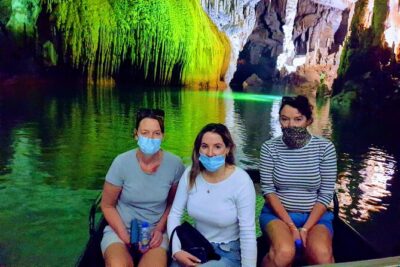
Private Guided Tour to Jeita Grotto through Harissa and Byblos
Read our review →