REVIEW · JEITA GROTTO AND HARISSA DAY TRIPS
Private Guided Tour to Jeita Grotto through Harissa and Byblos
Lebanon packs remarkable variety into one day. This private tour links the otherworldly limestone chambers of Jeita Grotto with the mountain views of Harissa and the ancient port city of Byblos. I especially like the comfort of private hotel pickup and the chance to shape the pace with your own guide. The main drawback is that entrance fees and lunch are extra, so the advertised $75 price is not the full cost.
I also like the human touch provided by guides such as Hassane, Ahmad, Albert, Hussein, and Khassim, who are praised for punctuality, warmth, and useful local advice. The day covers a lot of ground, though, and eight hours can feel full if you prefer slow museum visits or long meals.
In This Review
- Five things to know before you go
- Why this Beirut day trip works so well
- Inside Jeita Grotto, Lebanon’s great cave system
- Harissa and the view from Our Lady of Lebanon
- Riding the Téléferique above Jounieh Bay
- Walking through ancient Byblos
- Climbing Byblos Castle for the best ruins view
- Byblos souk and the ancient port
- What the $75 price really covers
- How the guides shape the experience
- Who should book this tour
- Should you book it?
- FAQ
- How long does the private tour last?
- Is hotel pickup and drop-off included?
- Is transportation private?
- Are admission tickets included?
- Is lunch included?
- Can I cancel for a full refund?
Five things to know before you go
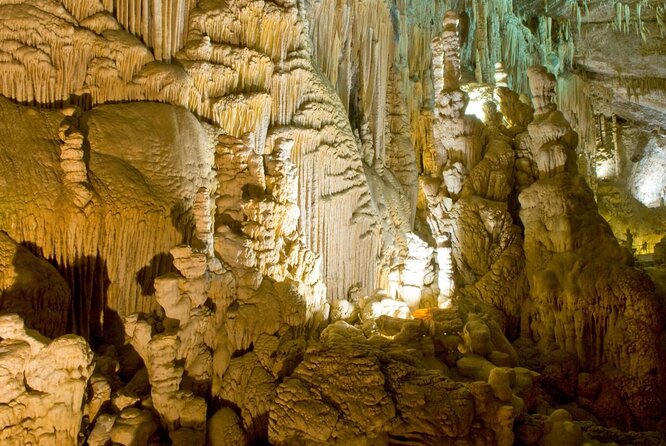
- Jeita Grotto is the natural centerpiece: You see vast limestone formations in the upper cave and travel by boat through the lower gallery when conditions allow.
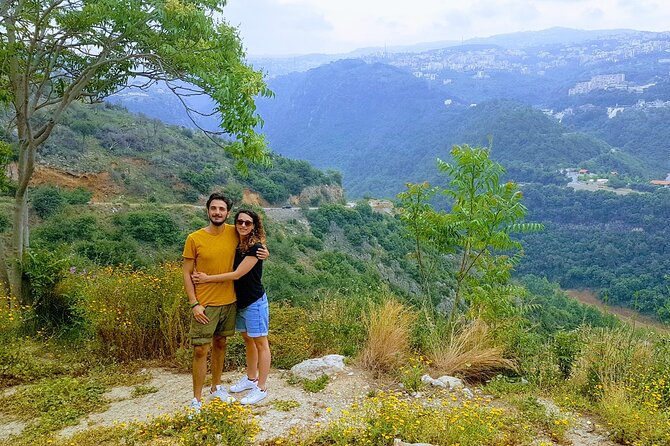
- Harissa adds the best high view: The Our Lady of Lebanon statue looks across Jounieh Bay toward Beirut, with the Téléferique cable car making the approach memorable.
- Byblos supplies the historical weight: You walk among Phoenician, Roman, and Crusader remains before reaching the old souk and ancient port.
- Private transport changes the feel: Hotel pickup, an air-conditioned vehicle, and only your own group make a busy day easier.
- Budget beyond the $75 fare: Jeita Grotto, the castle, and cable car tickets are not included, and neither is lunch.
- The guide can make or break the day: The company has earned a 4.9 rating from 48 published ratings, with 98 percent recommending the experience.
Why this Beirut day trip works so well
Beirut is a useful base, but Lebanon rewards you for leaving the city. In roughly eight hours, this tour takes you north along the coast and into the hills, combining a major natural attraction, a Christian pilgrimage site, and one of the country’s oldest cities.
That mix is the tour’s chief strength. You are not spending a full day on ruins alone, and you are not looking at viewpoints without context. The caves offer drama, Harissa offers a pause above the coast, and Byblos gives you streets, port views, and archaeological remains you can walk through.
The private format matters. Your driver or guide collects you from your Beirut hotel, handles the road between stops, and returns you afterward. You avoid the work of arranging separate taxis or trying to connect several sites by public transport. The vehicle is air-conditioned, an important comfort during Lebanon’s warmer months.
The day is still ambitious. Jeita, Harissa, and Byblos are close enough to combine, but each deserves more time than the schedule allows if you want to linger. I would treat this as a strong first look at the area rather than a slow, specialist visit to every site.
More Jeita and Harissa day trips:
- Guided Small-Group Tour to Jeita, Harissa, Byblos with Lunch
★ 5.0 · 361 reviews - Jeita Grotto,Harissa&Byblos Full-Day PRIVATE-CAR Trip from Beirut
★ 5.0 · 222 reviews - Jeita Grotto – Harissa – Byblos Trip
★ 5.0 · 169 reviews
Inside Jeita Grotto, Lebanon’s great cave system
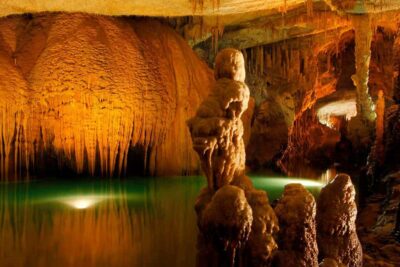
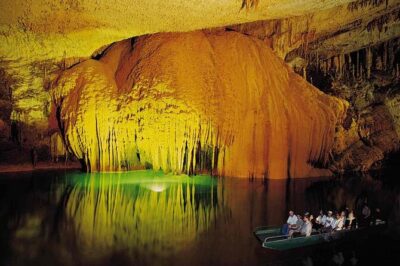
Jeita Grotto is the part of the day most likely to stay with you. The cave system consists of two separate but connected limestone galleries shaped over millions of years by water. It sits about 300 meters above sea level, with a total height difference of 305 meters.
The upper cave is about 2,130 meters long. Its chambers contain the formations you came to see: stalactites hanging from the ceiling, stalagmites rising from the floor, columns, curtains, draperies, ponds, and unusual mushroom-like shapes. The scale changes from chamber to chamber, so this is not simply a short walk through a decorated tunnel.
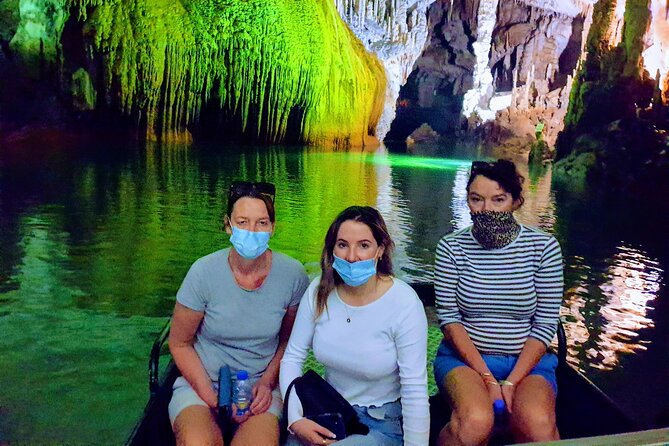
The lower gallery extends for about 6,200 meters and lies around 60 meters below the upper cave. An underground river and lake run through it, and the route is experienced by boat. That short boat ride gives Jeita a different character from a dry cave visit. You are close to the water, surrounded by stone shaped in near darkness, with the cave doing all the visual work.
The scheduled visit is about 90 minutes. That is enough to see the main parts without turning the stop into an exhausting expedition, but you should keep your expectations practical. You are visiting a managed attraction, not wandering freely through every passage in the cave system.
Admission is not included, so allow extra money for the entrance ticket. The same applies to the other paid stops later in the day. The available information does not give the current entrance price, so check it at booking or before departure rather than assuming the $75 covers everything.
If you have only one major natural sight on your Beirut stay, I would give Jeita priority. The cave has been described as extraordinary and unforgettable, and that praise makes sense: the combination of scale, water, and mineral shapes is hard to duplicate elsewhere on this route.
Harissa and the view from Our Lady of Lebanon
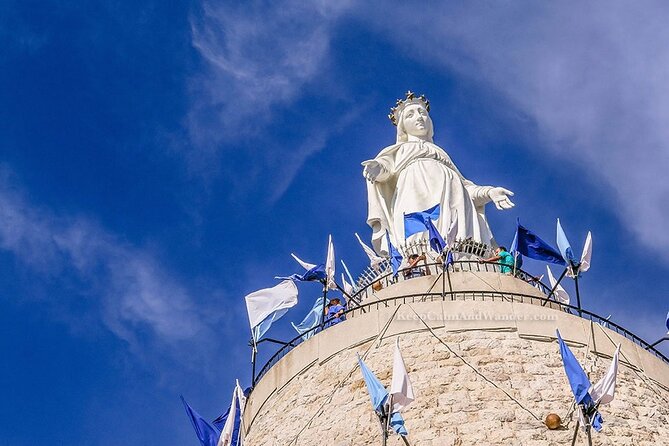
After Jeita, the tour moves to Harissa, a major Christian pilgrimage site above Jounieh. The central landmark is the huge bronze statue of the Immaculate Conception, known as Our Lady of Lebanon or Notre Dame du Liban.
The statue weighs 15 tons, rises 8.5 meters high, and has a diameter of five meters. Its arms reach toward Beirut and the Bay of Jounieh. Even if you are not visiting for religious reasons, the setting gives you a clear sense of why Harissa matters. The elevated position opens a wide view over the coast and the city below.
The main stop lasts about 30 minutes and admission is listed as free. That is enough time to see the statue, take photographs, and enjoy the view without making the shrine feel like a rushed roadside photo stop.
Nearby, you can see the concrete-and-glass cathedral and other churches belonging to different Christian communities. The Melkite Greek Catholic Basilica of St. Paul is described as Byzantine-style and was built between 1948 and 1965. A small chapel sits inside the base of the statue, adding another layer to the site.
A further 15-minute visit is set aside for the churches of Harissa. This is brief, so I would not expect a detailed architectural study. Instead, your guide can help explain why this hill has become an important place for several Christian denominations and how the shrine fits into Lebanon’s religious identity.
The best practical advice is simple: keep your camera ready, but do not spend every minute looking through it. The view is the point. On a clear day, the sweep over Jounieh Bay is one of the tour’s most rewarding pauses.
Riding the Téléferique above Jounieh Bay

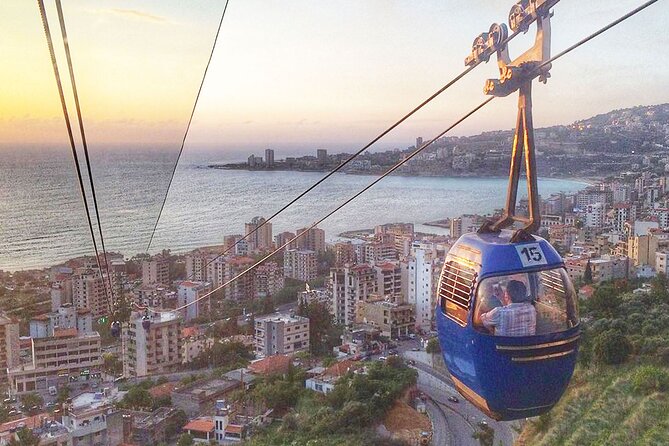
The Harissa cable car, or Téléferique, adds a little fun to a day otherwise filled with caves and ruins. The gondola route links the coast and the hilltop shrine, giving you a moving view over Jounieh Bay and the surrounding city.
The attraction dates back to 1965 and is described as one of Lebanon’s oldest and most visited tourist attractions. The ride is only allocated about 30 minutes, so this is a short scenic experience rather than a long mountain outing.
The cable car ticket is not included. That is worth noting because the fare can feel like a surprise after the tour price, especially for a family or group. Still, the ride gives you a view you cannot get from the road, and it breaks up the day nicely.
Several published accounts single out the cable car as a favorite part, alongside Jeita. I can see why. The gondola turns the transfer into an attraction, and the sight of the bay opening below you gives Harissa a stronger sense of place.
The operator may need to manage the sequence of the Harissa stops according to timing and local conditions. A private tour gives you a better chance of understanding the plan and asking for a little extra time if the schedule permits, but you should not assume every stop can be extended.
More of Byblos:
- Byblos, Jeita Grotto & Harissa Day Trip -With Lunch (4G on Board)
★ 4.5 · 145 reviews - Semi-Private Tour to Jeita Grotto, Harissa & Byblos with Lunch
★ 5.0 · 52 reviews - Small Group Tour to Jeita Grotto, Harisa & Byblos with Hotel pickup
★ 5.0 · 49 reviews - New Guided Semi-Private Tour to Jeita Grotto, Harissa & Byblos
★ 5.0 · 47 reviews
Walking through ancient Byblos
Byblos is the final major section of the day and the most rewarding stop for anyone drawn to archaeology. It is one of the oldest Phoenician cities and has been inhabited since Neolithic times. The city is also closely tied to the development and spread of the Phoenician alphabet.
That background is useful, but Byblos is best understood on foot. You move through an archaeological site, then into the old souk, and finally toward the port. The changing setting helps you see how the city developed over a very long period instead of presenting history as a list of dates.
The main Byblos visit lasts about two hours, with free admission listed for the general stop. A local guide in Byblos is included, which is valuable here. Ruins can blur together without someone pointing out what you are looking at and why the site mattered.
Do not expect every stone to be intact. Byblos is a layered archaeological area, and its appeal comes from the overlap of periods. You may see remains connected with ancient temples and later settlements close to the Crusader castle. The guide’s explanation is what turns that mixture into a readable story.
Climbing Byblos Castle for the best ruins view
Byblos Castle is a restored 12th-century Crusader fortress just inside the archaeological site. A dry moat about 10 meters wide surrounds it, and the square keep gives you a high view over the ruins and toward the sea.
Inside, there is a small museum and information panels about the city’s past. You can also look down toward Bronze Age dwellings and the nearby remains of the Temple of Baalat Gebal and the Temple of the Obelisks.
The castle visit is scheduled for an hour, but admission is extra. If you enjoy history, this is a fee I would consider worthwhile because the upper level helps you understand the scale and layout of Byblos. From ground level, the ruins can feel scattered. From the keep, they begin to make sense.
The castle is not a polished modern museum. Its strength is the view and the physical connection with the site. Wear shoes you can walk in comfortably, since the day includes cave paths, cobbled streets, and archaeological ground.
Byblos souk and the ancient port
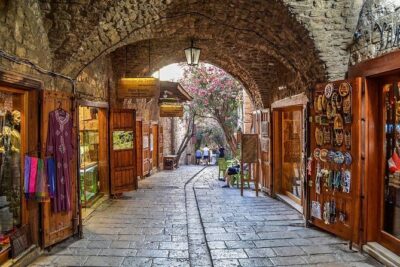
The old souk is allotted only 10 minutes, which makes it more of a stroll than a shopping session. Its cobblestone streets, old buildings, souvenirs, and antiques give you a change of mood after the archaeological site.
You can browse if something catches your eye, but do not count on a long buying session. The short stop is enough to get your bearings and see how Byblos functions as a living town rather than only an archaeological attraction.
The port receives another 10 minutes. Lebanese tradition identifies it as one of the oldest ports in the world, and around 3000 BC it was a major timber-shipping center in the eastern Mediterranean. The harbor is not a vast museum display. Its value is in the setting and in the way it connects Byblos to seafaring, trade, and the Phoenician world.
I like ending the historical portion here. After temples, ruins, and a fortress, the port gives you a simple visual reminder that Byblos was a working coastal city, not merely an ancient name in a textbook.
What the $75 price really covers
At $75 per person, the tour offers solid value for a private full-day outing from Beirut. You receive hotel pickup and drop-off, private transportation, an air-conditioned vehicle, a tour leader, and a local guide in Byblos.
The value rises if you are traveling with a small group and want a private vehicle rather than a large coach. You get direct transport between places, no need to coordinate several separate rides, and more room to ask questions or request practical help.
The price needs context, though. Lunch is not included. Jeita Grotto admission is not included, the cable car ticket is not included, and Byblos Castle admission is not included. The tour is therefore best viewed as a transportation and guiding package, not an all-inclusive day.
Some published accounts praise the food arranged during related day trips, and one account describes an impressive lunch, but you should not treat that as part of this package. Plan to pay for your own meal and confirm where the lunch break falls.
For a solo visitor, $75 plus extra costs may still be attractive because private transport for one person can be expensive to arrange independently. For two or more people, the private format becomes easier to justify. Group discounts are available, though the exact reduction is not provided.
How the guides shape the experience
The strongest pattern in the available feedback is praise for the guides and drivers. Hassane is repeatedly described as friendly, punctual, attentive, and full of useful information. Ahmad is praised for a considerate approach, while Albert is noted for his passion when explaining Lebanon and for providing a comfortable minivan.
Hussein is described as polite, patient, and highly informed, especially on a birthday outing. Khassim is praised for being friendly, reliable, and willing to arrange a good guide around the ruins. These names give you a sense of the company’s service style, but they do not guarantee who will lead your own tour.
The useful distinction here is between a driver who simply gets you around and a guide who helps you read the places. On this route, that difference matters most at Jeita and Byblos. A good explanation can turn a collection of cave shapes or temple stones into something you remember.
The private setup also lets you choose your level of conversation. One account praises a guide for providing information when wanted while allowing quiet time when preferred. That balance is ideal on an eight-hour day, when constant talking can become tiring.
Who should book this tour
I would recommend this tour to a first-time visitor staying in Beirut who wants to see several major sights without arranging transport. It suits couples, families, and small groups who value a private vehicle and a flexible human guide.
It is especially good for people who want variety: natural formations at Jeita, religious architecture and high views at Harissa, and archaeology and coastal history in Byblos. Families can also benefit from the changing pace, since the cave, cable car, castle, and souk offer different kinds of interest.
You may want a different plan if you have already seen Jeita and Byblos, or if you prefer to spend a full day at one archaeological site. The schedule is active, and the short Harissa, souk, and port visits leave little room for unplanned wandering.
Pack water, comfortable shoes, and money for admissions and lunch. Keep some flexibility in your expectations, since traffic and the timing of the cable car can affect the day’s rhythm.
Should you book it?
Book this tour if you want an efficient first taste of Lebanon beyond Beirut, with private transport and a guide who can connect the sights. Jeita Grotto is the main reason to go, while Harissa supplies the finest view and Byblos gives the day its historical depth.
Skip it only if your priority is slow travel. For everyone else, the combination is unusually strong: a world-scale cave system, a hilltop shrine, an aerial ride, a Phoenician city, a Crusader castle, a souk, and an ancient harbor in one manageable day. Free cancellation is available up to 24 hours before the start time, which gives you useful breathing room when planning.
FAQ
How long does the private tour last?
The tour lasts approximately eight hours.
Is hotel pickup and drop-off included?
Yes. Free hotel pickup and drop-off in Beirut are included.
Is transportation private?
Yes. The tour uses comfortable private transportation in an air-conditioned vehicle, and only your group participates.
Are admission tickets included?
No. Admission to Jeita Grotto, the Téléferique cable car, and Byblos Castle is not included. The general Harissa shrine visit and the listed Byblos visit have free admission.
Is lunch included?
No. Lunch is not included in the tour price.
Can I cancel for a full refund?
Yes. You can cancel at least 24 hours before the experience start time for a full refund. Cancellations or changes made within 24 hours are not refunded or accepted.
Just added in Beirut
- Wine Tasting Tour★ 5.0 · 2 reviews
- Lebanon tours vip jeitta byblos beirut we charge per vechile not per person.★ 5.0 · 1 review
- Lebanon’s Treasures: Jeita Grotto and Harissa Private Tour★ 5.0 · 2 reviews
- Journey Through Time: A Private Tour of Tripoli and Byblos★ 5.0 · 1 review
- Small Group Tour to Baalbek, Anjar & Ksara with Hotel pickup★ 5.0 · 2 reviews
- Small-Group Tour with Lunch to Sidon, Tyre & Maghdouche★ 5.0 · 2 reviews
- Guided Small-Group Tour to Baalbek, Cedars & Qozhaya with Lunch★ 5.0 · 2 reviews
- Small-Group Tour Qadisha Valley, Becharre and Cedars with Lunch and Tickets★ 5.0 · 1 review
Jeita Grotto and Harissa Day Trips
Guided Small-Group Tour to Jeita, Harissa, Byblos with Lunch
Read our review →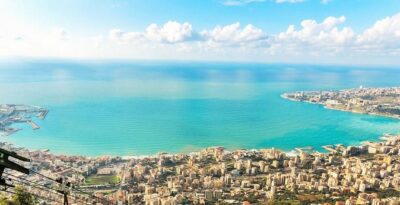
Jeita Grotto,Harissa&Byblos Full-Day PRIVATE-CAR Trip from Beirut
Read our review →
Byblos, Jeita Grotto & Harissa Day Trip -With Lunch (4G on Board)
Read our review →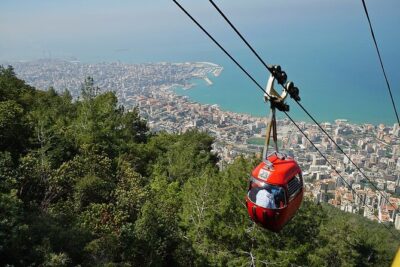
Semi-Private Tour to Jeita Grotto, Harissa & Byblos with Lunch
Read our review →
New Guided Semi-Private Tour to Jeita Grotto, Harissa & Byblos
Read our review →
Jeita Grotto, Harissa & Byblos Private Day Tour
Read our review →