REVIEW · QADISHA VALLEY AND THE CEDARS OF GOD
Unlocking the Wonders of Lebanon: Journey Through Qadisha Valley
Lebanon keeps its oldest stories in the mountains. This private day trip from Beirut reaches the UNESCO-listed Qadisha Valley, the town of Bcharre, the Gibran Museum, the Cedars of God, and Deir Qozhaya without asking you to handle mountain roads yourself. It is a full nine-hour outing built around scenery, Christian heritage, literature, and one of Lebanon’s strongest national symbols.
I like the comfort of door-to-door transfers and the freedom that comes with a private driver. I also like the mix of places: you get monasteries and cave settlements, but also a museum devoted to Kahlil Gibran and a cedar forest linked to the Bible. The main consideration is simple: entrance fees and lunch are not included, so the advertised $75 price is not your final cost.
The tour begins at 8:30 a.m. and includes an air-conditioned vehicle, a tour leader, hotel pickup, and hotel drop-off. Hassane is the guide specifically praised in the available feedback, with the monastery and cedar trees singled out as the strongest parts of the day. Since the tour is private, only your group participates, which makes it easier to control the pace than on a large coach outing.
In This Review
- Key points to know before booking
- Why the Qadisha Valley deserves a full day
- Bcharre, the town of churches and Gibran
- Inside the Gibran Museum
- The Cedars of God and Lebanon’s national symbol
- Deir Qozhaya, where hermits sought solitude
- What the private vehicle changes
- Is $75 good value?
- Timing, comfort, and practical limits
- Who will enjoy this day most?
- Should you book the Qadisha Valley tour?
- FAQ
- Where does the tour begin?
- How long does the tour last?
- Is hotel pickup included?
- Is the tour private?
- Is transportation included?
- Is a tour leader included?
- Is lunch included?
- Is admission to the Gibran Museum included?
- Are entrance fees included at the Cedars of God and Deir Qozhaya?
- Can I cancel for a full refund?
Key points to know before booking
- Qadisha Valley is the main event: Its caves, monasteries, cultivated terraces, and rugged mountain setting reflect an early phase of Christian monastic life.
- Bcharre adds a cultural stop: The town is linked to Kahlil Gibran, has around 37 churches, and is associated with Lebanon’s oldest ski area.
- The Cedars of God are protected and symbolic: The forest contains 375 trees and preserves some of Lebanon’s last remaining ancient cedar groves.
- Deir Qozhaya brings the history close: The monastery sits at 950 meters and has roots in hermit life believed to reach back to the fourth century.
- Private transport is a major benefit: You avoid self-driving in mountain terrain and receive round-trip transfers from your door.
- Plan for extra costs: Museum admission is not included, and lunch is also separate from the $75 tour price.
Why the Qadisha Valley deserves a full day
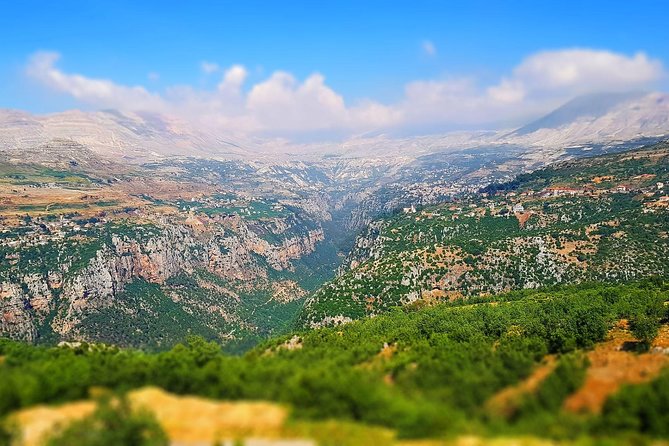
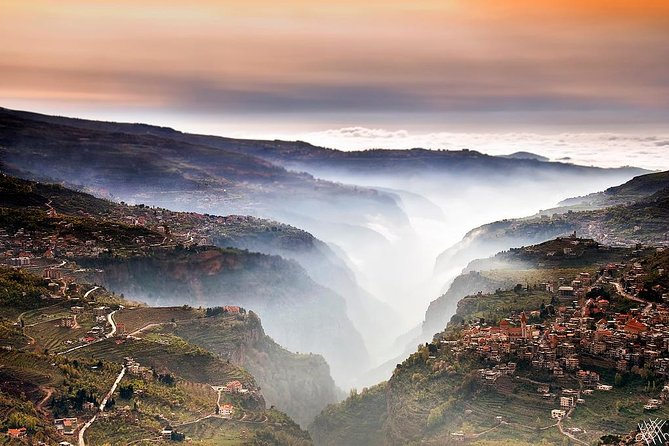
Qadisha is not simply a scenic mountain stop. It is an important settlement area for some of the earliest Christian monasteries in the world. Caves, chapels, monasteries, and farmed terraces are spread through a sharply cut valley, showing how religious communities lived in difficult terrain.
The appeal comes from the combination of nature and human history. You are not looking at a single monument in isolation. The entire valley reflects centuries of hermits, monks, agriculture, and worship. That gives the drive and the short visits a clear purpose.
The tour is especially useful if you want to see this area without arranging several separate rides. Beirut is your base, and the private vehicle handles the long trip to the mountains and back. At roughly nine hours, this is not a quick side trip, but the distance is part of the value. Qadisha is far enough from the capital that an independent visit requires more planning.
You should expect a day with several short stops rather than one long guided walk. The listed visit times range from 30 to 45 minutes. That is enough to see the main sights and get a feel for each place, though it may feel brief if you want a slow museum visit or extended time at a monastery.
More of the Qadisha Valley and the Cedars:
- Guided Small-Group Tour to Qadisha, Bcharee & Cedars with Lunch
★ 5.0 · 39 reviews - Cedars of Lebanon, Qozhaya, & Bcharre – With Lunch (4G on Board)
★ 4.5 · 34 reviews - Cedars, Bsharre & Kozhaya Day Tour
★ 5.0 · 15 reviews
Bcharre, the town of churches and Gibran
Bcharre is the first major stop and a useful introduction to the mountain region. The town is known as the home of the remaining preserved original Cedars of God, though the forest itself is visited later. Bcharre is also the birthplace of Kahlil Gibran, the Lebanese-American writer, painter, and sculptor.
The town is sometimes called the city of churches because it contains about 37 churches. That detail helps explain the religious character of the wider Qadisha area. Christianity here is not limited to isolated ruins. It remains part of the identity of the town and valley.
You get about 30 minutes in Bcharre, with no admission fee listed. Treat this as a short orientation stop, not a full town tour. You can take in the setting, learn why Bcharre matters, and prepare for the Gibran Museum. If you want extended time in town, this schedule may feel tight.
Bcharre also has an important place in Lebanon’s winter sports story. It is home to the Cedars Ski Resort and Lebanon’s first ski lift, built in 1953. That gives the town another layer beyond monasteries and literature. It is both an old mountain community and a historic ski center.
Inside the Gibran Museum
The Gibran Museum occupies the former Monastery of Mar Sarkis. Its location is fitting: the building ties Gibran’s artistic life to the religious setting and mountain culture of his birthplace.
The museum was founded in 1935 and holds 440 original paintings and drawings. It also contains Gibran’s tomb, furniture and personal belongings from his New York studio, and private manuscripts. These objects make the stop more personal than a simple portrait gallery.
You have about 30 minutes here, and admission is not included. That extra charge is worth considering when you calculate the day’s cost. For anyone interested in writing, art, Lebanese identity, or migration, this is likely to be one of the most meaningful stops.
I would pay particular attention to the contrast between the museum’s location and Gibran’s life. His work connected Lebanon with the United States, while the museum brings you back to the mountain town where his story began. You see both the local roots and the international reach.
The short visit means you may need to keep moving. If you already know Gibran’s work, the museum’s original art and belongings should be the priority. If you know little about him, the stop still gives you a clear introduction, but you may want to read a little about his life before the tour.
The Cedars of God and Lebanon’s national symbol
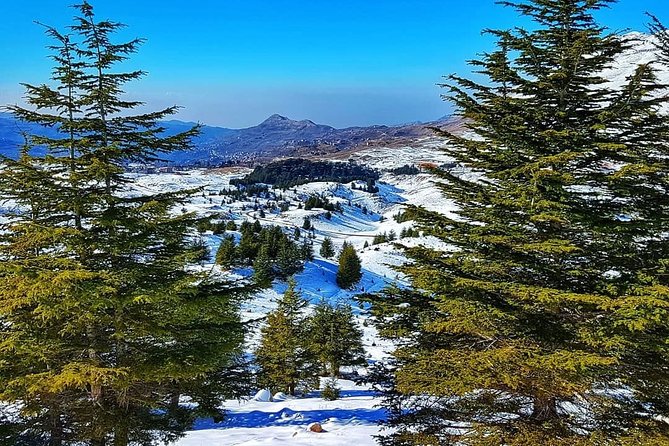
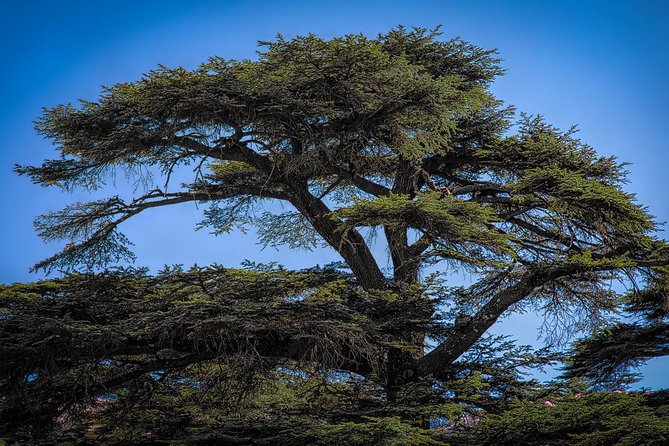
The Cedars of God is the most instantly recognizable stop on the route. The forest contains 375 trees and preserves one of the rare places where Lebanon’s cedar still grows. The cedar is the country’s symbol and appears on the Lebanese flag.
The trees also carry strong religious importance. Cedar is cited 103 times in the Bible and was prized in ancient times as a building material for major religious structures. That history gives the forest more weight than a normal woodland visit. You are seeing a living symbol tied to Lebanon’s identity, faith, and past.
The visit lasts about 45 minutes, longer than the stops in Bcharre and at the museum. That gives you time to look at the trees, take photographs, and absorb the setting without rushing through it. Admission is listed as free.
The forest is also a reminder of how much has been lost. The 375 surviving trees are precious partly because they are remnants of much larger ancient forests. I would approach this stop with that in mind. The point is not to expect a vast forest stretching across the mountains. The point is to see a protected remnant with unusual cultural importance.
This was one of the two strongest features singled out in the available feedback, along with the monastery. That emphasis makes sense. The cedars are visually striking, easy to understand, and closely tied to the country you are visiting.
A completely different kind of day out:
- Guided Small-Group Tour to Baalbek, Anjar and Ksara with Lunch
★ 5.0 · 511 reviews - Guided Small-Group Tour to Jeita, Harissa, Byblos with Lunch
★ 5.0 · 361 reviews - Paragliding Trip Over Lebanon – Jounieh Bay
★ 5.0 · 257 reviews - Jeita Grotto,Harissa&Byblos Full-Day PRIVATE-CAR Trip from Beirut
★ 5.0 · 222 reviews
Deir Qozhaya, where hermits sought solitude
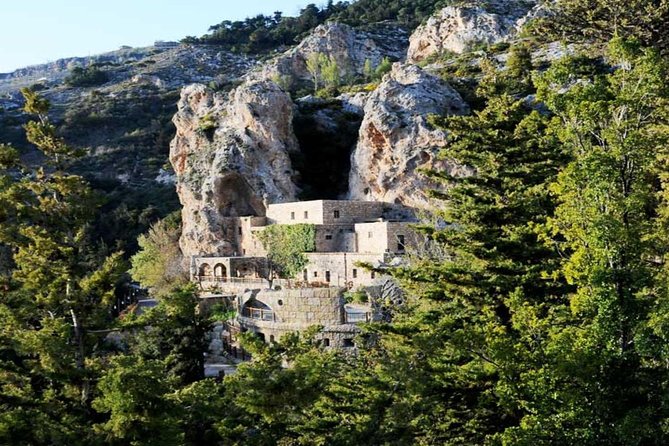
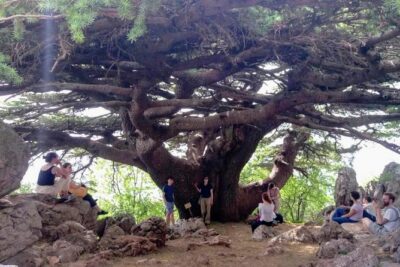
Deir Qozhaya, also called the Monastery of Saint Anthony the Great, gives the tour its strongest monastic focus. It sits at about 950 meters in the Valley of Qozhaya, surrounded by hills covered with pine and oak trees.
The valley extends toward Qannubin and forms part of the greater Qadisha Valley. Fruit trees grow along the valley, and the setting reflects the old pattern of hermits seeking isolated places for prayer and religious life.
Historians and scholars believe the monastery was first built and occupied by hermits near the beginning of the fourth century. It was looted, burned, and destroyed several times, but remains from the seventh century survive. That long record of damage and rebuilding gives the site a human scale. You are not seeing a perfectly preserved monument. You are seeing a place that endured.
The visit lasts about 30 minutes and no admission fee is listed. The time should let you see the monastery and appreciate its position in the valley, though it is not enough for an unhurried study of every detail.
If you are most interested in religious history, Deir Qozhaya may be the highlight of the tour. The available feedback specifically praises the monastery, and it is easy to see why. Its setting, age, and link to hermit life bring the story of Qadisha into focus.
What the private vehicle changes
A private driver is not just a luxury add-on here. The route reaches mountain towns and highland sites, and the tour removes the need to plan every transfer yourself. Pickup and drop-off are provided at your door, and the vehicle is air-conditioned.
The private format also means only your own group participates. That can make the nine-hour day more comfortable. You do not have to match the pace of a full bus, and you may be able to ask for more explanation at a particular stop, depending on the tour leader and timing.
The included tour leader matters because the sites are connected by history rather than by one single attraction. A driver can get you from Beirut to Qadisha, but a tour leader helps explain why the caves, monasteries, cedar forest, Bcharre churches, and Gibran Museum belong in the same day.
There is still a trade-off. A private tour does not automatically mean unlimited time. The planned visits are short, and the drive between Beirut and the mountain sites takes up part of the day. If you want long walks, extended church visits, or a slow museum experience, you should ask about flexibility before booking.
Is $75 good value?
At $75 per person, the price is reasonable for a private nine-hour outing with hotel pickup, drop-off, air-conditioned transport, and a tour leader. The strongest part of the value is the transport. Reaching Qadisha independently can involve more route planning, and self-driving would place the responsibility for mountain travel on you.
The price is less complete than it first appears. Lunch is excluded, and the Gibran Museum admission is not included. You should also check whether any other entrance charge applies locally, since the tour information only identifies the museum fee as separate.
For a solo visitor, $75 buys convenience but may feel less economical than it would for a couple, family, or small group. Since group discounts are available, ask about the rate for your party before confirming. The private setup becomes more attractive when the cost is shared.
The value is strongest for someone who wants several major sites in one day. You are paying for a well-connected route, not just admission to one monument. If you only want to see the cedars, a separate visit could be simpler, but it would miss the valley, Bcharre, the museum, and Deir Qozhaya.
Timing, comfort, and practical limits
The start time is 8:30 a.m., and the full experience lasts about nine hours. That makes this a full-day commitment, with an early start and a return later in the day. The schedule is best for someone who wants to make Qadisha a major part of a Beirut stay.
An air-conditioned vehicle is included, which is useful during the long road portion. Door-to-door pickup also saves time at the beginning and end. You should confirm the exact pickup arrangement when booking, since the available information only states that hotel pickup and drop-off are provided.
Lunch is not included. Set aside money for it and clarify the plan with Beirut Daily Tours before departure. The tour data does not specify a restaurant, meal stop, or packed lunch arrangement, so do not assume food will be provided.
Most people can participate, according to the tour information. No special restriction is listed, but the day includes mountain sites and monastery grounds. If you have a mobility concern, ask the provider about the exact walking conditions before booking rather than relying on the general participation note.
Free cancellation is available if you cancel at least 24 hours before the local start time. Cancellations or changes made less than 24 hours ahead are not accepted for a refund.
Who will enjoy this day most?
I would recommend this outing to you if you want Lebanon’s religious heritage, mountain scenery, and cultural history in one organized day. It suits first-time visitors who do not want to rent a car or work out the route between several highland sites.
It is also a good fit for readers interested in Kahlil Gibran. The museum is short, but its original drawings, paintings, manuscripts, furniture, belongings, and tomb give the Bcharre visit real substance.
Families and small groups may benefit from the private format, especially with group discounts. You can share the transport cost and avoid being tied to strangers’ schedules.
You may want a different arrangement if your priority is hiking or long stays at each monastery. The tour includes the main places, but the stated stop times are compact. It is a survey of Qadisha’s key sights rather than a long walking expedition.
Should you book the Qadisha Valley tour?
Book it if you want an efficient, private route from Beirut to the Qadisha Valley, with the Cedars of God and Deir Qozhaya given proper attention. The monastery and cedar forest are the day’s strongest reasons to go, while Bcharre and the Gibran Museum add cultural depth.
Before paying, confirm the museum admission, lunch plan, pickup details, and whether the schedule can adjust for your group. Ask if Hassane is available if his guiding style matters to you. At $75, the tour offers solid value when two or more people share the private ride, but remember to add food and entrance costs.
FAQ
Where does the tour begin?
The tour begins with pickup in Beirut at 8:30 a.m.
How long does the tour last?
The experience lasts approximately nine hours.
Is hotel pickup included?
Yes. Hotel pickup and drop-off are included.
Is the tour private?
Yes. Only your group participates in the private tour or activity.
Is transportation included?
Yes. The tour includes comfortable private transportation in an air-conditioned vehicle.
Is a tour leader included?
Yes. A tour leader is included in the experience.
Is lunch included?
No. Lunch is not included.
Is admission to the Gibran Museum included?
No. Admission to the Gibran Museum is not included.
Are entrance fees included at the Cedars of God and Deir Qozhaya?
The information lists admission as free for the Cedars of God, Deir Qozhaya, and Bcharre. The Gibran Museum is the stop specifically listed with admission not included.
Can I cancel for a full refund?
Yes, if you cancel at least 24 hours before the experience start time. Cancellations or changes made less than 24 hours before the start are not accepted for a refund.
Just added in Beirut
- RZR XP4 (4 Seat Buggy) Full Day Off-Road Scenic Adventures★ 5.0 · 2 reviews
- Sidon, Magdouche and Tyre★ 5.0 · 1 review
- Small-Group Tour to Beirut, Beiteddine and Deir El Qamar with Lunch and Tickets★ 5.0 · 1 review
- Full-Day Private Tour to Baalbek, Anjar And Ksara From Beirut★ 5.0 · 2 reviews
- Full-Day Private Tour to Beiteddine, Deir El Qamar, Mousa Palace★ 5.0 · 2 reviews
- Exploring the Qadisha Valley, Cedars of God, and Baalbek Temples★ 5.0 · 1 review
- Beirut to Beiteddine: Private Journey Through Palaces & Villages★ 4.5 · 2 reviews
- Private Tour – Hamatoura Monastery★ 5.0 · 1 review
Qadisha Valley and the Cedars of God
Guided Small-Group Tour to Qadisha, Bcharee & Cedars with Lunch
Read our review →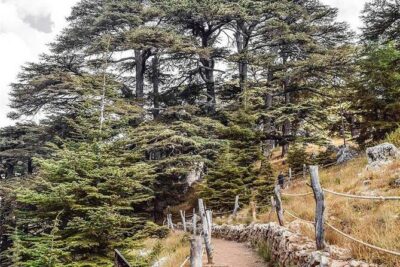
Cedars of Lebanon, Qozhaya, & Bcharre – With Lunch (4G on Board)
Read our review →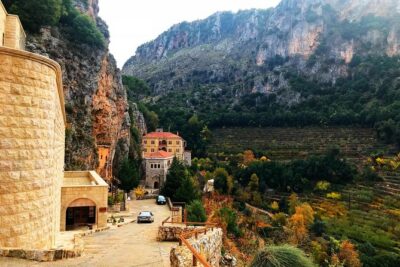
Cedars Shouf & Beiteddine w/pick-up, guide, entries+lunch
Read our review →
Guided small group to Cedars Reserve & Beiteddine w/lunch+entries
Read our review →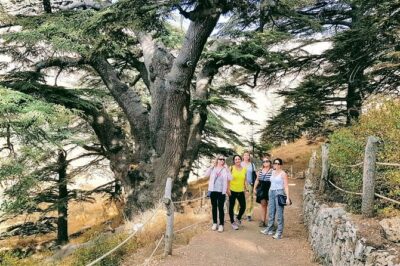
Small-Group Tour with Lunch to Qadisha Valley, Bcharre and Cedars
Read our review →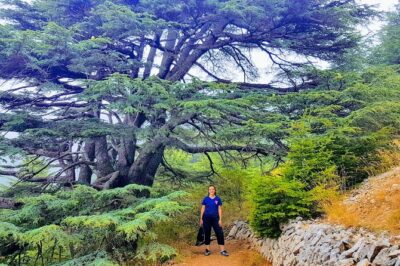
Guided Full-Day Private Trip to Cedars, Baalbek and Chateau Ksara
Read our review →