REVIEW · BAALBEK ANJAR AND KSARA DAY TRIPS
Journey Through Time: Exploring the Temples of Baalbek
Roman giants still rule Baalbek. I like the private hotel pickup and air-conditioned vehicle, which make a six-hour outing from Beirut much easier, and I like the chance to see the Temple of Jupiter, Temple of Bacchus, and the famous Stone of the Pregnant Woman in one trip. The main consideration is that lunch and the temple-complex admission are not included in the $75 price.
This is a strong choice if you want Baalbek without arranging transport yourself. The tour uses an English-speaking driver, and one guide connected with the experience is named Charbel. A previous outing with him was praised for its excellent lunch and value, but you should confirm the lunch arrangement because the official details list lunch as an extra.
In This Review
- Key points to know before booking
- Why Baalbek makes a worthwhile day from Beirut
- The drive into the Bekaa region
- Entering the Baalbek sanctuary
- Reading the temples without rushing
- Sayyeda Khawla Mosque and a living religious tradition
- The Stone of the Pregnant Woman
- What the $75 price really covers
- Who will enjoy this Baalbek outing?
- Should you book the Baalbek tour?
- FAQ
- Where does the tour begin?
- How long does the Baalbek tour last?
- What is the price?
- Is the tour private?
- What transportation is included?
- Is an English-speaking guide provided?
- Is lunch included?
- Are admission tickets included?
- Can I cancel or change the booking?
Key points to know before booking
- Private transport from Beirut: Your group travels in an air-conditioned vehicle, with hotel pickup and drop-off included.
- Two major Roman temples: The Temple of Jupiter and Temple of Bacchus are the heart of the Baalbek visit.
- A UNESCO-listed ancient site: Baalbek entered UNESCO’s World Heritage list in 1984.
- A rare look at Roman engineering: The Stone of the Pregnant Woman shows the scale of the blocks intended for the sanctuary.
- A short cultural stop: Sayyeda Khawla Mosque adds a living religious story to the ancient Roman setting.
- Budget carefully: The $75 cost covers transport and the driver, but lunch and the main temple admission are extra.
Why Baalbek makes a worthwhile day from Beirut
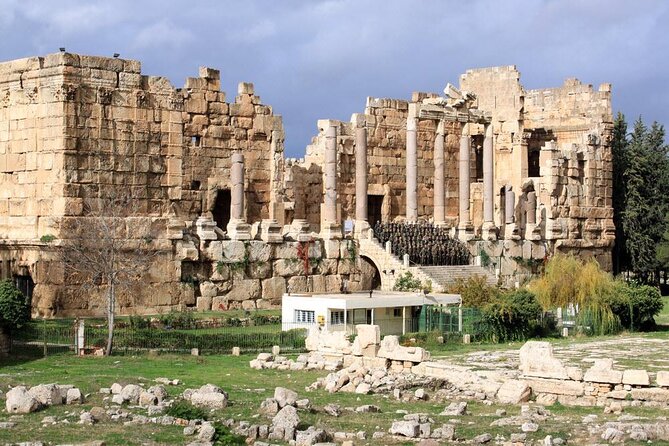
Baalbek is not a small ruin with a few scattered columns. It is a vast Roman sanctuary built on a scale that can make ordinary ancient sites feel modest. The complex sits at about 1,150 meters, near the fertile Bekaa plain and the south-western slope of the Anti-Lebanon range.
The city was known as Heliopolis during the Hellenistic period. Under Roman rule, it became a major place of worship dedicated to the Heliopolitan Triad: Jupiter, Venus, and Bacchus. Pilgrims came from across the Roman world to honor these gods.
That religious purpose helps you read the site correctly. You are not simply looking at leftover walls. You are walking through a ceremonial center built to impress worshippers and display imperial power. The scale was the message.
I like this tour because it makes Baalbek manageable from Beirut. Private transportation removes the need to plan a separate journey, and hotel pickup and drop-off are useful if you are unfamiliar with local transport. The air-conditioned vehicle also matters on a long outing, especially when you are combining city driving with time outdoors.
The tour lasts about six hours. That is enough for the main archaeological visit and the two shorter stops, but it is not a slow, scholarly day with hours for every corner. If you want to inspect every carving at length, you may need to keep an eye on the clock or arrange extra time privately.
More Baalbek and Bekaa day trips:
- Guided Small-Group Tour to Baalbek, Anjar and Ksara with Lunch
★ 5.0 · 511 reviews - Anjar, Baalbek & Ksara Day Trip – With Lunch (4G on Board)
★ 4.5 · 181 reviews - Baalbek – Anjar – Ksara Trip From Beirut
★ 4.5 · 80 reviews
The drive into the Bekaa region
The tour begins with pickup at your hotel in Beirut. The supplied details do not give a fixed departure time, route schedule, or exact vehicle model, so confirm those points when booking.
Your English-speaking driver handles the transportation and helps connect the stops. This format is more flexible than a large coach, since the tour is private and only your group participates. It also means the quality of the day depends partly on communication with the assigned driver.
Charbel is the guide name linked with one particularly positive experience. If he is assigned to your group, you can ask about the sites, the best order for the visit, and where lunch can be arranged. Since the listing describes the guide as an English-speaking driver rather than a dedicated archaeologist, I would not book this expecting a formal academic lecture.
The trip from Beirut takes you toward Baalbek and the Bekaa area, but the exact driving time is not provided. The six-hour total includes transport and sightseeing, so the time available inside the ruins will be shorter than six hours.
That is the practical tradeoff. You get a simple, organized outing, but this is not a multi-day exploration of the region. For a first look at Baalbek, the balance is sensible.
Entering the Baalbek sanctuary
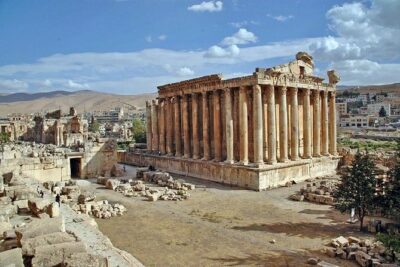
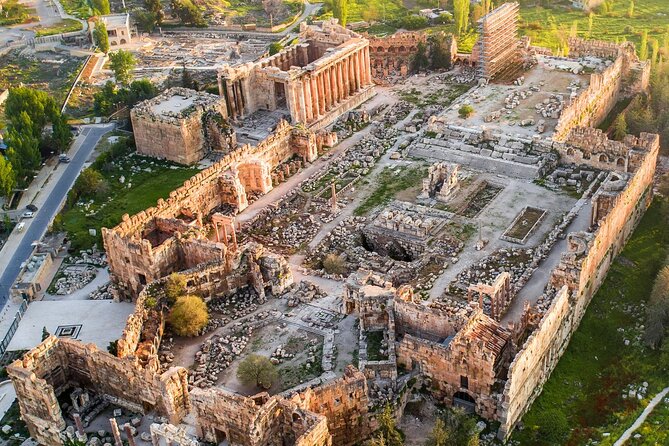
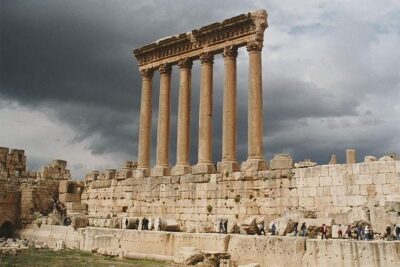
The Baalbek stop is the main event. The site includes the Temple of Jupiter and the Temple of Bacchus, two of the largest and grandest Roman temple ruins anywhere.
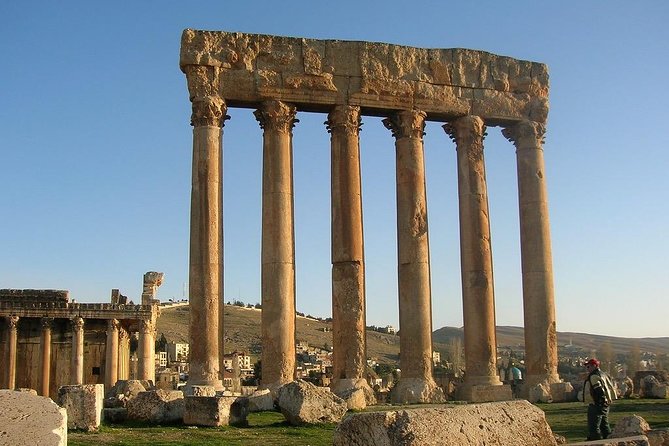
The Temple of Jupiter was the primary shrine of the sanctuary. Its surviving columns and enormous platform show how ambitious the builders were. Even with much of the original structure gone, the remaining stonework gives you a clear sense of the building’s former size.
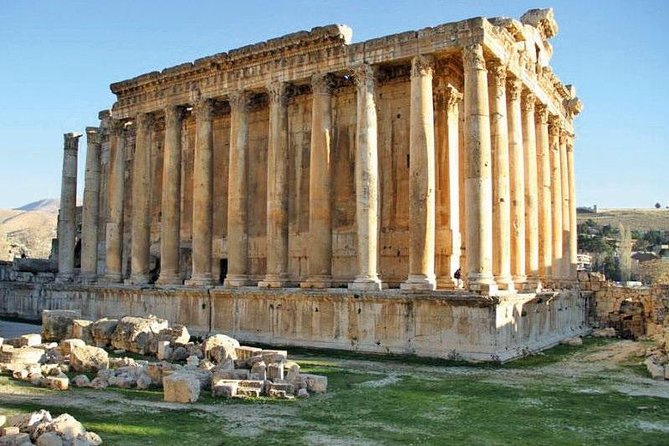
The Temple of Bacchus is especially impressive because so much of its carved structure remains. The name links it to the Roman god of wine, though the larger sanctuary honored a group of deities rather than one god alone. Look closely at the columns, doorways, and carved details. The builders were working on a monumental scale, but they also cared about fine surface work.
Baalbek reached its high point during Roman times, after construction carried on for more than two centuries. That long building period helps explain the site’s variety. You see immense foundations, grand columns, decorated stone, and the remains of a carefully planned sacred complex.
The ancient name Heliopolis means City of the Sun. The earlier Phoenician religious tradition continued under Greek and Roman influence, creating the Romanized Triad of Jupiter, Venus, and Bacchus. This cultural layering is one reason the site feels more interesting than a simple Roman copy of a Mediterranean temple.
The Baalbek overview is listed with free admission, while admission to the temple complex is listed separately as not included. Treat the $75 price as the cost of private transportation and the driver, not the full cost of entering every part of the ruins. Ask for the current ticket arrangement before departure so your budget is clear.
You will likely spend around an hour and a half at the main Baalbek area, followed by another hour and a half described for the temple complex. The exact division may vary, but the schedule gives you a useful expectation: the archaeological site receives most of the day, while the other stops are brief.
Reading the temples without rushing
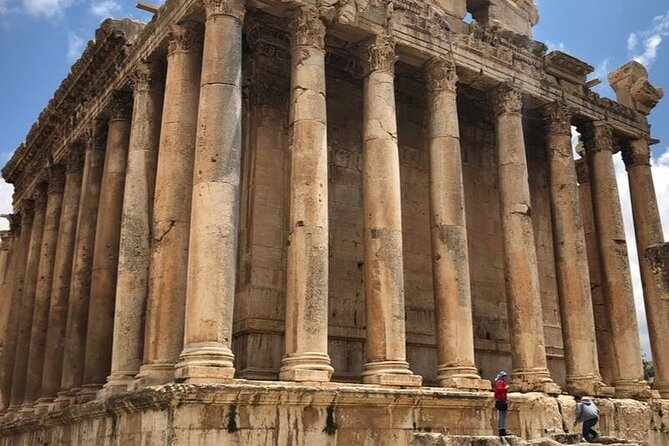
Baalbek rewards a little preparation. Before you arrive, remember three names: Jupiter, Venus, and Bacchus. These are the Roman names connected with the Heliopolitan Triad, whose roots reach back to the Phoenician religious tradition.
Jupiter was linked with the chief sanctuary. Venus was associated with the local religious system in her Roman form. Bacchus gave his name to the smaller but remarkably preserved temple. Knowing this makes the carved figures and temple functions easier to follow.
The complex was also a pilgrimage center. People came to worship, take part in religious rites, and see the power of the sanctuary. Imagine the site not as an abandoned ruin but as a destination filled with ceremony and movement.
I recommend taking time to compare the two temples. The Temple of Jupiter impresses through its size and position within the sanctuary. The Temple of Bacchus wins many visitors through its decoration and preservation. The contrast helps you appreciate both engineering and artistry.
The tour description does not promise a licensed guide, special access, or an organized archaeological lecture. Your driver may explain the main points, but you should ask questions if you want more detail. This is a practical sightseeing tour, not a specialist study visit.
The private format helps here. You can tell the driver if you need a few more minutes at a particular section, although the overall six-hour schedule still limits how long you can linger. A large group often moves at the pace of the slowest person. With a private group, the day should feel easier to manage.
A completely different kind of day out:
- Guided Small-Group Tour to Jeita, Harissa, Byblos with Lunch
★ 5.0 · 361 reviews - Paragliding Trip Over Lebanon – Jounieh Bay
★ 5.0 · 257 reviews - Jeita Grotto,Harissa&Byblos Full-Day PRIVATE-CAR Trip from Beirut
★ 5.0 · 222 reviews - First Paragliding Club in Lebanon – Since 1992
★ 5.0 · 193 reviews
Sayyeda Khawla Mosque and a living religious tradition
The stop at the Mosque of Sayyeda Khawla offers a sharp change of setting. The mosque is believed to mark the burial place of Sayyida Khawla, the daughter of Imam al-Hussein and granddaughter of the Prophet Muhammad.
The local story says that Khawla died in Baalbek while part of the caravan of captives from Karbala passed through the area. The mosque was erected at the site associated with her burial.
This stop adds a later religious tradition to a city already shaped by Phoenician, Hellenistic, and Roman worship. It reminds you that Baalbek has not been only an archaeological site. People continue to attach meaning to its places and stories.
No visit duration is provided for the mosque, and the tour details do not explain visitor rules or whether entry inside is included. Follow local instructions, dress respectfully, and ask the driver what is appropriate before entering. The stop may be brief, so consider it an introduction rather than a full religious visit.
I like its presence in the route because it prevents the day from becoming a parade of ancient stones. The mosque gives you a glimpse of Baalbek as a lived-in place with continuing religious importance.
The Stone of the Pregnant Woman
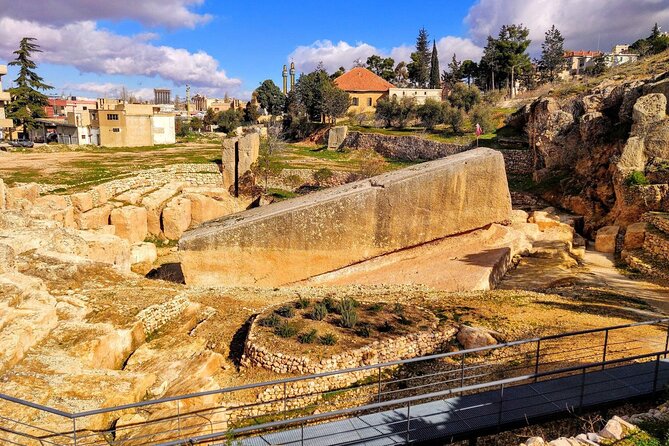
The final named stop is the Stone of the Pregnant Woman, a worked Roman monolith near the temple complex. The visit lasts about 15 minutes and admission is listed as free.
The stone is famous for its sheer size. Along with another nearby block, it is among the largest monoliths ever quarried. These blocks were likely intended for the nearby Roman sanctuary.
The nickname is memorable, but the engineering is the real reason to stop. The builders planned structures with stone blocks of a size that seems almost unreasonable today. The monolith gives you a direct look at the ambition behind the temples, before the stone was placed into the finished complex.
Do not expect a long visit. Fifteen minutes is enough to see the block, hear its basic story, and take photographs. It is not a separate archaeological museum or a large site with many features.
The stop works well at the end because it leaves you with a simple question: how did ancient builders quarry, move, and position material on this scale? Baalbek provides impressive finished monuments. This block lets you think about the hard work before construction even began.
What the $75 price really covers
At $75 per person, this tour can offer good value if you are traveling as a small private group and want transport arranged from Beirut. The price includes an air-conditioned vehicle, private transportation, an English-speaking driver, and hotel pickup and drop-off.
Those inclusions are important. You are paying for convenience and a private setup, not only for entry to a ruin. Organizing your own transport can take time and may require more local planning. Here, the provider handles the basic movement between Beirut, Baalbek, and the listed stops.
The price does not include lunch. One recorded experience praised a delicious lunch and called the outing good value, but the official details clearly place lunch outside the included package. Confirm whether the driver recommends or arranges a restaurant, and expect to pay separately.
The main temple-complex admission is also not included. The Baalbek overview and Stone of the Pregnant Woman are listed as free, but the temple visit has a separate admission note. Ask for the current entrance cost before setting your final budget.
Group discounts are offered, though the amount is not stated. Since the activity is private, the final value may improve if several people share the vehicle. Solo visitors should compare the per-person cost with other available transport options, while couples and families may find the privacy more useful.
A mobile ticket is available. Confirmation is received at booking, which helps when you are planning a fixed day in Lebanon. The cancellation rule is strict: the experience is non-refundable and cannot be changed for any reason. Only book once your schedule is firm.
Who will enjoy this Baalbek outing?
I would recommend this tour to anyone staying in Beirut who wants a straightforward first visit to Baalbek. It suits couples, families, and small groups that value hotel pickup, a private vehicle, and a driver who can speak English.
It is also a good fit if you prefer a focused six-hour outing rather than a full day built around several unrelated attractions. The route has a clear purpose: the Roman sanctuary, Sayyeda Khawla Mosque, and the giant monolith.
You may want something else if you need a specialist guide, long photography sessions, or a detailed study of every architectural phase. The information provided promises an English-speaking driver, not an expert historian, and the schedule gives the main ruins about three hours in total.
Visitors with a strong interest in sacred architecture will get the most from the combination of ancient temples and the mosque. Anyone mainly interested in Roman engineering will probably find the Temple of Jupiter, Temple of Bacchus, and Stone of the Pregnant Woman the strongest parts.
The tour is suitable for most people according to the supplied participation information. Still, the day includes walking around a large archaeological complex, so wear practical footwear and be ready for time outdoors. The details do not provide specific accessibility information, so ask the provider about mobility needs before booking.
Should you book the Baalbek tour?
Book it if you want Baalbek made simple. The private vehicle, hotel pickup, English-speaking driver, and focused route remove much of the planning work, while the temples provide one of Lebanon’s most powerful ancient sights.
Before paying, confirm three points: the temple admission cost, the lunch plan, and the exact pickup time. If you want a formal historical presentation, ask whether Charbel or another guide with deeper archaeological knowledge is available.
For a private half-day trip from Beirut, $75 can be fair value, especially for a small group sharing the transport. Just remember that the headline price is not the entire day’s cost. With that understood, this is a practical way to meet Baalbek’s colossal Roman remains and see how ancient, Islamic, and modern stories meet in the same place.
FAQ
Where does the tour begin?
The tour offers hotel pickup in Beirut and returns you to your hotel after the experience.
How long does the Baalbek tour last?
The tour lasts approximately six hours.
What is the price?
The listed price is $75 per person.
Is the tour private?
Yes. Only your group participates in the activity.
What transportation is included?
The tour includes private transportation in an air-conditioned vehicle.
Is an English-speaking guide provided?
An English-speaking driver is included.
Is lunch included?
No. Lunch is not included in the listed price.
Are admission tickets included?
Admission to the Baalbek temple complex is not included. The Baalbek overview and the Stone of the Pregnant Woman are listed with free admission.
Can I cancel or change the booking?
No. The experience is non-refundable and cannot be changed for any reason after booking.
Just added in Beirut
- Beirut Walking Tour – Discover Beirut by foot★ 5.0 · 2 reviews
- Lebanon’s Historic Gems: Private Tour of Jeita, Byblos & Harissa★ 5.0 · 1 review
- Discover the Hidden Gems: Qadisha, Bcharee, Cedars and Kozhaya★ 5.0 · 1 review
- PRIVATE Half-Day Tour to Beiteddine Palace & Deir elQamar★ 5.0 · 2 reviews
- Beiteddine and Al-Chouf Cedar Reserve★ 4.5 · 2 reviews
- Beirut Like a Local: Customized Private Tour★ 5.0 · 1 review
- Beirut Airport Transfer in a Limousine★ 5.0 · 2 reviews
- Luxury Yacht Ride★ 5.0 · 2 reviews
Baalbek Anjar and Ksara Day Trips
Anjar, Baalbek & Ksara Day Trip – With Lunch (4G on Board)
Read our review →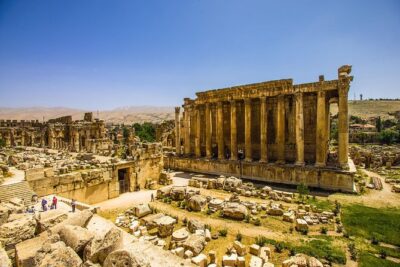
Private Anjar and Baalbek Tour from Beirut with Departure Ticket
Read our review →
Guided Private Full Day Tour to Baalbek, Anjar and Chateau Ksara
Read our review →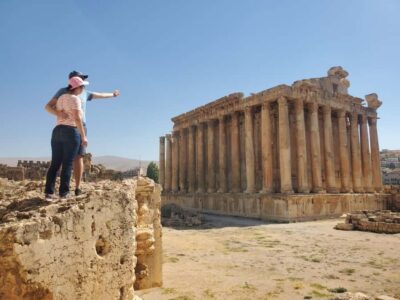
Baalbek Temples & Ksara Caves w/pick-up,guide, entries+lunch
Read our review →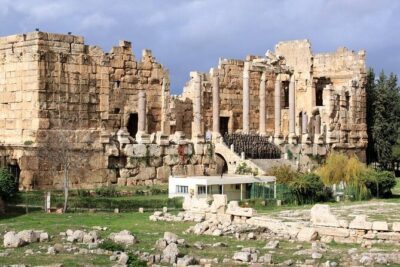
Small Group Tours to Baalbek, Anjar & Chateau Ksara with lunch and Tickets
Read our review →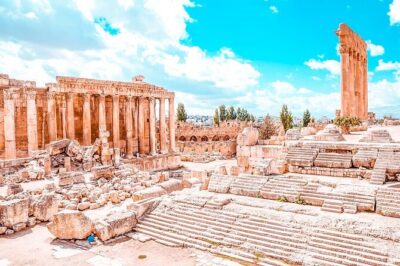
Private Tour: Anjar, Baalbek and Ksara Day Trip from Beirut
Read our review →