REVIEW · QADISHA VALLEY AND THE CEDARS OF GOD
Guided Private tour to Beiteddine Palace , Deir el Qamar and Cedars Forest
Lebanon’s mountain history begins outside Beirut. This private day trip takes you from the city to Beiteddine Palace, the old village of Deir el Qamar, and the Barouk Cedar Nature Reserve, all in a single eight-hour outing. I like the privacy of a dedicated vehicle and the convenience of hotel pickup, and I also like the way the route mixes grand buildings with village streets and mountain nature.
The main consideration is that the day has a lot packed into it. Palace admission, the cedar reserve fee, and lunch are not included, and the tour description mentions Moussa Castle while the timed schedule lists Barouk Cedar as the final stop. I would confirm that point before booking.
A chauffeur named Mike received special praise for being on time, courteous, professional, and friendly, with a good car. That is exactly the sort of practical service that matters on a long mountain day. The tour costs $100 per person, which can be fair for a private vehicle and guide, especially for a small group, but your final cost rises once you add lunch and entrance fees.
In This Review
- Key points to know before booking
- Why this makes a useful day outside Beirut
- Beiteddine Palace: allow the full 90 minutes
- Deir el Qamar: a compact village with several traditions
- Fakhreddine Mosque and Saydet El Talle Church
- Barouk Cedar Nature Reserve: 45 minutes among Lebanon’s cedars
- The Moussa Castle question
- Is $100 per person good value?
- Timing, comfort, and who should book
- Cancellation and practical booking notes
- Should you book this Chouf day trip?
- FAQ
- Where does the tour start?
- How long does the experience last?
- Is this a private tour?
- What transportation is included?
- Is hotel drop-off included?
- Is a guide included?
- Is lunch included?
- Are Beiteddine Palace admission fees included?
- Is admission to Barouk Cedar Nature Reserve included?
- Can I cancel for a full refund?
Key points to know before booking
- Beiteddine Palace takes about 90 minutes: This is the longest stop and the central cultural visit, but admission is extra.
- Deir el Qamar packs several sites into a short walk: You see the village, Fakhreddine Mosque, and Saydet El Talle Church.
- The tour is private: Only your own group participates, with transportation in an air-conditioned vehicle.
- Barouk Cedar Nature Reserve adds open-air time: The 45-minute stop introduces one of Lebanon’s best-known nature areas, though its admission fee is not included.
- Lunch is your responsibility: The tour includes no meal, so budget for it separately.
- The route description needs clarification: The overview refers to Moussa Castle, while the detailed schedule ends at Barouk Cedar.
Why this makes a useful day outside Beirut
Beirut is an exciting base, but Lebanon’s Chouf District gives you a different view of the country. Here, political history, religious traditions, old village life, and mountain forests sit close together. You do not need to arrange several separate rides or work out the mountain route yourself.
The private format is the strongest practical feature. You are collected from your Beirut hotel at 9:00 a.m., ride in an air-conditioned vehicle, and return to the same hotel after the day. For a couple, family, or group of friends, this is easier than trying to connect local transportation between several scattered places.
You also have a driver-guide with you. The information does not specify the guide’s formal qualifications, but the service note about Mike gives you one useful clue: punctuality and courteous driving have been praised. On a full day with mountain roads and several stops, a reliable driver can make the experience much less tiring.
The schedule is not built around long guided walks. Most stops are fairly short, with 90 minutes at Beiteddine Palace, 30 minutes in Deir el Qamar, 15 minutes at Fakhreddine Mosque, 15 minutes at Saydet El Talle Church, and 45 minutes at the cedar reserve. You will see a lot, but you should not expect a slow, detailed study of every site.
More of the Qadisha Valley and the Cedars:
- Guided Small-Group Tour to Qadisha, Bcharee & Cedars with Lunch
★ 5.0 · 39 reviews - Cedars of Lebanon, Qozhaya, & Bcharre – With Lunch (4G on Board)
★ 4.5 · 34 reviews - Cedars, Bsharre & Kozhaya Day Tour
★ 5.0 · 15 reviews
Beiteddine Palace: allow the full 90 minutes
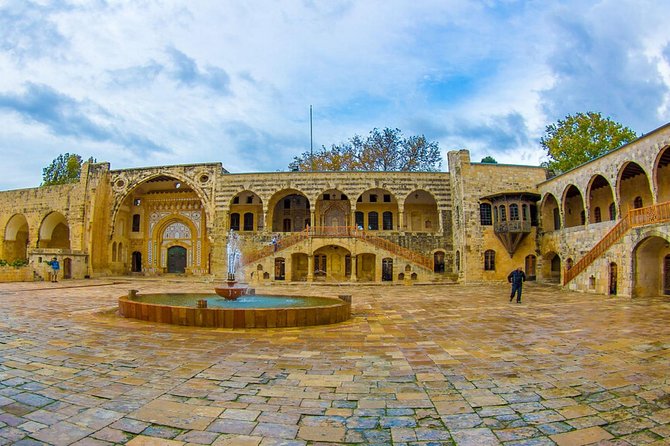
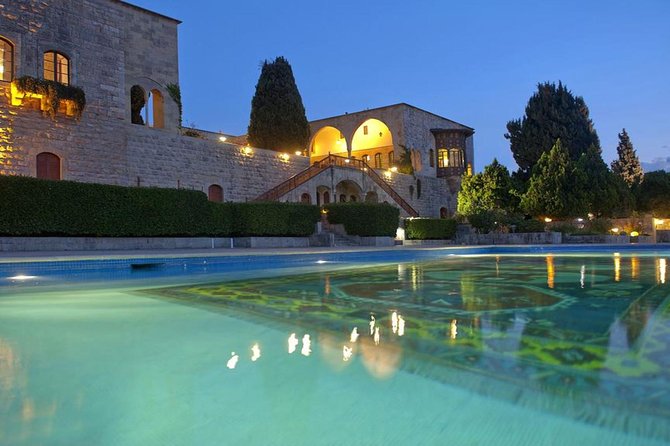
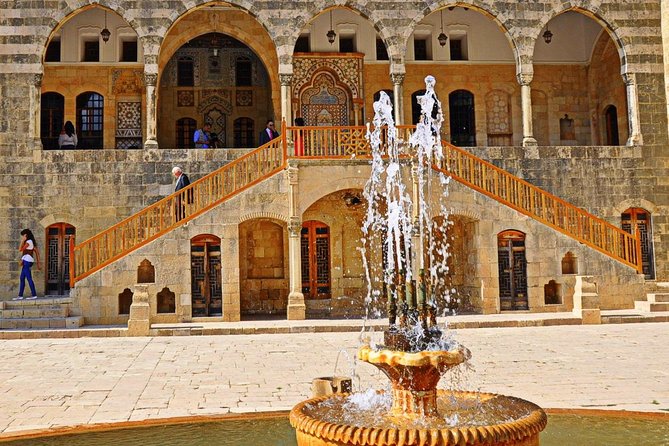
Beiteddine Palace is the day’s main architectural stop. Its name means House of Faith, and the palace was built between 1788 and 1818 by Emir Bashir Chehab II, who later ruled the Mount Lebanon Emirate.
The building has served several purposes over time. After 1840, the Ottomans used it as a government building. Under the French Mandate, it became a local administrative office. In 1943, it was declared the official summer residence of the president of Lebanon.
That long public life gives the palace more weight than a simple aristocratic residence. You are looking at a place tied to the administration and politics of Mount Lebanon, not only to its decoration and formal rooms. Parts of the palace are open to the public, while other sections remain the president’s summer residence.
The palace suffered heavy damage during the Lebanese Civil War. That matters when you set expectations. This is not a perfectly preserved time capsule, and some areas are unavailable. Still, the surviving public sections make it an important stop, especially if you want a clear introduction to the Chouf’s political past.
The allotted 90 minutes is sensible. You should have enough time to see the public areas without feeling rushed, but you may need to keep an eye on the clock if you like reading every display. The Beiteddine Palace Museum is also located here, and the palace hosts the annual Beiteddine Festival.
Admission is not included. I would check the current fee before departure and keep some extra money aside. Since this is the longest scheduled visit, the entrance cost is easier to justify here than at a very brief stop.
Deir el Qamar: a compact village with several traditions
Only about five kilometres from Beiteddine Palace, Deir el Qamar makes a natural second stop. The name means Monastery of the Moon. It was the first village in Lebanon to have a municipality, established in 1864, and it became the birthplace of artists, writers, and politicians.
The village is especially interesting because people from different religious backgrounds lived here. Its historic religious buildings included a mosque, a synagogue, and Christian churches. That mix gives the visit a wider purpose than simply photographing old stone buildings. You get a glimpse of how several communities shaped one small place.
The village was destroyed in 1860 during fighting between Druze and Christians, when it was set ablaze. Napoleon III sent a French contingent to help rebuild it. That painful chapter is part of the place you are seeing, and it helps explain why the village carries such importance in Lebanon’s story of community, conflict, and rebuilding.
The scheduled village visit lasts 30 minutes, which is short. I would use the time for a focused walk and listen closely to the guide rather than trying to see every corner. If you prefer long café stops, shopping, or unhurried photography, this itinerary may feel brisk.
Fakhreddine Mosque and Saydet El Talle Church
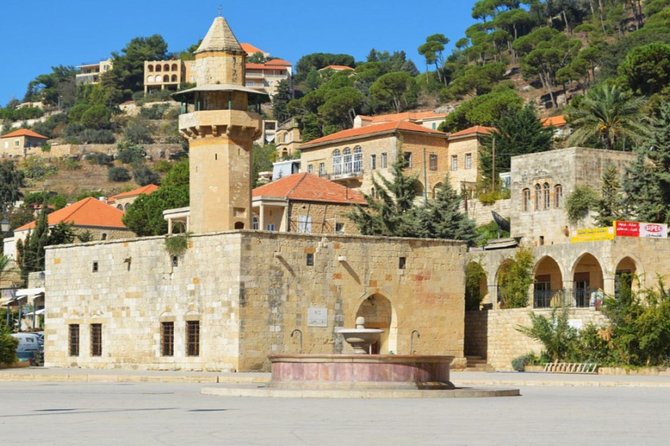
The next two stops are both in Deir el Qamar, and each receives 15 minutes. Their short timing suggests a quick exterior look or a brief visit, rather than a long religious or architectural tour.
Fakhreddine Mosque has an octagonal minaret and dates to 1493. It was restored in the sixteenth century by Fakhreddine I and is described as the oldest mosque in Mount Lebanon. Its location in a village known for several faith traditions makes it an important part of the Deir el Qamar visit.
You should treat the mosque as a historic site first and a photo stop second. If you want to enter, follow the guide’s instructions and observe local customs. The admission is free, but the schedule leaves little time for lingering.
Saydet El Talle Church, also called Our Lady of the Hill, dates to the fifteenth century and is one of Deir el Qamar’s important religious sites. The church was built over the remains of an older Phoenician temple dedicated to Astarte. An earthquake destroyed an earlier church on the site in 859, according to the historical account provided for the visit.
The site also carries a local legend involving a light seen on the hill and a decision about whether a mosque or church should be built there, depending on what was found underground. You do not need to accept every legend as literal history to appreciate what it shows: local religious places often carry layers of belief, memory, and storytelling.
With only 15 minutes here, listen for the key details and take a respectful look. The church visit is free, but opening access can depend on local conditions. The tour information does not promise a specific interior visit, so it is best to think of this as a short historical stop.
More of Beiteddine and the Chouf:
- Cedars Shouf & Beiteddine w/pick-up, guide, entries+lunch
★ 4.7 · 12 reviews - Guided small group to Cedars Reserve & Beiteddine w/lunch+entries
★ 5.0 · 12 reviews - Beirut, Beiteddine & DeirElQamar Day Trip-With Lunch(4G on Board)
★ 4.5 · 12 reviews - Small Group Tours to Beirut, Beiteddine & Deir el Qamar with lunch and all fees
★ 5.0 · 8 reviews
Barouk Cedar Nature Reserve: 45 minutes among Lebanon’s cedars
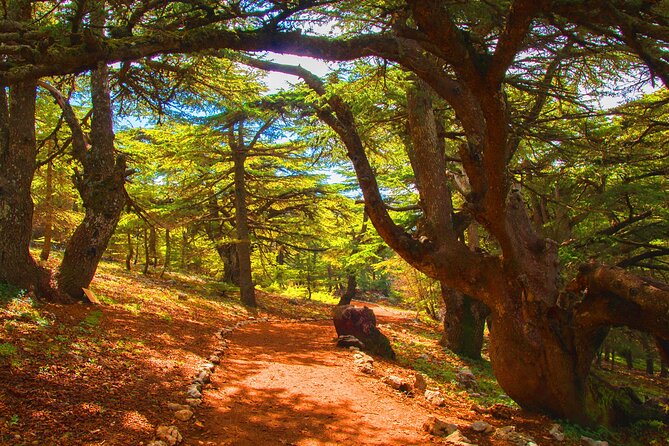
The final scheduled stop is the Barouk Cedar Nature Reserve, located in the Chouf District on the slopes of Barouk Mountain. The reserve covers 550 square kilometres and is one of Lebanon’s largest nature reserves.
The cedar area offers a change of pace after the palace and religious sites. You can spend 45 minutes outdoors, take in the mountain setting, and see why this part of Lebanon appeals to hikers and nature lovers. The reserve has trails for different levels of fitness, along with opportunities for bird watching, mountain biking, and snowshoeing.
The area supports 32 species of wild mammals, 200 bird species, and 500 plant species. A 45-minute visit will not allow you to explore the reserve properly, but it gives you a useful introduction. If you want a serious walk, ask before booking whether the itinerary can be adjusted. The published schedule does not promise a hike or specify a trail.
Admission is not included. You should also remember that the tour description uses both Cedars Forest and Barouk Cedar, while the detailed stop is Barouk Cedar Nature Reserve. That appears to be the nature portion of the route, but I would confirm the exact location and entry arrangements.
The Moussa Castle question
There is one point I would clear up before paying. The general description says that after lunch you can wander through Moussa Castle. The detailed schedule, however, lists Beiteddine Palace, Deir el Qamar, Fakhreddine Mosque, Saydet El Talle Church, and Barouk Cedar Nature Reserve, with no timed Moussa Castle stop.
That difference could reflect an older version of the route, an optional addition, or a simple wording error. Do not assume the castle is included. Ask the provider, Lebanon Tours & Travels, which stops are guaranteed on your date and whether lunch or the castle requires a change to the schedule.
This matters because the day already has a full program. Adding Moussa Castle without removing something else could make the final hours rushed. If the castle is your main reason for booking, get a clear answer in writing.
Is $100 per person good value?
At $100 per person, the tour is priced as a private full-day outing rather than a basic shared transfer. The value depends heavily on your group size. One person pays the full per-person rate, while a couple or larger group can spread the cost of the private vehicle and guide.
The price includes private transportation, an air-conditioned vehicle, hotel pickup and drop-off, and a professional guide. Those inclusions remove several common costs and hassles. You do not need to find a taxi between Beirut, Beiteddine, Deir el Qamar, and the reserve.
You still need to pay for lunch and admission to Beiteddine Palace and Barouk Cedar Nature Reserve. Those extras should be part of your real budget. The price also does not promise a specific restaurant, menu, or lunch duration.
I see good value here for people who want control over their own group and a simple route into the Chouf. I see less value for someone who only wants a quick ride to one attraction or who prefers to organize every stop independently.
Timing, comfort, and who should book
The 9:00 a.m. start and eight-hour duration create a full but manageable day. You will spend much of the experience in the vehicle, with short walking visits at several sites. Wear shoes suitable for uneven village surfaces and outdoor ground, but do not assume the reserve portion is a full hike.
This tour suits you if you:
- Want hotel pickup and drop-off from Beirut
- Prefer a private vehicle to a shared group
- Like combining architecture, religious sites, village history, and nature
- Are happy with short visits at some stops
- Want a driver-guide rather than handling the route yourself
It may not suit you if you want deep time at each site, a guaranteed long forest walk, or a carefully planned food experience. The schedule is broad rather than leisurely.
The private setup also helps if your group has different interests. One person can focus on the palace, another on village history, and another on the cedar reserve, while the guide helps keep the day moving. Still, the fixed timings mean you should not expect unlimited flexibility.
Cancellation and practical booking notes
You receive confirmation when booking, and most people can participate. This is a private activity, so only your group takes part.
Free cancellation applies when you cancel at least 24 hours before the 9:00 a.m. start time. Canceling within 24 hours, or making changes during that period, does not qualify for a refund. The cutoff follows local time in Lebanon.
Before booking, ask three simple questions: Is Moussa Castle included? Is lunch arranged or do you choose the stop? What are the current admission fees? These answers will tell you much more about the day’s real cost and pace.
Should you book this Chouf day trip?
I would book this tour if you want an easy private day from Beirut that brings together Lebanon’s mountain politics, religious heritage, village life, and cedar country. Beiteddine Palace is the anchor, Deir el Qamar adds human scale, and Barouk Cedar gives the schedule some fresh air.
I would not book it without clarifying Moussa Castle and the final nature stop. The route offers good variety, but the short visits mean you are sampling the Chouf rather than studying it in depth.
For a small group, the $100 price can be sensible, especially with a private vehicle, hotel service, and a driver-guide. Ask for the exact inclusions, budget for lunch and entrance fees, and make sure the schedule matches your priorities. If you do that, this is a practical way to see much more of Lebanon than Beirut alone.
FAQ
Where does the tour start?
The tour starts with pickup from your Beirut hotel at 9:00 a.m.
How long does the experience last?
The tour lasts approximately eight hours.
Is this a private tour?
Yes. Only your group participates in the activity.
What transportation is included?
Private transportation in an air-conditioned vehicle is included.
Is hotel drop-off included?
Yes. Hotel pickup and drop-off are included.
Is a guide included?
Yes. The tour includes a professional guide who travels with you.
Is lunch included?
No. Lunch is not included in the tour price.
Are Beiteddine Palace admission fees included?
No. Admission to Beiteddine Palace is not included.
Is admission to Barouk Cedar Nature Reserve included?
No. The admission fee for Barouk Cedar Nature Reserve is not included.
Can I cancel for a full refund?
Yes, if you cancel at least 24 hours before the experience start time. Cancellations within 24 hours are not refunded.
Just added in Beirut
- Guided Full-Day Private Trip to Tripoli from Beirut★ 5.0 · 2 reviews
- Guided Half-Day Private Trip to Beiteddine Palace and Deir el Qamar★ 5.0 · 2 reviews
- Guided Half-Day Private Trip to Byblos from Beirut★ 5.0 · 1 review
- Discovering Tyre: A Half-Day Tour with English-Speaking Driver★ 5.0 · 1 review
- Small Daily Tours in Beirut City★ 4.5 · 2 reviews
- Beirut to Beiteddine and Deir El Qamar: Daily Tours with Lunch★ 5.0 · 2 reviews
- Semi-Private Guided Tour to Baalbek, Anjar and Ksara with lunch★ 5.0 · 2 reviews
- Customized as you like day tour in lebanon anywhere from 1-6 riders same price★ 5.0 · 1 review
Qadisha Valley and the Cedars of God
Guided Small-Group Tour to Qadisha, Bcharee & Cedars with Lunch
Read our review →
Cedars of Lebanon, Qozhaya, & Bcharre – With Lunch (4G on Board)
Read our review →
Cedars Shouf & Beiteddine w/pick-up, guide, entries+lunch
Read our review →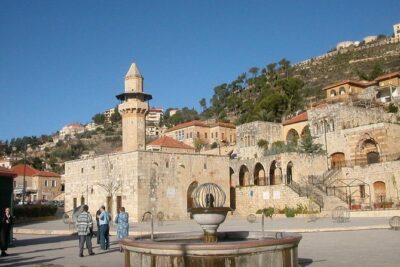
Guided small group to Cedars Reserve & Beiteddine w/lunch+entries
Read our review →
Small-Group Tour with Lunch to Qadisha Valley, Bcharre and Cedars
Read our review →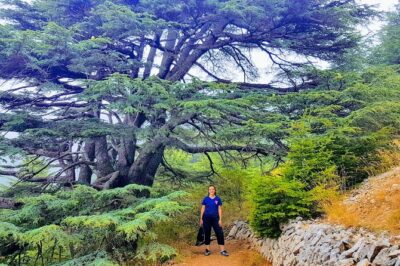
Guided Full-Day Private Trip to Cedars, Baalbek and Chateau Ksara
Read our review →