REVIEW · BAALBEK ANJAR AND KSARA DAY TRIPS
Full-Day Private Tour to Baalbek, Anjar And Ksara From Beirut
Ancient stones, sacred places, and Lebanese wine await. This private day trip from Beirut packs three very different experiences into about eight hours: the vast Roman temples at Baalbek, the carefully planned Umayyad ruins of Anjar, and a tasting at Château Ksara. I like the mix of major archaeological sights and a living Lebanese food and wine tradition. I also like that hotel pickup, drop-off, an air-conditioned vehicle, and an English-speaking driver are included.
The main drawback is time. Baalbek deserves a slow visit, while Anjar and Ksara add more driving and sightseeing to the day. Admission tickets and lunch are not included, so you should budget for both before setting out.
In This Review
- Key points before you book
- Why this Beirut day trip works
- Baalbek’s Roman temples: the reason to go
- The Mosque of Sayyida Khawla and a local sacred tradition
- The Stone of the Pregnant Woman and Roman engineering
- Anjar’s Umayyad city plan
- Château Ksara and the final wine tasting
- Is $50 per person a fair price?
- Who should choose this tour?
- Practical advice for a smoother day
- Should you book the Baalbek, Anjar and Ksara tour?
- FAQ
- Where does the tour start?
- How long does the tour last?
- What transportation is included?
- Is this a private tour?
- How much does the tour cost?
- Is lunch included?
- Are entrance tickets included?
- What places does the tour visit?
- Can I cancel for a refund?
Key points before you book
- Baalbek is the main event: You see the enormous Roman temples of Jupiter and Bacchus, among the best-preserved Roman structures in the ancient world.
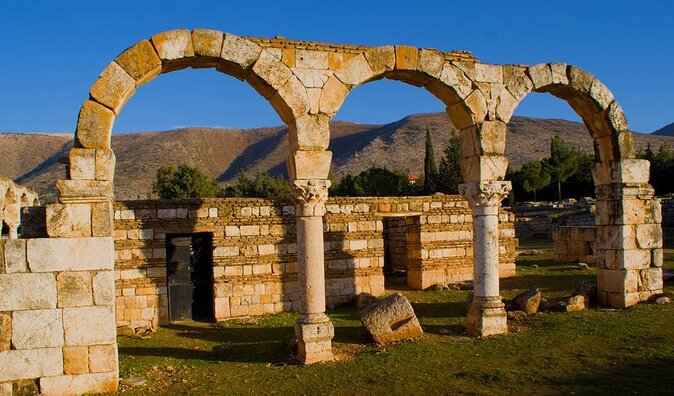
- Anjar changes the historical focus: Its Umayyad palace, mosque, baths, walls, and colonnades show a planned inland trading center rather than another Roman temple complex.
- The Stone of the Pregnant Woman adds scale: This huge Roman block helps you understand how extreme the building work at Baalbek was.
- Ksara gives the day a different finish: The Château was founded in 1857 by Jesuit priests and produces about three million bottles each year.
- The private format is useful: Only your group participates, and the driver handles transport from Beirut and back.
- The price can be good value: At $50 per person, the package is attractive if you are traveling with others and want transport arranged for a full day.
Why this Beirut day trip works
Lebanon can make a short city stay feel much larger. Beirut gives you the sea, food, museums, and city life, but Baalbek takes you into the Bekaa Valley and a much older chapter of the country. Anjar then adds an early Islamic site, while Ksara brings you back to a working Lebanese tradition.
I like the way this tour avoids giving you only one kind of attraction. You are not spending eight hours looking at similar ruins. Instead, the day moves from Roman imperial architecture to Umayyad urban planning and then to wine production.
The private setup matters. You are not tied to a large group’s pace, and only your own party joins the activity. The package includes an English-speaking driver and an air-conditioned vehicle, which is especially useful on a long day with several stops. Pickup and drop-off at your hotel also remove the need to arrange separate transport.
The stated start time is 8:30 am. The full outing lasts about eight hours, though the exact rhythm can depend on traffic, time at the sites, and the wine tasting. Since lunch is not included, ask about the day’s meal plan when you book or set aside time and money for food.
The company can coordinate by WhatsApp, which one customer found easy to use when arranging this tour and a separate half-day trip to Byblos with only a few days’ notice. That is a useful practical detail if your Lebanon plans are still coming together. Still, last-minute availability should never be treated as guaranteed.
More Baalbek and Bekaa day trips:
- Guided Small-Group Tour to Baalbek, Anjar and Ksara with Lunch
★ 5.0 · 511 reviews - Anjar, Baalbek & Ksara Day Trip – With Lunch (4G on Board)
★ 4.5 · 181 reviews - Baalbek – Anjar – Ksara Trip From Beirut
★ 4.5 · 80 reviews
Baalbek’s Roman temples: the reason to go
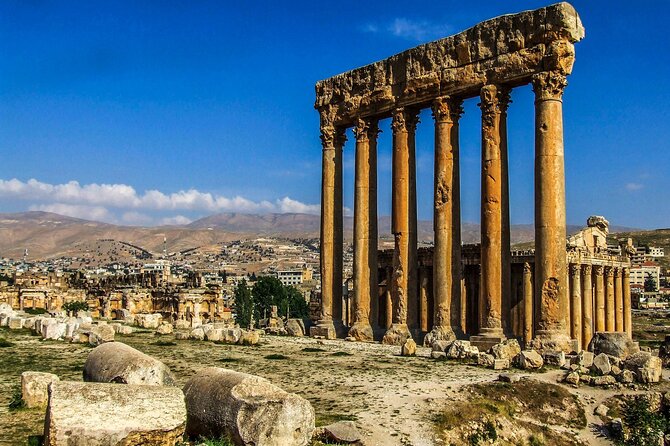
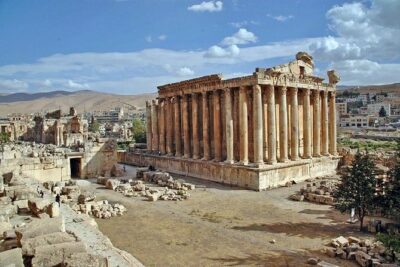
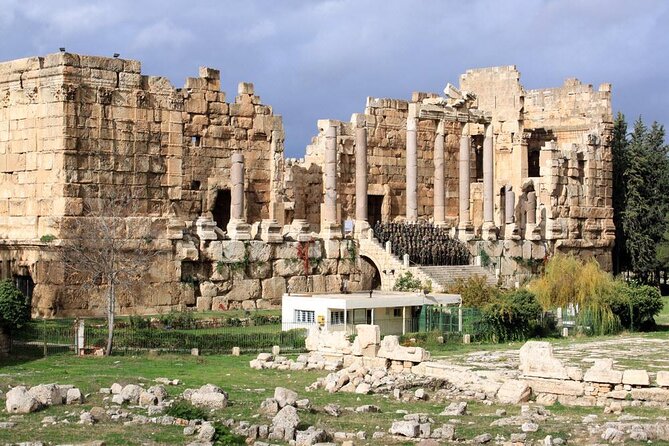
Baalbek is the heart of the day. The Roman ruins are described as Lebanon’s greatest Roman treasure, and that claim is easy to understand once you picture the scale. These were not modest provincial buildings. The complex included some of the largest and most impressive Roman temples ever built.
You are scheduled to spend about one hour and thirty minutes at the temples. That gives you enough time to see the main structures and take in the size of the site, but it may feel short if you enjoy archaeology or photography. Admission is not included, so remember that the $50 tour price does not cover entry here.
The Temple of Jupiter is the grandest name on the program. Its huge columns and elevated setting show the ambition behind the sanctuary. Even in ruins, the surviving stonework gives you a clear sense of how much labor, money, and political power went into the site.
The Temple of Bacchus is another major highlight. It is smaller than the Temple of Jupiter, but its preservation makes it especially rewarding. Look closely at the carved details and the proportions of the structure. Baalbek is not only about giant blocks. It is also about the fine work applied to them.
I would use the first few minutes to get your bearings instead of rushing straight into photographs. Notice how the remains are arranged, then compare the scale of the surviving columns with the smaller human figures around them. The contrast is the point.
Baalbek can be an intense stop because so much is packed into one complex. If you want a detailed archaeological explanation of every building, confirm how much guiding your English-speaking driver provides. The tour information identifies the driver as English-speaking, but it does not promise a dedicated archaeological guide.
That distinction affects expectations. You receive private transport and a driver, not necessarily a specialist guide at every ruin. You can still have a strong visit, but you may want to read a little about Baalbek before leaving Beirut if you enjoy understanding the site’s religious and architectural development.
The Mosque of Sayyida Khawla and a local sacred tradition
The day also includes a stop at the Mosque of Sayyida Khawla in Baalbek. It is associated with Sayyida Khawla, the daughter of Imam al-Hussein and granddaughter of the Prophet Muhammad. Local belief holds that she died and was buried here when the caravan of captives from Karbala passed through Baalbek.
This stop adds a different layer to the day. The Roman temples speak of imperial power and ancient pagan worship, while the mosque connects Baalbek to Islamic faith and the memory of Karbala. You are seeing how one city can carry several religious and historical traditions at once.
The available details do not give a separate time allocation for the mosque. That means the length of the visit may depend on the day’s schedule and your driver. Treat it as a meaningful cultural stop rather than expecting a long formal tour inside.
As with any religious place, dress and behavior should be respectful. The supplied information does not specify entry rules, so follow any instructions given at the site.
The Stone of the Pregnant Woman and Roman engineering
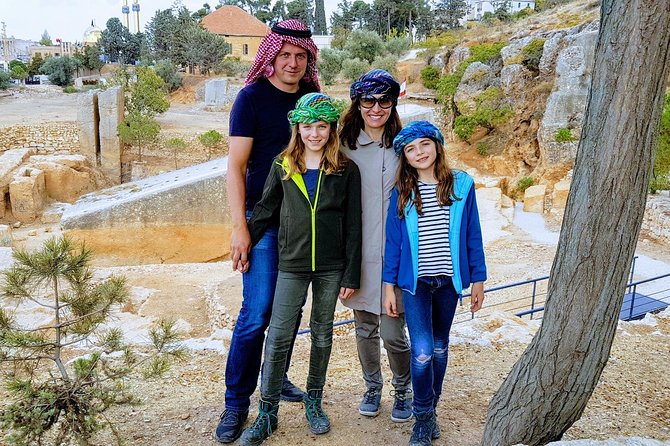
The Stone of the Pregnant Woman is a quick stop, scheduled for about 15 minutes, with free admission. It is a worked Roman monolith and one of the largest ancient stone blocks ever quarried. Another enormous block nearby adds to the sense that these stones were intended for the neighboring temple complex.
You do not need long here to understand the appeal. The stone is a physical puzzle. How did ancient builders quarry it, move it, and plan to use it? The exact answer matters less than the evidence of the ambition involved.
This stop works well beside the temples. At the main complex, you see the finished architectural result. At the stone quarry, you see the raw material and the scale of the unfinished work. Together, the two stops make Baalbek easier to grasp.
The 15-minute visit is brief, so you will not have much time for a long walk or detailed exploration. Use it to look at the cut surfaces, compare the block with nearby people and structures, and take a few photographs. Admission is free, but the stop still adds value because it makes the engineering challenge more concrete.
A completely different kind of day out:
- Guided Small-Group Tour to Jeita, Harissa, Byblos with Lunch
★ 5.0 · 361 reviews - Paragliding Trip Over Lebanon – Jounieh Bay
★ 5.0 · 257 reviews - Jeita Grotto,Harissa&Byblos Full-Day PRIVATE-CAR Trip from Beirut
★ 5.0 · 222 reviews - First Paragliding Club in Lebanon – Since 1992
★ 5.0 · 193 reviews
Anjar’s Umayyad city plan
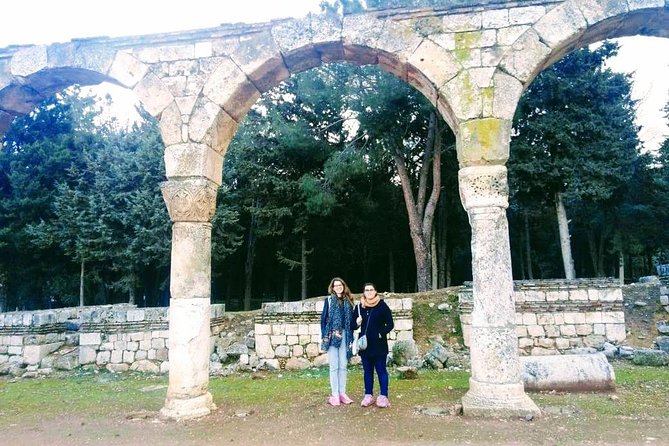
After Baalbek, the tour shifts to the Umayyad Ruins of Anjar. The visit is scheduled for one hour, and admission is not included. Anjar was an inland commercial center at the meeting point of important routes, including the road from Beirut to Damascus and routes crossing the Bekaa toward Homs and Tiberiade.
The site was only discovered by archaeologists in the late 1940s. That fact gives Anjar a different feel from Baalbek. Here, you are looking at the remains of a city whose archaeological story became clear much more recently.
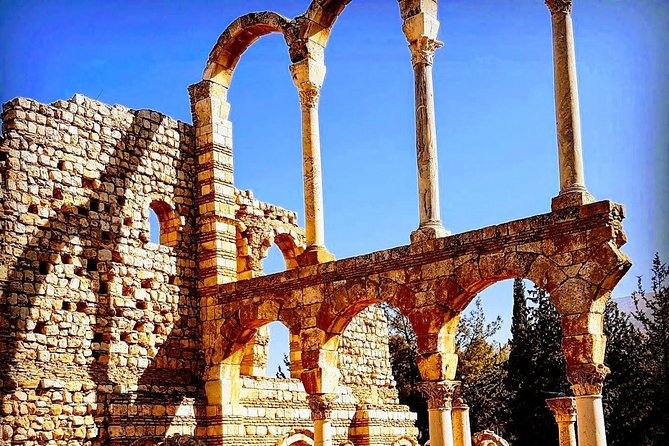
The ruins include the walls of an Umayyad palace, harems, a mosque, the great palace of the caliph, thermal baths, and many pillars. Some architectural details show Roman influence, but the city belongs to the Umayyad period. Its layout helps you think about trade, government, religion, and daily life in an early Islamic urban center.
I like Anjar because it rewards attention to the plan of the city. Baalbek grabs you with size. Anjar asks you to notice streets, walls, courtyards, and the relationship between public and private spaces. If you take a moment to imagine the palace and baths as working parts of a city, the ruins become more than scattered stones.
One hour is enough for an overview, especially after the large Baalbek complex. It may feel rushed if you want to inspect every remaining wall or understand the full political story of the Umayyad period. The entrance ticket is extra, so include it in your spending plan.
The combination of Baalbek and Anjar is one of the strongest reasons to choose this outing. You get two major archaeological sites with different identities, not two versions of the same ancient ruin.
Château Ksara and the final wine tasting
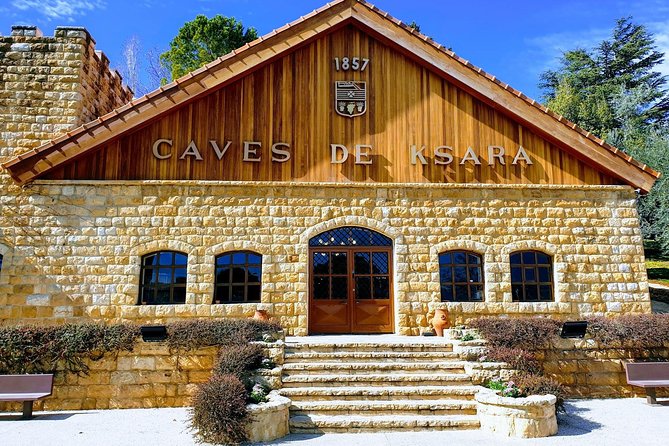
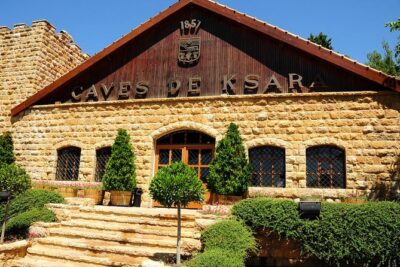
Château Ksara provides a relaxed change of pace after the ruins. The winery was founded in 1857 by Jesuit priests and developed Lebanon’s first dry wine. Today, it produces about three million bottles a year and exports to more than 40 countries.
The scheduled visit lasts one hour, and admission is not included. The tour description promises a wine tasting with a range of wines for different tastes and occasions. It does not specify the exact wines, number of pours, or whether a cellar tour is included, so ask if those details matter to you.
Ksara is more than a drink at the end of the day. It connects the Bekaa Valley to a modern Lebanese industry with a long local story. After seeing Roman and Umayyad remains, you get a look at something still in production.
If you do not drink wine, this stop may be less important to you than the archaeological sites. The information does not state whether non-drinking alternatives are available, so check in advance if that is relevant. For wine drinkers, though, the tasting gives the tour a pleasant final chapter and a chance to compare Lebanese production with wines you may know from elsewhere.
The one-hour schedule is sensible. You get enough time for a tasting without turning the final stop into another long visit. Since the tour does not include lunch, Ksara should not be mistaken for a full meal stop.
Is $50 per person a fair price?
At $50 per person, the value depends on how many people are in your private group and what you would otherwise pay for transport. The cost includes a private, air-conditioned vehicle, an English-speaking driver, hotel pickup, and hotel drop-off. Those inclusions matter on a full day that combines Beirut with several sites in the Bekaa Valley.
You still pay separately for admission to Baalbek, Anjar, and Château Ksara, and lunch is not included. The Stone of the Pregnant Woman has free admission. Before booking, add the separate entrance fees and food to the advertised price.
The tour becomes more appealing when shared by several people, since the transport is private and group discounts are offered. It is also useful if you do not want to arrange the route yourself or piece together separate rides between the sites.
The price is less compelling if you only want to see Baalbek and prefer a very long visit at the temples. In that case, a shorter private outing focused on Baalbek may fit better. This tour earns its value through variety and convenience, not through giving you unlimited time at one location.
Who should choose this tour?
I would point this tour toward a first-time visitor to Lebanon who wants a broad day outside Beirut. It suits you if you want major Roman ruins, an early Islamic site, and a Lebanese winery in one organized outing.
It also fits couples, families, and small groups who value privacy. The air-conditioned vehicle and hotel transfers make the day simpler, while the private format gives your group more control than a large shared bus.
History fans should enjoy the contrast between Baalbek and Anjar. Wine drinkers will appreciate the final stop at Ksara. If your main goal is a slow, specialist-led archaeological study, you may want to confirm the guiding arrangement before paying.
The tour is less suitable if you dislike long days, do not want to pay separate admission fees, or have no interest in wine. The total schedule is full, and the major sites deserve energy and attention.
Practical advice for a smoother day
Start with a clear idea of your priorities. At Baalbek, give yourself time to look at both the grand scale and the smaller carved details. At Anjar, focus on the city plan and the surviving palace, mosque, baths, and colonnades.
Carry money for lunch and entrance fees. The tour price does not include either, and only the Stone of the Pregnant Woman is specifically listed as free.
Use the booking contact before the day to confirm pickup details and ask what is included at Château Ksara. Communication by WhatsApp has been reported as easy, including when arranging the tour with only a couple of days’ notice.
The free cancellation policy allows a full refund if you cancel at least 24 hours before the experience begins. Changes or cancellations made less than 24 hours before the start time are not accepted for a refund, and the cut-off follows local time.
Should you book the Baalbek, Anjar and Ksara tour?
Book it if you want a convenient private day that shows three sides of Lebanon: Roman grandeur, Umayyad city life, and wine production in the Bekaa Valley. The mix is the strongest feature, and the included transport makes the $50 per-person starting price attractive for a small group.
Think twice if Baalbek is your only priority or if you want a dedicated specialist guide. The schedule gives you a useful overview, but the day moves quickly and paid admissions are extra.
For most first-time visitors with one open day from Beirut, I would consider this a sensible choice. You get the country’s biggest ancient spectacle, a less familiar archaeological site, and a distinctly Lebanese finish at Château Ksara.
FAQ
Where does the tour start?
The tour starts from Beirut with hotel pickup. The stated start time is 8:30 am.
How long does the tour last?
The experience lasts approximately eight hours.
What transportation is included?
Private transportation in an air-conditioned vehicle is included. An English-speaking driver provides the transport, and hotel pickup and drop-off are included.
Is this a private tour?
Yes. Only your group participates in the private tour or activity.
How much does the tour cost?
The listed price is $50 per person. Group discounts are offered.
Is lunch included?
No. Lunch is not included in the tour price.
Are entrance tickets included?
No. Admission to the Temples of Baalbek, the Umayyad Ruins of Anjar, and Château Ksara is not included. Admission to the Stone of the Pregnant Woman is free.
What places does the tour visit?
The day includes the Temples of Baalbek, the Mosque of Sayyida Khawla, the Stone of the Pregnant Woman, the Umayyad Ruins of Anjar, and Château Ksara.
Can I cancel for a refund?
Yes. You can cancel up to 24 hours before the experience starts for a full refund. Cancellations or changes made less than 24 hours before the start time are not accepted for a refund.
Just added in Beirut
- Sidon, Magdouche and Tyre★ 5.0 · 1 review
- Small-Group Tour to Beirut, Beiteddine and Deir El Qamar with Lunch and Tickets★ 5.0 · 1 review
- RZR XP4 (4 Seat Buggy) Full Day Off-Road Scenic Adventures★ 5.0 · 2 reviews
- Full-Day Private Tour to Beiteddine, Deir El Qamar, Mousa Palace★ 5.0 · 2 reviews
- Exploring the Qadisha Valley, Cedars of God, and Baalbek Temples★ 5.0 · 1 review
- Unlocking the Wonders of Lebanon: Journey Through Qadisha Valley★ 5.0 · 2 reviews
- Private Tour – Hamatoura Monastery★ 5.0 · 1 review
- Lebanon’s Triple Delight: Jeita Grotto, Baalbek & Chateau Ksara★ 5.0 · 1 review
Baalbek Anjar and Ksara Day Trips
Anjar, Baalbek & Ksara Day Trip – With Lunch (4G on Board)
Read our review →
Private Anjar and Baalbek Tour from Beirut with Departure Ticket
Read our review →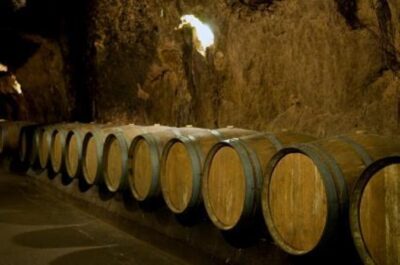
Guided Private Full Day Tour to Baalbek, Anjar and Chateau Ksara
Read our review →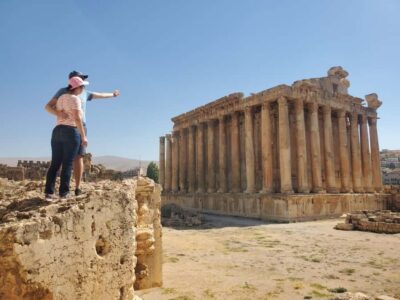
Baalbek Temples & Ksara Caves w/pick-up,guide, entries+lunch
Read our review →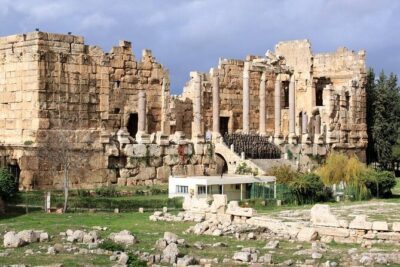
Small Group Tours to Baalbek, Anjar & Chateau Ksara with lunch and Tickets
Read our review →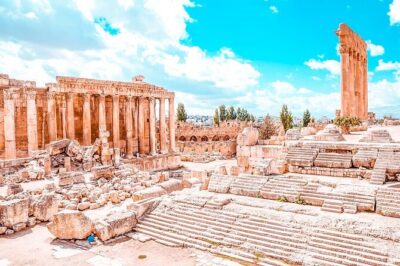
Private Tour: Anjar, Baalbek and Ksara Day Trip from Beirut
Read our review →