REVIEW · BAALBEK ANJAR AND KSARA DAY TRIPS
Exclusive Excursion: Discover Baalbek, Anjar, and Chateau Ksara
Baalbek, Anjar, and Lebanese wine make a fine day out. This private excursion links two UNESCO-listed archaeological sites with Chateau Ksara, Lebanon’s oldest winery, and gives you a driver and guide so you are not handling Bekaa Valley roads after a tasting. I especially like the door-to-door transfers and the chance to see both Roman and Umayyad architecture in one outing.
I also like the personal format. Your group travels alone, with a tour leader and local guide rather than being folded into a large bus tour. The main thing to watch is the price structure: the $70 rate includes transport and guiding, but admission tickets and lunch are extra.
In This Review
- Key points to know before booking
- Why this Beirut day trip works
- Baalbek’s colossal Roman sanctuary
- A brief stop at Sayyida Khawla Mosque
- The Stone of the Pregnant Woman and Roman ambition
- Anjar’s Umayyad city plan
- Chateau Ksara and Lebanon’s wine tradition
- What the private vehicle adds
- Timing, meals, and extra costs
- Who will enjoy this experience most
- Should you book the Baalbek, Anjar, and Ksara tour?
- FAQ
- Where does the excursion begin?
- How long does the tour last?
- Is transportation included?
- Is this a private tour?
- Which major sites are included?
- Are admission tickets included?
- Is lunch included?
- Does the tour include wine tasting?
- Can I cancel for a full refund?
Key points to know before booking
- Baalbek delivers the day’s biggest visual impact: Colossal Roman temples, huge carved stones, and the setting at about 1,150 meters make this the main event.
- The Stone of the Pregnant Woman is a quick but memorable stop: This massive Roman block helps explain the scale of the nearby sanctuary.
- Anjar changes the historical focus: Its Umayyad ruins show a planned Islamic city with palaces, baths, a mosque, and Roman-style columns.
- Chateau Ksara adds a welcome change of pace: You tour the cellars and taste Lebanese wine at a winery founded in 1857.
- A private car matters here: You get hotel pickup, hotel drop-off, air conditioning, and no need to drive after the tasting.
- The $70 price is best for a small group: It offers strong value when shared by several people, but you should add entrance fees and lunch to your budget.
Why this Beirut day trip works
Lebanon packs several eras into a surprisingly compact route. From Beirut, this day heads toward the Bekaa Valley, where Baalbek recalls the Roman world, Anjar reflects the Umayyad period, and Chateau Ksara connects the region to a living wine tradition.
I like the structure because the stops do not feel repetitive. Baalbek is monumental and religious. Anjar is more urban and archaeological. Ksara is social, modern, and sensory. The result is a day with enough variety to keep the long driving portions worthwhile.
The excursion lasts about eight hours and begins at 8:30 am. Hotel pickup and drop-off are included, so you do not need to arrange a separate meeting point in Beirut. The air-conditioned vehicle is useful for a full day that includes several hours on the road, although the exact driving time is not provided.
This is a private activity. Only your group takes part, which gives you more control over questions, stops, and the pace of each visit. That personal attention is the main reason to choose this over a cheaper shared excursion.
More Baalbek and Bekaa day trips:
- Guided Small-Group Tour to Baalbek, Anjar and Ksara with Lunch
★ 5.0 · 511 reviews - Anjar, Baalbek & Ksara Day Trip – With Lunch (4G on Board)
★ 4.5 · 181 reviews - Baalbek – Anjar – Ksara Trip From Beirut
★ 4.5 · 80 reviews
Baalbek’s colossal Roman sanctuary
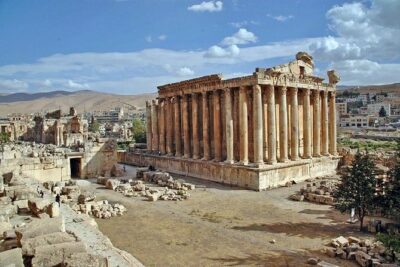
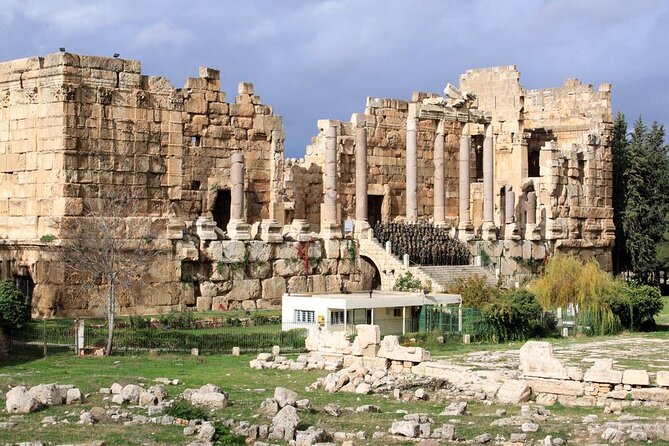
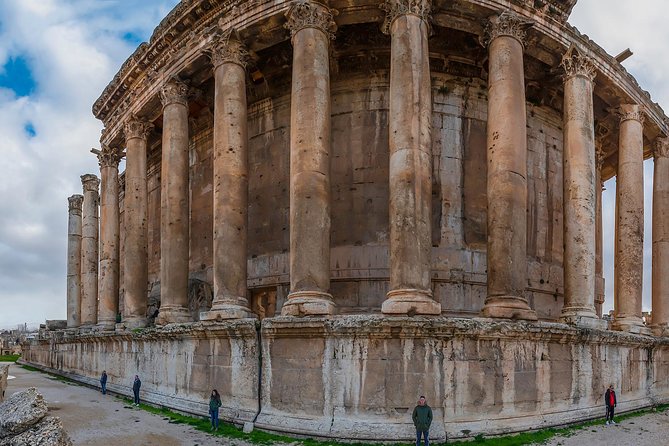
Baalbek is the centerpiece. The sanctuary sits at the foot of the Anti-Lebanon range beside the fertile Bekaa Valley, at an altitude of roughly 1,150 meters. Its elevated setting and enormous stonework give the site a scale that photographs do not always capture.
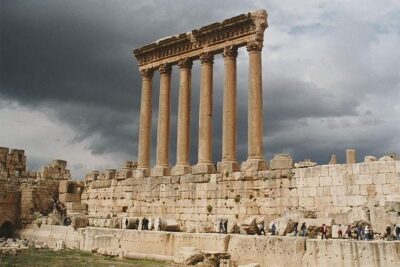
The city reached its peak during Roman times. Construction of the temple complex continued for more than two centuries, creating one of the major sanctuaries of the Roman world. The complex honored the Romanized Triad of Heliopolis: Jupiter, Venus, and Bacchus. Beneath those Roman names was an older Phoenician religious tradition.
You have about an hour at the temples. That is enough for an introduction and a focused walk, but it may feel short if you want to study every architectural detail. Ask your local guide to explain how the sanctuary developed and which surviving structures belong to each deity. A guide can also help you understand why the huge blocks were so difficult to quarry, move, and place.
Baalbek is not a small ruin where you simply wander among broken walls. Its appeal comes from the sheer size of the surviving construction. The Roman builders were making a statement about power, worship, and engineering, and the site still communicates that clearly.
The admission ticket is not included, so allow extra money beyond the advertised price. Since the tour gives you only one hour here, keep your visit focused. Wear practical shoes and bring water, especially during warmer months, though the provided information does not specify the walking conditions or weather.
A brief stop at Sayyida Khawla Mosque
The route also includes the Mosque of Sayyida Khawla in Baalbek. It marks the place where local belief says Sayyida Khawla, the daughter of Imam al-Hussein, was buried after the caravan of captives from Karbala passed through Baalbek.
This stop adds a religious dimension that differs from the Roman sanctuary. It also reminds you that Baalbek is not only an archaeological site. It remains a living city with sacred places important to the local community.
The available timing does not specify how long you spend at the mosque. Follow your guide’s instructions about appropriate behavior and clothing, and treat the site as an active place of worship rather than simply another photo stop.
The Stone of the Pregnant Woman and Roman ambition
The Stone of the Pregnant Woman takes only about 15 minutes, and admission is free. The stop is short because the attraction is very specific: a worked Roman monolith so large that it ranks among the biggest ancient stones ever quarried.
Another enormous block lies nearby. Both were apparently intended for the Roman temple complex, although the supplied information does not state exactly how they were meant to be used. Their size gives you a practical sense of the project at Baalbek. After seeing the finished temples, you can look at these rougher blocks and think about the labor that came before construction.
Do not expect a full archaeological visit here. This is a quick stop, best treated as a visual lesson in Roman building methods. It works well between the main sanctuary and Anjar because it adds context without taking much time.
A completely different kind of day out:
- Guided Small-Group Tour to Jeita, Harissa, Byblos with Lunch
★ 5.0 · 361 reviews - Paragliding Trip Over Lebanon – Jounieh Bay
★ 5.0 · 257 reviews - Jeita Grotto,Harissa&Byblos Full-Day PRIVATE-CAR Trip from Beirut
★ 5.0 · 222 reviews - First Paragliding Club in Lebanon – Since 1992
★ 5.0 · 193 reviews
Anjar’s Umayyad city plan
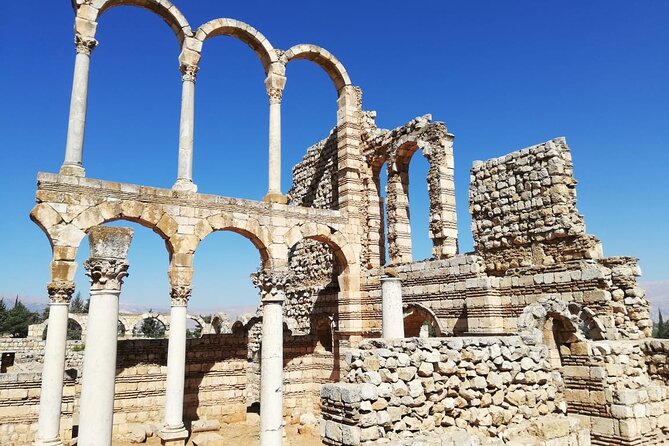
At Anjar, the focus shifts from Roman imperial religion to the Umayyad civilization of the eighth century. The site was once an inland commercial center at the meeting point of major routes, including the road from Beirut to Damascus and routes across the Bekaa toward Homs and Tiberias.
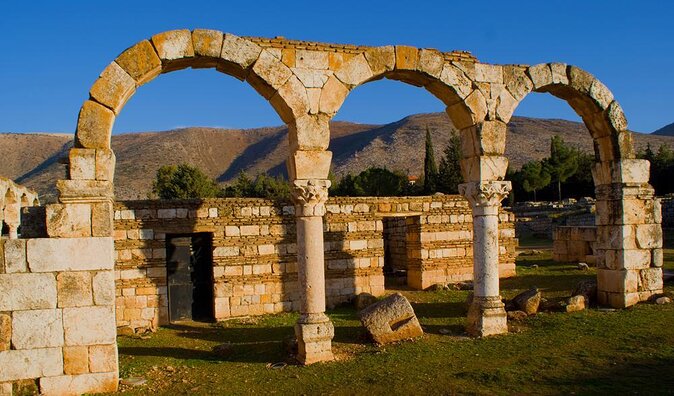
The ruins include the walls of the Umayyad palace, harems, a mosque, the great palace of the caliph, thermal baths, and many columns. Some of the columns and architectural details show Roman influence, which makes Anjar a useful companion to Baalbek. You can compare how different cultures reused familiar building ideas for different purposes.
The site was only discovered by archaeologists in the late 1940s. That relatively recent discovery adds a sense of unfinished work. You are seeing the remains of a city that was not as continuously monumental or widely known as Baalbek, yet its street plan and buildings reveal an important commercial center.
You have about 45 minutes here. That is a reasonable introduction, but not a slow archaeological study. Listen for the layout of the city, not just the names of individual ruins. The palace, mosque, baths, and market role make more sense when you picture Anjar as a planned city rather than a collection of isolated stones.
Admission is not included. If you prefer Roman temples to early Islamic urban ruins, Anjar may feel less immediately dramatic than Baalbek. I think it earns its place because it changes the period, purpose, and mood of the day.
Chateau Ksara and Lebanon’s wine tradition
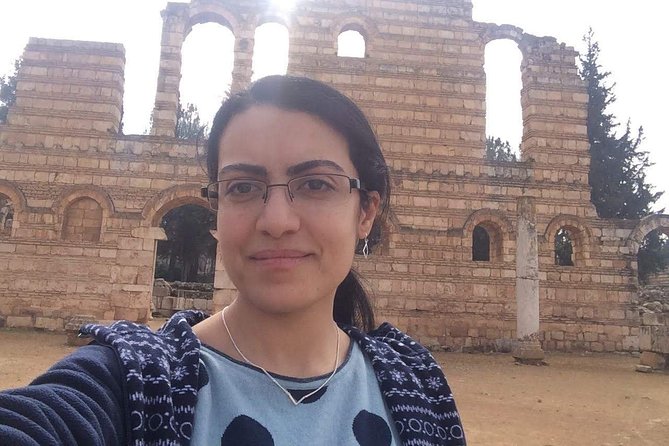
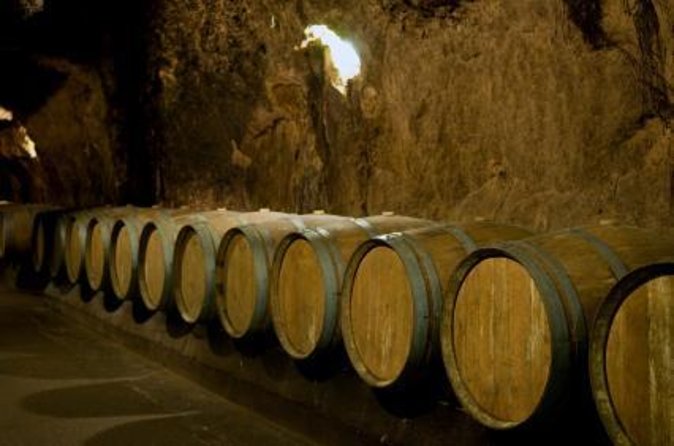
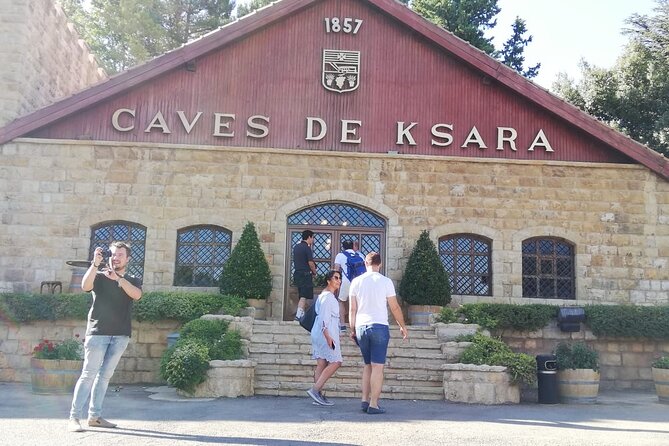
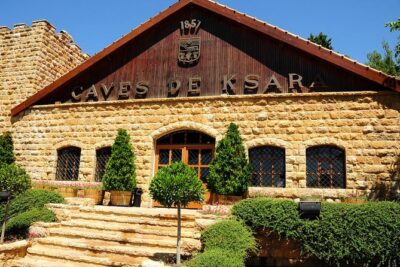
The final major stop is Chateau Ksara in the Bekaa Valley. Jesuit priests founded the winery in 1857, and the estate developed Lebanon’s first dry wine. Today, Chateau Ksara produces about three million bottles a year and exports to more than 40 countries.
The visit lasts about an hour and includes a cellar tour and wine tasting. This is where the private transport becomes especially useful. Wine-tasting and driving are a poor match, so having a driver and guide means you can taste without worrying about the return journey.
I like the timing of this stop. After temples and ruins, the winery gives you a chance to sit back and enjoy a product tied to the same valley you have been crossing. The tasting is not simply a break from sightseeing. It offers another way to understand Lebanon, through agriculture, production, trade, and a winery that has operated for more than a century and a half.
The tour price does not include the winery admission or tasting fee, so confirm the exact cost when booking. The provided information does not list the wines served, the number of samples, or whether nonalcoholic alternatives are available. If those details matter to you, ask before reserving.
What the private vehicle adds
The private format is not just a luxury label. Baalbek, Anjar, and Chateau Ksara are spread across the Bekaa Valley, and the excursion lasts a full day. Hotel pickup and drop-off remove the hassle of reaching a departure point, while the air-conditioned vehicle gives you a more comfortable base between stops.
You also get a tour leader and local guide. Their roles are not described separately, so you may want to ask who will lead the main commentary at each site. The strongest value comes when the guide connects the Roman, Phoenician, Umayyad, and modern wine stories instead of treating each stop as a separate checklist.
A private group can also ask for clarification without holding up strangers. If Baalbek captures your attention, you can use your time for questions there. If you prefer a faster walk through Anjar, the private setting may make that easier, subject to the day’s schedule.
The trade-off is cost. A shared excursion could be cheaper, but this tour offers a private vehicle, hotel transfers, two guides in the service description, and a wine stop without asking you to drive. At $70 per person, the value improves when several people share the private arrangement.
Timing, meals, and extra costs
The listed start time is 8:30 am, and the total duration is approximately eight hours. The four principal stops account for about three hours of visits, not including the mosque stop or the time spent driving between sites.
Lunch is not included. One account of the day describes an excellent lunch, but you should not treat that as part of the published package. Set aside money for food, and ask your provider how the lunch break is handled.
You also need to budget for entrance tickets at Baalbek, Anjar, and Chateau Ksara. The Stone of the Pregnant Woman is listed as free, but the other ticket prices are not provided. That makes it difficult to calculate the true final cost in advance, so confirm admission charges before departure.
The tour offers free cancellation if you cancel at least 24 hours before the start time. Cancellations or changes made less than 24 hours in advance are not refunded or accepted, and the cut-off follows local time.
Who will enjoy this experience most
I would choose this excursion if you want Lebanon’s major cultural sights without managing a complicated day of transport. It suits couples, families, and small groups who value privacy and want an easy hotel-to-hotel plan.
It is especially good for anyone interested in ancient architecture, religious history, early Islamic cities, and wine. You do not need to choose only one theme. The day moves between all four.
It may be less suitable if you want long, unhurried visits at each archaeological site. Baalbek receives about an hour and Anjar about 45 minutes, so you will get an overview rather than a scholarly examination. It is also not the right choice if you want an all-inclusive price, since tickets and lunch are separate.
The perfect audience is a small group that wants a broad introduction to the Bekaa Valley in one day. You get the major sights, a private ride, and a tasting, with far less planning than arranging each stop yourself.
Should you book the Baalbek, Anjar, and Ksara tour?
Book it if you want a well-rounded day from Beirut and care about comfort, privacy, and variety. Baalbek provides the unforgettable scale, Anjar supplies a different period and city plan, and Chateau Ksara finishes the day with a taste of modern Lebanese production.
Before paying, confirm the entrance fees, wine-tasting cost, lunch arrangements, and exactly who will guide each site. If the additional costs fit your budget, the $70 base price is a sensible deal for private transport and personal service. If you want more time at the ruins or prefer to control every stop, arrange a slower private itinerary instead.
FAQ
Where does the excursion begin?
The experience begins in Beirut with hotel pickup. The listed start time is 8:30 am.
How long does the tour last?
The excursion lasts approximately eight hours.
Is transportation included?
Yes. The tour includes comfortable private transportation in an air-conditioned vehicle, plus hotel pickup and drop-off.
Is this a private tour?
Yes. Only your group participates in this private activity.
Which major sites are included?
The route includes the Temples of Baalbek, the Mosque of Sayyida Khawla, the Stone of the Pregnant Woman, the Umayyad ruins of Anjar, and Chateau Ksara.
Are admission tickets included?
No. Admission tickets for Baalbek, Anjar, and Chateau Ksara are not included. The Stone of the Pregnant Woman is listed as free.
Is lunch included?
No. Lunch is not included in the tour price.
Does the tour include wine tasting?
The Chateau Ksara visit includes a cellar tour and wine tasting, but the admission or tasting charge is not included in the listed price.
Can I cancel for a full refund?
Yes, if you cancel at least 24 hours before the experience begins. Cancellations or changes made less than 24 hours before the start time are not accepted for a refund.
Just added in Beirut
- Wine Tasting Tour★ 5.0 · 2 reviews
- Lebanon tours vip jeitta byblos beirut we charge per vechile not per person.★ 5.0 · 1 review
- Lebanon’s Treasures: Jeita Grotto and Harissa Private Tour★ 5.0 · 2 reviews
- Small Group Tour to Baalbek, Anjar & Ksara with Hotel pickup★ 5.0 · 2 reviews
- Journey Through Time: A Private Tour of Tripoli and Byblos★ 5.0 · 1 review
- Guided Small-Group Tour to Baalbek, Cedars & Qozhaya with Lunch★ 5.0 · 2 reviews
- Small-Group Tour with Lunch to Sidon, Tyre & Maghdouche★ 5.0 · 2 reviews
- Small-Group Tour Qadisha Valley, Becharre and Cedars with Lunch and Tickets★ 5.0 · 1 review
Baalbek Anjar and Ksara Day Trips
Anjar, Baalbek & Ksara Day Trip – With Lunch (4G on Board)
Read our review →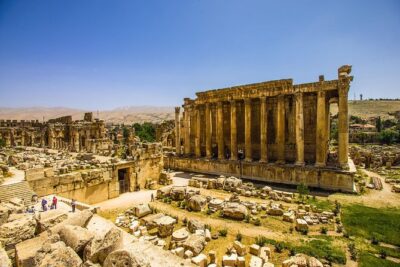
Private Anjar and Baalbek Tour from Beirut with Departure Ticket
Read our review →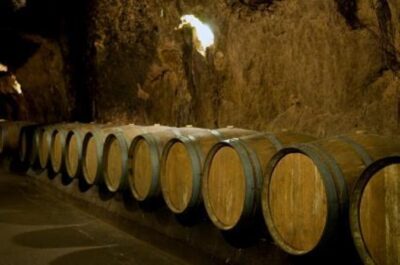
Guided Private Full Day Tour to Baalbek, Anjar and Chateau Ksara
Read our review →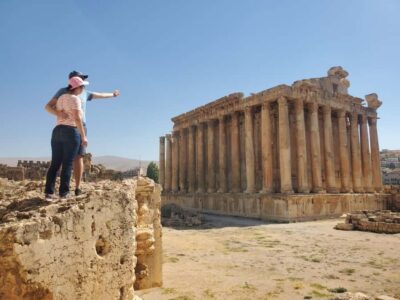
Baalbek Temples & Ksara Caves w/pick-up,guide, entries+lunch
Read our review →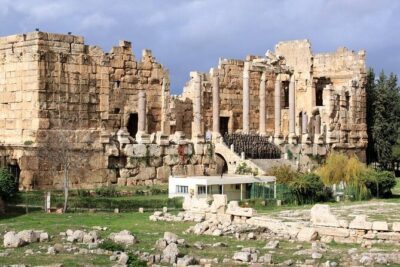
Small Group Tours to Baalbek, Anjar & Chateau Ksara with lunch and Tickets
Read our review →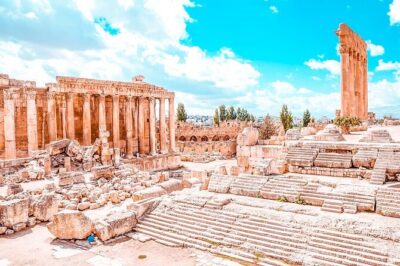
Private Tour: Anjar, Baalbek and Ksara Day Trip from Beirut
Read our review →