REVIEW · CITY TOURS
Discover the Heartbeat of Lebanon: Beirut By Car – Panoramic Tour
See Beirut’s many faces in four hours. This private half-day drive links the Mediterranean shore, rebuilt downtown, ancient ruins, religious landmarks, and the scarred Holiday Inn in one efficient route. I like the door-to-door hotel pickup and the freedom to shape the outing around your interests. I also like that your English-speaking driver provides context instead of simply pointing out buildings from the car window.
The main drawback is the short stop time. Most places receive only 15 minutes, with just 10 minutes at Beirut Souks and five at the Holiday Inn. That works well for first impressions and photographs, but you will not have time for long museum visits, extended shopping, or a leisurely meal. Lunch is not included, so plan to eat before or after the tour.
In This Review
- Key points to know before booking
- Why a private car works well in Beirut
- Pigeon Rocks gives you Beirut’s opening view
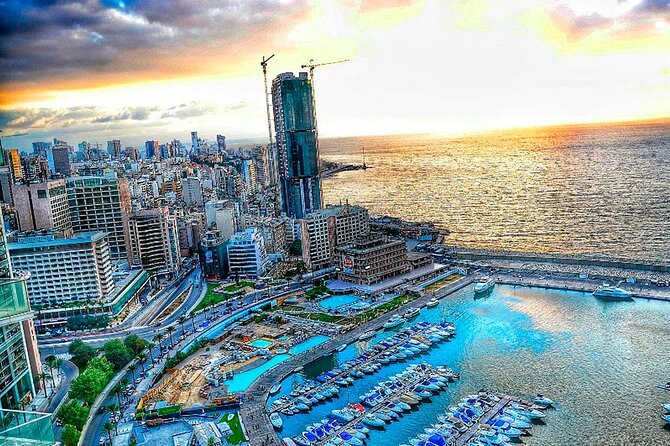
- Zaitunay Bay and the city’s polished waterfront
- Martyrs’ Square carries a difficult national memory
- Place de l’Etoile and the rebuilt center
- Two downtown mosques, two very different stories
- Saint George Cathedral adds another layer
- Beirut Souks show the commercial side of downtown
- Corniche El Manara brings back the sea
- Roman Baths reveal ancient Berytus
- The Holiday Inn is the tour’s hardest stop
- What $65 includes, and when it is good value
- Who should choose this Beirut tour?
- Should you book Beirut By Car?
- FAQ
- How long does the Beirut By Car Panoramic Tour last?
- What is the price of the tour?
- Is hotel pickup included?
- Is the transportation private?
- Is the vehicle air-conditioned?
- Is the guide English-speaking?
- Is lunch included?
- Are entrance tickets included?
- Can I cancel for a full refund?
Key points to know before booking
- Pigeon Rocks opens the tour with Beirut’s best-known coastal view, a quick and memorable introduction to the city.
- Your private, air-conditioned car saves time, especially when you want to combine waterfront sights with central Beirut.
- The route brings together several faiths and eras, from Roman baths and an ancient mosque to Saint George Cathedral and the Blue Mosque.
- The Holiday Inn offers a sobering look at the Lebanese Civil War, unlike the polished waterfront and rebuilt shopping district.
- Shawki receives specific praise for his friendly guiding, making the human side of the experience as important as the sightseeing.
- At $65 per person, value improves with two or more people, since transportation, a private vehicle, hotel transfers, and a guide are included.
Why a private car works well in Beirut
Beirut is a city of contrasts packed into a fairly tight urban area. The Mediterranean sits beside dense neighborhoods, modern marinas, old religious buildings, Roman remains, commercial streets, and reminders of war. Seeing all of that on foot would take much longer than four hours, and a private car lets you cover the spread without repeatedly arranging taxis.
The vehicle is air-conditioned and chauffeured, a practical advantage in warm weather. You get pickup and drop-off at your hotel, so the tour begins with less fuss. Since this is a private activity, only your party participates, which gives you more room to ask questions and request changes to the route.
The word customizable matters here. The advertised route includes 11 stops, but the experience is designed as a tailor-made outing. If you are more interested in Roman Beirut than shopping, or in religious architecture rather than the waterfront, tell the guide early. The exact balance should be settled before the car sets off.
The tour lasts about four hours. That is enough for an overview, not a full study of every site. I would treat it as a way to get your bearings quickly, then return later to one or two places that deserve more time.
More city tours in Beirut:
- City Sightseeing Beirut Hop-On Hop-Off Bus Tour
★ 4.5 · 87 reviews - PRIVATE city Tour of authentic Tripoli and vibrant Batroun
★ 5.0 · 51 reviews - Private Baalbek City Tour
★ 5.0 · 14 reviews
Pigeon Rocks gives you Beirut’s opening view
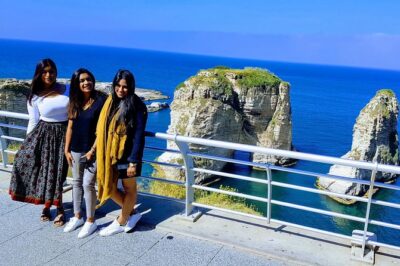
The first stop is Pigeon Rocks in Raouche, at Beirut’s western tip. Two huge rock formations rise from the sea like natural gateposts. Their shape, position, and seaside setting make them one of the city’s most recognizable sights.
You receive about 15 minutes here, with no admission charge. That is enough for photographs and a short look across the water, though not for a long walk along the coast. If the sea view is a priority, use your time well and ask where the best viewing point is before leaving the car.
This stop also sets the tone for the rest of the route. Beirut is not presented as an old city frozen in time. Instead, you see a modern capital with dramatic natural scenery and layers of history close by.
Zaitunay Bay and the city’s polished waterfront
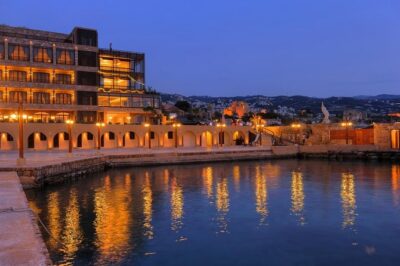
Zaitunay Bay brings you to a newer side of Beirut. The waterfront promenade has shops and restaurants, and its official identity is built around leisure. It is a sharp contrast to the rougher coastal character of Raouche.
The planned stop is 15 minutes and free. That is not enough for a proper meal, so think of this as a look at Beirut’s marina district rather than a restaurant visit. Since lunch is excluded, you could ask the guide whether your schedule allows a later food stop, but do not assume one is included.
For me, this is a useful part of the route because it shows how much the city changes from one neighborhood to the next. You move from natural rock formations to a more polished waterfront without leaving Beirut.
Martyrs’ Square carries a difficult national memory
Martyrs’ Square sits in the heart of downtown. It was once known as Al Burj, or Place des Cannons, and took its present name from the executions of Lebanese nationalists by the Ottoman authorities on May 6, 1916, during World War I.
You have 15 minutes here. The square is best understood with the guide’s explanation, since its importance is not only architectural. Ask about the political events linked to the site and how downtown Beirut changed over time.
This is one reason a guide adds value. A quick photograph cannot explain why the square matters. Shawki, the guide praised for being fun, informative, and welcoming, is especially relevant to a stop like this, where clear storytelling can turn a short pause into a useful lesson.
A completely different kind of day out:
- Guided Small-Group Tour to Baalbek, Anjar and Ksara with Lunch
★ 5.0 · 511 reviews - Guided Small-Group Tour to Jeita, Harissa, Byblos with Lunch
★ 5.0 · 361 reviews - Paragliding Trip Over Lebanon – Jounieh Bay
★ 5.0 · 257 reviews - Jeita Grotto,Harissa&Byblos Full-Day PRIVATE-CAR Trip from Beirut
★ 5.0 · 222 reviews
Place de l’Etoile and the rebuilt center
Place de l’Etoile, also called Nejme Square, is the central square of downtown Beirut. The Lebanese Parliament and related buildings are here, along with two cathedrals, a museum, cafés, and restaurants.
The square is especially known for its four-faced Rolex clock from 1930. That clock gives the space a strong visual marker and helps you understand why the square has become one of Beirut’s best-known urban scenes.
Again, the 15-minute visit is a quick orientation. You can admire the architecture and hear the basic story, but you should not expect time to explore every nearby building. If you have a particular interest in the Parliament, the cathedrals, or the museum, mention it before the tour so the route can give that interest proper weight.
Two downtown mosques, two very different stories
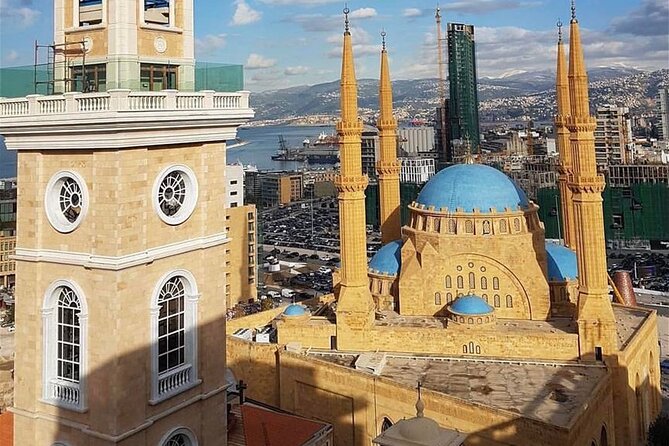
The Mohammad Al-Amin Mosque is one of the city’s most imposing buildings. Also called the Blue Mosque, it opened in 2008 and has four minarets, each about 65 meters high. Its light blue tiled domes, large arches, and amber-colored exterior create a powerful presence near Martyrs’ Square.
The planned stop is 15 minutes. Treat it as an exterior visit unless your guide confirms that entry is possible. No admission charge is listed, but the tour details do not promise interior access or specify any dress requirements.
The Al-Omari Mosque takes you much further back. It was built in 635 AD during the age of Omar Bin El Khattab, later became the Church of Saint John under the Crusaders, and returned to use as the city’s Grand Mosque in 1291 under the Mamluks. It suffered damage during the Civil War and was refurbished in 2004.
That sequence tells you a great deal about Beirut. Buildings here have changed purpose as rulers, religions, and political powers changed. You get about 15 minutes at Al-Omari, so listen closely to the guide rather than trying to absorb every date on your own.
Saint George Cathedral adds another layer
The Greek Orthodox Cathedral of Saint George is the seat of the Greek Orthodox Metropolitan bishop of Beirut and its dependencies. It is also regarded as the oldest church in Beirut and one of the oldest in the region.
The Christian temple at this location dates to the mid-sixth century AD and is linked with Beirut’s famous Law School. That connection is easy to miss without explanation, yet it helps place the cathedral within the city’s long religious and educational story.
The stop lasts about 15 minutes and is free. As with the mosques, the supplied details do not guarantee an interior visit. Use the time to look at the building’s setting in the city center and ask the guide how the cathedral relates to the surrounding downtown sites.
Beirut Souks show the commercial side of downtown
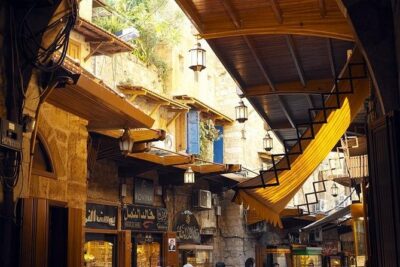
Beirut Souks is a large commercial district with more than 200 shops, 25 restaurants and cafés, an entertainment center, and a cinema complex. It is the most shopping-focused stop on the route.
You get only 10 minutes here. That is enough to see the scale of the district, but not enough for serious shopping or a relaxed café break. If buying gifts matters to you, the private format gives you a chance to ask whether the souks can receive more time by shortening another stop.
The souks also provide a useful contrast with the ancient and religious sites. Beirut is not presented only as a historical capital. It is also a place where commerce, food, films, and everyday city life share the same center.
Corniche El Manara brings back the sea
Al Manara Corniche is Beirut’s best-known seaside promenade. It runs from the Ramlet al Bayda area to Saint George Marina, with palm trees, Mediterranean views, Pigeon Rocks, and distant views toward the summits of Mount Lebanon.
The listed stop is 15 minutes. That is brief for a promenade, so you should not expect a long coastal walk. Still, this may be one of the most pleasant pauses of the day because it reconnects the city’s history with its setting by the sea.
If you enjoy taking photographs, this stop and Pigeon Rocks serve different purposes. Raouche gives you the famous rock formation. The Corniche gives you a broader sense of Beirut’s shoreline and the relationship between the city and the mountains beyond it.
Roman Baths reveal ancient Berytus
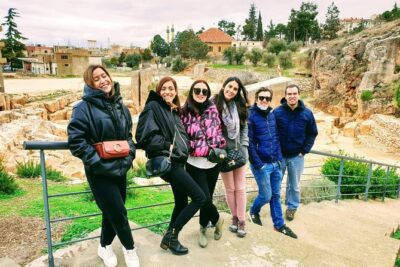
The Roman Berytus baths are the largest outdoor archaeological sight in downtown Beirut. They were discovered in 1968 and 1969 and underwent major renovation in the mid-1990s.
The bath complex began in the early first century under Augustus. Roman Berytus eventually had four major bath complexes, but an earthquake in 551 AD destroyed them. Today, the remains offer a clear reminder that Beirut was an important Roman city long before the modern capital took shape.
You have 15 minutes here, free of charge. That makes a guide’s explanation useful, since exposed ruins can be difficult to read without context. One of the baths is also used for artistic performances and concerts, an unusual example of an ancient site remaining part of modern city life.
The Holiday Inn is the tour’s hardest stop
The abandoned Holiday Inn is a landmark of Beirut’s Civil War. It was built between 1971 and 1974, during a period when the city was a major Middle Eastern tourism center. When the war began in 1975, the hotel became part of the Battle of the Hotels, a fight for control of luxury hotels that involved more than 25,000 combatants.
The building remains empty and untouched decades after the war. You get only five minutes here, probably from outside, but the short stop can still leave a strong impression. Unlike a restored monument, the damaged hotel has not been cleaned up for easy viewing. Its condition keeps the cost of war visible.
This is not a cheerful photo stop, and that is precisely why it belongs on a serious city tour. The route does not hide Beirut’s painful past behind attractive waterfronts and restored downtown streets. Ask the guide to explain what happened here, but give the place the respect it deserves.
What $65 includes, and when it is good value
The price is $65 per person. Included are the air-conditioned vehicle, private transportation, an English-speaking driver, and hotel pickup and drop-off. Lunch is not included, and the listed stops do not charge an admission fee.
For one person, the price may feel high compared with a simple self-guided walk through downtown. The value improves when you are sharing the private vehicle with companions and want to see distant points such as Pigeon Rocks, Zaitunay Bay, the Corniche, and the central sites in one morning or afternoon.
You are also paying for time saved and for the guide’s explanations. Shawki is specifically praised for going out of his way to make the group feel welcome and happy, while also keeping the tour informative. That personal attention matters more on a private trip than it would on a large bus excursion.
There is one practical limit: the tour’s free admission does not mean every building is open for an interior visit. Much of the experience is about seeing sites from the outside, understanding their setting, and deciding where to return later.
Who should choose this Beirut tour?
I would choose this tour if you have only a short stay in Beirut, prefer private transport, or want a broad first look before exploring independently. It suits couples, families, and small groups who value hotel pickup and do not want to organize several rides across the city.
It is also a good fit if you enjoy connecting ancient history, religious architecture, modern development, and recent conflict in one outing. The mix is more useful than a sightseeing route made only of attractive buildings.
I would think twice if you want long visits at each site, serious shopping, a sit-down lunch, or extended time inside museums and religious buildings. The schedule moves quickly, and the 15-minute pauses are designed for orientation rather than full exploration.
Free cancellation is available if you cancel at least 24 hours before the start time. Changes or cancellations made later are not accepted for a refund, so check your plans before the cutoff.
Should you book Beirut By Car?
Book it if you want to cover Beirut efficiently and privately, especially with companions who can share the cost. The mix of Pigeon Rocks, downtown squares, mosques, cathedral, Roman baths, waterfront, souks, and the Holiday Inn gives you a useful picture of the city in about four hours.
I would book with one request: tell Shawki or the tour provider what matters most to you before departure. The itinerary is broad, but the short stops mean your priorities should guide the final balance. For a first day in Beirut, this is a practical and thoughtful introduction. For a slow, site-by-site study, use it as a starting point and return to your favorites later.
FAQ
How long does the Beirut By Car Panoramic Tour last?
The tour lasts approximately four hours.
What is the price of the tour?
The price is $65 per person.
Is hotel pickup included?
Yes. Hotel pickup and drop-off are included.
Is the transportation private?
Yes. The tour uses private transportation, and only your group participates.
Is the vehicle air-conditioned?
Yes. An air-conditioned vehicle is included.
Is the guide English-speaking?
Yes. The tour includes an English-speaking driver.
Is lunch included?
No. Lunch is not included in the tour price.
Are entrance tickets included?
The listed stops show no admission ticket charge. The tour details do not promise interior admission to every site.
Can I cancel for a full refund?
Yes, if you cancel at least 24 hours before the experience start time. Cancellations made less than 24 hours before the start time are not refunded.
Just added in Beirut
- Beirut Walking Tour – Discover Beirut by foot★ 5.0 · 2 reviews
- Lebanon’s Historic Gems: Private Tour of Jeita, Byblos & Harissa★ 5.0 · 1 review
- Discover the Hidden Gems: Qadisha, Bcharee, Cedars and Kozhaya★ 5.0 · 1 review
- PRIVATE Half-Day Tour to Beiteddine Palace & Deir elQamar★ 5.0 · 2 reviews
- Journey Through Time: Exploring the Temples of Baalbek★ 5.0 · 1 review
- Beiteddine and Al-Chouf Cedar Reserve★ 4.5 · 2 reviews
- Beirut Like a Local: Customized Private Tour★ 5.0 · 1 review
- Beirut Airport Transfer in a Limousine★ 5.0 · 2 reviews
City Tours
PRIVATE city Tour of authentic Tripoli and vibrant Batroun
Read our review →
PRIVATE tour to Jeita Grottos, Harissa Shrine & Byblos City
Read our review →
Private Beirut City Tour with Boat Ride at Raouche Rock
Read our review →