REVIEW · JEITA GROTTO AND HARISSA DAY TRIPS
Small Group Tours to Jeita Grotto and Byblos with tickets
Nature and history meet north of Beirut. This six-hour small-group tour pairs the remarkable limestone chambers of Jeita Grotto with Byblos, one of Lebanon’s oldest cities. I like that admission to Jeita Grotto and Byblos Castle is covered, and I like the efficient route, which lets you see several major sights in one morning and afternoon. The main drawback is the pace: with about two hours at Jeita and roughly three hours around Byblos, you will get a strong first look rather than a slow, thorough visit.
The air-conditioned vehicle and pickup option make this useful if you have only one day in Beirut or prefer not to arrange separate transport. The small group is capped at 15 people, a sensible limit for a guide-led outing. Still, lunch is not included, and the exact pickup details are not provided here, so confirm where the vehicle will meet you before setting out.
In This Review
- The essential points at a glance
- Why this pairing works so well
- Entering Jeita Grotto before the crowds
- Reading the layers of ancient Byblos
- Climbing Byblos Castle for the best view
- A quick walk through the old souk
- Seeing Byblos Port and its timber trade
- What the $60 price really covers
- Timing, pickup, and the tour’s working rhythm
- Who will get the most from this day
- Should you book the Jeita Grotto and Byblos tour?
- FAQ
- How long does the tour last?
- What time does the tour start?
- Is pickup available?
- What is the price?
- Is transportation included?
- Are entrance tickets included?
- Is lunch included?
- How many people can join the group?
- How much time is spent at Jeita Grotto?
- Can I cancel for a full refund?
The essential points at a glance
- Jeita Grotto comes first: Spend about two hours at Lebanon’s famous cave reserve, with admission included.
- Byblos adds several layers: The visit includes the archaeological site, Crusader castle, old souk, and ancient port.
- A useful small-group size: The tour accepts no more than 15 people, allowing a more manageable outing than a large coach trip.
- The $60 price covers the main costs: Transport, entrance fees, a local guide, and a tour leader are included.
- Albert earns special praise: He is described as punctual, friendly, and well informed, and the early arrival at Jeita helped make the visit more rewarding.
- Plan around the six-hour clock: The schedule is compact, so this works best for sightseeing priorities rather than leisurely shopping or a long lunch.
Why this pairing works so well
Jeita Grotto and Byblos are very different stops. One is a natural site shaped by water over immense stretches of time. The other is a coastal city layered with Phoenician, Roman, medieval, and later remains.
That contrast gives the day a good rhythm. You begin underground among stalactites and stalagmites, then spend the second half looking across an archaeological site toward the sea. You are not repeating the same kind of attraction all day.
The tour also solves a practical problem. Jeita Grotto lies about 18 kilometers from Beirut, while Byblos is farther north along the coast. Seeing both independently means working out transport, opening arrangements, entrance tickets, and the order of stops. Here, the vehicle, guide, tour leader, and listed admission fees are bundled into one outing.
I would still keep your expectations realistic. Six hours is enough for a well-planned overview, but not enough for every corner of Byblos, a full meal, and unhurried shopping. Think of this as a focused introduction to two major Lebanese sights.
More Jeita and Harissa day trips:
- Guided Small-Group Tour to Jeita, Harissa, Byblos with Lunch
★ 5.0 · 361 reviews - Jeita Grotto,Harissa&Byblos Full-Day PRIVATE-CAR Trip from Beirut
★ 5.0 · 222 reviews - Jeita Grotto – Harissa – Byblos Trip
★ 5.0 · 169 reviews
Entering Jeita Grotto before the crowds
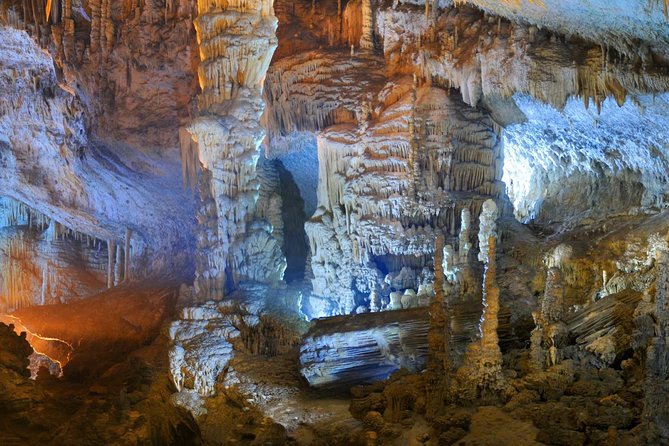
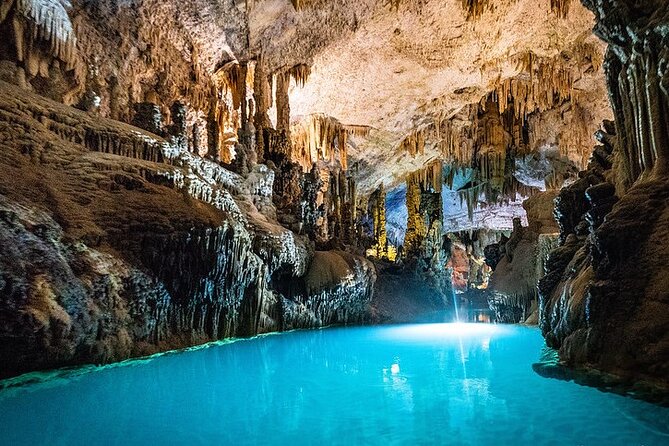
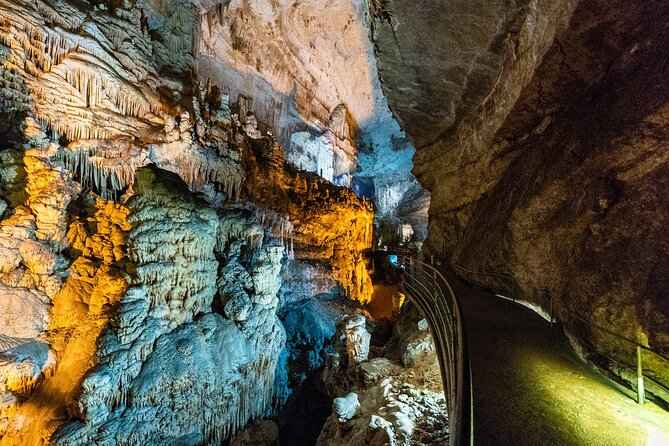
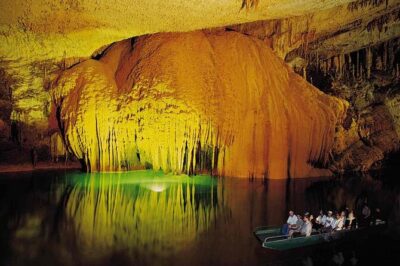
Jeita Grotto is the day’s most unusual stop. The reserve is known for its dramatic cave scenery and was nominated for the world’s seven wonders. You should allow about two hours here, with the entrance ticket included in the tour price.
The key benefit of arriving with a guide and organized transport is time. One account specifically praises arriving among the first groups at Jeita, which suggests that the 8:00 a.m. start can help you reach the site before it becomes busier. That matters in a cave. Smaller groups make it easier to hear explanations, move through viewing areas, and take in the formations without feeling hurried by a large crowd.
The cave experience is naturally visual rather than historical. You will see unusual rock shapes and underground chambers, while the surrounding reserve adds a scenic outdoor setting. The supplied information does not specify which sections are visited, whether all internal transport is used, or how much walking is required, so ask your guide for the day’s exact route.
Two hours should give you a meaningful visit, but it is not an invitation to linger indefinitely. If photography matters to you, ask about the rules on site. Cave attractions often limit where pictures can be taken, and the available details do not confirm the policy here.
Jeita is a strong opening stop because it makes an immediate impression. It also gives the tour a clear reason to start early. Albert, the praised tour host, is noted for being punctual, friendly, and well informed, qualities that matter when the day depends on reaching a popular site at a useful time.
Reading the layers of ancient Byblos
After Jeita, the tour moves to Byblos, an ancient Phoenician city inhabited since Neolithic times. Its origins are traced to around 5000 BC, and the city is closely tied to the development and spread of the Phoenician alphabet.
You have about two hours for Byblos itself, followed by a separate hour at Byblos Castle. The boundary between these parts may feel flexible on the ground, since the castle sits inside the archaeological area, but the schedule gives you an idea of the intended emphasis: see the old city and major ruins, then spend focused time at the castle.
Byblos is valuable because its story is not confined to one monument. You can look at the remains as a record of a port city that stayed important across many eras. The setting helps make the past easier to grasp. The ruins are not isolated in a museum case, and the sea is part of the city’s story.
The information here does not promise a specific guided lecture or a fixed walking route, so your experience will depend partly on how the local guide uses the time. I would listen for the connection between the city’s ancient trade, the Phoenician alphabet, and its position on the Mediterranean. Those links turn scattered stones into a clearer picture of why Byblos mattered.
Admission to the general Byblos stop is listed as free, while the castle entrance is included. That is useful for budgeting, though the tour’s wording does not identify every archaeological area covered by the entrance arrangements. Your guide can clarify what the included ticket opens.
Climbing Byblos Castle for the best view
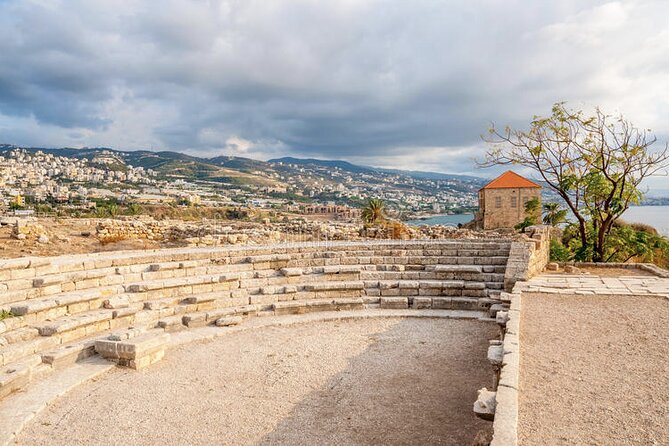
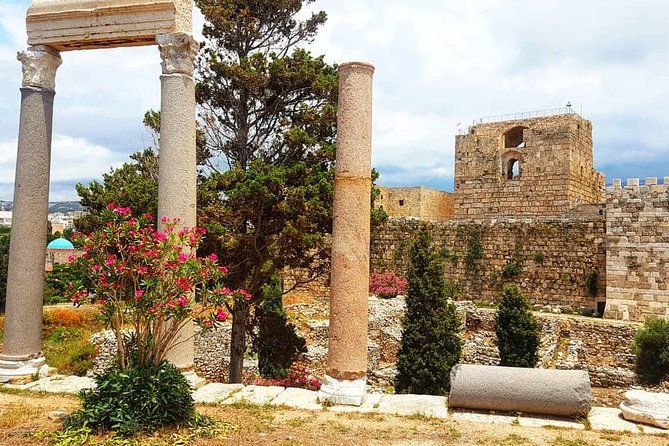
Byblos Castle is one of the most satisfying parts of the afternoon. The restored 12th-century Crusader fortress is surrounded by a dry moat about 10 meters wide and sits inside the archaeological site.
The square keep gives you a higher viewpoint over the ruins. From the top, you can look down at Bronze Age dwellings and toward the sea. This perspective is important. Ground-level ruins can be hard to read, but a raised view helps you understand the shape and scale of the settlement.
Inside the castle, a small museum and information panels explain the city’s long story. That makes the stop more than a photo opportunity. You can spend time connecting the fortress to the older remains around it, then use the displays to put the layers in order.
The planned time is about one hour. I think that is a fair amount for the keep, museum, panels, and views, though anyone fascinated by archaeology may want more. The tour’s schedule will not suit you if you prefer to study every inscription or take a slow architectural walk.
Comfortable shoes are a sensible choice, even though the available details do not give a precise walking estimate. A castle, moat, archaeological site, and cobbled streets naturally involve uneven surfaces. The tour is described as suitable for most people, but it does not provide detailed accessibility information, so ask before booking if steps or rough ground are a concern.
More of Byblos:
- Byblos, Jeita Grotto & Harissa Day Trip -With Lunch (4G on Board)
★ 4.5 · 145 reviews - Semi-Private Tour to Jeita Grotto, Harissa & Byblos with Lunch
★ 5.0 · 52 reviews - Small Group Tour to Jeita Grotto, Harisa & Byblos with Hotel pickup
★ 5.0 · 49 reviews - Private Guided Tour to Jeita Grotto through Harissa and Byblos
★ 5.0 · 48 reviews
A quick walk through the old souk
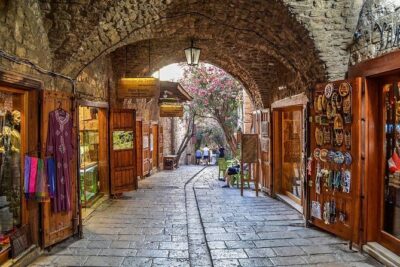
The old souk receives only about 10 minutes. That is enough for a quick stroll along cobbled streets and a look at the traditional architecture, but not enough for serious browsing.
You can shop for souvenirs and antiques here, though the short stop means you should treat shopping as optional. If you see something you want, be ready to make a quick decision. The souk is better understood as a brief change of pace between the archaeological site and port than as a full market visit.
I like that it is included in the route. Ancient sites can become a string of stones and explanations, while the souk gives you a small taste of present-day Byblos. Still, if shopping is a main reason for choosing the tour, this schedule will feel too tight.
Seeing Byblos Port and its timber trade
The final stop is Byblos Port, with about 10 minutes to look around. Lebanese tradition considers it the oldest port in the world, and around 3000 BC it was an important timber shipping center in the eastern Mediterranean.
This is a short stop, but it adds useful context to the city. Byblos was not simply an inland settlement with old walls. Its position by the sea helped connect it to trade, shipping, and the wider Mediterranean world.
Ten minutes will give you a look and a sense of place, not a detailed port tour. If you want time for photographs, keep your group’s schedule in mind. The port works best as a final snapshot of Byblos after you have seen the fortress and ruins.
What the $60 price really covers
At $60 per person, the tour offers solid value if you want to combine both destinations in one day. The price includes an air-conditioned vehicle, all listed entrance fees, a local guide, and a tour leader. That removes several costs that can add up when arranging the day separately.
The strongest value comes from the route and included transport. Jeita Grotto and Byblos are close enough to combine, but far enough apart that an organized vehicle is useful. You also avoid buying the Jeita and castle tickets separately during the outing.
Lunch is not included. Since the total duration is about six hours and the schedule leaves little free time, bring a plan for food. The supplied details do not identify a restaurant stop or meal break, so do not assume lunch is part of the day.
The maximum group size is 15 people. That is not a private tour, but it is small enough to keep the group more manageable at the cave and archaeological site. Your exact experience will depend on the final number of bookings, but the stated limit is reassuring for anyone who dislikes large sightseeing groups.
Timing, pickup, and the tour’s working rhythm
The start time is 8:00 a.m., and pickup is offered. The meeting point details are not included in the information provided, so confirm the pickup location and local instructions at booking.
The schedule appears to work like this:
- About two hours at Jeita Grotto
- About two hours exploring Byblos
- About one hour at Byblos Castle
- About 10 minutes at the old souk
- About 10 minutes at Byblos Port
Those stops total roughly five hours and 20 minutes. The remaining time allows for driving, organizing the group, and moving between sights. That explains why the tour is advertised as approximately six hours rather than an exact six-hour program.
The early start is one of the tour’s practical strengths. It gives Jeita a better chance of feeling calm and leaves the historic sites for later. The tradeoff is that the day begins promptly, so this is not suited to a very late morning.
Confirmation is provided at booking, and free cancellation is available if you cancel at least 24 hours before the start time. Cancellations within 24 hours are not refunded, and late changes are not accepted.
Who will get the most from this day
I would recommend this tour to you if you have limited time in Beirut and want to see two of Lebanon’s headline sights without managing the transport yourself. It is also a good match if you want a guide to connect the natural and historical parts of the day.
You will likely appreciate it most if you enjoy variety, organized sightseeing, and clear priorities. The route gives you a cave, archaeological ruins, a Crusader castle, a market street, and a port in one compact outing.
It may not suit you if you want long meals, extended shopping, or hours to study Byblos at your own pace. The souk and port stops are especially brief. People with mobility concerns should ask for more detail about walking conditions, since the tour is described as suitable for most people but does not provide a full accessibility breakdown.
The guide can shape the day’s quality. Albert is specifically praised for punctuality, friendliness, and strong explanations. Those traits are especially useful here because an early arrival at Jeita and a tight Byblos schedule both call for good organization.
Should you book the Jeita Grotto and Byblos tour?
I would book it if you have one free day, value convenience, and want a well-priced introduction to northern Beirut’s major sights. The $60 fee covers transport, the main entrance costs, and guiding, while the group limit keeps the outing from becoming a large coach procession.
Go in knowing what you are buying: a focused overview, not a leisurely private excursion. Bring money or food for lunch, wear practical shoes, confirm pickup details, and keep your expectations modest for the 10-minute souk and port stops. If that rhythm suits you, this tour makes a sensible first look at Jeita Grotto and Byblos.
FAQ
How long does the tour last?
The tour lasts approximately six hours.
What time does the tour start?
The stated start time is 8:00 a.m.
Is pickup available?
Yes, pickup is offered. The available information does not specify the exact pickup locations.
What is the price?
The price is $60 per person.
Is transportation included?
Yes. An air-conditioned vehicle is included.
Are entrance tickets included?
Entrance fees are included. Jeita Grotto and Byblos Castle specifically list included admission.
Is lunch included?
No. Lunch is not included in the tour price.
How many people can join the group?
The activity has a maximum of 15 participants.
How much time is spent at Jeita Grotto?
The planned visit to Jeita Grotto lasts about two hours.
Can I cancel for a full refund?
Yes, you can receive a full refund if you cancel at least 24 hours before the experience start time. Cancellations within 24 hours are not refunded.
Just added in Beirut
- Wine Tasting Tour★ 5.0 · 2 reviews
- Lebanon tours vip jeitta byblos beirut we charge per vechile not per person.★ 5.0 · 1 review
- Lebanon’s Treasures: Jeita Grotto and Harissa Private Tour★ 5.0 · 2 reviews
- Small Group Tour to Baalbek, Anjar & Ksara with Hotel pickup★ 5.0 · 2 reviews
- Journey Through Time: A Private Tour of Tripoli and Byblos★ 5.0 · 1 review
- Guided Small-Group Tour to Baalbek, Cedars & Qozhaya with Lunch★ 5.0 · 2 reviews
- Small-Group Tour with Lunch to Sidon, Tyre & Maghdouche★ 5.0 · 2 reviews
- Small-Group Tour Qadisha Valley, Becharre and Cedars with Lunch and Tickets★ 5.0 · 1 review
Jeita Grotto and Harissa Day Trips
Guided Small-Group Tour to Jeita, Harissa, Byblos with Lunch
Read our review →
Jeita Grotto,Harissa&Byblos Full-Day PRIVATE-CAR Trip from Beirut
Read our review →
Byblos, Jeita Grotto & Harissa Day Trip -With Lunch (4G on Board)
Read our review →
Semi-Private Tour to Jeita Grotto, Harissa & Byblos with Lunch
Read our review →
Private Guided Tour to Jeita Grotto through Harissa and Byblos
Read our review →
New Guided Semi-Private Tour to Jeita Grotto, Harissa & Byblos
Read our review →