REVIEW · BYBLOS TOURS
Guided Half-Day Private Trip to Byblos from Beirut
Byblos makes the past feel close. This private trip from Beirut brings you to one of the oldest Phoenician cities, with time for its archaeological site, Crusader castle, cobblestoned souk, and ancient port. I like the door-to-door hotel pickup and the freedom of a private vehicle, and I also like that a guide adds meaning to ruins that can otherwise look like scattered stones.
The main thing to consider is the price: $100 per person is reasonable if your group values private transport and personal guidance, but it is not the cheapest way to reach Byblos. Lunch and admission to Byblos Castle cost extra, and the listed sightseeing time adds up to only about three hours within a six-hour outing.
In This Review
- Key points to know before booking
- Why Byblos is worth a half-day from Beirut
- Leaving Beirut with private transport
- Walking through the Byblos archaeological site
- Climbing the 12th-century Byblos Castle
- The Old Souk and its cobbled lanes
- Pausing at the ancient port
- What the guide adds to the ruins
- Is $100 per person good value?
- Who should book this Byblos trip?
- Cancellation and planning notes
- Should you book the Byblos half-day tour?
- FAQ
- How long does the Byblos tour last?
- Is hotel pickup and drop-off included?
- Is this a private tour?
- Is lunch included?
- Is admission to Byblos Castle included?
- Can I cancel for a full refund?
Key points to know before booking
- Byblos is tied to the Phoenician alphabet, making the visit about more than walls and ruins.
- Private Beirut pickup and drop-off save you from arranging transport to Lebanon’s coast.
- The Crusader castle gives the best broad view across the archaeological site and toward the sea.
- The Old Souk adds a lived-in side of Byblos, with cobbled lanes, souvenirs, antiques, and old buildings.
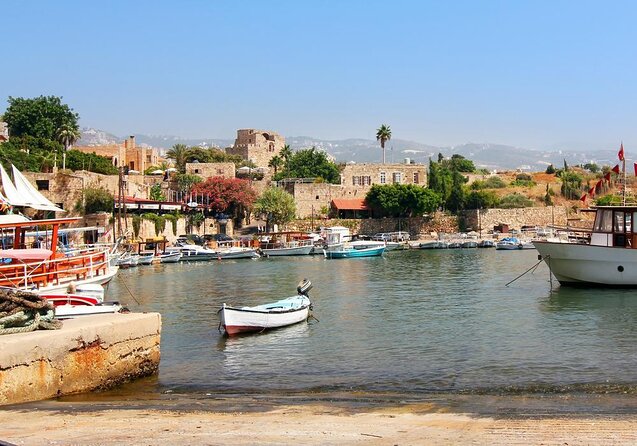
- The port is brief but evocative, linked to timber shipments dating to around 3000 BC.
- The tour suits a small group, since only your party takes part and the schedule can focus on your interests.
Why Byblos is worth a half-day from Beirut
Byblos is not simply a collection of old stones outside the capital. It is a place where several layers of Mediterranean history sit close together. The city was inhabited from Neolithic times and later became one of the key Phoenician ports.
Its importance reaches beyond Lebanon. Byblos is closely linked with the spread of the Phoenician alphabet, an idea that gives the ruins extra weight. As you walk through the site, you are not only looking at temples and castle walls. You are standing in a city connected to the development and movement of written language around the Mediterranean.
I find a half-day length sensible for a first visit. You can see the main areas without giving up the whole day in Beirut. The six-hour estimate includes the road journey, hotel transfers, guiding, and time at the site, so you should not expect a slow, full-day archaeological study.
The setting also helps. Byblos combines an archaeological area with a port and a historic market district. That mix gives you different ways to experience the town. You can look at ancient foundations, climb a medieval fortress, browse small shops, and walk beside the harbor in one outing.
More of Byblos:
- Guided Small-Group Tour to Jeita, Harissa, Byblos with Lunch
★ 5.0 · 361 reviews - Jeita Grotto,Harissa&Byblos Full-Day PRIVATE-CAR Trip from Beirut
★ 5.0 · 222 reviews - Jeita Grotto – Harissa – Byblos Trip
★ 5.0 · 169 reviews
Leaving Beirut with private transport
The tour includes pickup and drop-off at your Beirut hotel in an air-conditioned vehicle. That is a practical benefit, especially if you prefer not to work out separate coastal transport or negotiate the return journey.
Private transport matters here because your group is not tied to a larger coach schedule. Only your party takes part, which gives the outing a quieter feel and lets you spend more time on the parts that interest you. If the castle matters most, you can ask for more explanation there. If you prefer the souk or port, the private format should make the day less rigid.
The vehicle is described as comfortable, but the exact pickup time is not provided. Confirm that detail after booking, along with the precise hotel meeting point. The tour is booked around 120 days ahead on average, so advance planning is sensible during busy periods.
The road journey itself is part of the time calculation. Since the tour lasts about six hours, the actual time in Byblos will be shorter than six hours. That is not a flaw, but it helps set the right expectation. You are booking a focused introduction, not an unhurried day along the Lebanese coast.
Walking through the Byblos archaeological site
The main Byblos visit is scheduled for about two hours. This is where the tour earns its place on your itinerary.
Byblos has been inhabited since Neolithic times, and the archaeological area contains remains from several periods. The city’s long story is easier to follow with a guide, since the site includes foundations, temples, and ruins from different eras rather than one single monument.
The nearby Temple of Baalat Gebal and Temple of the Obelisks add substance to the visit. Their names help you understand that this was a religious and civic center, not merely a trading stop. Your guide can connect the remains with the wider Mediterranean world and explain why Phoenician Byblos mattered.
I would listen closely for the material about the alphabet. This is one of the most unusual reasons to visit. Many historic towns offer ruins, but Byblos also gives you a direct connection to the history and spread of Phoenician writing.
The two-hour stop is enough for a broad introduction, though it may feel short if archaeology is your main interest. You will need to keep moving between the major features. Comfortable walking shoes are a sensible choice because the site includes outdoor ruins and the Old Souk has cobblestoned streets.
Climbing the 12th-century Byblos Castle
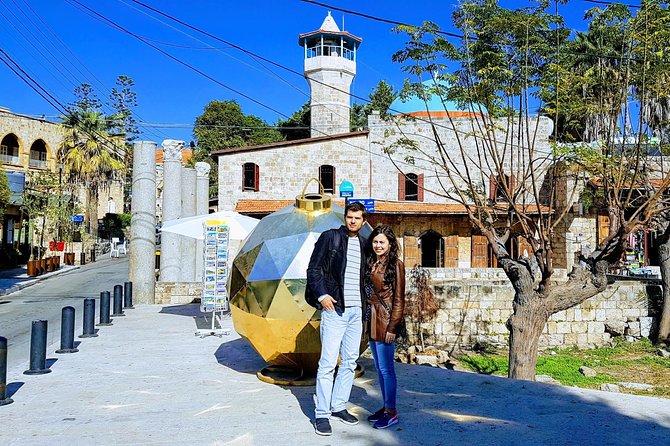
Byblos Castle receives about one hour, making it the longest single stop in the sightseeing portion of the tour. Admission is not included, so budget for the entrance fee separately. The price is not stated in the available details, and you should confirm the current amount before departure.
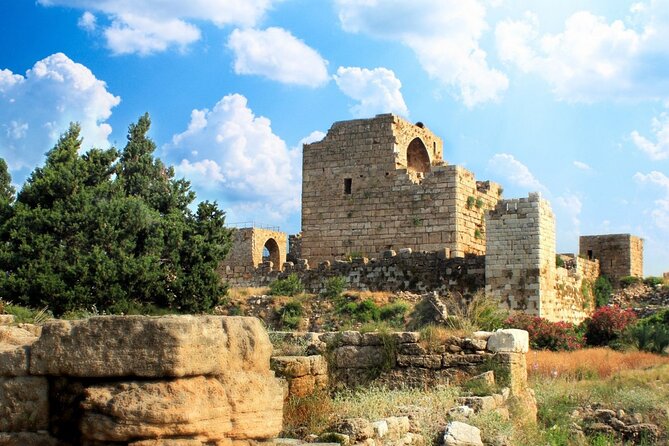
The castle is a restored 12th-century Crusader fortress surrounded by a dry moat about 10 meters wide. Its square keep is the main attraction. From the top, you get a broad view over the archaeological ruins and toward the sea, which helps you understand how the old city was arranged.
The view is the castle’s strongest feature. From ground level, ancient foundations can blend together. From above, the relationship between the fortress, Bronze Age dwellings, temples, and coastline becomes clearer. I like this kind of stop because it gives you a sense of place, not just a list of dates.
Inside, you will find a small museum and information panels covering the city’s past. These displays are useful if you want more detail than the outdoor ruins provide. Still, this is a compact museum rather than a major collection, so do not expect a large indoor exhibition.
The hour should be enough to enter, look through the museum, climb the keep, and take in the views. If you have mobility concerns, ask the operator about the castle access before booking, since the tour description does not give detailed accessibility information.
A completely different kind of day out:
- Guided Small-Group Tour to Baalbek, Anjar and Ksara with Lunch
★ 5.0 · 511 reviews - Paragliding Trip Over Lebanon – Jounieh Bay
★ 5.0 · 257 reviews - First Paragliding Club in Lebanon – Since 1992
★ 5.0 · 193 reviews - Anjar, Baalbek & Ksara Day Trip – With Lunch (4G on Board)
★ 4.5 · 181 reviews
The Old Souk and its cobbled lanes
The Old Souk is a short 20-minute stop. That may sound brief, but it adds a useful change of pace after the archaeological site.
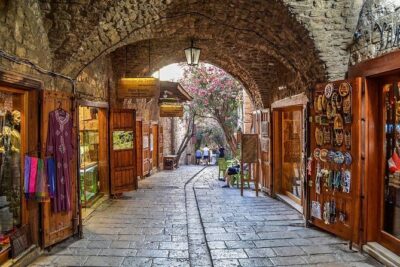
Here you can stroll along old cobblestone streets, look at the architecture, and browse shops selling souvenirs and antiques. The souk gives you a more everyday sense of Byblos than the formal ruins do. It is also the natural place to pick up a small reminder of the visit.
I would not plan a long shopping session around this stop. Twenty minutes is enough for a quick walk and a few purchases, but not enough for a relaxed search through every shop. If you want more time in the market, ask whether the private format allows a small adjustment.
The souk is also a good spot to slow down. Historic sites can become tiring when every stop involves dates and dynasties. A short walk through the market lets you enjoy the town’s texture without needing a lecture at every corner.
Pausing at the ancient port
The port receives about 20 minutes, so think of it as a scenic and historical pause rather than a full harbor visit.
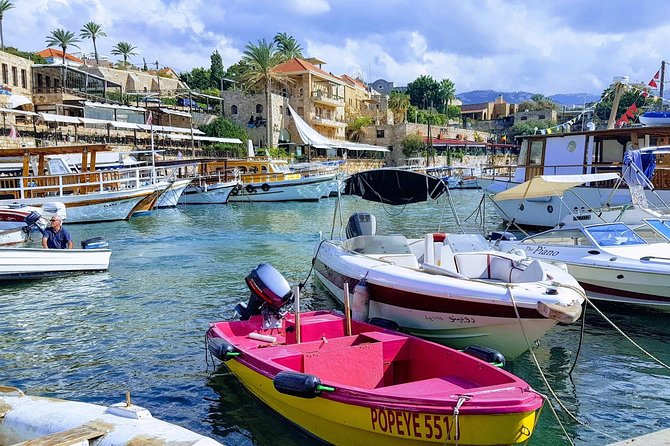
Byblos Port is believed by Lebanese people to be the oldest port in the world. Around 3000 BC, it was an important timber shipping center in the eastern Mediterranean. That detail gives the waterfront real significance. The port was tied to trade, ships, wood, and the city’s connection with other coastal cultures.
The stop is short, but the port helps explain why Byblos grew where it did. The archaeological remains show the city’s religious and political life, while the harbor points to its commercial role.
You may find this stop most rewarding when the guide explains how the port supported the city. Without that context, 20 minutes beside the water could feel modest. With the story in place, it becomes a useful final piece of the Byblos picture.
What the guide adds to the ruins
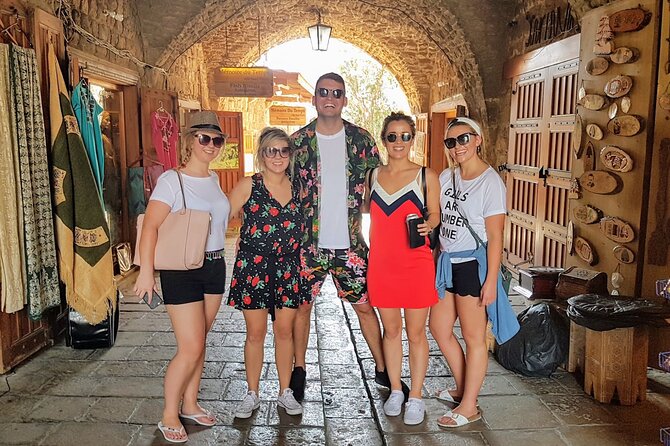
A professional guide and tour leader are included. The guide is an important part of the value because Byblos does not always explain itself at a glance. The stones are old, the layers overlap, and the significance of the Phoenician alphabet is easy to miss if you walk alone.
A past participant described the guide as amazing and considered the day worthwhile even when fewer people were in Byblos. That points to the human side of the experience: good commentary can keep the visit engaging regardless of crowd levels.
No guide’s name is provided, so you cannot request a particular person in advance based on the available details. You can, however, tell the operator what interests you most. History, architecture, trade, religion, and the Phoenician alphabet are all sensible topics to ask about.
Because this is a private tour, you should have more room to ask questions than you would on a large group outing. That is especially helpful if you are visiting Lebanon for the first time and want the guide to connect Byblos with the wider region.
Is $100 per person good value?
At $100 per person, this tour makes the most sense for people who place a high value on convenience. The price includes hotel pickup and drop-off, private transportation, an air-conditioned vehicle, a tour leader, and a professional guide.
For a solo visitor, the cost may feel high for a half-day outing. For two or more people sharing the private experience, the price becomes easier to justify, especially when you factor in the time saved by having transport arranged from your hotel.
The value is not just the entrance to Byblos. You are paying for the route from Beirut, the driver, the private setting, and the guide’s explanations. You also keep the rest of the day free, which is useful if you want to return to Beirut for lunch or another activity.
Lunch is not included. You should plan to eat before or after the tour, or ask the operator whether there will be a suitable chance to stop. Castle admission is also extra, so the final cost will be higher than the advertised tour price.
Group discounts are available, though the exact discount is not stated. Ask for the current rate if you are booking with family or friends. The private setup and group pricing may make this a stronger deal for a small party than for one person traveling alone.
Who should book this Byblos trip?
I would recommend this outing to a first-time visitor staying in Beirut who wants a clear introduction to Byblos without spending a full day away from the capital.
It suits you especially well if you want:
- A private experience rather than a shared coach
- Hotel pickup and return
- A guide to explain Phoenician and medieval history
- A compact visit covering the main sights
- Time left in the day for Beirut
- A mix of ruins, shopping streets, and waterfront scenery
It may be less suitable if you want several hours of independent wandering, a long lunch, or a detailed archaeological study. The schedule is focused, and the short souk and port stops leave little room for lingering unless the guide can adjust the plan.
The tour is designed for most participants, but detailed accessibility information is not provided. If uneven historic ground, cobbles, stairs, or castle access could be a concern, ask before booking.
Cancellation and planning notes
You receive confirmation at the time of booking. Free cancellation is available if you cancel at least 24 hours before the experience’s local start time, giving you a full refund.
Inside that 24-hour window, cancellations and changes are not accepted for a refund. Keep the local cutoff in mind, especially if your Beirut plans depend on flight schedules or changing travel arrangements.
I would also confirm three practical points before the day begins: your hotel pickup time, the current castle admission fee, and whether you want to request extra time in the souk or at the archaeological site.
Should you book the Byblos half-day tour?
Book it if you want the simplest way to see Byblos from Beirut and value a private car, hotel transfers, and a guide who can explain why the city matters. The castle view, Phoenician connections, ancient port, and Old Souk make a well-rounded half-day.
Skip it if you are trying to keep costs as low as possible or want to explore Byblos at your own slow pace. At $100 per person, the tour is about ease and context rather than bargain transport. For a small group with limited time, that trade-off is likely worth it.
FAQ
How long does the Byblos tour last?
The experience lasts approximately six hours, including the journey from Beirut, the sightseeing stops, and the return to your hotel.
Is hotel pickup and drop-off included?
Yes. Pickup and drop-off at your Beirut hotel are included.
Is this a private tour?
Yes. Only your group takes part in the activity.
Is lunch included?
No. Lunch is not included in the tour price.
Is admission to Byblos Castle included?
No. Admission to Byblos Castle is not included and must be paid separately.
Can I cancel for a full refund?
Yes. You can receive a full refund if you cancel at least 24 hours before the experience’s local start time. Cancellations within 24 hours are not refunded.
Just added in Beirut
- Guided Full-Day Private Trip to Tripoli from Beirut★ 5.0 · 2 reviews
- Guided Half-Day Private Trip to Beiteddine Palace and Deir el Qamar★ 5.0 · 2 reviews
- Small Daily Tours in Beirut City★ 4.5 · 2 reviews
- Discovering Tyre: A Half-Day Tour with English-Speaking Driver★ 5.0 · 1 review
- Beirut to Beiteddine and Deir El Qamar: Daily Tours with Lunch★ 5.0 · 2 reviews
- Customized as you like day tour in lebanon anywhere from 1-6 riders same price★ 5.0 · 1 review
- Semi-Private Guided Tour to Baalbek, Anjar and Ksara with lunch★ 5.0 · 2 reviews
- Private Trip to Beiteddine Palace, Deir elQamar and Mousa Castle★ 5.0 · 2 reviews
Byblos Tours
Guided Small-Group Tour to Jeita, Harissa, Byblos with Lunch
Read our review →
Jeita Grotto,Harissa&Byblos Full-Day PRIVATE-CAR Trip from Beirut
Read our review →
Byblos, Jeita Grotto & Harissa Day Trip -With Lunch (4G on Board)
Read our review →
Semi-Private Tour to Jeita Grotto, Harissa & Byblos with Lunch
Read our review →
Private Guided Tour to Jeita Grotto through Harissa and Byblos
Read our review →
New Guided Semi-Private Tour to Jeita Grotto, Harissa & Byblos
Read our review →