REVIEW · JEITA GROTTO AND HARISSA DAY TRIPS
Full-Day Private Tour to Jeita Grotto, Harissa and Byblos
Three big Lebanese sights, one easy day. This private tour brings together Jeita Grotto, the shrine at Harissa, and ancient Byblos without making you piece together taxis or local transport. I especially like the mix of natural wonder and old-world history, plus the door-to-door car service from Beirut. The main catch is that several entry fees and lunch are extra, so the advertised $50 price is not the final cost.
The day also works well for first-time visitors who want a broad look at Lebanon’s coast north of Beirut. The driver and guide handle the route, give short explanations at each site, and adjust the experience to your own party. Past guests gave the tour a perfect five-star rating, with special praise for the helpful driver, clear information, scenic views, and well-paced schedule.
In This Review
- Key points to know before booking
- Why this Beirut day trip works
- Jeita Grotto: Lebanon’s most unusual first stop
- Harissa and the statue above Jounieh Bay
- Harissa’s churches and a short look at local faith
- Riding the Telepherique to Our Lady of Lebanon
- Byblos: Phoenician history beside the sea
- Byblos Castle and the archaeological site
- Byblos Old Souk and the ancient port
- What the $50 price really includes
- Timing, comfort, and the private format
- Who should book this experience?
- Should you book the Jeita, Harissa, and Byblos tour?
- FAQ
- What is included in the tour price?
- Are entrance tickets included?
- Is lunch included?
- What time does the tour begin?
- Is this a private tour?
- Can I cancel for a full refund?
Key points to know before booking
- Jeita Grotto combines two cave levels, with dramatic mineral formations above and an underground river below.
- Harissa gives you the day’s best high view, looking across Jounieh Bay from beside the huge statue of Our Lady of Lebanon.
- The Telepherique cable car is an attraction in its own right, carrying you above pine-covered slopes to the shrine.
- Byblos brings together Phoenician ruins, a Crusader castle, a small old souk, and an ancient port.
- Private transport makes the eight-hour schedule practical, especially when starting and ending at a Beirut hotel.
- The $50 per-person price covers the vehicle and guide, but Jeita, the cable car, the castle, food, and gratuity are not included.
Why this Beirut day trip works
Lebanon packs a remarkable amount into a small area, but visiting several major sites independently can take planning. This tour solves the basic transport problem with a private, air-conditioned vehicle and hotel pickup and drop-off. You spend the day with your own group rather than joining a large coach.
That private format matters most on a busy sightseeing day. You can ask questions, take photographs, and keep the pace suited to your party. The tour includes brief explanations at each stop, so you get useful context without being tied to a long formal lecture.
I like the route because it avoids a one-note day. Jeita is about geology, Harissa is about faith and views, and Byblos brings archaeology and coastal life. You see Lebanon underground, from a mountain, and beside the Mediterranean.
The advertised duration is about eight hours, beginning at 9:00 a.m. The listed stop times add up to just under six hours, leaving room for road transfers, loading and unloading, and the natural pauses that come with a full day out. Lunch is not included, so you should plan to discuss the meal stop with your guide.
More Jeita and Harissa day trips:
- Guided Small-Group Tour to Jeita, Harissa, Byblos with Lunch
★ 5.0 · 361 reviews - Jeita Grotto,Harissa&Byblos Full-Day PRIVATE-CAR Trip from Beirut
★ 5.0 · 222 reviews - Jeita Grotto – Harissa – Byblos Trip
★ 5.0 · 169 reviews
Jeita Grotto: Lebanon’s most unusual first stop
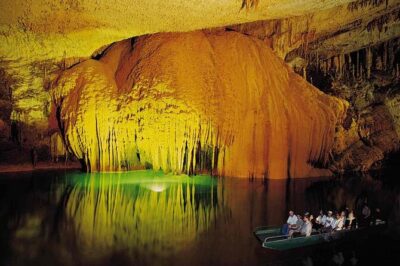
The day begins at Jeita Grotto, about 300 meters above sea level. The site consists of two separate but connected limestone cave systems shaped over millions of years. It is described as the longest cave complex in the Middle East, and the scale becomes clear once you learn that the upper cave extends about 2,130 meters while the lower gallery runs for roughly 6,200 meters.
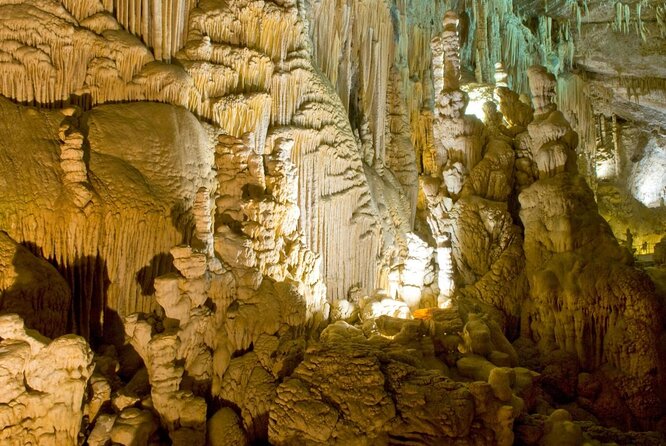
You have about an hour and a half here. The upper cave is the visual star. Water has formed stalactites, stalagmites, columns, curtains, draperies, mushrooms, and ponds in the limestone. These are not ruins placed for display. They are natural forms, slowly built over immense spans of time.
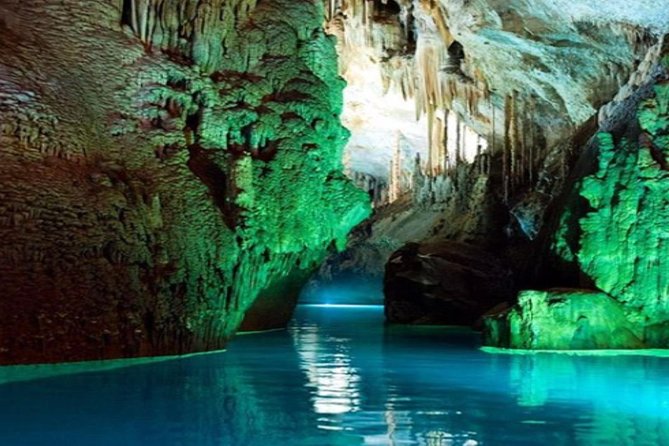
The lower gallery has a different character. It lies about 60 meters below the upper level and includes a smooth underground river and a lake. The contrast between the sculpted upper chamber and the water-filled lower section gives Jeita more variety than a simple cave walk.
Admission is not included, so allow extra money beyond the $50 tour price. The provided details do not specify the exact ticket cost or how the two cave sections are visited on the day, so confirm the current arrangements when booking.
Jeita is also the stop where timing can feel tight if you want to examine every formation. You have enough time for a meaningful visit, but not necessarily an unhurried geological study. I would keep the first stop focused: follow the guide’s explanation, take in the main formations, and avoid using too much time on repeated photographs.
Harissa and the statue above Jounieh Bay
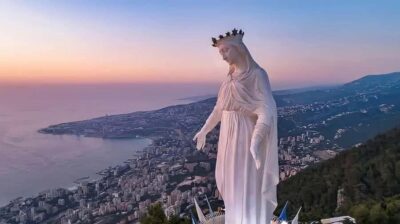
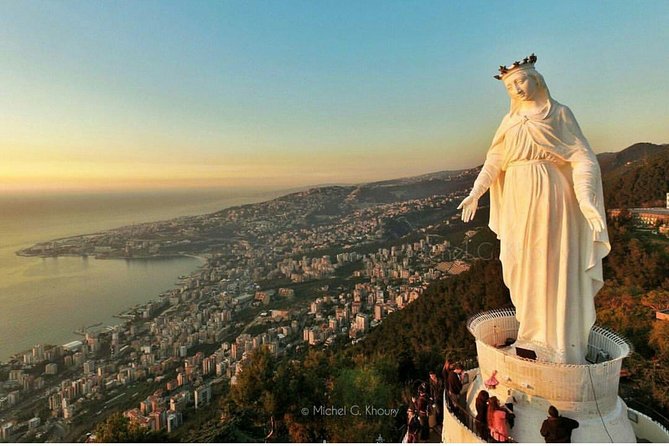
From Jeita, the route continues to Harissa, a major Christian pilgrimage site. The Shrine of Our Lady of Lebanon is marked by a 15-ton bronze statue of the Virgin Mary, painted white, with her arms stretched toward Beirut.
The statue is 8.5 meters high and five meters in diameter. A small chapel sits inside its base, while a large cathedral made of concrete and glass is next to it. The setting gives this stop weight beyond its size. Harissa is a place of worship, not simply a lookout with a monument.
You have about 30 minutes at the shrine, and admission is free. That is enough to see the statue, take in the view, and understand why the site matters to Christian pilgrims in Lebanon. If you want extended quiet time inside the religious buildings, the schedule may feel short.
The view is the main reward for many sightseers. From Harissa, you look over Jounieh Bay and toward Beirut. The trip’s strongest panorama comes here, and previous praise for the stunning views is easy to understand. The elevated position gives you a broad view that you cannot get from the coastal road below.
Harissa’s churches and a short look at local faith
The next stop allows about 15 minutes for the churches around Harissa. This is brief, but it adds useful context to the shrine. The area includes churches from different Christian traditions, including the Byzantine-style Melkite Greek Catholic Basilica of St. Paul.
The statue and the nearby cathedral are the main visual anchors, while the surrounding churches show that Harissa is more than one monument. You get a glimpse of the site’s wider religious role without spending half the day on church visits.
Do not expect a detailed architectural tour in 15 minutes. The included explanation is described as brief, and this stop functions best as a compact addition to the shrine rather than a separate major attraction. For many people, the panoramic setting will matter more than seeing every church interior.
More of Byblos:
- Byblos, Jeita Grotto & Harissa Day Trip -With Lunch (4G on Board)
★ 4.5 · 145 reviews - Semi-Private Tour to Jeita Grotto, Harissa & Byblos with Lunch
★ 5.0 · 52 reviews - Small Group Tour to Jeita Grotto, Harisa & Byblos with Hotel pickup
★ 5.0 · 49 reviews - Private Guided Tour to Jeita Grotto through Harissa and Byblos
★ 5.0 · 48 reviews
Riding the Telepherique to Our Lady of Lebanon
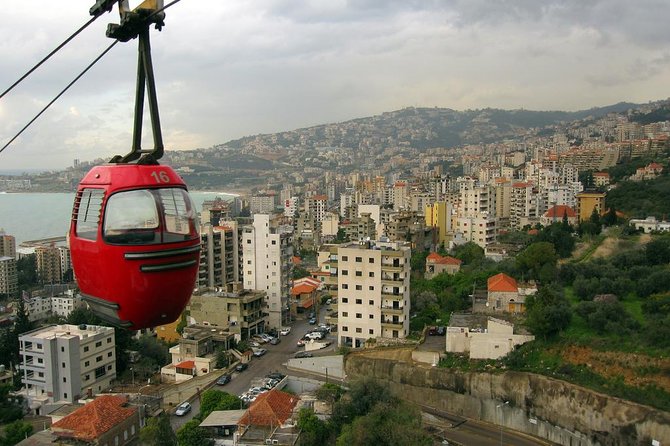
The Harissa Telepherique is one of Lebanon’s best-known tourist attractions. This gondola lift carries passengers from Jounieh above steep, pine-covered mountain slopes to an altitude of about 650 meters, arriving near the shrine.
The ride itself takes about 20 minutes in the itinerary. That makes it more than a simple transfer. You get a changing view of Jounieh Bay, the city, and the slopes below as the gondola climbs.
The cable car admission is not included. This is an important cost detail because the ride is one of the tour’s signature experiences, not an optional footnote. Ask the provider about the current fare and whether the cable car is operating on your chosen date.
The gondola also adds a practical question: the route includes private vehicle transfers, but the cable car changes how you reach Harissa. Clarify the exact sequence when you book. The supplied schedule lists the shrine and churches before the Telepherique, but local traffic, operating conditions, or the day’s transport plan may affect the order.
Still, the cable car is worth preserving in your schedule. It turns a normal mountain visit into a memorable part of the day, and it gives you a different view from the one beside the statue.
Byblos: Phoenician history beside the sea
Byblos is the day’s longest cultural stop, with about two hours allocated to the city and its sights. The settlement has been inhabited since Neolithic times and is closely tied to the Phoenician world and the spread of the Phoenician alphabet.
That background gives Byblos unusual importance. You are not simply walking through an old seaside town. The archaeological site connects early settlement, maritime trade, temples, and later medieval construction in one compact area.
The city is also a good counterpoint to Jeita. At the grotto, nature did the building. In Byblos, generations of people left layers of construction and reuse. The result is a place where a short walk can bring you past remains from very different periods.
The listed schedule gives two hours for Byblos, followed by one hour at Byblos Castle. Since the castle sits inside the archaeological area, the timing may overlap in practice or reflect separate portions of one extended visit. Ask your guide how much free walking time you will have outside the formal stops.
Byblos Castle and the archaeological site
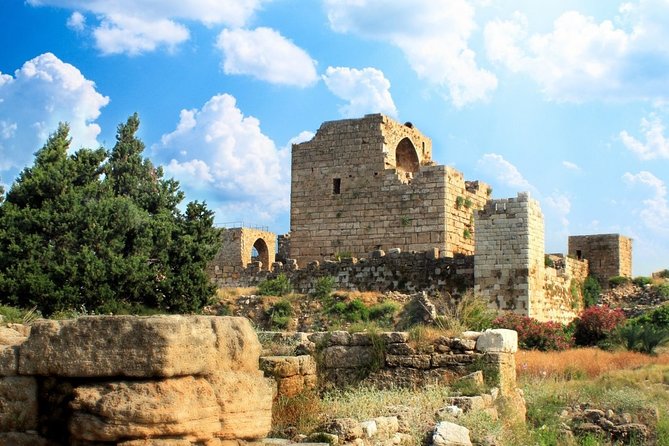
Byblos Castle is a restored 12th-century Crusader fortress surrounded by a dry moat about 10 meters wide. It is located within the archaeological area, near the remains of the Temple of Baalat Gebal and the Temple of the Obelisks.
The castle’s square keep is the best place for a broad view across the ruins. From the top, you can see Bronze Age dwellings below the walls and look toward the sea. This is the point where Byblos becomes easiest to understand as a layered settlement rather than a collection of disconnected stones.
Inside, a small museum and information panels explain the city’s past. That is useful if you want more than a quick photograph. The guide’s short explanation helps orient you, while the panels let you spend extra time on the periods that interest you most.
Castle admission is not included. As with Jeita and the Telepherique, the extra fee can affect the tour’s real value, though the base price remains low for a private vehicle and guide. If you are watching your budget, confirm all entrance costs before departure rather than treating $50 as an all-inclusive figure.
Byblos Old Souk and the ancient port
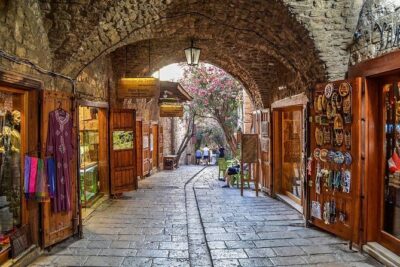
The old souk receives about 10 minutes, enough for a quick stroll along cobbled streets and a look at the old buildings. Shops sell souvenirs and antiques, but the appeal is not only shopping. This is a chance to change pace after the archaeological grounds and see Byblos as a living town.
Ten minutes is not enough for serious browsing. If you want to shop, you may need to use a little of your free time elsewhere. I would treat the souk as a pleasant walk and save major purchases for a longer visit.
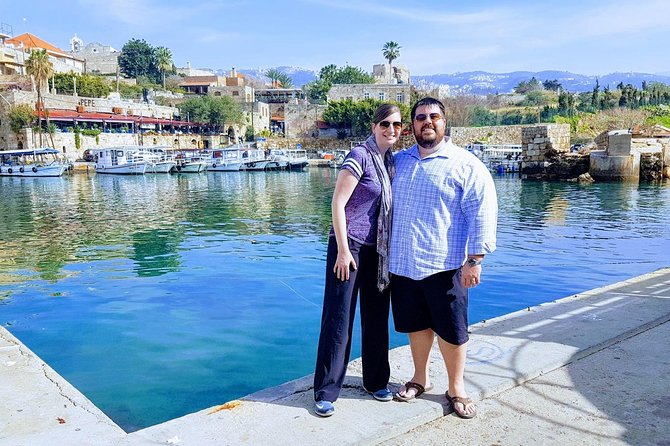
The port is another short stop, also about 10 minutes. Byblos Port is an ancient harbor, traditionally regarded by Lebanese people as the oldest port in the world. Around 3000 BC, it was an important timber-shipping center in the eastern Mediterranean.
The port gives the Phoenician story a clear physical setting. Byblos was not important only because people lived there. Its position beside the sea helped make it a center for trade and shipping. Even a brief look at the harbor helps connect the ruins to the wider Mediterranean.
What the $50 price really includes
At $50 per person, this is an unusually modest price for an eight-hour private excursion. The value comes from combining a private car, air conditioning, a tour leader, hotel pickup and drop-off, and explanations at each location.
A private vehicle is especially useful for this route. Jeita, Harissa, and Byblos are separate stops, and reaching all three by public transport would require more planning and likely more waiting. You pay for convenience, but you also gain a day built around your own party.
The low price needs a clear footnote. Lunch, gratuity, Jeita admission, the Telepherique ticket, and Byblos Castle admission are excluded. Shrine and church admission are listed as free, and the main Byblos visit is also listed as free, but you should still budget for the paid attractions and food.
The tour is strongest value for two or more people sharing the private experience. A solo visitor still gets the convenience of a private day, but the per-person price may feel less compelling once admissions and lunch are added.
Timing, comfort, and the private format
Pickup begins at 9:00 a.m., with hotel pickup and drop-off included. That makes the tour simple to fit into a Beirut stay, particularly if you want to avoid arranging separate transport for each site.
The air-conditioned vehicle is an important comfort feature for a full day. You will move between underground caves, a mountain shrine, a cable car, and a coastal archaeological town. The vehicle provides a cool break between visits and keeps the group together.
Only your party participates. That gives you room to ask the driver or guide for suggestions, a feature praised in the feedback. One especially positive account described the guide as helpful, generous with suggestions, and eager to explain his country. Another highlighted the driver’s useful information and assistance.
No guide’s name is provided, so you should not book expecting a specific individual. The quality of the day will depend partly on the guide assigned, but the experience is designed around personal service rather than a fixed large-group script.
Most people can participate, according to the tour information. Still, the day includes cave visits, a gondola ride, a mountain site, cobbled streets, and the climb to a castle viewpoint. Anyone with mobility concerns should ask the provider for current access details before booking, since the available information does not spell out step-free routes or seating arrangements.
Who should book this experience?
I would recommend this tour to a first-time Beirut visitor who wants to see several headline sights in one day. It suits couples, families, and small groups that value private transport and do not want to organize a complicated route.
It is also a good choice if you care about variety. You get caves, a religious monument, mountain views, a cable car, archaeological ruins, a Crusader castle, a souk, and a port. Few day trips offer such a wide range of settings.
The tour may be less suitable if you want long, unhurried visits. Harissa’s church stop is only 15 minutes, the souk and port each receive about 10 minutes, and Byblos has a lot to see. Independent visitors who prefer to linger over lunch, shop, or study every ruin may find the schedule brisk.
You should also think about your priorities. If ancient sites matter most, Byblos deserves your attention. If views and unusual natural formations appeal more, Jeita and Harissa will likely be the highlights. The tour gives each major attraction a place, but it cannot offer museum-length time at all of them.
Should you book the Jeita, Harissa, and Byblos tour?
Book it if you want a practical, private introduction to Lebanon’s northern sights from Beirut. The strongest reasons are the door-to-door vehicle, the useful guide support, the private group format, and the smart combination of Jeita’s caves, Harissa’s views, and Byblos’s long human story.
Before paying, confirm the current admission costs and cable-car arrangements. Add money for lunch and a tip, and ask how the two-hour Byblos visit and one-hour castle visit fit together. If you are happy with a full schedule and short stops at the smaller Harissa and Byblos locations, the $50 base price offers very good value.
Free cancellation is available when you cancel at least 24 hours before the 9:00 a.m. start time. Cancellations or changes within 24 hours are not refunded or accepted, so keep that deadline in mind when your plans are still shifting.
FAQ
What is included in the tour price?
The price includes a private car, an air-conditioned vehicle, a tour leader, hotel pickup and drop-off, and brief explanations about each site.
Are entrance tickets included?
No. Admission to Jeita Grotto, the Harissa Telepherique, and Byblos Castle is not included. Admission to the Shrine of Our Lady of Lebanon, the churches of Harissa, and the main Byblos visit is listed as free.
Is lunch included?
No. Lunch is not included in the tour price.
What time does the tour begin?
The tour starts at 9:00 a.m. and lasts about eight hours.
Is this a private tour?
Yes. Only your own group participates in the activity.
Can I cancel for a full refund?
Yes, if you cancel at least 24 hours before the experience start time. Cancellations made less than 24 hours before the start time are not refunded, and changes within that period are not accepted.
Just added in Beirut
- Wine Tasting Tour★ 5.0 · 2 reviews
- Lebanon tours vip jeitta byblos beirut we charge per vechile not per person.★ 5.0 · 1 review
- Lebanon’s Treasures: Jeita Grotto and Harissa Private Tour★ 5.0 · 2 reviews
- Small Group Tour to Baalbek, Anjar & Ksara with Hotel pickup★ 5.0 · 2 reviews
- Journey Through Time: A Private Tour of Tripoli and Byblos★ 5.0 · 1 review
- Guided Small-Group Tour to Baalbek, Cedars & Qozhaya with Lunch★ 5.0 · 2 reviews
- Small-Group Tour with Lunch to Sidon, Tyre & Maghdouche★ 5.0 · 2 reviews
- Small-Group Tour Qadisha Valley, Becharre and Cedars with Lunch and Tickets★ 5.0 · 1 review
Jeita Grotto and Harissa Day Trips
Guided Small-Group Tour to Jeita, Harissa, Byblos with Lunch
Read our review →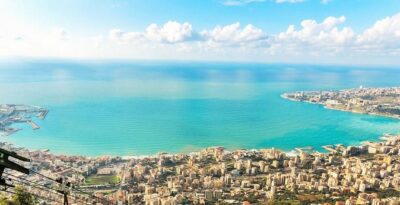
Jeita Grotto,Harissa&Byblos Full-Day PRIVATE-CAR Trip from Beirut
Read our review →
Byblos, Jeita Grotto & Harissa Day Trip -With Lunch (4G on Board)
Read our review →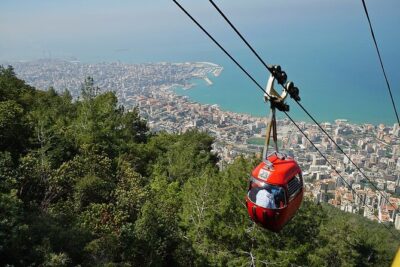
Semi-Private Tour to Jeita Grotto, Harissa & Byblos with Lunch
Read our review →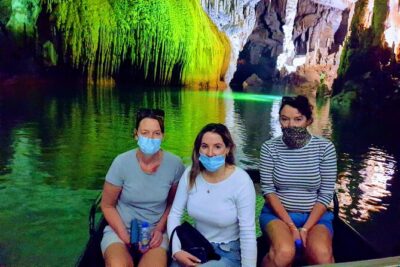
Private Guided Tour to Jeita Grotto through Harissa and Byblos
Read our review →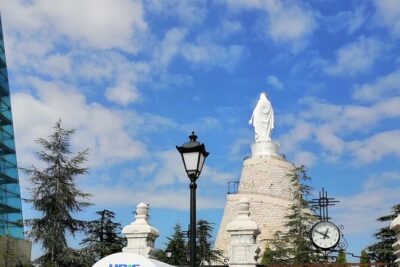
New Guided Semi-Private Tour to Jeita Grotto, Harissa & Byblos
Read our review →