REVIEW · JEITA GROTTO AND HARISSA DAY TRIPS
Exclusive Journey to Jeita Grotto, Harissa, and Byblos
Lebanon packs wonder into one long day. This private outing links Jeita Grotto, Harissa, and Byblos without asking you to face Beirut traffic behind the wheel. I especially like the door-to-door pickup and the freedom to explore without being tied to a large group. The main drawback is cost: at $50 per person, with several admission fees and lunch extra, the final bill can rise.
You get an air-conditioned private vehicle, a tour leader, and a local guide in Byblos. The personal service is a real strength. Fadi, Kassem, Hussein, and Ali are each praised for being friendly, flexible, helpful, or punctual, although one account notes that pickup ran slightly late because of the hotel location and traffic.
In This Review
- Key points to know before booking
- A practical way to see Lebanon’s coast from Beirut
- Jeita Grotto: Lebanon’s underground showpiece
- Harissa’s statue and the view over Jounieh Bay
- Harissa’s churches and the Téléferique ride
- Byblos, where the ancient city meets the sea
- Byblos Castle and the archaeological site
- What the private service adds
- Is $50 a fair price?
- Who should book this day out?
- Final call: a strong sightseeing package with extra costs
- FAQ
- What time does the tour start?
- How long does the experience last?
- Is hotel pickup included?
- Is this a private tour?
- Is lunch included?
- Are entrance tickets included?
- Can I cancel for a full refund?
Key points to know before booking
- Three major sights in one day: Jeita Grotto, Harissa, and Byblos give you nature, religion, archaeology, and coastal scenery in one outing.
- Private transport solves a real problem: Hotel pickup and drop-off spare you the stress of driving Lebanon’s busy roads yourself.
- Jeita Grotto is the day’s natural highlight: Two connected limestone cave systems contain stalactites, stalagmites, curtains, ponds, and an underground river.
- Harissa delivers the best wide view: The 8.5-meter bronze statue of Our Lady of Lebanon looks over Beirut and Jounieh Bay.
- Byblos rewards a slow walk: The old souk, ancient port, archaeological site, and Crusader castle are close enough to make a satisfying town visit.
- Budget for extras: Jeita Grotto, the Harissa cable car, and Byblos Castle charge admission separately, while lunch is not included.
A practical way to see Lebanon’s coast from Beirut
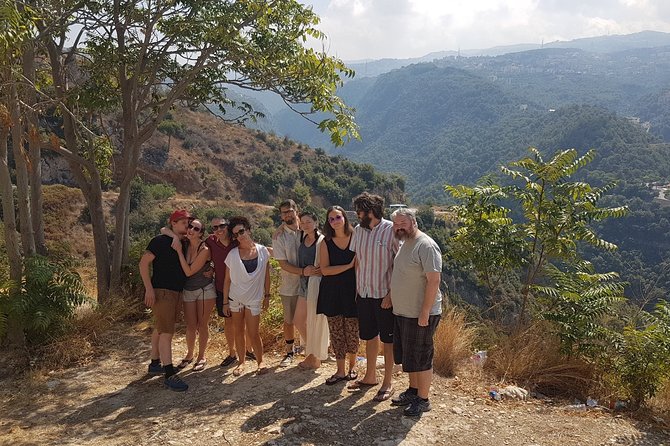
The appeal here is simple: you can see three of northern Lebanon’s best-known sights in about eight hours, then return to your hotel without arranging several separate rides. The start time is 9:00 am, and the experience is private, so only your own group participates.
I like the format for two reasons. First, you keep the convenience of an organized excursion without surrendering the day to a large coach party. Second, the schedule includes enough time at Byblos to walk beyond a single photo stop. You can explore at your own pace, with transport waiting to connect the main sights.
This is transport-led sightseeing rather than a fully guided cultural tour. A tour leader accompanies the outing, and a local guide is included in Byblos, but the general promise is that you explore independently. That suits you if you prefer room to wander, take photographs, or pause for coffee rather than listen to a nonstop commentary.
The trade-off is financial. The $50 price covers private transportation, hotel pickup and drop-off, an air-conditioned vehicle, the tour leader, and the Byblos guide. It does not cover lunch or admission to the main paid attractions. One review called the service very good but felt the tour was a little expensive, especially since lunch costs extra. That is fair criticism, particularly for a solo visitor. For two or more people sharing a private vehicle, the value looks stronger.
More Jeita and Harissa day trips:
- Guided Small-Group Tour to Jeita, Harissa, Byblos with Lunch
★ 5.0 · 361 reviews - Jeita Grotto,Harissa&Byblos Full-Day PRIVATE-CAR Trip from Beirut
★ 5.0 · 222 reviews - Jeita Grotto – Harissa – Byblos Trip
★ 5.0 · 169 reviews
Jeita Grotto: Lebanon’s underground showpiece
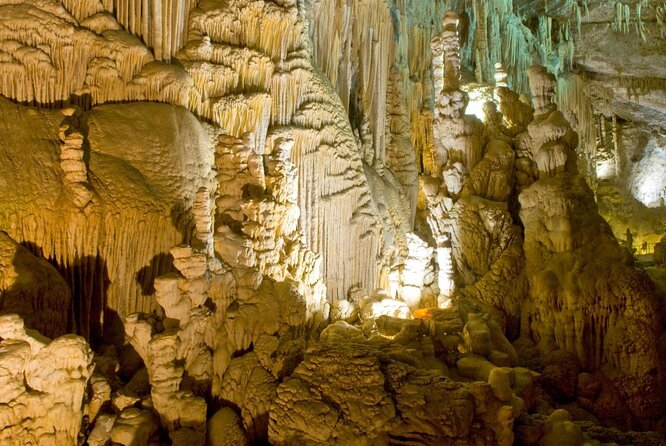
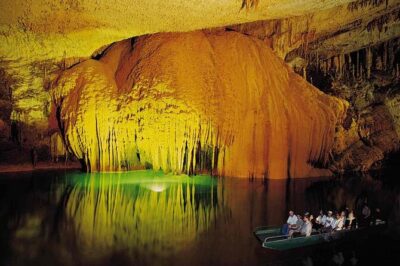
Jeita Grotto deserves the first major stop because it is unlike anything else on this day. The site is a system of two separate but connected limestone caves formed over millions of years. At about 300 meters above sea level, it has a total height difference of 305 meters and is described as the longest cave complex in the Middle East.
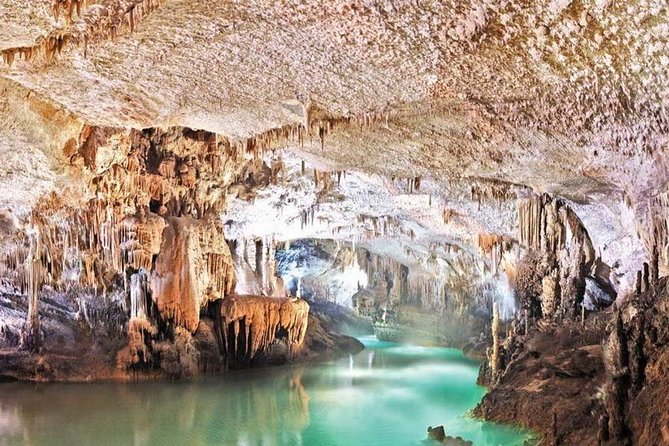
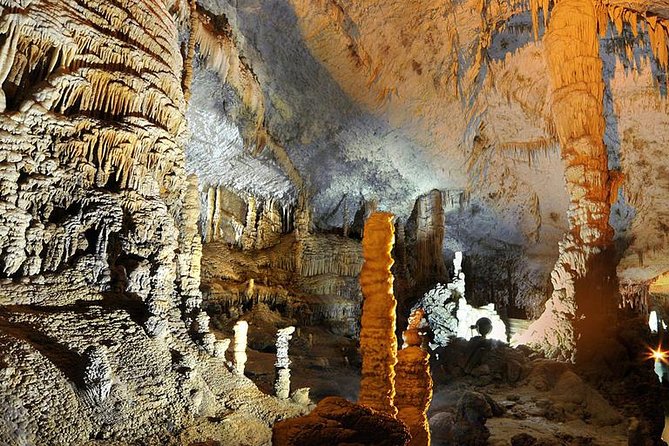
The upper cave is 2,130 meters long. Its appeal is visual: expect a high concentration of mineral formations, including stalactites hanging from the ceiling, stalagmites rising from the floor, columns, mushroom shapes, ponds, curtains, and drapery-like stone. These names are not just geological labels. They help you notice the odd shapes and textures as you move through the cave.
The lower gallery is much longer, at 6,200 meters, and lies about 60 meters below the upper cave. A smooth underground river and lake run through it. The contrast between the dry formations above and the water below gives the visit a sense of variety, even though both sections belong to the same cave system.
You have about 1 hour and 30 minutes here. That is enough time for a focused visit, but it is not an open-ended caving expedition. Admission is not included, so check the current entrance cost when you book or before setting out. The tour description does not provide the exact fee.
Jeita is the stop where the private format matters less than at Byblos, since the cave visit follows the attraction’s own setup. Still, having a driver handle the road and parking lets you conserve energy for the cave. I would treat this as a must-see portion of the day, especially if you want something beyond Lebanon’s churches and ancient ruins.
Harissa’s statue and the view over Jounieh Bay
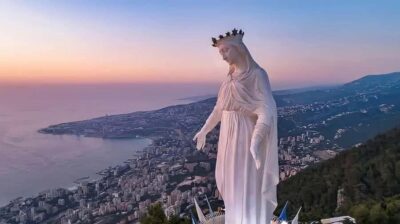
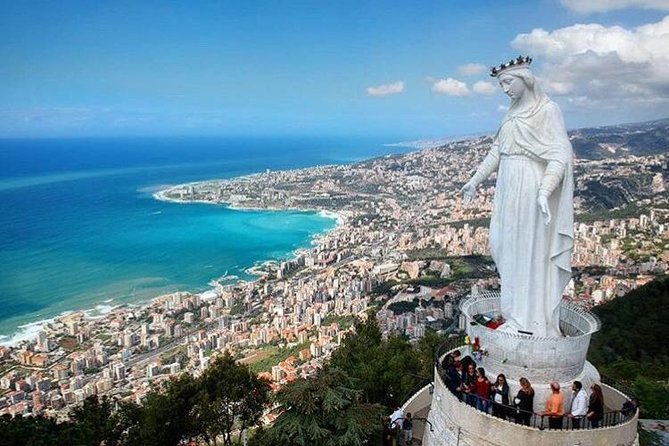
After the grotto, the route turns to Harissa, a major Christian pilgrimage site above Jounieh. The Shrine of Our Lady of Lebanon is marked by a white-painted, 15-ton bronze statue of the Virgin Mary, also called Notre Dame du Liban.
The statue was made at the end of the 19th century and inaugurated in 1908. It rises 8.5 meters high, has a diameter of five meters, and reaches its arms toward Beirut. At the base is a small chapel, while a large cathedral made of concrete and glass sits beside it.
You get 30 minutes at the shrine, and admission is free. That is a short visit, but the attraction is compact. Your main reason to linger is the view. The statue looks over the Bay of Jounieh, with Beirut visible in the distance, creating one of the day’s clearest moments of orientation. You can see how the coastal city, bay, and steep mountain setting fit together.
The shrine is religiously important, so you should approach it with the same respect you would bring to any active place of worship. The tour information does not specify a dress code or interior access rules, so do not assume every part of the complex is open in the same way at all times.
Harissa’s churches and the Téléferique ride
The next stop gives you 15 minutes among Harissa’s churches. The area includes the shrine and several Christian buildings representing different denominations. The Melkite Greek Catholic Basilica of St. Paul, built in a Byzantine style south of the statue, is one of the named examples.
This is a brief orientation stop rather than a full church tour. If architecture and religious sites are your main interests, you may want to use this time carefully and ask the tour leader what you can see during the visit. Admission is free.
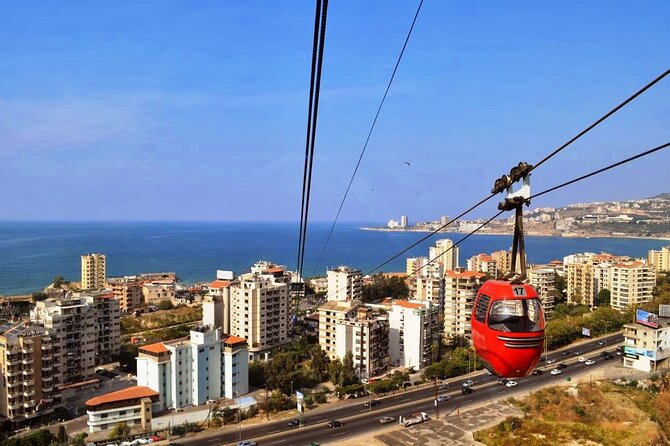
The Téléferique, or gondola lift, is another short stop, listed at about 20 minutes. It runs from Jounieh up the steep, pine-covered mountain to Harissa at an altitude of about 650 meters. The ride offers views over Jounieh Bay and the surrounding city.
The cable car is not included in the tour price. That matters because the aerial ride is one of the more memorable ways to understand Harissa’s setting, but you will need to pay separately. The schedule also makes clear that this is not a long cable-car excursion. It is a scenic addition, not the central purpose of the day.
You should also clarify how the group will use the Téléferique, since the tour includes private road transport while the cable car is a separate attraction. The supplied details do not explain whether the vehicle meets you at the top or bottom, so ask before booking if this point affects your plans.
More of Byblos:
- Byblos, Jeita Grotto & Harissa Day Trip -With Lunch (4G on Board)
★ 4.5 · 145 reviews - Semi-Private Tour to Jeita Grotto, Harissa & Byblos with Lunch
★ 5.0 · 52 reviews - Small Group Tour to Jeita Grotto, Harisa & Byblos with Hotel pickup
★ 5.0 · 49 reviews - Private Guided Tour to Jeita Grotto through Harissa and Byblos
★ 5.0 · 48 reviews
Byblos, where the ancient city meets the sea
Byblos is the longest stop, with roughly two hours assigned to the town itself. That is appropriate. Byblos is one of the oldest Phoenician cities, inhabited since Neolithic times, and it has been connected to Mediterranean history for thousands of years.
The city also has a direct link to the Phoenician alphabet, an important reason Byblos matters beyond its age. This is not simply an old settlement with attractive stones. It connects archaeology, writing, trade, and the sea in one compact place.
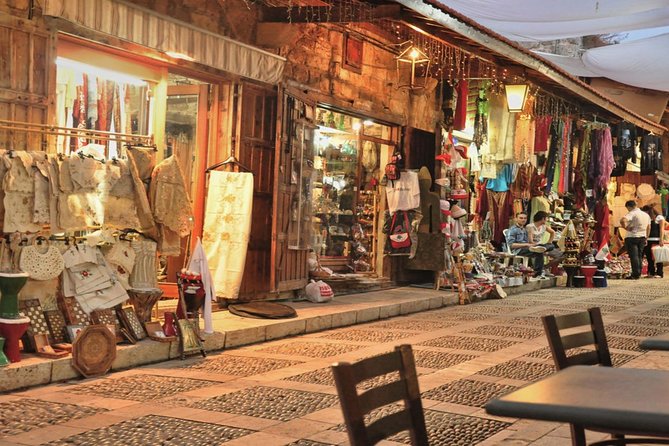
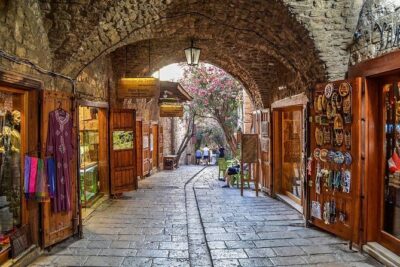
I like the way the visit combines several different settings. You can move from archaeological ruins to the old souk, then down toward the port. The old souk has cobblestone streets, older buildings, souvenirs, and antiques. You can shop, but you do not have to. A slow walk through the lanes may be more rewarding than treating the market as a buying stop.
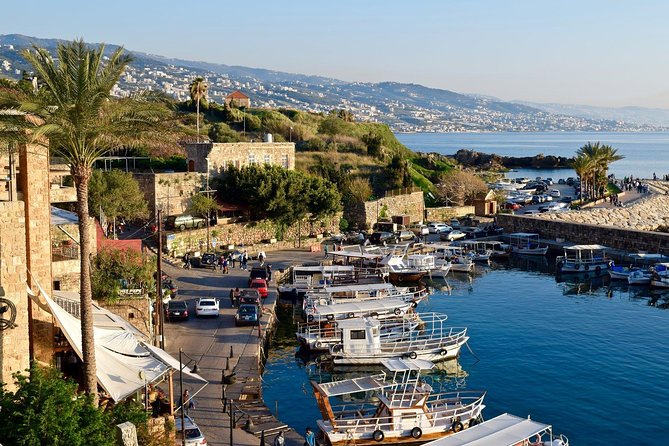
Byblos Port is only listed for about 10 minutes. Lebanese tradition considers it the oldest port in the world, and around 3000 BC it was an important timber-shipping center in the eastern Mediterranean. The short visit is enough to connect the town’s ancient identity with its maritime setting, though you should not expect a long harbor walk.
The town portion is listed as free admission. That does not mean every nearby attraction is free, however. The archaeological site and castle may have their own entrance arrangements, so keep some cash or another payment option available.
Byblos Castle and the archaeological site
Byblos Castle is a restored 12th-century Crusader fortress just inside the archaeological site. A dry moat about 10 meters wide surrounds it, and the square keep gives you a strong view over the ruins and toward the sea.
The castle is useful because it turns a spread of stones into a readable picture. From the top, you can look down on the remains of the Temple of Baalat Gebal and the Temple of the Obelisks. Bronze Age dwellings are visible below the walls, adding another layer to the site.
Inside, a small museum and information panels explain the city’s past. You get about one hour here, which is enough time to climb, look over the ruins, and read some of the background. Admission is not included, so count this among the day’s extra costs.
The castle may be the best place to understand Byblos physically. The town, port, temples, and later fortress are not presented as separate attractions. They occupy the same small area, showing how one useful coastal location was reused across many periods.
Still, the schedule asks you to cover a lot. If you read every panel, take many photographs, and shop in the souk, you may feel pressed. The private format helps because you are not waiting for a large group, but the total day remains full.
What the private service adds
The strongest part of this experience is not a special performance or an unusual activity. It is the ease of moving between places that are difficult to combine on your own in one day.
Self-driving in Lebanon can be stressful, particularly when you are unfamiliar with the roads and traffic. Here, you are collected at your hotel, ride in a private air-conditioned vehicle, and return to the same general starting point. That saves planning time and leaves you free to watch the road rather than manage it.
The human service also seems to be a strong point. Fadi is described as kind, flexible, professional, honest, polite, and easy to talk with. Kassem is praised for making people comfortable quickly and for being helpful and well informed. Hussein is described as apologetic after a delayed pickup and attentive without being pushy. Ali is praised for arriving on time, answering questions, and keeping the outing at a personal pace.
Those details matter. A private day can feel uncomfortable if the driver is rigid or constantly trying to hurry you. The consistent picture here is of drivers who are friendly and relaxed. That is especially useful when you are tired after the cave and still have Byblos ahead.
There is one practical caution: hotel pickup may run late because of traffic or the location of your accommodation. Build a little patience into the morning. The 9:00 am start is fixed, but roads can affect the exact departure from your door.
Is $50 a fair price?
At $50 per person, this is not the cheapest way to reach Jeita, Harissa, and Byblos. Yet price comparisons can be misleading because this is a private tour, not a public bus excursion.
The fee includes:
- Hotel pickup and drop-off
- Private transportation
- An air-conditioned vehicle
- A tour leader
- A local guide in Byblos
- A flexible schedule for your own group
You still pay for lunch, Jeita Grotto, the Téléferique, and Byblos Castle. That means the advertised price is only the starting point. For a couple or small group, the convenience may justify it. For one person, the cost per head feels less generous.
I would judge the value by your priorities. If you want to see all three destinations in one day and do not want to drive, $50 buys a useful amount of transport and planning. If your budget is tight, you may find the added admission charges and lunch make the day pricier than expected.
Ask for the current entrance fees before confirming. The supplied details do not state them, and they can change. Also ask how much free time you will have in Byblos if shopping or a relaxed meal matters to you.
Who should book this day out?
I would recommend it to first-time visitors staying in Beirut who want a broad introduction to the area north of the city. It also suits couples, families, and small groups who value a private vehicle and do not want to coordinate taxis between several separate stops.
The tour is a good fit if you like mixing experiences: a cave, a mountain shrine, a cable car, churches, ruins, a market, and a port. It is less suitable if you prefer one site explored in great depth or want a relaxed day with long meals and plenty of unplanned wandering.
The schedule may also work well for you if you want control over the pace. The outing is private, and the stop descriptions leave room for independent exploration rather than constant guiding. Just remember that the overall route is ambitious, so flexibility does not turn it into a slow-paced day.
Free cancellation is available if you cancel at least 24 hours before the 9:00 am start. Changes or cancellations within 24 hours are not accepted for a refund.
Final call: a strong sightseeing package with extra costs
Book this tour if you want an efficient, private way to connect Jeita Grotto, Harissa, and Byblos from Beirut. Its best features are the door-to-door transport, friendly drivers, freedom from a large group, and the chance to see three very different sides of Lebanon in one day.
I would hesitate only if your budget is strict or if you expect every attraction and lunch to be covered. The extra fees add up, and the schedule is busy. For everyone else, especially a small group that wants comfort and independence without the headache of driving, this is a practical and worthwhile day out.
FAQ
What time does the tour start?
The tour starts at 9:00 am.
How long does the experience last?
The tour lasts approximately eight hours.
Is hotel pickup included?
Yes. Hotel pickup and drop-off are included.
Is this a private tour?
Yes. Only your group participates in the private activity.
Is lunch included?
No. Lunch is not included in the tour price.
Are entrance tickets included?
No. Admission to Jeita Grotto and Byblos Castle is not included. The Téléferique ticket is also not included. Admission to the Shrine of Our Lady of Lebanon, the Churches of Harissa, Byblos, the Old Souk, and Byblos Port is listed as free.
Can I cancel for a full refund?
Yes, if you cancel at least 24 hours before the experience start time. Cancellations made less than 24 hours before the start time are not refunded.
Just added in Beirut
- Wine Tasting Tour★ 5.0 · 2 reviews
- Lebanon tours vip jeitta byblos beirut we charge per vechile not per person.★ 5.0 · 1 review
- Lebanon’s Treasures: Jeita Grotto and Harissa Private Tour★ 5.0 · 2 reviews
- Small Group Tour to Baalbek, Anjar & Ksara with Hotel pickup★ 5.0 · 2 reviews
- Journey Through Time: A Private Tour of Tripoli and Byblos★ 5.0 · 1 review
- Guided Small-Group Tour to Baalbek, Cedars & Qozhaya with Lunch★ 5.0 · 2 reviews
- Small-Group Tour with Lunch to Sidon, Tyre & Maghdouche★ 5.0 · 2 reviews
- Small-Group Tour Qadisha Valley, Becharre and Cedars with Lunch and Tickets★ 5.0 · 1 review
Jeita Grotto and Harissa Day Trips
Guided Small-Group Tour to Jeita, Harissa, Byblos with Lunch
Read our review →
Jeita Grotto,Harissa&Byblos Full-Day PRIVATE-CAR Trip from Beirut
Read our review →
Byblos, Jeita Grotto & Harissa Day Trip -With Lunch (4G on Board)
Read our review →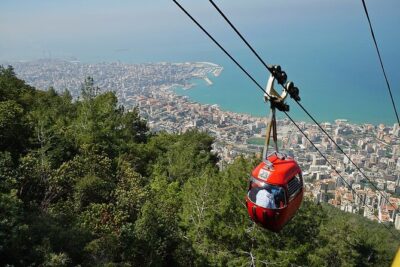
Semi-Private Tour to Jeita Grotto, Harissa & Byblos with Lunch
Read our review →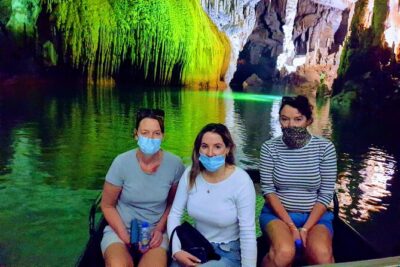
Private Guided Tour to Jeita Grotto through Harissa and Byblos
Read our review →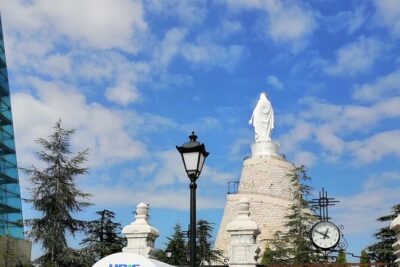
New Guided Semi-Private Tour to Jeita Grotto, Harissa & Byblos
Read our review →