REVIEW · BEITEDDINE AND DEIR EL QAMAR
Private Trip to Beiteddine Palace, Deir elQamar and Mousa Castle
Mountain history starts outside Beirut. This private day trip combines Beiteddine Palace and its fine mosaics with the compact historic town of Deir el Qamar, then adds the wonderfully unusual Moussa Castle. I like the private format because your group gets its own vehicle, guide, and hotel pickup. I also like the mix of grand political history and small-town religious heritage.
The main drawback is cost control. At $75 per person, the tour can be good value for a full eight-hour private outing, but palace and castle admission are extra, and lunch is not included. Winter weather can also change the plan, as snow once closed the Chouf Cedars during a visit.
In This Review
- Key points to know before booking
- Leaving Beirut for the Chouf Mountains
- Beiteddine Palace, the grand opening stop
- Moussa Castle and one man’s determined idea
- Deir el Qamar, the Monastery of the Moon
- Fakhreddine’s Mosque and its octagonal minaret
- Saydet El Talle Church and the town’s older sacred layers
- What the private format really adds
- Is $75 per person a fair price?
- Weather, timing, and practical expectations
- Who should book this Beirut day trip?
- Should you book it?
- FAQ
- What is included in the private tour?
- How long does the tour last?
- Are admission tickets included?
- Is lunch included?
- Is this a group tour or a private activity?
- Can I cancel for a full refund?
Key points to know before booking
- Beiteddine Palace takes about 90 minutes: The palace is the main historical stop, with mosaics, courtyards, and rooms connected to Emir Bashir Chehab II.
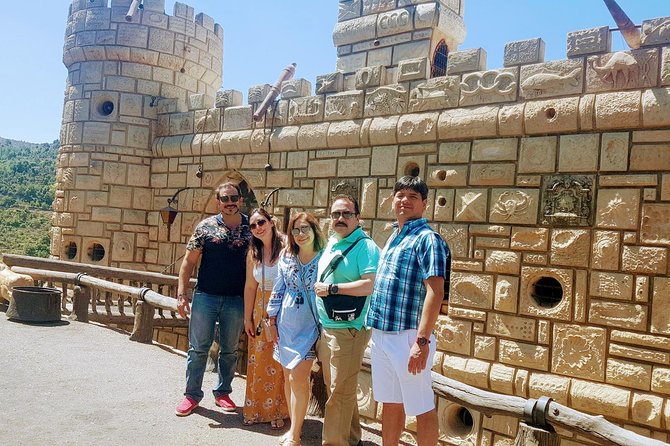
- Moussa Castle is a very personal monument: Its builder, Moussa Al Maamari, began dreaming of the castle at age 14 and built it on the hill between Beiteddine and Deir el Qamar.
- Deir el Qamar packs several faiths into a small town: You see a mosque, Christian churches, and the story of a former capital of the Mount Lebanon Emirate.
- The tour is private, not a large coach outing: Only your group participates, which makes the day easier to adjust within the planned stops.
- Admissions and lunch cost extra: The $75 price covers transport, guide, and hotel pickup and drop-off, but not entry tickets or food.
- Guides can shape the day: Albert received praise for his history commentary and flexibility, while Ziad was singled out for his cultural knowledge and skill as both guide and driver.
Leaving Beirut for the Chouf Mountains
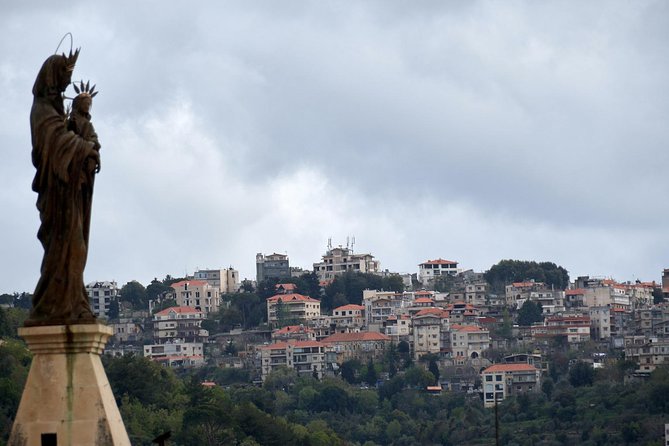
The tour begins with a 9:00 a.m. pickup from your hotel in Beirut. You spend about eight hours away from the city, riding in an air-conditioned vehicle through the Chouf countryside.
That arrangement matters. Beiteddine, Deir el Qamar, and Moussa Castle are close enough to combine, but they are not Beirut sights you can casually string together on foot. A private vehicle removes the need to arrange separate transport between the hill towns and lets you focus on the views and historic sites.
The drive itself is part of the appeal. You leave the city behind and head into the Mount Lebanon region, where the route becomes a mountain outing rather than a standard urban sightseeing tour. The supplied details do not specify the exact vehicle model, road conditions, or scenic stops, so you should think of this as a destination-focused day trip rather than a sightseeing drive with many scheduled viewpoints.
The private setup is especially useful for couples, families, or a small group with shared interests. You are not waiting for a large bus to load, and your guide can spend more time explaining the places your group finds most interesting. At the same time, the tour follows a fairly full schedule, so do not expect unlimited time at every stop.
More of Beiteddine and the Chouf:
- Guided small group to Cedars Reserve & Beiteddine w/lunch+entries
★ 5.0 · 12 reviews - Beirut, Beiteddine & DeirElQamar Day Trip-With Lunch(4G on Board)
★ 4.5 · 12 reviews - Cedars Shouf & Beiteddine w/pick-up, guide, entries+lunch
★ 4.7 · 12 reviews
Beiteddine Palace, the grand opening stop
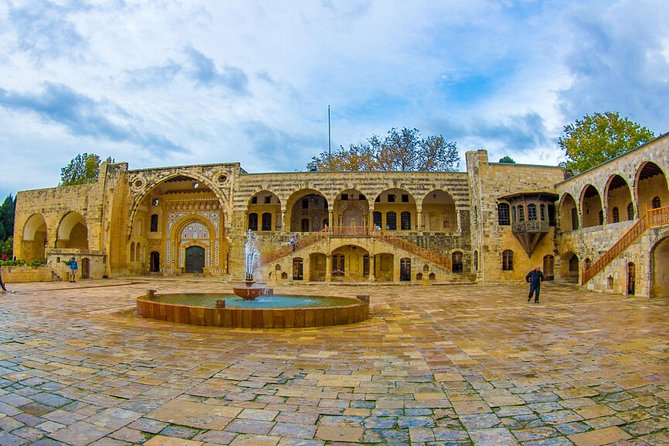
Your first major stop is Beiteddine Palace, usually planned for about an hour and a half. The name means House of Faith, and the palace was built between 1788 and 1818 by Emir Bashir Chehab II, who later ruled the Emirate of Mount Lebanon.
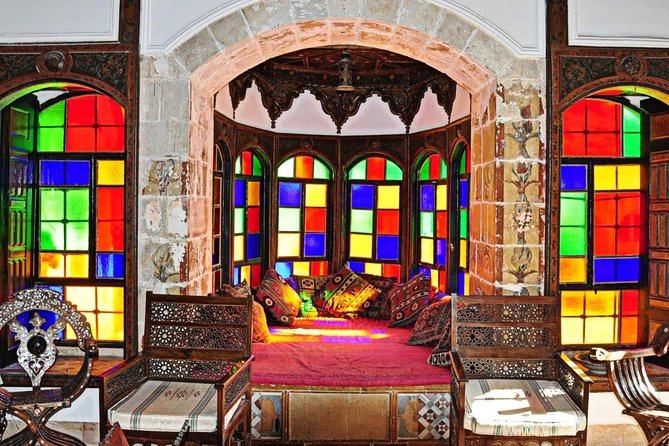
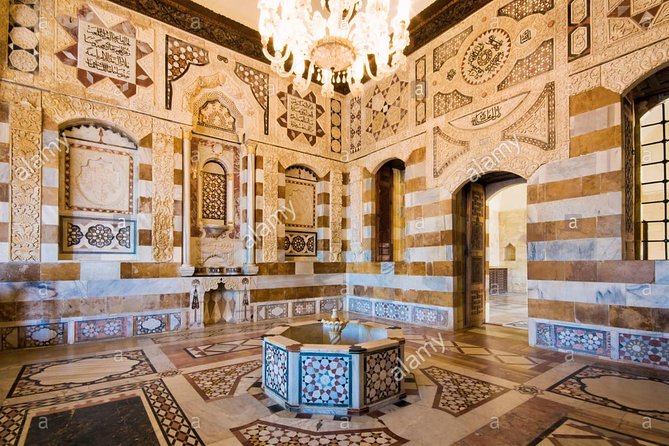
This is the tour’s grandest site. The palace gives you a direct look at the ambitions of a ruler who wanted a major residence in the mountains. Its mosaics are a particular reason to pay attention. One visitor specifically praised their beauty, and the palace museum adds substance beyond a quick photo stop.
The building has had several lives. After 1840, the Ottomans used it as a government building. During the French Mandate, it became a local administrative office. In 1943, it was declared the official summer residence of the president of Lebanon. Parts of the palace remain reserved for that purpose, while other sections are open to the public.
That mixed use explains an important practical point: you will not necessarily see every room or section of the complex. The palace was heavily damaged during the Lebanese Civil War, and its current public areas reflect both restoration and continuing official use.
Admission is not included, so budget for a separate ticket. The supplied information does not give the current entry price, and that price may change, so check it before departure if you are calculating the exact cost of the day.
I would give this stop your full attention. The 90-minute window is long enough to see the public areas without turning the visit into a slow architectural study. Look closely at the mosaics, listen to the guide’s explanation of Bashir Chehab II, and keep in mind that the palace is not just an old residence. It also reflects Ottoman administration, the French Mandate, the Lebanese presidency, and wartime damage.
Moussa Castle and one man’s determined idea
The next stop is Moussa Castle, with about one hour set aside. It sits on a hill between Beiteddine and Deir el Qamar and has a very different character from the palace.
This castle tells the story of Moussa Al Maamari, born on July 27, 1931. His idea began when he was only 14 years old, when he wanted to impress a local girl he loved. He eventually built the castle himself, with his beliefs and ideas engraved into its stones.
That backstory is what makes the stop worthwhile. Beiteddine represents princely power and formal history. Moussa Castle is a personal project, shaped by one man’s long-held dream. You are not looking at another official residence or religious monument. You are seeing a creator’s idea made physical, stone by stone.
The castle may appeal most to people who enjoy unusual places with a strong human story. If your interests are limited to major archaeological sites, you may find it less important than Beiteddine. If you enjoy eccentric buildings and the stories behind them, the one-hour visit gives the day a welcome change of pace.
Admission is not included here either. Since both Beiteddine and Moussa Castle charge separate entry fees, ask about the current amounts when booking or before the pickup time. The advertised $75 should not be treated as the final door-to-door cost.
Deir el Qamar, the Monastery of the Moon
Deir el Qamar is about five kilometres from Beiteddine Palace, and the tour gives you roughly 30 minutes for the town itself. The name translates as Monastery of the Moon, and the village once served as the capital of the Emirate of Mount Lebanon.
Thirty minutes is enough for a focused introduction, but not enough for a leisurely exploration of every street and building. You should use the time well, staying close to the guide and paying attention to the town’s religious and civic story.
Deir el Qamar became the first village in Lebanon to have a municipality, in 1864. It is also associated with many Lebanese artists, writers, and politicians. The most striking detail is the town’s history of different religious communities living together. Its places of worship included a mosque, a synagogue, and Christian churches.
The town was destroyed in 1860 during civil conflict between Druze and Christians, when it was set on fire. Napoleon III sent a French contingent to help rebuild it. That history gives the town a weight that is easy to miss if you treat it as a quick village photo stop.
I would not expect a museum-style presentation here. Deir el Qamar works better as a place where the guide connects buildings, faiths, politics, and rebuilding. With only half an hour, ask questions as you walk and save independent wandering for another visit.
The stop is listed with free admission, which helps balance the separate charges at the palace and castle. It also gives the day a more public, lived-in setting after two purpose-built attractions.
A completely different kind of day out:
- Guided Small-Group Tour to Baalbek, Anjar and Ksara with Lunch
★ 5.0 · 511 reviews - Guided Small-Group Tour to Jeita, Harissa, Byblos with Lunch
★ 5.0 · 361 reviews - Paragliding Trip Over Lebanon – Jounieh Bay
★ 5.0 · 257 reviews - Jeita Grotto,Harissa&Byblos Full-Day PRIVATE-CAR Trip from Beirut
★ 5.0 · 222 reviews
Fakhreddine’s Mosque and its octagonal minaret
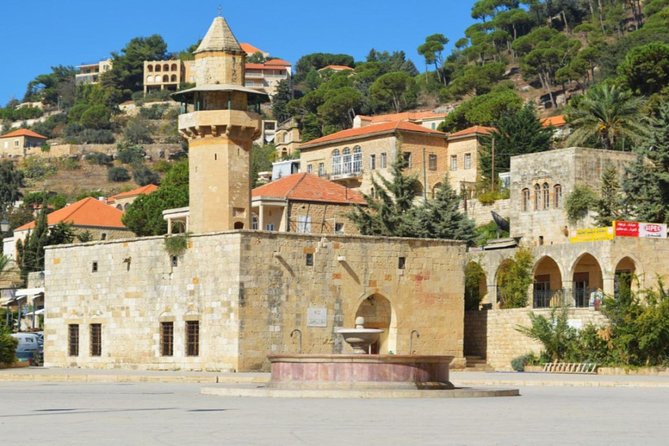
Fakhreddine’s Mosque receives about 15 minutes. That may sound brief, but the mosque is in Deir el Qamar, so it fits naturally into the town visit.
Built in 1493 and restored in the 16th century by Fakhreddine I, it is described as the oldest mosque in Mount Lebanon. Its octagonal minaret is the feature to watch for, and the building helps show the area’s long-standing religious variety.
This is a stop where a guide adds real value. Fifteen minutes does not allow much time for a detailed visit, but it is enough to understand why the mosque matters and how it fits into Deir el Qamar’s wider story.
Admission is free. Treat the stop as a brief historical pause rather than a full standalone attraction. The mosque’s importance comes from its age, setting, and place within the town’s shared religious past.
Saydet El Talle Church and the town’s older sacred layers
The final listed stop is Saydet El Talle Church, also known as Our Lady of the Hill. The visit lasts about 15 minutes and is free.
The church dates to the 15th century and is one of Deir el Qamar’s key religious and historic sites. Its story reaches further back. A church was built on the site over the ruins of an old Phoenician temple dedicated to the goddess Astarte. That earlier church was later destroyed by an earthquake in 859.
A local legend adds another layer. A Druze emir in Baakline reportedly saw a light coming from the hill of Deir el Qamar. He ordered his soldiers to dig there, with instructions to build either a mosque or a church depending on what symbol they found.
The details make this a rewarding short stop, even though 15 minutes is not much time. You get a glimpse of how older sacred sites, Christian tradition, local legend, and the town’s Druze history overlap.
The church also completes the religious picture introduced at Fakhreddine’s Mosque. Together, the two stops show why Deir el Qamar cannot be reduced to a single-community village or a pretty mountain town.
What the private format really adds
The tour is for your group alone, with hotel pickup and drop-off, comfortable private transport, an air-conditioned vehicle, and a professional guide. That is more than a simple transfer, since the guide is expected to accompany you through the historical sites.
The strongest reason to choose private transport is control. You avoid organizing multiple taxis and can keep the same guide throughout the day. The format also suits visitors who want history explained in plain language rather than read every detail from a phone.
The guide may be the most important variable in the experience. Albert was praised for explaining Lebanon’s history at Beiteddine and for handling a weather-related change when the Chouf Cedars were closed by snow. Ziad was praised as a guide, driver, and person, with particular emphasis on his cultural and historical knowledge.
Those comments point to a useful booking question: ask who is scheduled to guide your group. The available information does not guarantee Albert or Ziad, so you should not assume that either one will lead your tour. Still, their names give you a sense of the kind of guide service the company has provided.
The day is private, but it is not an entirely free-form custom tour. The listed schedule gives 90 minutes at Beiteddine, one hour at Moussa Castle, 30 minutes in Deir el Qamar, and 15 minutes at each of the mosque and church. If you want long meals, extensive shopping, or a slow village walk, ask in advance if the timing can change.
Is $75 per person a fair price?
At $75 per person, the tour can offer solid value if you want a full day outside Beirut without arranging the transport yourself. You receive hotel pickup and drop-off, an air-conditioned private vehicle, and a professional guide for approximately eight hours.
The value improves with a small group. Two or three people can share the cost while still receiving a private experience. Larger groups may find the per-person rate easier to justify, provided everyone wants the same mix of palaces, religious sites, and unusual architecture.
You must add the cost of admission to Beiteddine Palace and Moussa Castle. Lunch is also separate. Since the tour information does not state the ticket prices or recommend a specific restaurant, plan your budget around the advertised price plus those additional expenses.
I would compare this with the cost and effort of hiring a car and guide separately. The tour’s advantage is convenience and a planned route. Its limitation is that the price does not include every expense connected with the day.
Weather, timing, and practical expectations
The tour starts at 9:00 a.m. and lasts about eight hours. That makes it a substantial day, not a quick half-day trip. Wear comfortable shoes for historic buildings and town streets, and leave room in your schedule for mountain traffic or weather-related changes.
Snow can affect nearby Chouf sights. In one case, the Chouf Cedars were closed because of snow, and the guide adapted the day with another stop. The listed tour does not promise a Chouf Cedars visit, so do not book this experience expecting that attraction to be part of the route.
Confirmation is provided when you book, and free cancellation is available if you cancel at least 24 hours before the local start time. Cancellations or changes made less than 24 hours before the start are not refunded or accepted.
Most people can participate, and only your group joins the activity. The supplied details do not provide a full accessibility assessment, so if you have specific mobility needs, ask the provider before booking.
Who should book this Beirut day trip?
I would choose this tour if you want to see several important Chouf sites in one day and prefer a guide to connect the history. It suits first-time visitors to Lebanon who want more than Beirut, as well as returning visitors who missed the mountain towns on an earlier trip.
It is a good fit for people who enjoy variety. You get a ruler’s palace, a self-built castle, a historic town, an old mosque, and a church with links to earlier sacred traditions. No single stop has to carry the entire day.
Families and small groups should also appreciate the private vehicle and hotel service. You can share the day with people you know instead of joining a large group with strangers and fixed commentary.
I would hesitate if your priority is a slow, unstructured day. The schedule gives short windows at Deir el Qamar’s mosque and church, and you will need to pay extra for palace and castle entry. Someone seeking only major ancient ruins may also prefer a different outing.
Should you book it?
Book this trip if you want an efficient, private route from Beirut into the Chouf with strong historical variety. Beiteddine Palace is the main reason to go, while Deir el Qamar gives the day its human and religious depth, and Moussa Castle adds an eccentric personal story.
Before booking, confirm the guide, ask about current admission fees, and plan for lunch separately. Keep an eye on winter conditions, especially if you hope to add or see nearby cedar sites.
At $75 per person, it is a sensible choice for a small group that values private transport and a full-day guide. It is less attractive if you want every expense included or prefer to spend several hours in just one town.
FAQ
What is included in the private tour?
The tour includes hotel pickup and drop-off, private transportation in an air-conditioned vehicle, and a professional guide.
How long does the tour last?
The experience lasts approximately eight hours and begins at 9:00 a.m.
Are admission tickets included?
No. Admission tickets for Beiteddine Palace and Moussa Castle are not included. Deir el Qamar, Fakhreddine’s Mosque, and Saydet El Talle Church are listed with free admission.
Is lunch included?
No. Lunch is not included in the tour price.
Is this a group tour or a private activity?
It is a private activity, so only your group participates.
Can I cancel for a full refund?
Yes, if you cancel at least 24 hours before the experience start time. Cancellations or changes made less than 24 hours before the start are not refunded or accepted.
Just added in Beirut
- Guided Full-Day Private Trip to Tripoli from Beirut★ 5.0 · 2 reviews
- Guided Half-Day Private Trip to Byblos from Beirut★ 5.0 · 1 review
- Guided Half-Day Private Trip to Beiteddine Palace and Deir el Qamar★ 5.0 · 2 reviews
- Small Daily Tours in Beirut City★ 4.5 · 2 reviews
- Discovering Tyre: A Half-Day Tour with English-Speaking Driver★ 5.0 · 1 review
- Beirut to Beiteddine and Deir El Qamar: Daily Tours with Lunch★ 5.0 · 2 reviews
- Semi-Private Guided Tour to Baalbek, Anjar and Ksara with lunch★ 5.0 · 2 reviews
- Customized as you like day tour in lebanon anywhere from 1-6 riders same price★ 5.0 · 1 review
Beiteddine and Deir el Qamar
Cedars Shouf & Beiteddine w/pick-up, guide, entries+lunch
Read our review →
Beirut, Beiteddine & DeirElQamar Day Trip-With Lunch(4G on Board)
Read our review →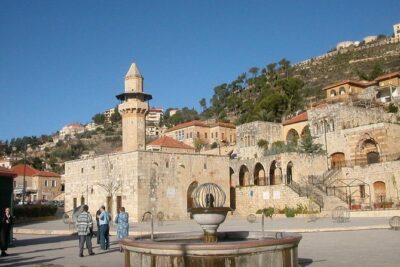
Guided small group to Cedars Reserve & Beiteddine w/lunch+entries
Read our review →
Small Group Tours to Beirut, Beiteddine & Deir el Qamar with lunch and all fees
Read our review →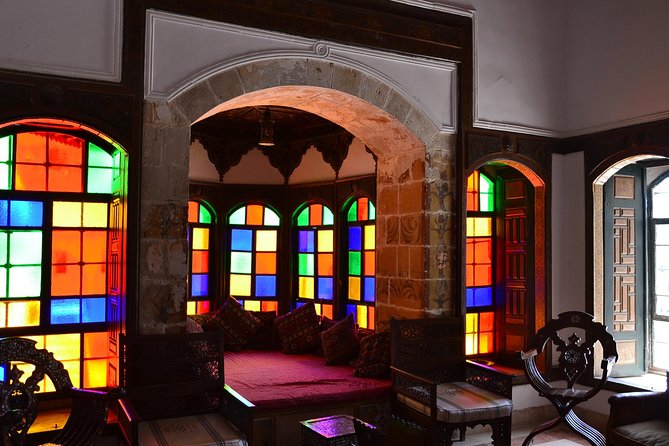
Deir el Qamar – Beiteddine Palace – Chouf Cedars From Beirut
Read our review →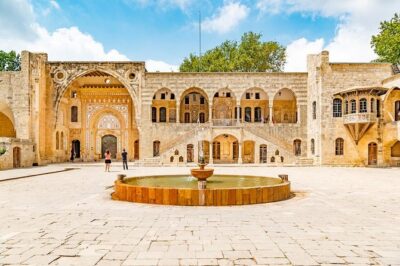
Guided Small-Group Tour to Beirut, Beiteddin & Deir elQamar
Read our review →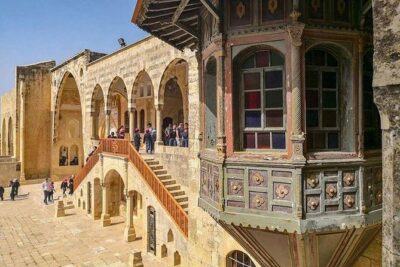
Deir Al-Qamar, Beiteddine Palace and Barouk Cedars Tour
Read our review →