
REVIEW · LEBANON
BEYOND BEIRUT
Beirut refuses to sit still. This private walk takes you past Roman remains, old churches, street art, and war-scarred buildings, then connects them to the city you see today. I like the focus on places beyond standard sightseeing, and I especially like that guide Joanna can shape the route around your interests. The main drawback is that six hours on foot can be demanding, especially in hot weather or on uneven streets.
You also get a useful human layer here. Joanna has been praised for explaining Lebanon’s political past and present without reducing Beirut to a museum of conflict. The tour is private for up to four people, so $110 per group can be strong value, though food and drinks cost extra and the published timing should be confirmed before you book.
In This Review
- Key points at a glance
- Beirut beyond the postcard
- Starting near Beirut Souks
- Roman baths and ancient fragments
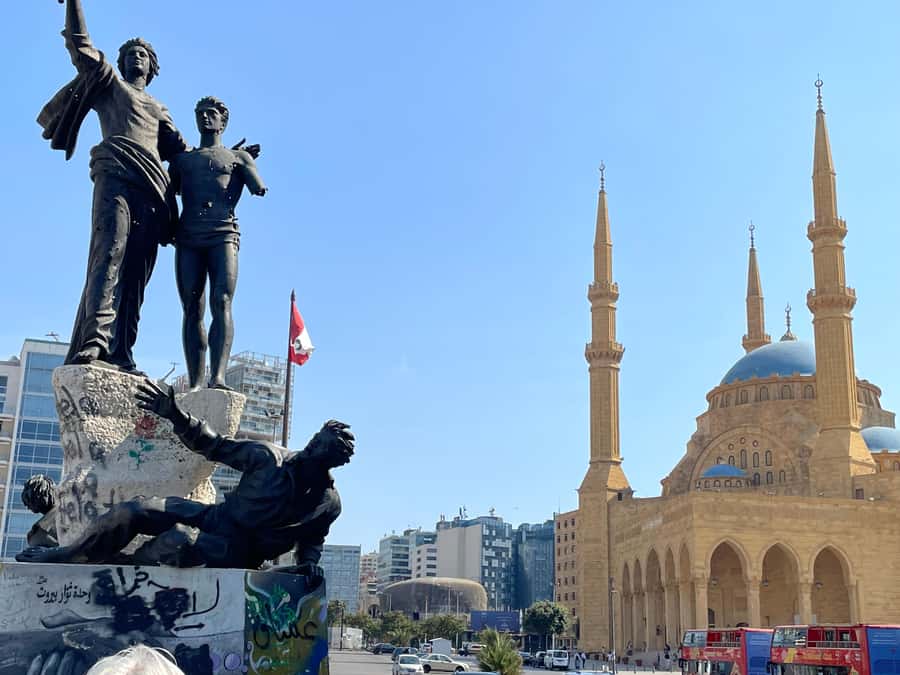
- Mohammad Al-Amin Mosque and central Beirut
- Small churches, Lebanese houses, and street art
- War traces and Lebanon’s recent past
- Gemmayzeh, cafés, and local eating
- Pigeon Rocks and the Mediterranean view
- What six hours feels like on foot
- Is $110 good value for four people?
- Who should book Beyond Beirut?
- Should you book this Beirut walking tour?
- FAQ
- How long does the tour last?
- How much does the experience cost?
- Is this a private tour?
- What languages are available?
- Is hotel pickup included?
- Are entrance fees included?
- Is food included?
- Is the tour suitable for wheelchair users?
Key points at a glance
- Roman details among modern buildings: Look for ancient baths, mosaics, and ruins appearing beside newer city structures.
- Joanna’s personal context: Her guidance covers Beirut’s past, Lebanon’s recent political story, local customs, and practical restaurant advice.
- A private route for up to four: The small format allows the walk to change around your interests, weather, and pace.
- More than famous landmarks: The route can include small churches, Lebanese houses, wall art, damaged buildings, cafés, and rebuilt districts.
- Food is not included: Bring water, snacks, and cash, or plan to buy lunch during the day.
- A real walking commitment: Comfortable shoes, a hat, and a charged phone are sensible essentials. The activity is not suitable for wheelchair users.
Beirut beyond the postcard
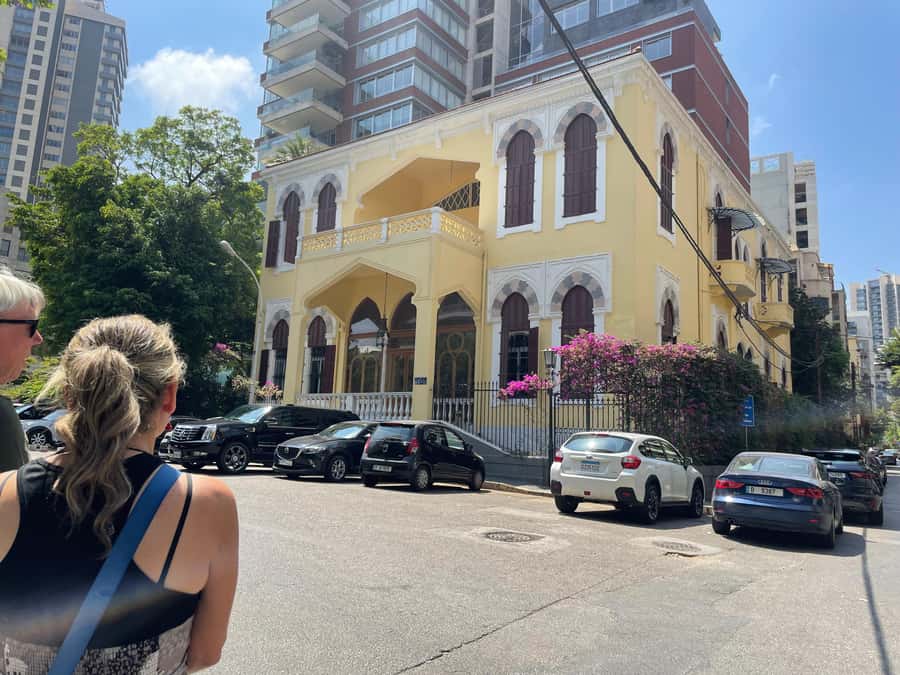
A normal city tour can leave you with a tidy list of sights and very little sense of how the place works. This walk takes a less polished route through Beirut, where an old façade may sit next to a glass tower and a colorful shopfront may share a street with a damaged building.
That contrast is the point. You are not only looking for grand monuments. You are watching how Beirut carries its ancient past, civil war scars, reconstruction, religion, art, cafés, and ordinary routines in the same few blocks.
I like this approach because Beirut rewards curiosity. The most interesting stop may be a small church, a surviving mosaic, or a building you would otherwise pass without a second glance. The guide’s explanation gives those places meaning without asking you to admire them as isolated objects.
This is also not a sanitized city walk. You may see neglected spaces, traces of conflict, and streets that feel rough around the edges. That can be valuable, but you should choose this tour because you want a candid look at Beirut, not because you expect a carefully staged sightseeing circuit.
Other trips worth a look in Beirut:
- Guided Small-Group Tour to Baalbek, Anjar and Ksara with Lunch
★ 5.0 · 511 reviews - Guided Small-Group Tour to Jeita, Harissa, Byblos with Lunch
★ 5.0 · 361 reviews - Paragliding Trip Over Lebanon – Jounieh Bay
★ 5.0 · 257 reviews
Starting near Beirut Souks
The listed meeting area includes Beirut Souks, with pickup available from your hotel lobby or accommodation at the scheduled time. The exact pickup arrangement should be checked when booking, since the information gives two pickup options but names Beirut Souks specifically.
Beirut Souks provide a useful starting point for understanding the city’s rebuilding. From there, the route can move toward central Beirut and areas where ancient remains, newer construction, and commercial streets meet.
The private format matters from the first minute. You are not trying to keep up with a large group or waiting for a dozen people to take photographs. With up to four people, you can ask more questions and tell Joanna what interests you: architecture, political history, religion, food, street art, or everyday life.
That flexibility is one of the tour’s strongest features. One outing was reshaped around a guest’s requests when the weather turned poor. That suggests a guide who treats the route as a conversation rather than a fixed script.
Roman baths and ancient fragments
Beirut’s old remains do not always appear in a grand archaeological setting. They can show up beside offices, roads, and modern buildings, which makes them more revealing than a single isolated ruin.
The Roman Baths are one of the major sights associated with this walk. Their value is not just their age. They help you see that central Beirut has been a place of public life for centuries, long before the present streets and towers took shape.
A separate stop may include a Roman mosaic tucked into a less obvious setting. This is the sort of detail that is difficult to find by wandering alone. You might pass the surrounding building without realizing that a small piece of ancient Beirut is nearby.
The route also includes Roman remains in civilian buildings and other fragments that are easy to miss. I would pay close attention here, because the experience depends on the explanation. Without context, a mosaic or broken wall can look like a minor object. With a guide, it becomes part of the city’s long chain of rebuilding and reuse.
Mohammad Al-Amin Mosque and central Beirut
The Mohammad Al-Amin Mosque is among the most recognizable sights included in the wider tour route. Its scale and position make it an important stop in central Beirut, especially when set against the surrounding streets and reconstructed areas.
This is also a good point to consider the tour’s balance. You do see major sights, but the experience does not stop at taking a photograph and moving on. Joanna’s role is to explain how the area changed, what was rebuilt, and how the modern city relates to the older one.
Downtown Beirut can look polished in places, but its appearance does not tell the full story. The walk connects the public spaces and landmark buildings with the less obvious signs of what came before. You may spend time looking at façades, street details, and nearby structures rather than simply following a landmark checklist.
If you want a quick introduction to Beirut’s headline sights, this route can provide it. If you want every major attraction entered and fully explored, ask about the exact schedule. The six-hour duration sounds generous, but a walking route with many stops can pass quickly.
A completely different kind of day out:
- Jeita Grotto,Harissa&Byblos Full-Day PRIVATE-CAR Trip from Beirut
★ 5.0 · 222 reviews - First Paragliding Club in Lebanon – Since 1992
★ 5.0 · 193 reviews - Anjar, Baalbek & Ksara Day Trip – With Lunch (4G on Board)
★ 4.5 · 181 reviews - Jeita Grotto – Harissa – Byblos Trip
★ 5.0 · 169 reviews
Small churches, Lebanese houses, and street art
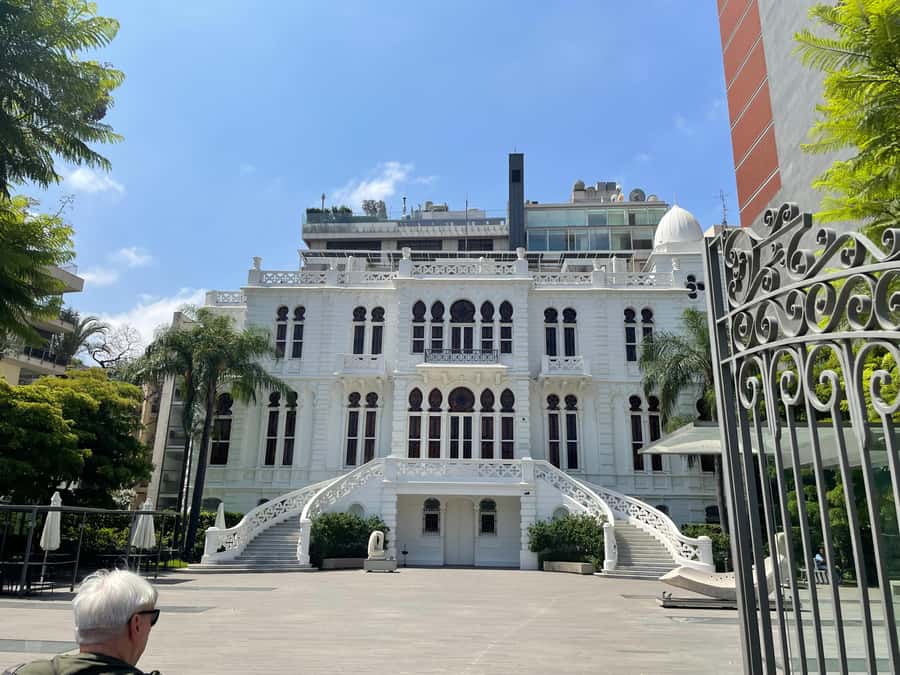
Some of the best parts of this experience are the smaller discoveries. The route has included small churches, traditional Lebanese houses, painted walls, and colorful storefronts that do not normally receive much attention in guidebooks.
These stops show a different side of Beirut’s identity. Religious buildings reveal the city’s mix of communities. Older houses point to building traditions that can disappear as neighborhoods change. Wall art adds a modern voice, sometimes playful and sometimes political.
I like this combination because it keeps the walk from becoming a procession of official monuments. You are given reasons to look upward, sideways, and behind the obvious street frontage. A guide who knows the city can point out details that are physically close to the main sights but mentally far from the usual route.
There is no guarantee that every small church, mosaic, painting, or house will appear on every departure. The itinerary is described as unconventional and adaptable, and the route may change with requests or conditions. Think of these examples as the kind of material the walk can include, not a guaranteed checklist.
War traces and Lebanon’s recent past
Beirut’s modern story includes years of war, political tension, rebuilding, and uncertainty. The tour gives this subject space, which is important if you want to understand why some streets feel unfinished or why damaged structures remain beside repaired ones.
Joanna has been praised for explaining the modern history of Lebanon and showing physical traces of conflict. That does not turn the walk into a formal war-history tour, but it adds needed context to what you see.
I appreciate that the experience appears to treat this subject as part of daily Beirut rather than as a dramatic backdrop. A damaged façade is not just a striking photograph. It may point to displacement, reconstruction, memory, or a political decision about what to preserve.
You should be prepared for serious material. This is not a cheerful sightseeing loop from one pretty view to the next. The tone may shift from architecture and food to difficult recent events. That range is one reason the walk can help you understand the city, but it may not suit someone looking only for light entertainment.
Gemmayzeh, cafés, and local eating
The route can also move into neighborhoods such as Gemmayzeh, where cafés, restaurants, older homes, and street life offer a more social view of Beirut.
Food is not included in the $110 price, but a meal may be arranged or suggested during the day. One particularly well-liked outing included lunch at a pleasant restaurant in Gemmayzeh and a stop at a traditional ice cream shop. Treat those as possible additions rather than guaranteed inclusions, and carry cash for anything you buy.
This part of the walk adds useful balance. Beirut is not only ruins, political history, and damaged buildings. It is also a place where people meet, eat, drink coffee, and keep local habits alive in changing neighborhoods.
The guide’s restaurant and sightseeing recommendations are another practical benefit. If this is your first time in Beirut, you can use the tour to ask what to do later, where to eat, and which parts of Lebanon deserve extra time. I would bring a short list of questions, since a private walk gives you room to make the advice personal.
Pigeon Rocks and the Mediterranean view
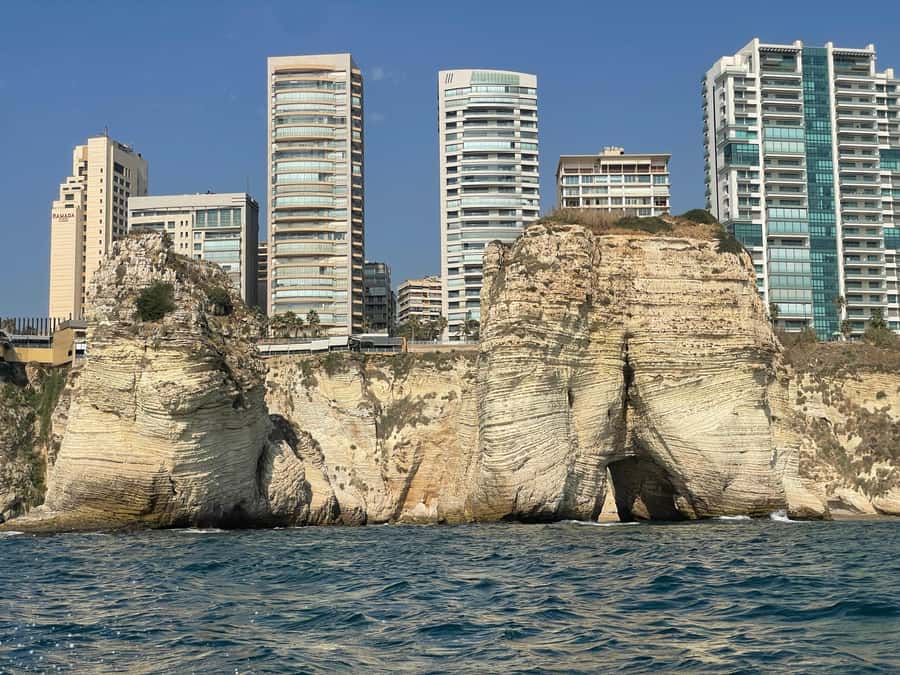
Pigeon Rocks in Raouche provides one of the route’s biggest changes of scene. After central streets, old structures, and urban details, the rocks open the view toward the Mediterranean.
This is a strong photo stop and a useful breathing space during a long day on foot. The sea view also reminds you that Beirut is a coastal city, not only a dense historic center.
The exact place and timing should be confirmed, since the description presents a citywide route and the day’s order may vary. If Pigeon Rocks is important to you, mention it when arranging the tour. A private guide has more room to respond than a large scheduled group, but the day still has a limited number of hours.
What six hours feels like on foot
The stated duration is six hours. One itinerary detail also shows 12 hours, which conflicts with the main description, so I would confirm the starting time and expected end time before payment.
For a six-hour walking day, wear shoes that you already trust. Bring water, food or snacks, a hat, and a charged smartphone. Cash is useful for food, drinks, and small purchases. A camera is worthwhile, but keep it secondary to listening, especially during stops about conflict and politics.
The walk includes breaks, photo stops, visits, guided sightseeing, and scenic views along the way. Even so, you should expect a full outing rather than a gentle stroll. The activity is not suitable for wheelchair users, and the information does not promise a fully step-free route.
Weather can affect the experience. A previous outing was adjusted when conditions were poor, which is reassuring, but you should still dress for the forecast and ask how the route will change if needed.
Is $110 good value for four people?
The price is $110 per private group of up to four people. At full capacity, that works out to $27.50 per person for six hours, before food and drinks. For a private guide, included entrances, hotel or accommodation pickup, and a route that can respond to your interests, that is a reasonable price.
For one person or a couple, the per-person cost is higher. The value then depends on how much you want personal attention and local interpretation. A basic group walk may cost less, but it will not offer the same ability to adjust the day or ask questions throughout.
All entrances within the tour are included. Food and beverages are not, so budget separately for lunch, ice cream, water, or café stops. Since the tour can include restaurant suggestions rather than a prepaid meal, you keep control of your spending.
Free cancellation is available up to 24 hours before the activity for a full refund, and you can reserve now and pay later. Those terms help if your Lebanon plans are still moving, but confirm the exact start time and pickup point before you finalize the booking.
Who should book Beyond Beirut?
I would choose this tour if you want Beirut explained through its odd corners, not just its famous buildings. It suits first-time visitors who want a broad introduction, as well as repeat visitors who have already seen the central sights and want more local texture.
It is especially useful for:
- Couples, families, or friends who can fill a private group of up to four
- People interested in architecture, religion, street art, and political history
- Visitors who want restaurant and sightseeing suggestions for the rest of their stay
- Anyone who prefers conversation and flexible pacing over a fixed group schedule
- Photographers who enjoy contrasts between old buildings, modern construction, wall art, and sea views
I would think twice if you dislike long walks, hot weather, difficult surfaces, or serious discussions about conflict. I would also confirm the route if one particular attraction matters most, since the day is adaptable and the listed timing is inconsistent.
The tour is offered in English, French, Portuguese, and Arabic. That range makes it easier to choose the guide language that lets you ask detailed questions and follow complex historical explanations.
Should you book this Beirut walking tour?
Yes, if your idea of sightseeing includes the parts of a city that do not fit neatly on a postcard. Beyond Beirut offers a private six-hour walk with major landmarks, ancient remains, small religious buildings, street art, local neighborhoods, sea views, and an honest look at Lebanon’s recent past.
Its strongest feature is Joanna’s guidance. The praise centers on her warmth, preparation, and ability to explain both Beirut’s older story and its current political setting. The walk can also be changed around your requests, which gives it more value than a standard route.
Book it for access to Beirut’s overlooked details and for the chance to ask direct questions. Before you go, confirm the six-hour schedule, pickup location, and whether stops such as Gemmayzeh or Pigeon Rocks fit your preferred route.
FAQ
How long does the tour last?
The main activity information gives a duration of six hours. One itinerary detail lists 12 hours, so confirm the expected start and finish times before booking.
How much does the experience cost?
The price is $110 per private group of up to four people.
Is this a private tour?
Yes. The group type is private, with space for up to four people.
What languages are available?
The tour is offered in English, French, Portuguese, and Arabic.
Is hotel pickup included?
Pickup is included. You should wait in your hotel lobby or at your accommodation at the scheduled pickup time. Beirut Souks is also listed as a pickup location.
Are entrance fees included?
Yes. All entrances within the tour are included.
Is food included?
No. Food and beverages are not included. You should bring food and drinks or carry cash for purchases during the day.
Is the tour suitable for wheelchair users?
No. The activity is listed as unsuitable for wheelchair users.
Just added in Beirut
- Wine Tasting Tour★ 5.0 · 2 reviews
- Lebanon tours vip jeitta byblos beirut we charge per vechile not per person.★ 5.0 · 1 review
- Lebanon’s Treasures: Jeita Grotto and Harissa Private Tour★ 5.0 · 2 reviews
- Small Group Tour to Baalbek, Anjar & Ksara with Hotel pickup★ 5.0 · 2 reviews
- Journey Through Time: A Private Tour of Tripoli and Byblos★ 5.0 · 1 review
- Guided Small-Group Tour to Baalbek, Cedars & Qozhaya with Lunch★ 5.0 · 2 reviews
- Small-Group Tour with Lunch to Sidon, Tyre & Maghdouche★ 5.0 · 2 reviews
- Small-Group Tour Qadisha Valley, Becharre and Cedars with Lunch and Tickets★ 5.0 · 1 review