REVIEW · BEITEDDINE AND DEIR EL QAMAR
Beirut to Beiteddine: Private Journey Through Palaces & Villages
Lebanon’s mountain past comes alive here. This private day trip from Beirut links Beiteddine Palace, Moussa Castle, and Deir el Kamar without the trouble of arranging transport between them. I like the hotel pickup and private air-conditioned vehicle, and I like the mix of grand architecture, village streets, religious sites, and one very unusual homemade castle.
The main drawback is that admission tickets and lunch cost extra, so the $70 price is not the full out-of-pocket total. The schedule also gives limited time at each stop, which suits you if you want a broad introduction rather than a slow, detailed visit to every site.
In This Review
- Five things to know before you book
- Why this Beirut day trip works
- Beiteddine Palace, 90 minutes of royal scale
- Moussa Castle, 30 minutes of personal obsession
- Deir el Kamar, a village with many layers
- Fakhreddine’s Mosque and the octagonal minaret
- Saydet el Talle, a church on an older sacred site
- What the private vehicle changes
- Is $70 a fair price?
- Who should choose this outing?
- Should you book Beirut to Beiteddine?
- FAQ
- What time does the tour start?
- How long does the experience last?
- Is hotel pickup included?
- Is transportation private?
- Is this a group tour?
- Are entrance tickets included?
- Is lunch included?
- Can I cancel for a full refund?
Five things to know before you book
- Beiteddine Palace is the main event: You get about 90 minutes at the former residence of Emir Bashir Chehab II, with palace rooms, fountains, and the museum area.
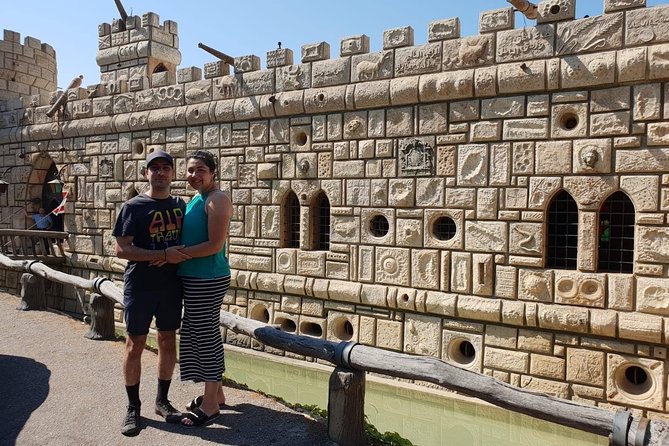
- Moussa Castle is unlike the other stops: This hand-built hilltop castle grew from Moussa Al Maamari’s youthful dream of impressing a girl he loved.
- Deir el Kamar adds real village character: The old town brings together churches, a mosque, a historic square, and a long record of religious coexistence.
- Private transport keeps the day easy: Hotel pickup and drop-off from Beirut remove the need to manage mountain roads or public transport.
- The price is best for a small group: At $70 per person, a private vehicle becomes more attractive when two or more people share the outing.
- Plan for extra costs: Entrance tickets are not included, and lunch is also your responsibility.
Why this Beirut day trip works
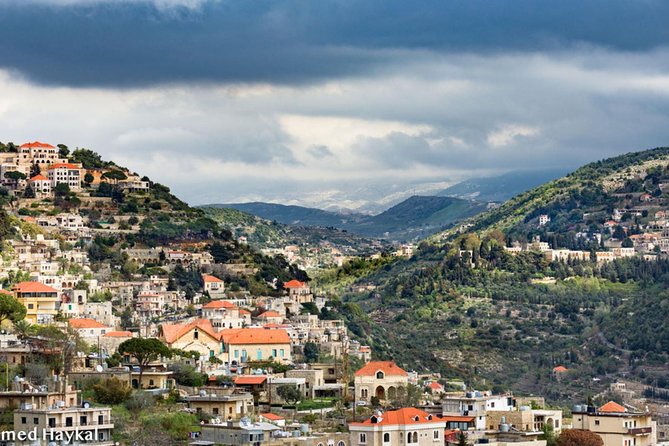
The Chouf region is close enough to visit from Beirut in one long day, but far enough to feel like a change of setting. Instead of spending the day in a car with a single distant attraction, you move through three different kinds of places: a princely palace, a personal architectural oddity, and a historic village.
That variety is the best reason to choose this outing. You are not simply touring another monument. You are seeing how power, faith, local ambition, and village life have shaped Mount Lebanon.
The private format matters. Your group travels with its own driver and tour leader, and pickup begins at your Beirut hotel at 9:00 a.m. You do not need to find a meeting point in a busy city or work around a large group’s pace. Hotel drop-off is included at the end, too.
The strongest practical advantage is dependability. Beirut Daily Tours has a useful habit of answering questions before the trip and helping clarify what can and cannot be arranged. That matters in Lebanon, where a clear plan and reliable communication can save you a good deal of stress.
More of Beiteddine and the Chouf:
- Guided small group to Cedars Reserve & Beiteddine w/lunch+entries
★ 5.0 · 12 reviews - Beirut, Beiteddine & DeirElQamar Day Trip-With Lunch(4G on Board)
★ 4.5 · 12 reviews - Cedars Shouf & Beiteddine w/pick-up, guide, entries+lunch
★ 4.7 · 12 reviews
Beiteddine Palace, 90 minutes of royal scale
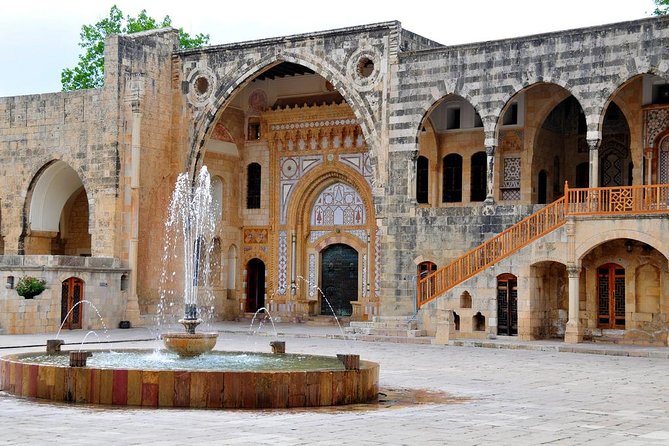
Beiteddine Palace is the anchor of the day. Emir Bashir Chehab II began building it in 1788, and work continued until 1818. Its name means House of Faith, though the building feels more like a carefully staged expression of political power than a simple residence.
Give yourself time to look past the famous name. The appeal is in the details: elaborate interior rooms, courtyards, and fountains that bring movement and sound to the stone setting. The palace also houses the Beiteddine Palace Museum and hosts the annual Beiteddine Festival.
Its later history adds another layer. After 1840, the Ottoman administration used the palace as a government building. During the French Mandate, it served as a local administrative office. In 1943, it became the official summer residence of the Lebanese president.
The palace suffered heavy damage during the Lebanese Civil War. Some parts are open to the public, while other areas remain part of the president’s summer residence. That means you should not expect access to every room or corner of the complex. The public areas still offer enough to make the visit worthwhile, but the experience is shaped by what is open on the day.
Admission is not included, so keep that expense in mind before you arrive. The 90-minute stop is long enough for a first visit, but not so long that you can study every architectural feature at leisure. If palaces are your main interest, you may wish the schedule allowed more time here.
Moussa Castle, 30 minutes of personal obsession
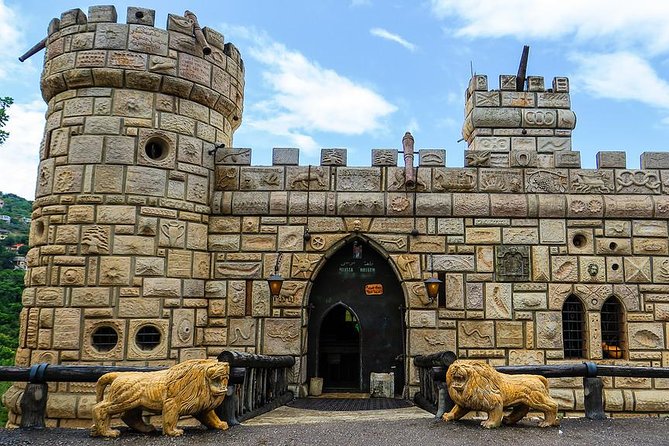
Moussa Castle breaks up the formal grandeur of Beiteddine with a story that is much more personal. The castle sits on a hill between Beiteddine and Deir el Kamar, and its entire character comes from the determination of Moussa Al Maamari.
Moussa was born on July 27, 1931. At age 14, he began dreaming of building a castle to impress a local girl he loved. The result is a structure shaped by one man’s beliefs, ideas, and persistence, with those ideas engraved on its stones.
You get about 30 minutes here. That is enough to see the main structure and grasp the unusual story behind it, though the short stop will feel tight if you want to inspect everything closely. Admission is not included.
I would not treat Moussa Castle as a minor photo stop. Its value comes from the human story. Beiteddine represents an emir and a formal seat of authority. Moussa Castle represents one person refusing to let an old dream stay imaginary.
The site also works well for mixed-age groups. The tale is easy for young visitors to understand, while adults can appreciate the patience and labor behind a hand-built castle. One French-language account describes the visit as interesting for adults, teenagers, and younger children alike, and that broad appeal makes sense.
Deir el Kamar, a village with many layers
Deir el Kamar means Monastery of the Moon. The village lies in the Chouf District of Mount Lebanon, about five kilometers from Beiteddine Palace. Its compact setting gives the day a more human scale after the palace’s formal rooms and courtyards.
The town was the first village in Lebanon to have a municipality, established in 1864. It has also been the birthplace of artists, writers, and politicians. More important for a short visit, Deir el Kamar shows how several religious communities once lived in the same town. A mosque, synagogue, and Christian churches all formed part of its religious life.
That past was not always peaceful. In 1860, Deir el Kamar was destroyed during fighting between Druze and Christians, and the town was set ablaze. Napoleon III later sent a French contingent to help rebuild it.
You get about 30 minutes at the municipal area, with no admission charge. This is a quick orientation rather than a full village walk. If you want time for a long coffee, careful shopping, or a relaxed look at every lane, the schedule may feel rushed.
Still, the stop helps connect the other sites. You see the palace as part of the Chouf region rather than an isolated attraction. You also get a glimpse of a town that carries both religious variety and painful memories in a very small area.
A completely different kind of day out:
- Guided Small-Group Tour to Baalbek, Anjar and Ksara with Lunch
★ 5.0 · 511 reviews - Guided Small-Group Tour to Jeita, Harissa, Byblos with Lunch
★ 5.0 · 361 reviews - Paragliding Trip Over Lebanon – Jounieh Bay
★ 5.0 · 257 reviews - Jeita Grotto,Harissa&Byblos Full-Day PRIVATE-CAR Trip from Beirut
★ 5.0 · 222 reviews
Fakhreddine’s Mosque and the octagonal minaret
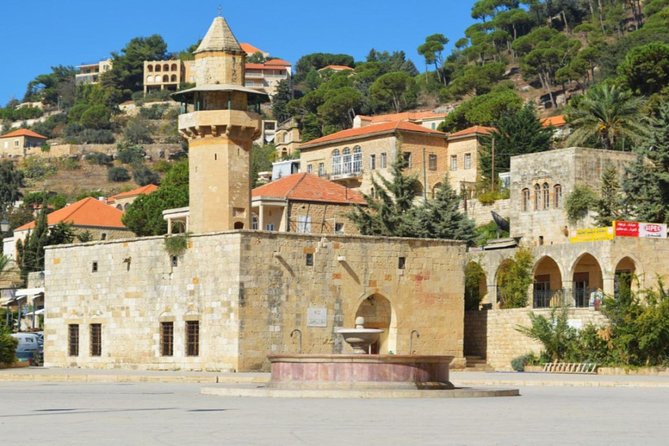
The visit to Fakhreddine’s Mosque lasts about 15 minutes and is free. That may sound brief, but the building is close to the other Deir el Kamar sights, so you can get a clear look without a long detour.
The mosque was built in 1493 and restored in the sixteenth century by Fakhreddine I. Its octagonal minaret gives it a distinctive profile, and it is described as the oldest mosque in Mount Lebanon.
This is a stop for looking and context rather than a major indoor tour. The age of the mosque matters because it places Deir el Kamar’s story well before the palace and before the modern municipality. You can see how the village’s religious history reaches back through several periods of Lebanese rule.
Since admission is free, there is no ticket decision to make here. The practical point is to stay aware of the 15-minute schedule. Use the time to notice the minaret and setting, then let the tour leader guide you to the next site.
Saydet el Talle, a church on an older sacred site
The Church of Saidet et Tallé, also called Our Lady of the Hill, is another 15-minute stop in Deir el Kamar. It is one of the town’s key religious and historic places and dates to the fifteenth century.
The site is connected to an older Phoenician temple dedicated to Astarte. A church was built there by Monk Nicolas Smisaati, and the earlier structure was later destroyed by an earthquake in 859. The layers of belief and rebuilding are what make this brief stop interesting.
A local legend tells of a Druze emir in Baakline who saw a light coming from the hill at Dar el Kamar. He ordered his soldiers to dig there the next morning. The story says he instructed them to build a mosque if they found an Islamic symbol and a church if they found a Christian one.
You should take the story as tradition rather than a simple historical record, but it helps explain the site’s place in local memory. The church is free to visit, and the short stop gives you a chance to see how sacred places can gather several eras and faiths in one location.
What the private vehicle changes
For this route, private transport is more than a comfort feature. You are leaving Beirut, heading toward mountain towns, and visiting several sites with different opening and access arrangements. Having a driver handle the road lets you focus on the views and the day’s sequence.
The vehicle is air-conditioned, and hotel pickup and drop-off are included. That makes the tour a good fit if you prefer not to rent a car or if you want to avoid sorting out regional transportation on your own.
A private tour also gives your group a little breathing room. Only your party participates, so you are not tied to strangers who want a different amount of time at the palace or castle. The trade-off is that the tour is still built around a set eight-hour program. Private does not mean every stop can expand without affecting the rest of the day.
The tour includes a tour leader, which is useful at sites where a few historical facts make a large difference. Ask about the palace’s changing roles, the castle’s builder, and the religious history of Deir el Kamar. The supplied information does not identify the leader by name, so do not book expecting a particular guide.
Is $70 a fair price?
At $70 per person, this is a reasonable price if you value convenience and are traveling with at least one companion. You are paying for roughly eight hours, private transportation, hotel pickup and return, a driver, and a tour leader.
The value becomes less clear if you compare it only with entrance fees. Tickets are not included, and lunch is not included, so you will pay more than the advertised amount during the day. The exact ticket prices are not provided here, so you should confirm those costs before booking if your budget is tight.
For a solo visitor, $70 can still be worthwhile because arranging a private vehicle and driver independently may be difficult. For a couple, family, or small group, the private format makes more financial sense, especially if group discounts apply.
I also like the free cancellation condition. You can cancel for a full refund up to 24 hours before the 9:00 a.m. start time. Changes or cancellations inside that window are not accepted for a refund, so keep the local cut-off time in mind.
Who should choose this outing?
I would choose this tour if you want to see several important Chouf sights in one day without handling transport yourself. It suits first-time visitors to Lebanon who want a broad introduction to mountain architecture, village life, and religious history.
Families may appreciate Moussa Castle’s straightforward story and the variety of stops. Couples and small groups will likely enjoy the privacy of the vehicle and the chance to set a comfortable pace within the planned schedule.
This is less suitable if you want a slow day spent in one town. The 15-minute religious-site visits and 30-minute village and castle stops leave little room for wandering. It is also not the best match if your priority is a long lunch or extensive time inside Beiteddine Palace.
Most travelers can participate, according to the supplied tour information, but no detailed accessibility information is provided. If you have mobility concerns, ask the operator about the vehicle, walking surfaces, and access at each historic site before booking.
Should you book Beirut to Beiteddine?
Book it if you want variety, private transport, and a clear full-day plan from Beirut. Beiteddine gives you the grand architectural centerpiece, Moussa Castle provides the memorable oddball story, and Deir el Kamar adds a village setting with religious and political history.
Before you commit, budget for palace and castle admission and lunch. If those extras are acceptable, the tour offers solid value, especially for two or more people sharing a private outing.
FAQ
What time does the tour start?
The tour starts at 9:00 a.m.
How long does the experience last?
The tour lasts approximately eight hours.
Is hotel pickup included?
Yes. Pickup and drop-off from your Beirut hotel are included.
Is transportation private?
Yes. Your group travels in a comfortable private, air-conditioned vehicle with a driver.
Is this a group tour?
No. This is a private activity, and only your group participates.
Are entrance tickets included?
No. Admission tickets for Beiteddine Palace and Moussa Castle are not included. The Deir el Kamar stops listed here have free admission.
Is lunch included?
No. Lunch is not included in the tour price.
Can I cancel for a full refund?
Yes. You can cancel at least 24 hours before the experience starts for a full refund. Cancellations or changes made less than 24 hours before the start time are not accepted for a refund.
Just added in Beirut
- RZR XP4 (4 Seat Buggy) Full Day Off-Road Scenic Adventures★ 5.0 · 2 reviews
- Sidon, Magdouche and Tyre★ 5.0 · 1 review
- Small-Group Tour to Beirut, Beiteddine and Deir El Qamar with Lunch and Tickets★ 5.0 · 1 review
- Full-Day Private Tour to Baalbek, Anjar And Ksara From Beirut★ 5.0 · 2 reviews
- Full-Day Private Tour to Beiteddine, Deir El Qamar, Mousa Palace★ 5.0 · 2 reviews
- Exploring the Qadisha Valley, Cedars of God, and Baalbek Temples★ 5.0 · 1 review
- Unlocking the Wonders of Lebanon: Journey Through Qadisha Valley★ 5.0 · 2 reviews
- Private Tour – Hamatoura Monastery★ 5.0 · 1 review
Beiteddine and Deir el Qamar
Cedars Shouf & Beiteddine w/pick-up, guide, entries+lunch
Read our review →
Beirut, Beiteddine & DeirElQamar Day Trip-With Lunch(4G on Board)
Read our review →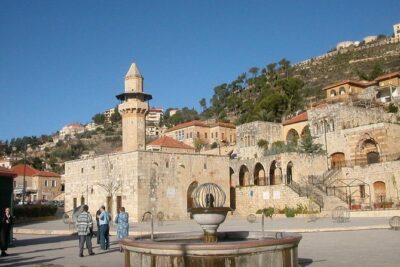
Guided small group to Cedars Reserve & Beiteddine w/lunch+entries
Read our review →
Small Group Tours to Beirut, Beiteddine & Deir el Qamar with lunch and all fees
Read our review →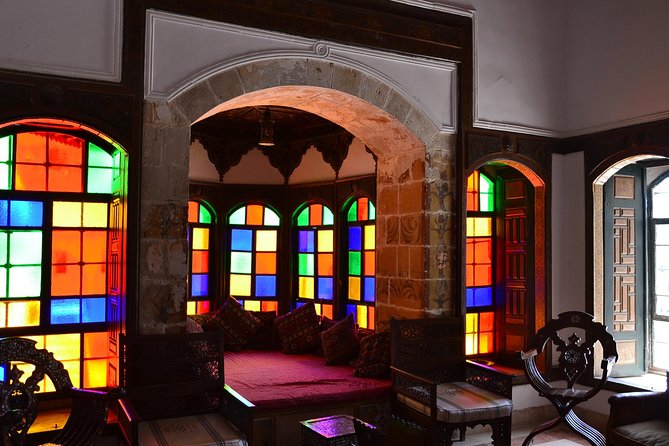
Deir el Qamar – Beiteddine Palace – Chouf Cedars From Beirut
Read our review →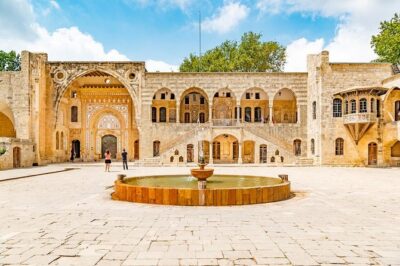
Guided Small-Group Tour to Beirut, Beiteddin & Deir elQamar
Read our review →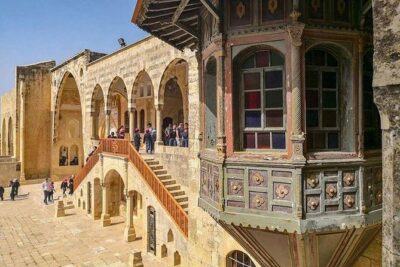
Deir Al-Qamar, Beiteddine Palace and Barouk Cedars Tour
Read our review →