
REVIEW · LEBANON
6 Nights Lebanon Holiday Vacation
Lebanon rewards curious eyes. This $810, six-night package gives you a smart way to see a remarkable amount of the country without changing hotels every night. I like the four small-group day tours, and I like the mix of Roman ruins, Phoenician ports, mountain monasteries, cedars, and a winery. The main tradeoff is simple: several touring days are long, with plenty of time on the road.
You stay in Beirut for the whole trip, which keeps packing to a minimum and gives you a familiar base. I also like the free day in Beirut, plus airport transfers at both ends. Dinner and personal expenses are not included, so you will need to budget for evening meals and shopping. Guides Hassan and Anwar received special thanks for making the experience memorable, and the tour’s two published ratings praise the lunches and accommodation as well as the sightseeing.
In This Review
- Key points to know before booking
- Why this Beirut-based format works
- Day 1: A simple arrival in Beirut
- Day 2: Caves, cable cars, and ancient Byblos
- Day 3: Baalbek’s colossal temples and the Bekaa Valley
- Day 4: Cedars, Bcharre, and mountain monasteries
- Day 5: Phoenician ports from Sidon to Tyre
- Day 6: Your own Beirut day
- Day 7: A straightforward departure
- What the $810 price really covers
- Who will enjoy this Lebanon holiday most
- Should you book the 6-night Lebanon package?
- FAQ
- How long is the Lebanon holiday package?
- Where does the tour begin?
- Are airport transfers included?
- How many organized touring days are included?
- What meals are included?
- What is the maximum group size?
- Which UNESCO World Heritage Sites are included?
Key points to know before booking
- Five UNESCO World Heritage Sites: Visit Byblos, Baalbek, Anjar, the Qadisha Valley area, and Tyre during the four touring days.
- One Beirut hotel for six nights: You avoid repeated check-ins and use the capital as your base for every excursion.
- Small groups capped at 15 people: This is a more personal format than a large coach tour, though the exact group size can vary.
- Four full sightseeing days with lunch: Meals are covered during the organized day trips, while dinners remain your responsibility.
- A free Beirut day: Use it for shopping, city exploring, or a quiet hotel day before departure.
- Airport transfers are included: A driver meets you on arrival and returns you to Beirut-Rafic Hariri International Airport before your flight.
Why this Beirut-based format works
Lebanon is compact, but its roads and mountain routes can make independent sightseeing awkward. This trip solves much of that problem by putting you in one Beirut hotel and sending you out on organized day tours. You get the ease of a package without being locked into a single large coach for the entire week.
The format also gives you some breathing room. The four touring days cover the major sights, while Day 6 is yours. You can shop, explore Beirut, or simply rest after several early starts and long drives. That balance is valuable because the itinerary is ambitious.
The $810 price includes six hotel nights, six breakfasts, four lunches, four small-group excursions, hotel transfers, and round-trip airport transfers. That is a fair package price if you plan to visit the major sites anyway. It would cost time and planning to arrange the same collection of destinations separately.
Still, do not read the price as an all-inclusive holiday. Dinners, drinks, souvenirs, and other personal costs are extra. Hotel grades are available to suit different budgets, but the specific hotel names and room standards are not provided, so confirm the grade before paying.
Other trips worth a look in Beirut:
- Guided Small-Group Tour to Baalbek, Anjar and Ksara with Lunch
★ 5.0 · 511 reviews - Guided Small-Group Tour to Jeita, Harissa, Byblos with Lunch
★ 5.0 · 361 reviews - Paragliding Trip Over Lebanon – Jounieh Bay
★ 5.0 · 257 reviews
Day 1: A simple arrival in Beirut
Your first day is intentionally light. A driver meets you at Beirut-Rafic Hariri International Airport and takes you to your Beirut hotel. The listed transfer times are short, about 15 minutes from the airport and roughly 20 minutes within Beirut, though actual road conditions can affect the ride.
There is no sightseeing scheduled, which is sensible after a flight. You can check in, rest, and prepare for the first full tour. Since all six nights are in Beirut, you do not need to unpack again during the week.
The airport transfer is one of those small inclusions that matters more than it sounds. Arriving in a new country is easier when you know someone is waiting and the hotel transfer is already arranged.
Day 2: Caves, cable cars, and ancient Byblos
The first touring day heads north from Beirut and combines several very different sights. It begins at Jeita Grotto, a limestone cave system with upper and lower sections formed over millions of years. The upper cave is known for stalactites, stalagmites, columns, curtains, and other mineral formations, while the lower gallery includes an underground river and lake.
You have about 90 minutes at Jeita, and admission is included. The caves are a strong opening stop because they show Lebanon’s natural side before the trip turns to religious sites and ancient cities. The route includes walking, so comfortable shoes are useful.
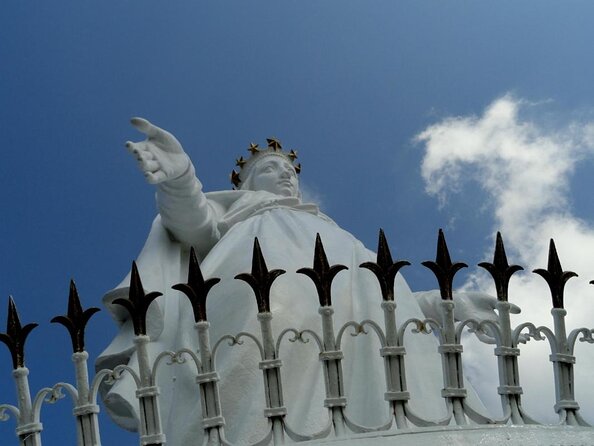
Next comes Harissa, home to the Shrine of Our Lady of Lebanon. A large bronze statue of the Virgin Mary overlooks the Bay of Jounieh, with its arms reaching toward Beirut. The shrine is an important Christian pilgrimage site and offers one of the trip’s best broad views.
The nearby Churches of Harissa add context to the stop. You see the large cathedral beside the statue, along with churches connected to different Christian traditions, including the Byzantine-style Melkite Greek Catholic Basilica of St. Paul. The church visits are brief, so this is more of a scenic and cultural stop than a detailed religious tour.
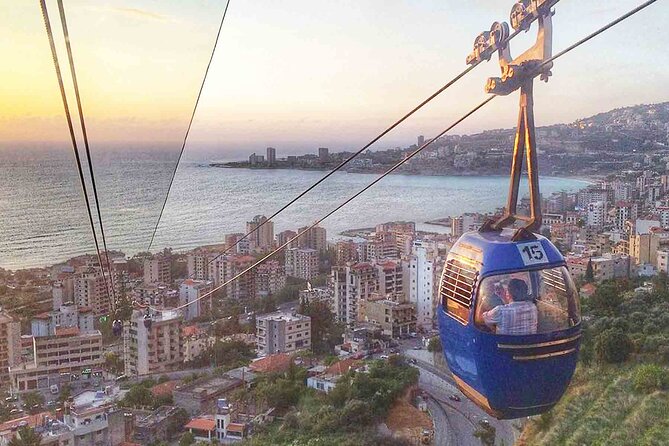
The Telepherique Harissa cable car is included and takes about 20 minutes. It carries you above the pine-covered slopes from Jounieh toward the shrine, reaching about 650 meters. The ride adds a welcome change from road transport and gives you a clear view over Jounieh and its bay.
The afternoon belongs to Byblos, one of the oldest Phoenician cities. Its importance is tied to early Mediterranean trade and to the spread of the Phoenician alphabet. You get roughly two hours in the town, followed by an included visit to Byblos Castle.
The Crusader castle dates from the 12th century and sits within an archaeological area containing remains of the Temple of Baalat Gebal and the Temple of the Obelisks. Climb the keep for a useful view over the ruins and toward the sea. A small museum and information panels help explain the site.
The old souk and port are short stops, each about 10 minutes. The souk is good for a stroll over old cobbled streets and a look at souvenir shops. Byblos Port is tied to the city’s ancient timber trade. These stops are brief, so you should not expect a long independent shopping period.
This is a full day with many changes of scene. I like that variety, but you may find the pace brisk if you prefer to linger at archaeological sites.
Day 3: Baalbek’s colossal temples and the Bekaa Valley
Day 3 is the big Roman archaeology day. Baalbek is one of Lebanon’s essential sights and the reason many history-minded people choose this package. The sanctuary was known as Heliopolis during the Hellenistic and Roman periods, and its enormous temples were built over more than two centuries.
The Temple of Jupiter is the dramatic centerpiece. Its columns were about 30 meters high, and the temple sat on a platform built with giant foundation stones. Even in ruined form, the scale is hard to grasp from photographs. You need to walk around it to understand how much construction went into the complex.
The Temple of Bacchus is smaller than Jupiter’s temple, but it is exceptionally well preserved and richly decorated. It dates in its finished form to around the second century CE. The Temple of Venus has a different shape, with a circular shrine on a horseshoe-shaped platform and decorative references to doves and shells.
The schedule gives you several hours around Baalbek, including the main temple complex, individual temples, and the Stone of the Pregnant Woman. The latter is a huge worked Roman block, one of the largest ancient monoliths ever quarried. It offers a useful reminder that the engineering challenge here was as astonishing as the religious purpose.
The Mosque of Sayeda Khawla adds a modern religious dimension to the day. It is built at the site believed to contain the tomb of Sayyida Khawla, the daughter of Imam al-Hussein. The itinerary does not list a set duration for this stop, so the time available may depend on the group and the day’s schedule.
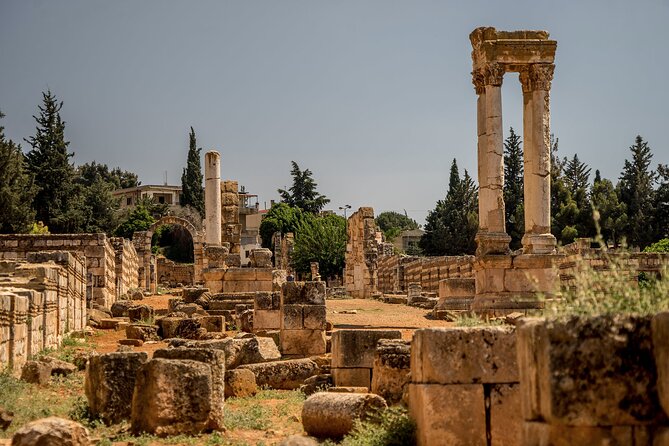
After Baalbek, you visit Anjar, an Umayyad city founded by Caliph Walid I in the early eighth century. Its regular street plan feels different from Baalbek’s monumental Roman sanctuary. The ruins include a palace, mosque, baths, arcades, and other remains, with some Roman architectural features reused in the later city.
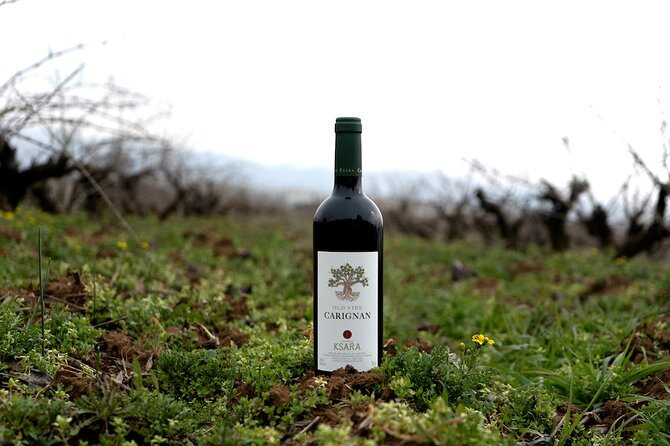
The day ends at Château Ksara, a winery founded by Jesuit priests in 1857. Its place in Lebanon’s wine story gives the stop more meaning than a simple tasting visit. Admission is included, and you have about an hour there. The exact tasting details are not specified, so ask what is included on the day.
Lunch is included during this tour. With Baalbek, Anjar, and the winery in one day, this is one of the most rewarding and most demanding outings. Expect a long day and bring water, sun protection, and shoes suited to uneven stone surfaces.
A completely different kind of day out:
- Jeita Grotto,Harissa&Byblos Full-Day PRIVATE-CAR Trip from Beirut
★ 5.0 · 222 reviews - First Paragliding Club in Lebanon – Since 1992
★ 5.0 · 193 reviews - Anjar, Baalbek & Ksara Day Trip – With Lunch (4G on Board)
★ 4.5 · 181 reviews - Jeita Grotto – Harissa – Byblos Trip
★ 5.0 · 169 reviews
Day 4: Cedars, Bcharre, and mountain monasteries
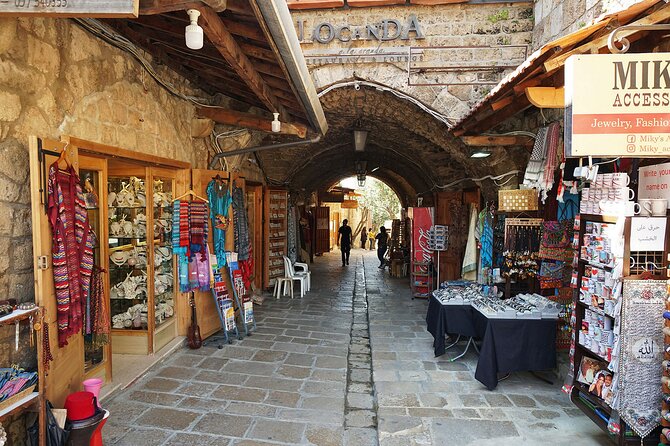
The fourth day heads into northern Lebanon and the Qadisha Valley area. This is the day for mountain scenery, Christian monastic sites, and the famous cedar trees on the national flag.
You begin around Greater Bcharre, a town associated with the Cedars of God and with the Lebanese writer and artist Kahlil Gibran. Bcharre is also known for its many churches and its long connection with skiing. The town visit lasts about 30 minutes, so it is a quick introduction rather than a full exploration.
The Gibran Museum follows. It occupies the former Monastery of Mar Sarkis and contains 440 original paintings and drawings, along with furniture, belongings, manuscripts, and Gibran’s tomb. The scheduled 30 minutes will let you see the main displays, but anyone deeply interested in his work may wish for more time.
The Cedars of God are the natural highlight. The remaining grove contains 375 trees and represents one of the last surviving pieces of Lebanon’s ancient cedar forests. Cedar wood was prized for major buildings in the ancient world, and the tree appears repeatedly in the Bible. Here, the cedar is not just scenery. It is a national symbol and a direct link to Lebanon’s past.
The final major stop is Deir Qozhaya, the Monastery of Saint Anthony the Great. The monastery sits about 950 meters above sea level in the Valley of Qozhaya, surrounded by pine and oak-covered hills. Its religious tradition reaches back to the early centuries of Christianity, with surviving remains linked to the seventh century.
The broader Qadisha Valley is associated with early Christian monastic life, caves, monasteries, and cultivated terraces. This itinerary gives you selected sites rather than a long valley hike, which is important to understand. You are seeing the area by road and on short visits, not completing a demanding walking route through the valley.
The mountain day can be cooler than Beirut, depending on conditions, and the roads may be winding. Lunch is included, as it is on the other organized tour days.
Day 5: Phoenician ports from Sidon to Tyre
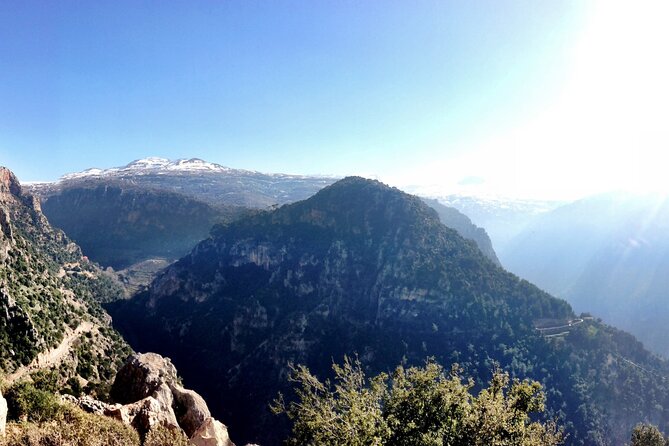
The final touring day follows the southern coast, linking Sidon, Maghdoucheh, and Tyre. It is a strong day for urban history, port culture, Crusader remains, and Roman archaeology.
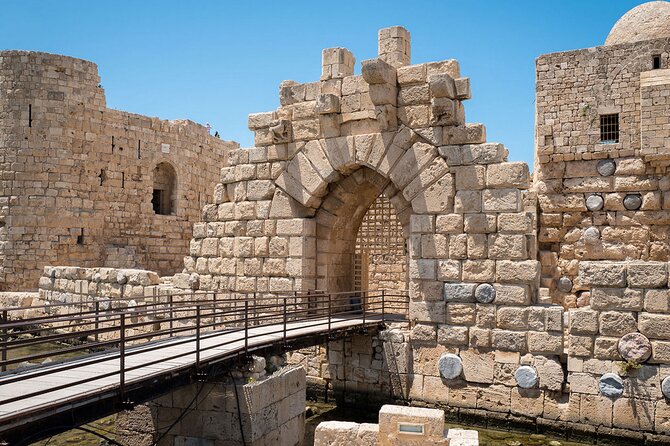
Sidon was one of the major Phoenician cities and was known for purple dye and glassware. The Sea Castle, built by Crusaders in the 13th century on a small island, is the city’s most recognizable monument. A causeway connects it to the mainland, and the remaining fortress walls give you a direct view of Sidon’s coastal defenses.
Khan al-Franj is a traditional inn with a large courtyard, covered galleries, and a central fountain. Built in the early 17th century by Emir Fakhreddine II, it served trade and diplomatic purposes connected with France. The visit is short, but it helps you picture how commerce worked before modern hotels and roads.
The Soap Museum occupies a former 17th-century soap factory. You can see how traditional olive-oil soap was made and learn about bathhouse customs in the region. The museum also contains archaeological pieces found during excavation, including pottery fragments and clay pipe heads.
Debbane Palace is another compact but worthwhile stop. Built in the 18th century, it is described as the last surviving Ottoman-period house in Sidon. Its reception rooms, stained glass, mosaic tiles, and old stables are reached through a narrow stairway in the souk. The short visit means you should focus on the architecture rather than trying to see every detail.
At Maghdoucheh, the Basilica of Our Lady of Mantara is tied to the tradition that Mary rested in a sacred cave while waiting for Jesus. The shrine includes a tower, a statue of the Virgin and Child, a cathedral, a cemetery, and the cave. It is a brief stop, but it adds another layer to the region’s religious story.
Tyre brings the day to its archaeological high point. This ancient Phoenician port was famous for its purple dye, made from murex sea snails, and its history reaches through Phoenician, Greek, Roman, Byzantine, Arab, Crusader, Mamluk, and Ottoman periods.
At the Al-Bass Archaeological Site, you see a Roman triumphal arch, a monumental road, an aqueduct, a necropolis, and the large Roman hippodrome. The hippodrome is among the best-preserved examples of its kind and gives you a sense of the scale of public entertainment in the Roman world.
The Tyre Cemetery contains hundreds of Roman and Byzantine sarcophagi. Some carry inscriptions, names, occupations, or carved scenes. The ancient harbor area is also part of Tyre’s story, though the modern port is now used by fishing boats and only parts of the old mole remain visible.
You receive about two hours in Tyre, plus separate time at the archaeological sites, hippodrome, and cemetery. This is another long day, but the sites are varied enough to keep it interesting. If Roman ruins are your priority, this day and Baalbek are the strongest reason to book.
Day 6: Your own Beirut day
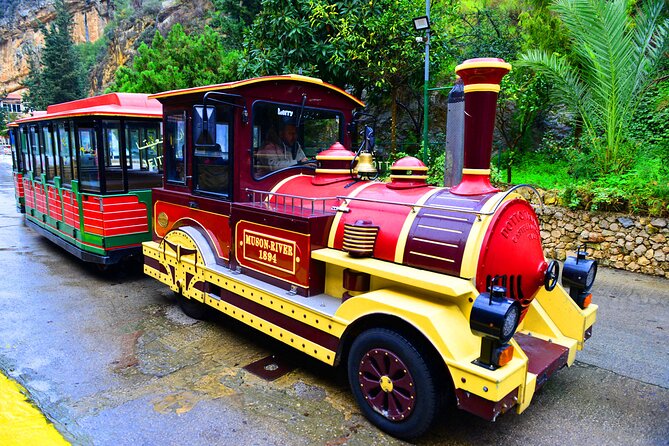
The free day is not an afterthought. After four organized excursions, it gives you time to slow down and choose what matters most to you.
You can shop for souvenirs, explore Beirut at your own pace, or stay at the hotel and rest. The itinerary does not provide a guide, transport, or a fixed list of Beirut attractions for this day, so you should treat it as unstructured free time.
I would use it to revisit a place that caught your attention, shop for Lebanese products, or simply recover before the flight. Since dinner is not included on any day, this is also a useful evening to choose your own restaurant.
Day 7: A straightforward departure
After breakfast and check-out, a representative transfers you to Beirut-Rafic Hariri International Airport. The planned airport drop-off is two to three hours before departure, which is a practical buffer for an international flight.
The transfer is listed as taking about 15 minutes, but allow extra time for traffic. The key benefit is that the package does not leave your final airport ride to chance.
What the $810 price really covers
At $810 per person, the package offers good value for someone who wants the main sights with little planning. Six breakfasts, four lunches, accommodation, airport transfers, hotel pick-up and drop-off, and four small-group tours form a useful bundle.
The greatest saving is time. You do not need to compare separate day tours, arrange intercity transport, or work out how to connect Baalbek, Anjar, Qadisha, Sidon, and Tyre from Beirut.
The weak point is the information gap around the hotel. You can choose among hotel grades, but the supplied details do not identify the properties or explain the exact differences. Ask about the hotel category, room type, and location before booking.
You should also budget for four dinners, two other evening meals, drinks, tips if appropriate, shopping, and personal costs. Group discounts are offered, and the maximum group size is 15, which keeps the format relatively small.
Cancellation is flexible only if you act early: cancel at least three full days before the local start time for a full refund. Changes or cancellations inside that window are not accepted or refunded.
Who will enjoy this Lebanon holiday most
I would recommend it to you if you want a broad first look at Lebanon and prefer a fixed base. It suits history fans, architecture lovers, religious heritage enthusiasts, and anyone who wants to combine ancient sites with mountain scenery and coastal towns.
It is also a good fit if you like guided sightseeing but want one free day. The small-group format should feel more manageable than a large coach, though the days remain full.
I would hesitate if you want slow travel, long hikes, or complete control over every hour. The itinerary covers a lot, but short stops at some towns and museums leave limited time for spontaneous wandering.
Should you book the 6-night Lebanon package?
Book it if your priority is seeing Lebanon’s major sights efficiently from Beirut. Baalbek, Byblos, Tyre, Anjar, the Cedars of God, Jeita Grotto, and Harissa create a strong mix, and the included lunches and transfers make the price easier to justify.
Before paying, confirm the hotel grade and ask how the four tour days are assigned. If you are comfortable with long sightseeing days and extra costs for dinner, this is a practical, well-planned introduction to Lebanon. The positive feedback specifically praises the format, food, accommodation, and the work of Hassan and Anwar, which matches the package’s strongest qualities: good coverage, helpful structure, and little transport worry.
FAQ
How long is the Lebanon holiday package?
The package lasts approximately seven days and includes six nights in a Beirut hotel.
Where does the tour begin?
The experience begins at Beirut-Rafic Hariri International Airport in Beirut, Lebanon.
Are airport transfers included?
Yes. Airport pick-up on arrival and transfer back to Beirut-Rafic Hariri International Airport before departure are included.
How many organized touring days are included?
You join four small-group touring days. Day 6 is a free day in Beirut.
What meals are included?
Six breakfasts and four lunches are included. Dinner is not included.
What is the maximum group size?
The activity has a maximum of 15 participants.
Which UNESCO World Heritage Sites are included?
The package visits five of Lebanon’s six UNESCO World Heritage Sites, including Baalbek, Byblos, Anjar, the Qadisha Valley area, and Tyre.
Just added in Beirut
- Wine Tasting Tour★ 5.0 · 2 reviews
- Lebanon tours vip jeitta byblos beirut we charge per vechile not per person.★ 5.0 · 1 review
- Lebanon’s Treasures: Jeita Grotto and Harissa Private Tour★ 5.0 · 2 reviews
- Journey Through Time: A Private Tour of Tripoli and Byblos★ 5.0 · 1 review
- Small Group Tour to Baalbek, Anjar & Ksara with Hotel pickup★ 5.0 · 2 reviews
- Small-Group Tour with Lunch to Sidon, Tyre & Maghdouche★ 5.0 · 2 reviews
- Guided Small-Group Tour to Baalbek, Cedars & Qozhaya with Lunch★ 5.0 · 2 reviews
- Small-Group Tour Qadisha Valley, Becharre and Cedars with Lunch and Tickets★ 5.0 · 1 review