REVIEW · PRIVATE DRIVERS
4-Day Lebanon Tour from Beirut with Airport Transfer
Lebanon packs centuries into four days. I like the way this tour combines Baalbek’s enormous Roman temples with Byblos, one of the world’s oldest continuously inhabited cities. I also like the practical setup: airport transfers, three hotel nights, breakfasts, two lunches, and a small-group format of no more than 15 people are bundled into the $435 price.
The main drawback is the pace. Day 3 covers Baalbek, Anjar, the Stone of the Pregnant Woman, and Château Ksara, so you will spend much of the day on the move. If you prefer long meals and unhurried museum visits, this schedule may feel tight.
In This Review
- Key points to know before booking
- What $435 buys you in four days
- Arrival in Beirut with a private airport transfer
- Jeita Grotto and the caves beneath Mount Lebanon
- Harissa, Our Lady of Lebanon, and Jounieh Bay
- Byblos, from Phoenician port to Crusader castle
- Baalbek and the scale of Imperial Rome
- The Stone of the Pregnant Woman and Sayyida Khawla Mosque
- Anjar, an Umayyad city laid out in straight lines
- Château Ksara and the Bekaa Valley wine tradition
- How the schedule feels in real use
- Who should book this four-day program?
- Final call: strong value for a concentrated first visit
- FAQ
- What is included in the $435 tour price?
- Is airport pickup included?
- How many people can join the tour?
- Which major archaeological sites are included?
- Is wine tasting included?
- What is not included in the price?
Key points to know before booking
- Baalbek is the main event: The Temple of Jupiter and Temple of Bacchus offer some of the most imposing Roman ruins in the region.
- Byblos gives you a gentler second day: Archaeological remains, a Crusader castle, an old souq, and a fishing port create a varied visit.
- Jeita Grotto adds a strong nature break: The cave system includes crystal formations, an underground river, and a lake.
- Harissa brings the best high view: The Our Lady of Lebanon shrine looks over Jounieh Bay and can be reached by the Teleferique cable car.
- Château Ksara makes the Bekaa Valley personal: You finish the long historical day with a Lebanese wine tasting at a winery founded in 1857.
- The price covers useful basics: Airport transfers, accommodation, breakfast, two lunches, and hotel pickup reduce the number of arrangements you must make yourself.
What $435 buys you in four days
At $435 per person, this is not simply a sequence of sightseeing stops. The cost includes round-trip transfers from Beirut-Rafic Hariri International Airport, three nights in a Beirut city hotel, breakfast each morning, two lunches, hotel pickup and drop-off, and participation in two small-group tours.
That package can offer good value if you are making a short first visit to Lebanon. You do not need to arrange a hotel, find a driver at the airport, or organize transport between Beirut, the coast, the Bekaa Valley, and the inland archaeological sites.
The price does not include dinner or personal expenses. Plan for those separately. Because lunch is included twice but dinner is not, you retain some freedom to choose your evening meals in Beirut. That is useful if you want to try Lebanese food beyond a fixed group menu.
The tour is advertised for a maximum of 15 people. That is small enough for a guide to speak with the group rather than simply point from the front of a large coach. Still, this is a group trip, not a private custom itinerary. You will follow the planned route and timing.
More airport transfers in Beirut:
- Airport Arrival Transfer to Your Beirut Hotel
★ 5.0 · 87 reviews - Beirut Arrival Airport Transfer Pickup
★ 5.0 · 25 reviews - Beirut Departure Airport Drop-off
★ 4.5 · 14 reviews
Arrival in Beirut with a private airport transfer
Your first service begins at Beirut-Rafic Hariri International Airport. The transfer operates around the clock, and a representative greets you at the arrival terminal before taking you to your Beirut hotel.
The airport transfer is one of the most useful parts of the package. After a flight, it is reassuring to have a vehicle waiting rather than negotiate transport immediately. The service also states that there are no luggage restrictions, waiting-time fees, or delay fees.
The actual transfer is listed at about 15 minutes from the airport, followed by roughly 20 minutes to settle into Beirut. The schedule leaves Day 1 light. You check in, put away your luggage, and prepare for the sightseeing days ahead.
That first evening is not packed with activities. I consider that a plus. A four-day program with long drives needs a calm arrival rather than another forced attraction.
Jeita Grotto and the caves beneath Mount Lebanon
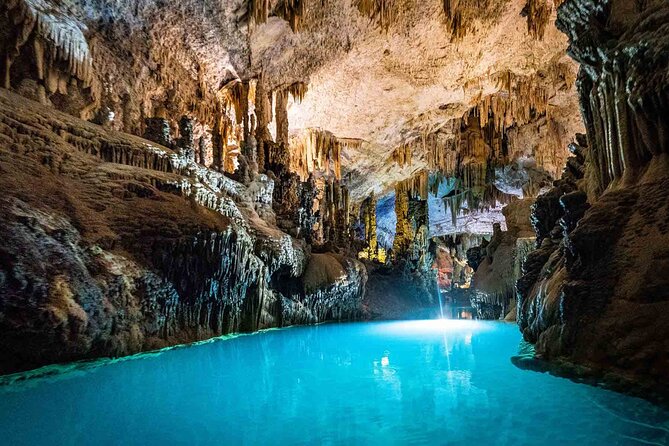
Day 2 begins with Jeita Grotto, a striking change from the city and ancient ruins that follow. The site consists of two connected limestone cave systems formed over millions of years.
The upper cave is about 2,130 meters long and contains stalactites, stalagmites, columns, curtains, draperies, mushrooms, and ponds. The lower gallery stretches about 6,200 meters and lies around 60 meters below the upper cave. It is associated with an underground river and lake.
You have about 90 minutes here, and admission is included. That should give you time to see the main cave areas without turning the visit into an all-day stop.
Jeita Grotto works well early in the trip because it gives your eyes a rest from masonry and archaeological foundations. The cave formations are the attraction, not a long historical lecture. Bring shoes suitable for walking on cave surfaces, though the supplied information does not specify conditions or required footwear.
Harissa, Our Lady of Lebanon, and Jounieh Bay
From Jeita, the route continues to Harissa, a major Christian pilgrimage site above Jounieh. The focal point is a 15-ton bronze statue of the Virgin Mary, known as Our Lady of Lebanon or Notre Dame du Liban.
The statue is 8.5 meters high and has a diameter of five meters. Its arms extend toward Beirut, with a broad view over Jounieh Bay. You have about 30 minutes at the shrine, enough for the statue and the main outlook, but not a long religious or architectural study.
The nearby churches add context. A large cathedral of concrete and glass sits beside the statue, while the area also includes the Byzantine-style Melkite Greek Catholic Basilica of St. Paul, the Apostolic Nunciature, and residences connected with Eastern Catholic patriarchs.
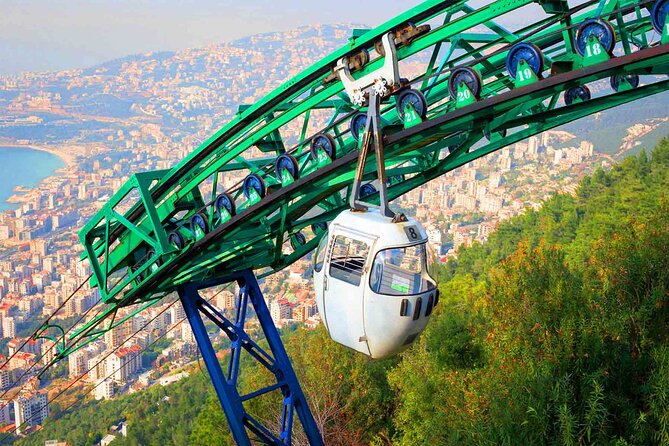
You will also ride the Teleferique du Liban, a gondola lift from Jounieh to Harissa. The ride climbs above pine-covered slopes to about 650 meters and offers views over the bay and surrounding city. The cable car ride is included and takes roughly 20 minutes in the schedule.
This is one of the tour’s most memorable visual moments. The combination of the shrine, the mountain setting, and the cable car makes Harissa more than a quick religious stop. The drawback is time: the shrine and churches are allotted only about 45 minutes together, not counting the cable car ride.
A completely different kind of day out:
- Guided Small-Group Tour to Baalbek, Anjar and Ksara with Lunch
★ 5.0 · 511 reviews - Guided Small-Group Tour to Jeita, Harissa, Byblos with Lunch
★ 5.0 · 361 reviews - Paragliding Trip Over Lebanon – Jounieh Bay
★ 5.0 · 257 reviews - Jeita Grotto,Harissa&Byblos Full-Day PRIVATE-CAR Trip from Beirut
★ 5.0 · 222 reviews
Byblos, from Phoenician port to Crusader castle
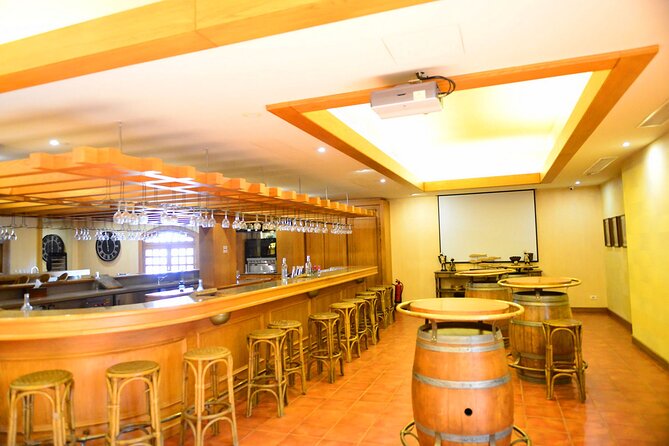
Byblos is the longest stop on Day 2, with about two hours in the city and another hour at the citadel. That is sensible. Byblos has several layers, and rushing through it would flatten the place into a quick photo stop.
The city has been inhabited since Neolithic times and is closely connected with Phoenician culture and the spread of the Phoenician alphabet. Its position on the Mediterranean also made it an important center for timber shipping. The ancient port is traditionally regarded by Lebanese people as one of the oldest ports in the world.
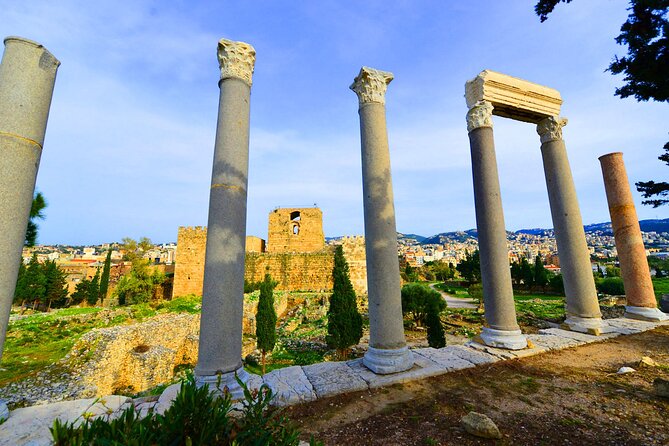
The Byblos archaeological area includes the ruins of the Temple of Baalat Gebal and the Temple of the Obelisks. You can read the site as a series of occupations rather than one single monument. That helps explain why Byblos feels different from Baalbek. Here, the interest comes from layers of settlement, trade, religion, and coastal life.
The 12th-century Byblos Castle gives you a useful high view over the ruins. It is a restored Crusader fortress surrounded by a dry moat about 10 meters wide. Inside, a small museum and information panels explain the city’s past. Bronze Age dwellings can be seen below the castle walls, with the sea beyond.
The old souq offers a softer finish to the archaeological visit. You can walk its cobbled streets, browse souvenirs and antiques, and enjoy the older buildings. The stop at the fishing port is brief, about 10 minutes, but it connects the ancient trading city with the working waterfront of modern Byblos.
I especially like this part of the program because it balances explanation with time to wander. Still, the souq and port visits are short. If you want extensive shopping or a relaxed meal beside the harbor, you may need to return independently another day.
Baalbek and the scale of Imperial Rome
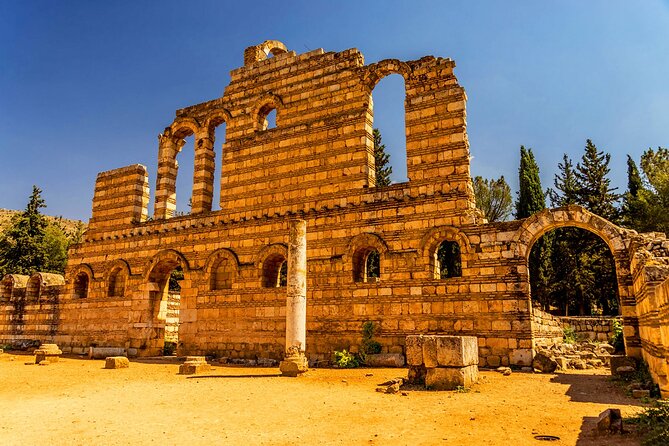
Day 3 is the most demanding and the most rewarding. Baalbek sits in the Bekaa Valley at an altitude of about 1,150 meters, near the southwestern slope of the Anti-Lebanon range.
The ancient city was known as Heliopolis during the Hellenistic period. Under Roman rule, it became a major sanctuary dedicated to a Romanized version of a Phoenician religious triad associated with Jupiter, Venus, and Bacchus.
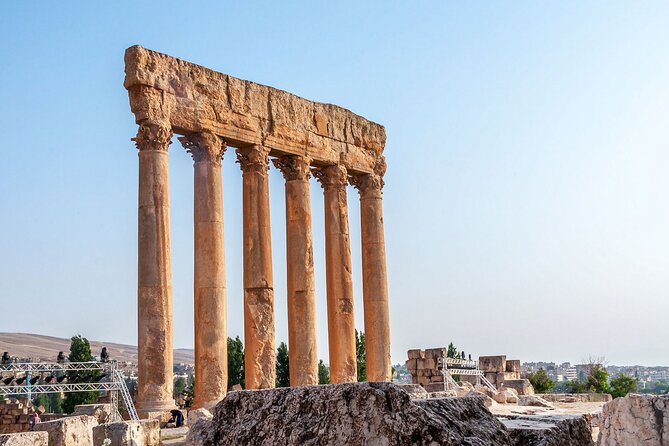
The site is famous for its size. The Temple of Jupiter once had columns about 30 meters high, each nearly 2.5 meters in diameter. Three of the huge foundation stones are among the heaviest blocks used in ancient construction.
At the Great Court, you begin to understand the scale of the complex. It was not built for a small local congregation. Pilgrims came to worship, and the Roman builders created vast courts, platforms, stairways, and temples to match the importance of the sanctuary.
The Temple of Bacchus is often the more complete-looking monument. Its ornament is especially fine, and the structure is regarded as one of the best-preserved Roman temple ruins. Even with missing sections, the carved details show how elaborate the original building must have been.
The Temple of Venus is smaller and more unusual. Its circular shrine sits on a horseshoe-shaped platform, with niches decorated with forms linked to doves and shells. The design gives you a different idea of Roman sacred architecture than the massive rectangular temples nearby.
The schedule gives Baalbek several hours across the city and temple stops. That is appropriate, but the repeated time blocks suggest a tightly organized visit. Wear comfortable shoes, keep water with you, and listen closely when the guide explains how the separate courts and temples fit together.
A strong guide matters here. Natasha is the guide named in the tour feedback, and her historical presentations were praised at a historian’s level. If she is leading your group, you can expect the site to be more than a set of giant columns. It is worth asking in advance if she will be your guide, since guide assignments can change.
The Stone of the Pregnant Woman and Sayyida Khawla Mosque
Near Baalbek, you see the Stone of the Pregnant Woman, a worked Roman monolith associated with the temple complex. Along with another large block nearby, it is one of the biggest stones ever quarried.
The stop lasts about 15 minutes and is free. It is brief, but it gives you a practical sense of the engineering problem behind Baalbek. Once you see the block separated from the main ruins, the scale of the temple foundations becomes easier to picture.
The route also includes the Mosque of Sayyida Khawla. It is believed to mark the burial place of Sayyida Khawla, the daughter of Imam al-Hussein. The site adds a later Islamic and local religious layer to a day otherwise focused heavily on Phoenician and Roman history.
The supplied schedule does not give a visit duration or admission detail for the mosque. Treat it as a short cultural stop rather than a major tour section.
Anjar, an Umayyad city laid out in straight lines
After Baalbek, the tour continues to Anjar. The city was founded by Caliph Walid I in the early eighth century, and its regular plan recalls the organized palace cities of earlier periods.
The ruins include the Umayyad palace, harems, mosque, great palace of the Caliph, thermal baths, walls, and rows of pillars. Some architectural elements resemble Roman design, which makes Anjar a useful companion to Baalbek. You can compare two different political and religious eras without visiting separate parts of the country.
Anjar was built at the crossroads of routes linking Beirut with Damascus and the Bekaa Valley with Homs and Tiberias. Its position explains why a large inland commercial center developed here.
You have about 90 minutes between the city and the Umayyad ruins. That is enough for a guided walk through the principal remains, though not for a slow archaeological study. The site was only discovered by archaeologists in the late 1940s, a reminder that Lebanon’s past is still being uncovered and interpreted.
Château Ksara and the Bekaa Valley wine tradition
The final stop on Day 3 is Château Ksara, a winery in the Bekaa Valley founded by Jesuit priests in 1857. It developed Lebanon’s first dry wine and now produces about three million bottles a year, with exports to more than 40 countries.
Admission and a one-hour visit are included. This stop gives the long archaeological day a more relaxed ending and introduces you to a living part of Lebanese culture. You are not only looking at ancient remains. You are also seeing how the Bekaa Valley remains connected with farming, production, and local food traditions.
The tour description promises an authentic Lebanese wine taste. Dinner is not included, so this tasting should not be treated as a full meal. If you do not drink alcohol, you may find this stop less important than the historical sites, but it still provides a useful look at a major Lebanese producer.
How the schedule feels in real use
The program is best for someone who wants a strong first look at Lebanon in a short period. You see the coast, the mountains, Beirut’s airport corridor, the Bekaa Valley, Roman temples, an Umayyad city, a Christian shrine, a major cave complex, and a working winery.
The tradeoff is that the route covers a lot of ground. Day 2 already combines Jeita Grotto, Harissa, the cable car, and Byblos. Day 3 has even more stops, with Baalbek taking the largest share of attention.
I would choose this tour if I had only four days and wanted organized transport. I would not choose it if my main goal were slow photography, long lunches, or independent time in Beirut. The program gives you breadth and interpretation, not unlimited free time.
The small-group limit of 15 helps. It should make meeting points and guide explanations easier than in a large coach group, while keeping the price below what a fully private tour might cost.
Who should book this four-day program?
This tour suits first-time visitors who want the major sights arranged in a logical loop from Beirut. It also suits solo visitors and couples who would rather not handle airport transfers, intercity driving, hotel arrangements, and archaeological sites alone.
History fans will get the most from Baalbek, Byblos, and Anjar. Nature lovers have Jeita Grotto and the mountain views from Harissa. Food and drink enthusiasts get two included lunches and a wine tasting, though dinners remain your responsibility.
Families may appreciate the variety, but the long Day 3 schedule could be tiring for young children. People with limited mobility should confirm practical details before booking, since the program includes caves, archaeological grounds, a castle, and a gondola lift, and the supplied information does not describe accessibility arrangements.
You should also check your arrival and departure times carefully. The first day is mainly a transfer, while the final day takes you from your Beirut hotel to the airport two to three hours before departure. That airport timing is sensible, but the package does not include extra sightseeing on departure day.
Final call: strong value for a concentrated first visit
I would book this tour if I wanted Lebanon’s most important ancient sites without spending weeks arranging transport. The combination of Baalbek, Byblos, Anjar, and Jeita Grotto gives you a clear sense of the country’s Roman, Phoenician, Umayyad, Christian, and modern cultural layers.
Book it with realistic expectations. You will have a busy schedule, limited free time at some stops, and dinners to arrange yourself. But for $435, the included hotel, transfers, breakfasts, lunches, small-group touring, and wide range of sites make this a practical introduction, especially if Natasha is available to guide the historical visits.
FAQ
What is included in the $435 tour price?
The price includes round-trip airport transfers, three nights of accommodation in a Beirut city hotel, three breakfasts, two lunches, hotel pickup and drop-off, and participation in two small-group tours.
Is airport pickup included?
Yes. Pickup is provided at Beirut-Rafic Hariri International Airport, and the private arrival transfer operates 24 hours.
How many people can join the tour?
The activity has a maximum group size of 15 people.
Which major archaeological sites are included?
The route includes Byblos, the Byblos Citadel, Baalbek and its temples, the Stone of the Pregnant Woman, Anjar, and the Umayyad ruins of Anjar.
Is wine tasting included?
Yes. A one-hour visit and wine tasting at Château Ksara are included.
What is not included in the price?
Dinner and personal expenses are not included.
More Private Drivers in Beirut
- Private Arrival Transfer: Beirut International Airport to Hotel
★ 4.0 · 12 reviews - Private Arrival Transfer: From Airport to your hotel in Beirut
★ 4.5 · 11 reviews - Departure Transfer:From Hotel To Beirut-Rafic Hariri International Airport (BEY)
★ 5.0 · 10 reviews - Airport Departure Transfer From Your Beirut Hotel
★ 5.0 · 7 reviews
Just added in Beirut
- Wine Tasting Tour★ 5.0 · 2 reviews
- Lebanon tours vip jeitta byblos beirut we charge per vechile not per person.★ 5.0 · 1 review
- Lebanon’s Treasures: Jeita Grotto and Harissa Private Tour★ 5.0 · 2 reviews
- Small Group Tour to Baalbek, Anjar & Ksara with Hotel pickup★ 5.0 · 2 reviews
- Journey Through Time: A Private Tour of Tripoli and Byblos★ 5.0 · 1 review
- Guided Small-Group Tour to Baalbek, Cedars & Qozhaya with Lunch★ 5.0 · 2 reviews
- Small-Group Tour with Lunch to Sidon, Tyre & Maghdouche★ 5.0 · 2 reviews
- Small-Group Tour Qadisha Valley, Becharre and Cedars with Lunch and Tickets★ 5.0 · 1 review
Private Drivers

Private Arrival Transfer: Beirut International Airport to Hotel
Read our review →
Private Arrival Transfer: From Airport to your hotel in Beirut
Read our review →
Departure Transfer:From Hotel To Beirut-Rafic Hariri International Airport (BEY)
Read our review →
Airport Departure Transfer From Your Beirut Hotel
Read our review →

Private Departure Transfer: Hotel to Beirut International Airport
Read our review →